Use with caution
Use with caution. Avoid feverfew during pregnancy (it may trigger contractions) and while breastfeeding. Chewing the fresh leaves can cause mouth sores, and people allergic to ragweed and other daisy-family plants may react to it. It may also slow blood clotting.
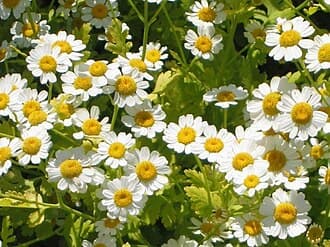
Feverfew
Tanacetum parthenium
herbFeverfew is a bushy, short-lived perennial herb covered in small white daisy flowers with yellow centers above aromatic, citrus-scented, lacy foliage. Long grown in medicinal and cottage gardens - traditionally for headaches and migraines - it reaches 1 to 3 ft, blooms from early summer, and self-seeds freely to return year after year in zones 5 to 9.
☀️
Sun
full sun
💧
Water
Every 7 days
🌾
Harvest
~120 days
📊
Difficulty
easy
🌱
Lifecycle
perennial
Comes back every year
↔️
Spacing
12-18 in. apart
⬇️
Planting Depth
Surface-sow seed (needs light)
🧪
Soil pH
6.0-6.7
Growing Details
Soil Type
Average, well-draining
Hardiness Zones
Zones 5 – 8
When to Fertilize
Light feed in spring only
Fertilizer
Compost or balanced; low needs
🌱 Growing Guide
Sow seed in early spring or fall, pressing it onto the surface since light is required to germinate; fall sowing or a brief cold spell improves germination. Feverfew grows in full sun to part shade and ordinary, well-drained soil and is drought-tolerant once established. It flowers best and lives longest in lean conditions, so avoid heavy feeding. Plants are short-lived but self-sow generously; deadhead if you want to limit the volunteers, or let a few set seed to renew the patch.
Planting Calendar
Sign in to personalize →🌱
Start seeds indoors
Feb 18
🌿
Transplant outdoors
Apr 15
🌾
Projected first harvest
Aug 13
JJan
FFeb
MMar
AApr
MMay
JJun
JJul
AAug
SSep
OOct
NNov
DDec
✅ Plant alongside
Good neighbors that attract beneficial insects or deter pests
- Tomato: Aromatic foliage is traditionally used to help repel aphids and other soft-bodied pests
- Cabbage: Its strong scent helps mask brassicas from egg-laying pests
- Yarrow: Shares lean soil and draws hoverflies and parasitic wasps that hunt aphids
🛡️ Pest & disease prevention
Proactive ways to stop trouble before it starts. Tap a name with an arrow for its full guide
Feverfew is seldom bothered and even helps deter them; rinse off any clusters and support beneficials
Self-seeding
Deadhead spent flowers before the seed ripens to keep volunteers under control
🌾 Harvest & storage
Harvest leaves and flowering tops once the daisy-like flowers are in full bloom in summer, cutting on a dry morning. Hang the stems in small bundles to dry in the shade. Deadhead and cut back after flowering to tidy the plant and limit its enthusiastic self-seeding.
🥗 Nutrition & benefits
Feverfew has a long traditional use for headache and migraine relief, attributed to the compound parthenolide in its leaves. It is a folk remedy, not a substitute for medical care, and is not recommended during pregnancy. In the garden its small daisies draw hoverflies and other beneficial insects.
⚠️ Toxicity & safety
Use with caution. Avoid feverfew during pregnancy (it may trigger contractions) and while breastfeeding. Chewing the fresh leaves can cause mouth sores, and people allergic to ragweed and other daisy-family plants may react to it. It may also slow blood clotting.
For educational and informational purposes only. HomeSown is not medical, health, or other professional advice. Always positively identify any plant before handling or eating it; some plants, and some parts of otherwise-edible plants, are toxic. Consult a qualified professional before consuming or otherwise using any plant, especially if you are pregnant, nursing, taking medication, or have a health condition.