Browse 714 plants with full growing guides
Showing 714 of 714 plants
Solanum lycopersicum 'Better Boy'
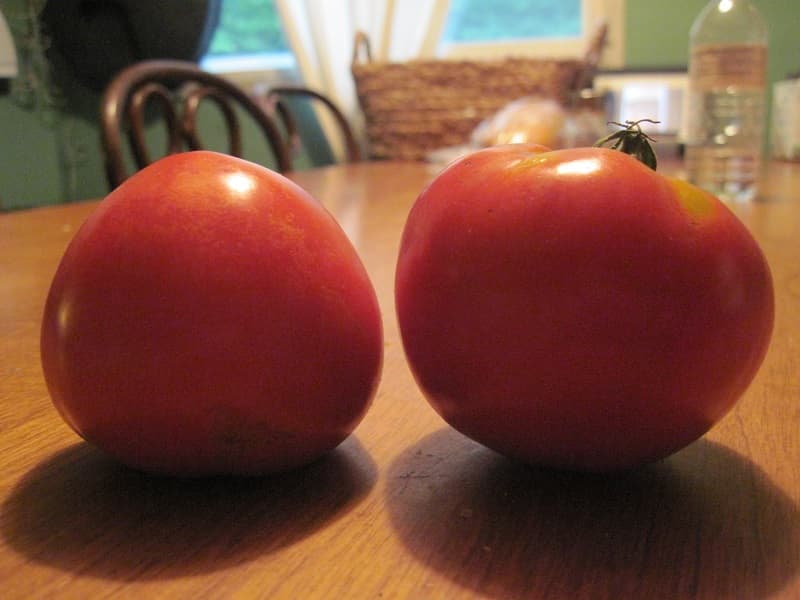
Better Boy is the workhorse slicing tomato found on nearly every garden-center bench, a vigorous indeterminate hybrid prized for dependable yields of large, round, deep-red fruit that average 10 to 16 ounces, often nearing a pound. The flavor is the classic balanced sweet-tart tomato taste and the flesh is firm enough to slice cleanly for sandwiches and burgers. Its real claim to fame is built-in disease resistance: the VFN designation means it shrugs off verticillium and fusarium wilts and root-knot nematodes, the soilborne problems that cut heirloom plants short. That resistance lets a single plant keep setting fruit from early summer right up to the first hard frost.
Cucumis sativus 'Marketmore 76'
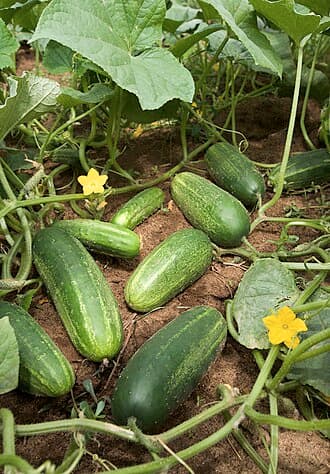
Marketmore 76 is the standard open-pollinated slicing cucumber, bearing uniform, straight, dark-green fruit 8 to 9 inches long with crisp, mild flesh, on disease-resistant vines. A reliable home-garden workhorse since the 1970s, it begins bearing in about 65 to 70 days and keeps producing as long as the fruit is picked.
Fragaria x ananassa 'Albion'
Albion is the premier day-neutral strawberry in North America, bred at UC Davis and released in 2004 (U.S. plant patent granted in 2006). Day-neutral means it ignores day length and fruits in flushes from late spring right through to fall frost, rather than in one June burst. The berries are large, long-conical, deep red inside and out, exceptionally firm, and among the sweetest and firmest of the day-neutral varieties, which is why Albion dominates both market and home plantings. Albion also carries strong resistance to Verticillium wilt, Phytophthora crown rot, and anthracnose - a rare combination that makes it forgiving for beginners.
Tagetes patula
The French marigold is a compact, bushy annual smothered in gold, orange, and mahogany blooms from spring to frost, with pungent, ferny foliage. One of the most famous companion plants in the vegetable garden, it is valued not just for color but for suppressing root-knot nematodes in the soil and drawing hoverflies and other beneficial insects.
Ocimum basilicum 'Genovese'
Genovese is the classic Italian sweet basil, the variety prized for pesto, with large, fragrant, deep-green leaves and a rich, sweet, clove-and-anise aroma. A tender warm-season annual, it grows fast in summer heat and keeps producing as long as it is regularly pinched and kept from flowering.
Capsicum annuum 'California Wonder'
Green bell peppers are simply sweet bell peppers harvested before they finish ripening, while they are still crisp, mild, and grassy-fresh. This is the classic California Wonder type, a thick-walled, four-lobed, blocky pepper that has been the home-garden standard since the 1920s, with no heat at all. Left on the plant about two more weeks, the same fruit ripens from green to a sweeter red, in roughly 75 days from transplant.
Phaseolus vulgaris 'Blue Lake'
Blue Lake is a classic American snap bean famous for straight, round, deep-green pods that stay tender and stringless with a sweet, old-fashioned flavor, equally good fresh, canned, or frozen. The original is a vigorous pole bean that climbs to six feet and bears over a long season, ripening its first pods in about 60 to 65 days and producing until frost.
Daucus carota 'Nantes'
Nantes is a classic carrot type producing slender, cylindrical, blunt-tipped roots six to seven inches long with smooth skin, a small core, and exceptionally sweet, crisp, mild flesh. Among the most popular home carrots for fresh eating, it matures in about 60 to 75 days and grows best in cool weather, sweetening further after fall frosts.
Vaccinium corymbosum 'Bluecrop'
Bluecrop is the worlds most widely planted northern highbush blueberry and the benchmark all others are measured against. Released by the USDA and the New Jersey Agricultural Experiment Station in 1952, it forms a vigorous, upright 4 to 6 ft bush that is drought-tolerant, cold-hardy, and consistently productive, with large, light-blue, firm midseason berries of good flavor. It needs roughly 800 to 1,000 winter chill hours, so it suits zones 4 to 7. Bluecrop is partly self-fertile but yields larger berries and heavier crops when planted with a second highbush variety for cross-pollination.
Coriandrum sativum 'Slow Bolt'
Cilantro is the fast, cool-season annual whose bright, citrusy leaves are essential to Mexican, Indian, and Asian cooking, while the same plant's dried seeds are the warm spice coriander. The Slow Bolt strain is bred to hold in leaf longer before bolting in heat, extending the harvest of tender foliage that is the toughest part of growing cilantro well.
Cucurbita pepo 'Black Beauty'
Black Beauty is a classic dark-green zucchini, a bush-type summer squash bearing glossy, slender fruit with tender, creamy flesh that is endlessly versatile in the kitchen. The plants are famously prolific, producing more than most families can keep up with from about 50 to 60 days, with fruit ready to pick just days after the blossoms open.
Capsicum annuum 'Jalapeño'
The jalapeno is the most widely grown hot pepper in North America, a medium-heat chile rated about 2,500 to 8,000 Scoville units with thick crisp walls and a grassy, vegetal bite. Picked green it is the workhorse of salsas, nachos, poppers, and pickling; left to ripen red on the plant it grows sweeter and a touch hotter, and smoke-dried red jalapenos become chipotles. The compact, productive plants suit gardens and containers alike and set heavy loads of fruit over a long warm season, making one or two plants plenty for most households.
Allium cepa 'Candy'
Candy is an intermediate-day (day-neutral) hybrid sweet onion that forms big, slightly flattened, light-yellow globes - up to softball size - with sweet, juicy, low-sulfur flesh. Because it is day-neutral rather than long- or short-day, it bulbs well across most of the country, from the far North to the deep South, unlike region-locked sweet onions such as Vidalia (short-day) or Walla Walla (long-day). Like all sweet onions, its high sugar and water content makes it mild and pleasant raw on salads and burgers but means it does not keep long, storing only about two to three months.
Rubus idaeus 'Heritage'
Heritage is the standard everbearing red raspberry, a primocane-fruiting variety that bears a light summer crop on second-year canes and a heavy fall crop on the current season's canes. Vigorous, hardy, and largely self-supporting, it is one of the easiest raspberries for home gardens, with the simplest pruning of any type and sweet, firm, flavorful berries.
Lactuca sativa 'Buttercrunch'
Buttercrunch is a popular butterhead lettuce forming a loose rosette of soft, buttery green leaves around a tender, blanched heart, with a sweet, mild flavor and a crisp center. An award-winning variety prized for tolerating heat better than most butterheads, it is slower to bolt and turn bitter, and it matures in about 55 to 65 days.
Petunia × hybrida
A warm-season annual producing masses of ruffled trumpet flowers in every color from white through lavender, purple, red, pink, yellow, and bicolors. Long-blooming, easy to grow, and one of the best flowers for summer containers, hanging baskets, and garden borders. Also an effective trap crop for aphids and thrips near vegetable beds.
Petroselinum crispum 'Moss Curled'
Curly parsley is the tightly ruffled, deep-green form of the classic biennial herb, milder and more decorative than flat-leaf and the traditional garnish. Grown as an annual for its leaves, it forms dense 8 to 14 inch clumps that take light frost.
Pisum sativum var. macrocarpon
Sugar snap peas are edible-pod peas eaten whole, combining the plump sweetness of a shelling pea with a crisp, stringless pod when young. Climbing vines crop heavily in cool weather, and the sweet, crunchy pods are a favorite for fresh snacking, salads, and quick stir-fries.

Solanum lycopersicum 'Celebrity'
Celebrity is a 1984 All-America Selections winner and one of the most dependable home-garden tomatoes ever bred. The semi-determinate plants grow to a tidy 3 to 4 feet yet keep setting medium-large 7 to 8 oz red fruit all season until frost, combining heavy early yields with rich, well-balanced flavor. Celebrity carries a broad disease-resistance package (verticillium wilt, fusarium wilt races 1 and 2, nematodes, and tobacco mosaic virus), which makes it one of the most forgiving choices for new growers.
Malus domestica 'Honeycrisp'
Honeycrisp is a modern favorite famous for its exceptionally crisp, juicy, explosively crunchy texture and balanced sweet-tart flavor. Developed at the University of Minnesota, it is very cold-hardy and stores unusually well for months, ripening in late summer to early fall, and like other apples it requires a different variety nearby for cross-pollination.
Capsicum annuum
A red bell pepper is simply a green bell left on the plant to fully ripen, turning from green through to deep red as it sweetens and develops its richest flavor and highest vitamin content. Sweet and crisp with no heat, blocky and thick-walled, it is excellent raw, roasted, or sauteed, and takes a few extra weeks on the plant to color up.
Mammoth Sunflower
The iconic tall annual sunflower producing massive seed-filled heads 12 to 18 inches across on 8 to 12-foot stalks. Edible seeds are high in protein and healthy fats. Flowers track the sun when young (heliotropism) before becoming fixed east-facing at maturity. One of the most productive and dramatic plants in any garden, attracting goldfinches, bees, and countless beneficial insects.
Cucumis sativus 'Boston Pickling'
Boston Pickling is the classic American pickling cucumber, in commercial seed catalogs since 1877. The vigorous vines bear an abundance of 3 to 6 inch fruits with thin bumpy skin, dense crisp flesh, and a small seed cavity, which is what makes them so reliable for crunchy whole-pack pickles. Also excellent fresh.
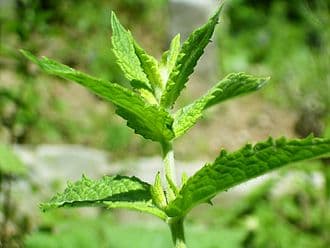
Mentha spicata
Spearmint is the common sweet mint, milder and less sharply cool than peppermint, with a clean, sweet flavor used in teas, sauces, salads, and drinks like mojitos and mint juleps. Like all mints it is a hardy perennial that spreads enthusiastically by runners and returns each spring, supplying fragrant leaves throughout the season.
Spinacia oleracea 'Bloomsdale'
Bloomsdale is a classic savoy-leaf heirloom spinach with heavily crinkled, glossy dark-green leaves and a rich, sweet flavor. Slower to bolt than smooth-leaf types, this cold-hardy long-standing variety gives a longer spring and fall harvest and stands up to winter with protection.
Rubus 'Triple Crown'
Triple Crown is the most productive thornless blackberry for home growers: large glossy berries with deep balanced sweet-tart flavor, ripening over a 5-week stretch in late summer. The semi-erect canes are vigorous and trained up a trellis for easy picking, and a single mature plant can yield 25 to 35 lb of fruit per season.
Phaseolus vulgaris 'Kentucky Wonder'
Kentucky Wonder is the classic heritage pole snap bean, grown for well over a century for its 7 to 8 inch flat green pods and rich, old-fashioned bean flavor that is sweet and tender when picked young. The twining vines climb 6 feet or more and keep flowering and bearing right up to frost, so a single planting yields for weeks. Left on the vine, the same pods mature into plump seeds that can be shelled green or dried as the brown Kentucky Wonder dry bean, making it a true dual-purpose heirloom for fresh eating and storage.
Solanum lycopersicum 'Early Girl'
Early Girl is a popular early hybrid valued for ripening its first medium-sized, globe-shaped slicing tomatoes in just 50 to 60 days from transplant, weeks ahead of most varieties. The indeterminate vines keep producing reliable, full-flavored fruit all season, making it a dependable choice for short-season gardens or anyone impatient for the first ripe tomato.
Knock Out Rose
The Knock Out rose (Rosa 'Radrazz'), introduced in 2000, revolutionized rose growing by being almost foolproof. It is a rounded, bushy shrub rose, typically 3 to 4 ft, that produces flushes of cherry-red, lightly scented single flowers continuously from spring until frost. Crucially, it is self-cleaning (it drops spent blooms and reblooms without deadheading) and was bred for outstanding resistance to black spot and other diseases that plague traditional roses, so it needs no spraying. Cold hardy to about zone 5 and extremely heat- and drought-tolerant once established, it gives the look of a rose garden with a fraction of the fuss.
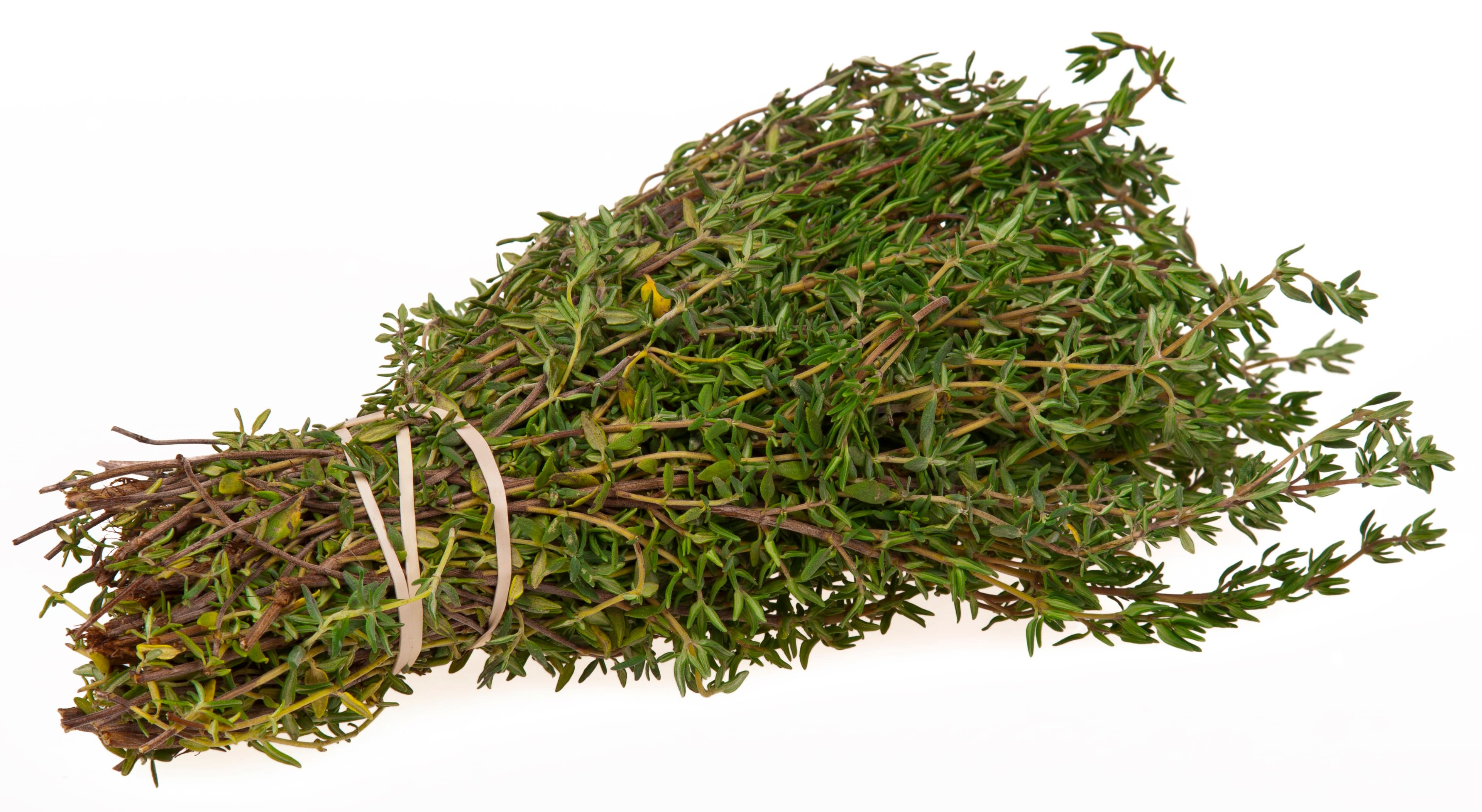
Thymus vulgaris
English thyme is the common culinary thyme, a low, woody-stemmed Mediterranean perennial with tiny, intensely aromatic gray-green leaves, a foundation herb for stocks, roasts, and slow-cooked dishes. The tough little plants are evergreen in mild climates, draw bees when they bloom, and hold their flavor well through cooking and drying.
Lactuca sativa var. longifolia
Romaine, or cos lettuce, forms a tall, upright head of sturdy, elongated leaves with crisp ribs and a sweet, robust flavor, the classic lettuce for Caesar salads. More heat- and bolt-tolerant than tender butterheads, it matures in about 70 to 85 days and holds its quality well in the garden and the refrigerator.
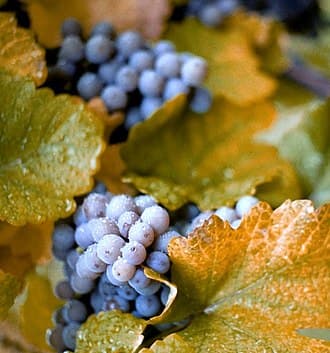
Vitis labrusca 'Concord'
Concord is the classic American blue-black slipskin grape, intensely aromatic and sweet-tart, the grape behind traditional grape juice, jelly, and jam. A vigorous, cold-hardy, disease-tolerant vine, it is self-fruitful and forgiving, ripening its heavy clusters in early to mid fall, and a single well-tended vine can produce for decades.
Capsicum annuum 'Cayenne'
The cayenne is a long, slender, thin-walled hot pepper rated about 30,000 to 50,000 Scoville units, several times hotter than a jalapeno, that ripens from green to brilliant red. Its thin walls dry easily, making it the classic pepper for grinding into cayenne powder and crushed red pepper flakes, as well as for hot sauces, in about 70 to 75 days.
Daucus carota 'Imperator'
Imperator 58 is the classic supermarket carrot: 8 to 10 inches long, slender, tapered, and deep orange, with the uniform shape that made the Imperator type the standard for commercial production. The variety needs loose deep soil to size up properly; in heavy or rocky ground the roots fork and twist.
Viola × wittrockiana
A cheerful cool-season annual producing bicolor face-like flowers in purple, yellow, white, and combinations. Cold-hardy enough to bloom through light snow. One of the earliest and latest flowers of the season, bridging autumn and spring. Edible flowers used as garnishes and in salads. Classic for spring containers, window boxes, and early garden color.
Cucurbita pepo 'Crookneck'
The classic American summer squash — bright yellow with a characteristic curved neck and bumpy skin. Harvest young at 6 to 8 inches for tender, sweet flesh. One of the most productive plants in any vegetable garden; a few plants will feed an entire family through summer.
Origanum vulgare subsp. hirtum
Greek oregano is the pungent, white-flowered subspecies that cooks mean by real oregano. Many plants simply labeled oregano are milder ornamental forms, but Greek oregano delivers the sharp, warm, peppery flavor essential to Mediterranean, Greek, and Mexican cooking. It is a low, spreading, woody-based perennial that forms a fragrant mat of small gray-green leaves, topped in summer by white flowers that bees and butterflies swarm. Tough and drought-proof once established, it thrives on heat and a bit of neglect and is one of the easiest, most rewarding culinary herbs to grow.
Allium cepa 'Red Burgundy'
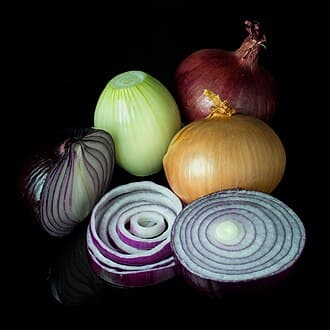
Red Onion is the sharp, colorful cooking onion with deep purple-red skin and crisp white flesh ringed in purple. Raw, it brings color and bite to salads, salsas, and sandwiches; roasted or caramelized it turns sweet and mellow. Most red onions sold for the North are long-day storage types that bulb when summer days stretch past about 14 hours, while short-day reds are grown in the South, so matching the variety to your latitude is the key to getting full-size bulbs. It is a cool-season crop planted in early spring and harvested in mid to late summer.
Ficus carica 'Brown Turkey'
Brown Turkey is a popular, easy-to-grow fig with brownish-purple skin and sweet, richly flavored pink-amber flesh, well suited to home gardens and containers. It is self-fruitful, needing only one plant, and where the season is long it can bear two crops a year: a light early breba crop on last year's wood and a heavier main crop in late summer and fall.
Brassica oleracea var. italica 'Calabrese'
Calabrese is the classic Italian green broccoli, producing a large blue-green central head followed by a steady supply of smaller side shoots after the main head is cut. A cool-season brassica maturing in about 60 to 90 days, it is the standard home-garden broccoli, valued for the long secondary harvest that can continue for weeks.
Raphanus sativus 'Cherry Belle'
Cherry Belle is the classic round, cherry-red salad radish, with crisp white flesh and a mild, clean bite, and one of the very fastest vegetables anyone can grow, going from seed to harvest in roughly three to four weeks. That speed makes it ideal for filling gaps between slower crops, marking rows of slow-germinating carrots, and giving beginners a quick, satisfying first success. It is a cool-season root that does best in the mild weather of spring and fall, and like all radishes it turns sharp and woody if rushed through heat.
Cosmos bipinnatus 'Sensation'
Cosmos is an airy, fast-growing annual with feathery foliage and a long summer-to-frost show of daisy-like blooms in pink, white, and magenta on tall, graceful stems. It thrives on neglect, flowering best in poor soil, and is a powerful magnet for bees, butterflies, and beneficial insects, making it as useful in the vegetable garden as it is pretty in the border or vase.
Salvia rosmarinus 'Arp'
Arp Rosemary (Salvia rosmarinus 'Arp') is the benchmark cold-hardy rosemary, discovered in 1972 near the town of Arp in east Texas and prized for surviving winter temperatures down to about -10F. That hardiness extends dependable rosemary into zone 6, well beyond the mild-winter range of most varieties. It is an upright, open, vigorous shrub reaching 3 to 5 ft, with slightly longer, lighter gray-green, spruce-scented needles and pale blue flowers in spring. The flavor is full and resinous, excellent for roasts, breads, and grilling, and like all rosemary it is evergreen, drought-tough, and beloved by bees.
Solanum lycopersicum 'Roma'
Roma is the classic determinate paste tomato found in markets and gardens everywhere, valued for egg-shaped, meaty, low-moisture fruit with few seeds and thick walls that cook down into rich sauce, paste, and canned tomatoes. Each fruit runs about 2 to 3 ounces, and the compact bushy plants set nearly their whole crop in one concentrated flush rather than spreading it across the season. That habit is the whole point: it gives the cook a large batch of nearly identical fruit ready at the same time for a single big canning or sauce day. The plants are widely adapted and carry good resistance to verticillium and fusarium wilts.
Citrullus lanatus 'Crimson Sweet'
Crimson Sweet is a classic round, blocky watermelon with a pale green rind striped in dark green and crisp, sweet, deep-red flesh, with fruit typically weighing 15 to 25 pounds. The vigorous vines need a long, hot season, ripening in about 85 to 90 days, and the variety is prized for high sugar content and good disease resistance.
Capsicum annuum 'Banana'
The banana pepper is a mild, elongated, waxy yellow pepper that ripens through orange to red and grows sweeter as it colors. With little to no heat, from zero to about 500 Scoville units, it is a heavy-bearing favorite for fresh eating, stuffing, and especially pickling for sandwiches and salads.
Pisum sativum var. saccharatum
Snow peas are flat-podded peas eaten whole, pod and all, while the pods are still thin and the seeds barely formed, prized for their sweet crunch in stir-fries and salads. A frost-hardy cool-season climber, it crops in the cool shoulders of spring and fall and stops producing once summer heat sets in.
Echinacea purpurea
A tough, drought-tolerant North American native perennial producing large pink daisy-like flowers with prominent dark spiky cones from mid-summer through fall. One of the most important late-season pollinator plants and an outstanding cut flower. Also the source of the herbal supplement echinacea. Extremely easy to grow and long-lived.

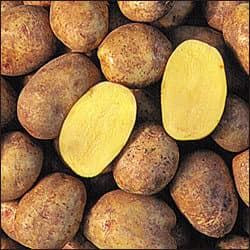
Solanum tuberosum 'Yukon Gold'
Yukon Gold is a popular early-to-midseason potato with smooth, thin yellow skin and moist, buttery, golden flesh that is excellent boiled, mashed, or roasted. It sizes up faster than storage russets, in about 75 to 90 days, holds together well when cooked, and yields uniform, good-keeping tubers.
Prunus avium 'Bing'
Bing is the classic dark sweet cherry, producing large, firm, deep-mahogany fruit with rich, sweet flavor, the benchmark variety for fresh eating. The vigorous trees bear in early summer but need a long winter chill and a compatible second sweet cherry for pollination, since Bing cannot set fruit with its own pollen.
Salvia officinalis
Garden sage is a hardy, woody-stemmed perennial with soft, silvery-green leaves and a warm, savory, slightly peppery flavor classic in stuffing, sausage, and rich autumn dishes. A Mediterranean shrub that returns for years, it is handsome enough for the ornamental border, with spikes of blue flowers that draw bees.
Phaseolus vulgaris 'Provider'
Provider is a dependable early bush snap bean, one of the most reliable varieties for an early crop because it germinates well in cool soil and bears a heavy, concentrated set of round, meaty green pods in just about 50 days. The compact, self-supporting plants need no trellis and are a favorite for first sowings and successive plantings.
Lactuca sativa var. capitata 'Great Lakes'
Iceberg is the classic crisphead lettuce, forming a dense, round head of pale, crunchy, mild leaves, and it is the most heat-tolerant of the lettuces, the Great Lakes strain bred to head reliably in warmer conditions. The most demanding lettuce to grow well, it needs a longer, cool season of about 80 to 90 days to form a tight, full head.
Solanum lycopersicum 'Sweet 100'
Sweet 100 is an indeterminate cherry tomato prized for huge yields of one-inch, candy-sweet red fruit borne in long, branching clusters. The tall vines start ripening in about 60 to 65 days and keep producing nonstop until frost, so a single well-staked plant can yield many hundreds of tomatoes over a season. The fruit is high in sugars but, like most cherry tomatoes, tends to split after heavy rain following dry spells, so keep moisture even and pick promptly to limit cracking.
Antirrhinum majus 'Rocket Mix'
Snapdragon (Antirrhinum majus) is the classic cottage garden flower with tall spikes of dragon-mouth blooms in every color from pure white to deep burgundy, plus bicolors and pastels. A cool-season cut flower beloved by pollinators (especially bumblebees, which are heavy enough to trip the dragon-mouth open), Snapdragon is a short-lived perennial usually grown as a cool-weather annual for spring and fall bloom.

Prunus persica 'Elberta'
Elberta is the most famous heirloom peach, a large, freestone variety with golden, red-blushed skin and sweet, juicy yellow flesh that pulls cleanly from the pit, excellent fresh, canned, or baked. Unlike many tree fruits it is self-fruitful, so a single tree bears well, ripening its heavy crop in mid to late summer.
Brassica oleracea var. capitata 'Copenhagen Market'
Copenhagen Market is a classic early green cabbage forming a solid, round, blue-green head about six to seven inches across with mild, crisp leaves good for slaws, kraut, and cooking. A dependable cool-season brassica, it matures in about 65 to 70 days from transplant and was bred to head uniformly on a compact plant that fits a home garden.
Anethum graveolens 'Bouquet'
Dill is a fast-growing annual herb with feathery blue-green foliage and a fresh, tangy, grassy flavor, indispensable for pickles, fish, and potato dishes, while its seeds season brines and breads. The tall, airy plants are quick to bolt into flat yellow flower umbels that draw beneficial insects, and Bouquet is a compact strain bred for abundant foliage.
Allium sativum 'German Extra Hardy'
German Extra Hardy is the gold-standard porcelain hardneck garlic for cold climates, with large bulbs holding 4 to 6 big easy-peel cloves under white wrappers tinged purple. The flavor is strongly pungent raw and sweetly mellow when roasted, with high sugar content, and the bulbs store easily for 6 months.
Solanum melongena 'Black Beauty'
Black Beauty is the classic large, glossy, deep-purple eggplant, an heirloom prized for its plump, oval fruit and creamy, mild flesh that is excellent grilled, roasted, or layered into parmesan. The sturdy plants produce a handful of big fruit each, maturing in about 80 days, with surprisingly early ripening for such a large eggplant.
Cafe au Lait Dahlia
Cafe au Lait is the famously sought-after dinnerplate dahlia, bearing 8 to 10 inch blooms in soft, shifting tones of creamy blush, buff, and palest peach. Bushy 3 to 4 ft plants flower from midsummer until frost and are the darling of wedding florists and cutting gardens. Grown from tubers that are lifted and stored over winter in cold climates.
Malus domestica 'Gala'
Gala is one of the most popular apples, a crisp, sweet, mild variety with thin skin striped in red over yellow, excellent for fresh eating and applesauce. The trees are productive and bear at a relatively young age, ripening their fruit from late summer into early fall, and like most apples Gala needs a second variety nearby for cross-pollination.
Beta vulgaris 'Detroit Dark Red'
Detroit Dark Red is the standard garden beet, an heirloom producing smooth, round, deep-red roots with sweet, tender flesh and a bonus crop of nutritious red-veined greens. A dependable cool-season root maturing in about 55 to 65 days, it resists turning woody even at full size and is good for fresh use, canning, and pickling.
Allium schoenoprasum
Chives are a hardy perennial herb in the onion family, forming neat grassy clumps of slender, hollow leaves with a mild, fresh onion flavor, plus edible purple pompom flowers in spring. The easiest allium to grow, chives return reliably year after year, are among the first herbs up in spring, and supply snippable leaves all season.
Lactuca sativa 'Bibb'
A small compact butterhead lettuce producing tight, loosely folded heads of soft, buttery-textured leaves with a sweet, mild flavor. Highly regarded by restaurant chefs for presentation and flavor. Bibb is the heirloom butterhead also sold as Kentucky Limestone (originally called limestone lettuce), considered by many the finest American lettuce. It forms beautiful small cups perfect for serving appetizers.
Zea mays 'Silver Queen'
Silver Queen is a classic late-season white sweet corn, prized for its large ears packed with small, tender, creamy-white kernels and an old-fashioned sweet corn flavor. A standard sugary hybrid maturing in about 88 to 92 days, it is a longtime favorite for fresh eating, best picked and cooked the same day before its sugars turn to starch.
Cucurbita moschata 'Waltham Butternut'
Butternut is the most popular winter squash, a tan, bell-shaped fruit with dense, sweet, deep-orange flesh, a small seed cavity, and a smooth rind that is easy to peel. The vigorous vines ripen fruit in roughly 85 to 110 days, and butternut is one of the best-keeping squash, sweetening in storage and lasting for months.
Pyrus communis 'Bartlett'
Bartlett is the classic summer pear, medium to large with thin skin that ripens from green to golden yellow, very sweet, juicy, and tender, and the most widely grown pear for fresh eating and canning. A heavy, reliable midseason bearer, it crops best with a second pear variety nearby for pollination.
Tagetes erecta 'Crackerjack'
African marigold of the Crackerjack type is a tall, robust annual carrying big, fully double pompom blooms in gold, orange, and yellow from summer to frost on 2 to 3 foot plants. Easy and dependable, it is both a bold bedding flower and a classic vegetable-garden companion.
Capsicum chinense 'Habanero'
The habanero is one of the hotter peppers commonly grown, rated roughly 100,000 to 350,000 Scoville units, with a distinctive fruity, floral aroma beneath its fierce heat. The small, lantern-shaped pods ripen from green to orange or red, and unlike most garden peppers it is a Capsicum chinense that needs a long, hot season, often 90 to 100 days or more from transplant.
Petroselinum crispum var. neapolitanum
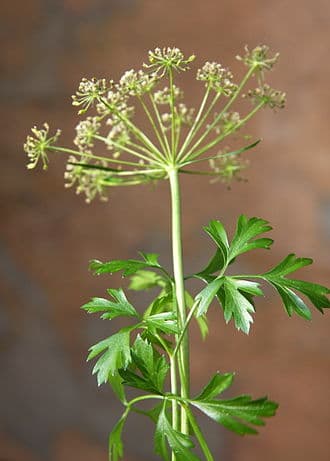
Italian flat-leaf parsley is the cook's parsley, with flat, deeply cut, dark-green leaves and a brighter, more robust flavor than the curly type, used both as a fresh herb and as a foundation of many dishes. Technically a biennial usually grown as an annual, it forms a generous leafy clump its first year and tolerates cold well, often standing into winter.
Daucus carota 'Danvers Half Long'
A long, tapered open-pollinated carrot developed by market gardeners around Danvers, Massachusetts, in the 1870s — one of the most adaptable carrots for heavy soils where longer varieties struggle. 6 to 8 inch broad-shouldered roots with a dark orange core and good, balanced sweet flavor.
Brassica oleracea var. botrytis 'Snowball Y'
Snowball is the standard white cauliflower, forming a firm, domed head of tight, snow-white curds six to eight inches across with a mild, sweet flavor. A cool-season brassica maturing in about 65 to 80 days, the Snowball Y strain has leaves that curl over the head to help shade it, and cauliflower is the most weather-sensitive of the cabbage family, demanding cool, steady conditions.
Citrus × limon 'Eureka'
Eureka is the standard grocery-store lemon: medium to large bright yellow fruit with textured skin and intensely acidic juicy flesh, nearly seedless. The tree is everbearing in mild climates, meaning fruit and flowers appear together year-round, with the heaviest crop set in late winter through early summer. Cold-tender, so it lives in pots in any climate with frost.
Maverick Geranium
The zonal geranium is the quintessential summer container flower, the bold red, pink, or salmon geranium that fills window boxes, porch pots, and beds across the country. Despite the common name it is a Pelargonium, not a true hardy geranium. The Maverick series is bred for garden performance and grown from seed, producing compact, well-branched plants topped all summer with large rounded flower heads over softly scalloped, often zone-marked leaves. Sun-loving, heat-tough, and drought tolerant once established, it is a tender perennial grown as an annual in most of the country, blooming from spring until frost with a little deadheading.
Solanum tuberosum 'Russet Burbank'
The russet is the classic baking and frying potato, a large, oblong tuber with rough brown skin and dry, fluffy white flesh that bakes light and fries crisp. A late-maturing main-crop variety, Russet Burbank needs a long season of roughly 100 to 120 days and produces heavily, storing for months through winter.
Mentha × piperita
Peppermint is a vigorous, high-menthol mint, a natural hybrid famous for its sharp, cooling flavor in teas, desserts, and candies. The lush, fragrant plants spread aggressively by underground runners and return year after year, making them best grown contained, but they reward with an abundance of leaves all season.
Brassica oleracea 'Lacinato'
Lacinato, also called dinosaur or Tuscan kale, is an Italian heirloom with long, narrow, deeply puckered blue-green leaves and a sweeter, more refined flavor than curly kale. A hardy cool-season brassica, it yields baby leaves in about 30 days and full leaves in 60 to 65 days, and like all kale it grows sweeter and more tender after frost.
Abelmoschus esculentus 'Clemson Spineless'
Clemson Spineless is the standard okra variety, an heirloom that has been the home-garden benchmark since the 1930s, bearing straight, ridged, deep-green pods on tall, sturdy plants. Its spineless pods are easy to pick, and the heat-loving plants crop heavily over a long, hot summer, with the first pods ready in about 55 to 65 days.
Cucumis melo var. cantalupensis 'Hale's Best'
Cantaloupe, or muskmelon, is the classic netted melon with rough tan webbing over the rind and fragrant salmon-orange flesh around a hollow seed cavity. Hales Best is a beloved old market variety prized for deep sweetness and heavy aroma, the smell that fills a kitchen when the fruit is ripe. The plants are sprawling warm-season annual vines that need room, heat, and a fairly long season, but they reward the space with intensely sweet fruit far better than most store-bought melons. As a heat-lover it thrives in hot, sunny summers.
Asparagus officinalis 'Mary Washington'
Mary Washington is the heirloom standard for home asparagus, a hardy, rust-resistant variety producing thick, tender green spears with purple-tinged tips. A long-lived perennial that can crop for fifteen to twenty years from a single planting, it sends up its spears in early spring, rewarding the patience it takes to establish a bed.
Super Elfin Impatiens
Super Elfin is the classic bedding impatiens, for decades the most popular shade annual in North America for one simple reason: it blooms nonstop, all season, in the shady spots where little else will flower. It makes a low, dense, mounding plant covered in flat, five-petaled flowers in jewel tones of red, pink, salmon, violet, white, and bicolors, glowing in a dim corner from spring until frost with almost no care. It is a tender plant grown as an annual everywhere. Its one real drawback is susceptibility to impatiens downy mildew, a disease that can wipe out a planting; where that has been a problem, the newer disease-resistant series are a safer choice.
Capsicum annuum 'Poblano'
The poblano is a large, heart-shaped mild chile with thick walls and gentle heat, about 1,000 to 2,000 Scoville units, the classic pepper for chiles rellenos and roasting. Picked dark green for fresh use, it ripens to red-brown and, when dried, becomes the ancho chile of Mexican cooking, maturing in about 75 days.
Ocimum basilicum var. thyrsiflora
The fragrant Southeast Asian basil with purple-tinged stems, glossy narrow leaves, and an anise-clove aroma quite different from Italian sweet basil. Essential in Vietnamese pho, Thai curries, and stir-fries. More heat-tolerant and slower to bolt than Genovese types.
Cucurbita pepo 'Connecticut Field'
The archetypal fall and Halloween carving pumpkin. Large round orange fruits average 15 to 25 pounds with moderately sweet stringy flesh that is edible for pies and soups. Growing a classic pumpkin is a bucket-list garden experience and a practical source of fall decor.
Prunus domestica 'Stanley'
Stanley is the classic European prune-plum: dark blue-purple oval fruit, sweet golden-yellow freestone flesh, and a high sugar content that dries down beautifully into homemade prunes. The tree is self-fertile, extremely cold-hardy to minus 30F, and one of the most reliable plum varieties for the home grower.
Cucurbita pepo 'Acorn'
Acorn squash is a small, ribbed winter squash shaped like its namesake, with a hard dark-green shell and sweet, fine-grained yellow-orange flesh that is excellent halved and baked. The vigorous vines bear several fruit each and mature in about 80 to 100 days, and unlike most winter squash, acorn does not improve with long curing and is ready to eat at harvest.
Lavandula angustifolia
The most classic and beloved fragrant herb plant in the world. Tall spikes of small purple flowers above silver-gray aromatic foliage. English lavender is the hardiest, most fragrant, and most culinary of all lavender species. Beyond its famous use in sachets and soap, it is a culinary herb, an exceptional cut flower, a premier bee plant, and one of the most drought-tolerant perennials available.
Allium cepa 'Walla Walla'
A large, famously sweet and mild onion from Washington State. Walla Walla onions are some of the largest and juiciest of all sweet onions, with such low pungency they can be eaten like an apple by some people. They do not store well because of their high water content, so they are best enjoyed fresh over a short season.
Beta vulgaris subsp. cicla 'Fordhook Giant'
Swiss chard is a leafy beet relative grown for its large, glossy, crinkled green leaves and thick, succulent stalks, the Fordhook Giant strain bearing broad dark leaves on wide white stems. One of the most productive and forgiving greens, it tolerates both summer heat and light frost, yields for months from a single planting, and matures in about 55 to 60 days.
Melissa officinalis
Lemon balm is a bushy, lemon-scented perennial in the mint family, native to southern Europe and northern Africa and hardy from roughly zones 3 to 9. It forms branching clumps about two feet tall of soft, crinkled leaves that release a bright lemon fragrance when crushed. Easy to grow and almost pest-free, it is valued for soothing teas and for flavoring salads, fish, and desserts. Like its mint relatives it spreads, both by expanding clumps and by self-seeding, so it is often kept in a pot or a contained bed.
Fragaria x ananassa 'Seascape'
Seascape is a day-neutral strawberry from UC Davis (1991) that became a backbone of the California and home-garden trade for its sheer productivity and wide adaptability. It fruits in flushes from spring to frost, setting very large, firm, glossy berries with balanced sweet-tart flavor and good color through the cut. Seascape performs well across a broad climate range and in containers and hanging baskets, and it tolerates heat better than most day-neutrals, making it a strong pick where summers are warm.

Solanum lycopersicum 'Cherokee Purple'
Cherokee Purple is a smoky, sweet pre-1890 Tennessee heirloom, said to trace to the Cherokee people, with dusky rose-purple shoulders over brick-red flesh that many rank among the best-tasting slicers ever grown. The 10 to 12 ounce beefsteak fruit carry a deep, almost wine-like flavor that intensifies in heat. Indeterminate vines produce all season and need sturdy staking or caging. As a classic heirloom it lacks modern disease resistance and the soft fruit does not keep long, so it is grown for flavor and fresh eating rather than shipping or storage.
Solanum lycopersicum 'Big Boy'
Big Boy is a longtime favorite hybrid slicing tomato introduced by Burpee in 1949 and still one of the most-grown big reds in American gardens. The indeterminate vines produce large, smooth, deep-red globes that commonly run from 10 oz to a full pound or more, with thick meaty walls and the rich, balanced old-fashioned flavor that made the variety famous. It keeps growing and setting fruit until frost, ripens its main crop about 78 days after transplanting, and the heavy fruit needs sturdy staking or a tall cage.
Tropaeolum majus 'Jewel Mix'
A cheerful climbing and trailing annual with round, edible leaves and bright trumpet-shaped flowers in orange, red, and yellow. One of the most versatile companion plants — edible, beautiful, and a workhorse for pest control in the vegetable garden.
Solanum lycopersicum 'Sungold'
Sungold is a beloved hybrid cherry tomato bearing long trusses of small, golden-orange fruit with an intensely sweet, fruity, almost tropical flavor that ranks among the sweetest of all tomatoes. The vigorous indeterminate vines bear early, in about 57 to 65 days, and produce prolifically right up to frost.
Origanum majorana
A sweet, mild perennial herb closely related to oregano but with a softer, more nuanced flavor. Used extensively in Mediterranean cooking — particularly French, Greek, and Italian — for poultry, lamb, egg dishes, and soups. Sweet marjoram is slightly more delicate than oregano and less bitter. It grows as a tender perennial (zones 9 to 10) or annual in colder climates.
Vaccinium corymbosum 'Patriot'
Patriot is a northern highbush blueberry released by the University of Maine in 1976 and prized as one of the most cold-hardy blueberries you can grow, shrugging off zone-3 winters that damage less resilient varieties. The vigorous, upright, medium-height bush (3 to 5 ft) bears large, firm, sweet berries with excellent flavor in the early-to-midseason window. Two traits set Patriot apart from standard highbush like Bluecrop: it tolerates heavier, wetter, silty-clay soils better than most blueberries (given good drainage) and carries a high natural resistance to root-rot pathogens, making it the dependable choice for difficult northern sites. It is partly self-fertile but yields larger, earlier berries when planted near a second highbush variety.
Cucurbita pepo 'Spaghetti'
Spaghetti squash is a winter squash whose cooked flesh pulls apart into tender, pasta-like strands, mild in flavor and low in calories, which makes it a popular noodle substitute. The vigorous vines produce oblong, hard-shelled, golden-yellow fruit that cure and store for months.
Zea mays 'Golden Bantam'
Golden Bantam is the heirloom that made yellow sweet corn popular in America - introduced in 1902 by Burpee, before which most sweet corn was white. It is an open-pollinated standard (su) variety, so you can save seed, and it delivers the rich, old-fashioned corn flavor many gardeners prize over modern hybrids. Compact 5 to 6 ft stalks bear 5 to 7 in. ears of deep golden kernels in about 80 days. The su sugars convert to starch quickly after picking, so Golden Bantam is a get-it-to-the-pot-fast corn - the reward is unmatched traditional flavor.

Calibrachoa
Calibrachoa, sold as Million Bells or trailing petunia, is a tender perennial from South America almost always grown as a warm-season annual. It makes a cascading mound 3 in tall and up to 20 in across, covered from late spring until frost in masses of half-inch bells in nearly every color. It is heat and drought tolerant, does not decline in hot summers, and needs no deadheading, which makes it one of the most popular plants for hanging baskets, window boxes, and mixed containers.
Brassica oleracea 'Red Acre'
Dense, heavy heads with striking burgundy-red to deep purple leaves that hold their color even after cooking. Slightly stronger flavor than green cabbage with a hint of pepper. Red cabbage is the basis of classic German and Eastern European braised dishes and beautiful in raw slaws. The pigment is water-soluble and turns blue when cooked with alkaline ingredients — add a splash of vinegar to the pot to keep it red.
Ipomoea batatas 'Beauregard'
Beauregard is the most popular home-garden sweet potato, a vigorous, dependable variety with rosy-copper skin and sweet, moist, deep-orange flesh that bakes and roasts beautifully. A heat-loving tropical vine grown for its swollen storage roots, it is among the earlier sweet potatoes, maturing in about 90 to 105 days, and the sprawling vines also yield edible leaves.
Malus domestica 'Fuji'
Fuji is a sweet, late-season Japanese apple beloved for its long storage life and balanced flavor. The bicolored skin shows pink-red striping over a green-yellow background, and the dense flesh snaps cleanly with a juicy, honey-sweet bite. It is excellent for fresh eating, slicing into salads, and long winter storage.
Ocimum basilicum 'Dark Opal'
Deep purple-to-near-black basil with a slightly more intense, clove-like flavor compared to green basil. Beautiful as an edible ornamental in containers and mixed beds. Makes vivid pink basil vinegar and a striking garnish. Grows identically to Genovese basil but stands out visually in any garden.
Brassica napus 'Red Russian'
Red Russian is a tender Siberian-type kale (Brassica napus, the same species as rapeseed, rather than the curly Brassica oleracea kales). Its flat, oak-shaped, blue-green leaves carry striking purple-red midribs and stems, and the texture is notably more tender and the flavor milder and sweeter than curly kale, making it the best choice for raw salads and massaged-kale dishes. Fast-growing and very cold-hardy, it produces baby leaves in about a month and full leaves in 50 to 60 days, sweetening further after frost.
Solanum lycopersicum 'Beefmaster'
Beefmaster is a classic beefsteak hybrid grown for sheer size: solid, meaty, mild-sweet red fruit that can top 2 pounds on vigorous indeterminate vines. It ripens its main crop about 80 days after transplanting and keeps bearing until frost. Beefmaster carries VFN disease resistance (verticillium wilt, fusarium wilt, and nematodes), giving the long-season plant the staying power to hold up over a full summer.
Lobularia maritima 'Carpet of Snow'
Sweet alyssum is a low, mat-forming annual in the mustard family, native to the Mediterranean coast, that smothers itself in tiny four-petaled flowers with a soft honey fragrance. Carpet of Snow is the classic pure-white form, only three to nine inches tall but spreading wider into a dense flowering carpet. It blooms from early in the season until frost, tucking along bed edges, between pavers, and over the rims of containers and hanging baskets. Beyond its looks and scent, it is one of the most valuable beneficial-insect plants a gardener can grow.
Capsicum annuum 'Sweet Banana'
Sweet Banana is a mild, sweet pepper named for its long, tapered, banana-like shape, ripening from pale yellow through orange to red and growing sweeter as it colors. With essentially no heat, it is a heavy-bearing favorite for fresh eating, slicing into salads, and pickling, ready in about 70 days.
Rubus occidentalis 'Jewel'
Jewel is the standard summer-bearing black raspberry: large, glossy, deep-black fruit with rich winey flavor that ripens earlier than red raspberries, in late June to early July. The variety is vigorous, productive, and far less prone to virus problems than older black-raspberry selections, which is why it dominates home plantings in the eastern US.
Allium tuberosum
Garlic chives, also called Chinese chives, are a hardy clumping perennial with flat, grassy leaves that taste of mild garlic and a flush of edible, fragrant white flowers in late summer. They are tougher and slower to spread than common chives and are a staple in Asian cooking.
Lactuca sativa 'Grand Rapids'
Grand Rapids is the classic green leaf lettuce, a loose-leaf non-heading type that forms a large, open rosette of bright, light-green leaves with deeply frilled and crinkled edges. Bred originally for greenhouse forcing, it is fast, vigorous, and one of the most widely grown green leaf lettuces, with a mild, sweet flavor and a crisp, tender texture. It is slower to bolt than many leaf lettuces and well suited to cut-and-come-again harvesting, making it a dependable choice for spring and fall salads.
Phaseolus vulgaris 'Pinto'
The classic Southwestern U.S. and Mexican bean. Mottled tan-and-brown skin when dry becomes a creamy beige when cooked. Earthy, creamy flavor that is the backbone of refried beans, chili, and many Mexican-American dishes. Easy bush bean that grows well in hot, dry climates that challenge other legumes.
Moonbeam Coreopsis
Moonbeam (Coreopsis verticillata) earned Perennial Plant of the Year in 1992 and has been a border staple ever since. It builds an airy, ferny mound of fine threadlike foliage studded all summer with masses of soft, creamy butter-yellow daisies. The muted color blends with everything, the plant is tough and drought-tolerant, and the long nonstop bloom makes it a dependable bee and butterfly feeder. A sterile selection, it pours its energy into flowering rather than seed, blooming for months with a midsummer shearing.
Brassica rapa subsp. rapa 'Purple Top White Globe'
Purple Top White Globe is the standard old-fashioned garden turnip, a smooth round root with crisp white flesh and bright purple-red shoulders where the top pushes above the soil into the sun. Mild and faintly sweet when grown well, it is a fast, cold-hardy cool-season root maturing in about 55 days, and it is really two crops in one, since its tender young leaves make excellent cooked greens. Like other turnips it grows best in the cool of spring and fall and sweetens after a touch of frost, making the autumn-sown crop the prize of the two.
Citrullus lanatus 'Sugar Baby'
A compact 8 to 10 lb icebox watermelon — the classic home-garden choice where space is limited. Deep green skin, crisp sweet red flesh, and fewer seeds than full-size types. Matures in about 75 days.
Brassica oleracea var. viridis 'Georgia Southern'
Georgia Southern is an 1880s heirloom collard, a hardy loose-leaf brassica that is a Southern staple, with large, smooth, blue-green leaves on tall plants with white stalks. More heat- and cold-tolerant than most cabbages, it crops over a long season and turns noticeably sweeter after frost.
Ocimum basilicum 'Cinnamon'
A warm, spicy basil with a distinct cinnamon-clove aroma from the essential oil methyl cinnamate. Beautiful purple stems and pale pink flowers make it ornamental as well as culinary. Excellent in fruit salads, tropical drinks, desserts, and as a garnish. Slightly more compact than Genovese basil.
Vigna unguiculata
A heat-loving Southern U.S. classic also called black-eyed pea or cowpea. Cream-colored beans with a distinctive black eye. Drought-tolerant, nitrogen-fixing, and productive in hot conditions where other legumes struggle. The centerpiece of traditional Southern New Year dishes. Both fresh-shelled green beans and dried are excellent.
Solanum tuberosum 'Kennebec'
Kennebec is the gold-standard mid-to-late white potato, bred by the USDA in 1941 at Presque Isle, Maine. Smooth creamy skin, shallow eyes, and dense low-moisture white flesh make Kennebec the ideal frying potato, while its dependable yield and excellent disease resistance keep it a top home garden choice across the US.
May Night Salvia
May Night (Salvia x sylvestris 'Mainacht') was the very first Perennial Plant of the Year, in 1997, and remains the standard perennial salvia. It forms a tidy clump that throws up dense spikes of deep violet-blue flowers from late spring into early summer, with reliable rebloom if sheared after the first flush. The nectar-rich tubular flowers are irresistible to bumblebees, native bees, butterflies, and hummingbirds, and the aromatic foliage is left alone by deer and rabbits. Drought-tolerant and unfussy, it anchors the early-season pollinator border.
Prunus cerasus 'Montmorency'
Montmorency is the benchmark tart pie cherry: bright red skin, pale juicy flesh, and a lively acidity that mellows perfectly with sugar in pies, preserves, and dried snacks. The compact tree is self-fertile, cold-hardy through zone 4, and one of the easiest fruit trees for a northern backyard.
Beta vulgaris 'Golden'
A brilliant golden-yellow beet that will not bleed onto cutting boards, fingers, or salads when sliced. Flavor is milder, sweeter, and less earthy than red beets, making it appealing to people who find red beets too strong. Both roots and greens are excellent eating. Beautiful in salads alongside red and striped varieties.
Raphanus sativus var. longipinnatus
Daikon is a large, long, white Asian radish with mild, crisp, juicy flesh, used raw in salads, grated as a condiment, pickled, and simmered in soups and braises; its deep taproot also makes it a popular soil-loosening cover crop. Unlike quick spring radishes, it is grown as a longer-season fall crop, maturing in roughly 50 to 70 days.
Thymus x citriodorus
Lemon thyme is a low, spreading evergreen perennial that layers a bright lemon scent over the warm, classic thyme flavor. Tidy 6 to 12 inch mounds carry tiny leaves and clouds of pink summer flowers that bees adore, and it doubles as an edging or container herb.
Solanum lycopersicum 'Juliet'
Juliet is an indeterminate grape, or saladette, tomato that produces heavy clusters of shiny, elongated red fruit on vigorous vines. A 1999 All-America Selections winner, it ripens in about 60 days and keeps bearing until frost, and the meaty, crack-resistant fruit stores unusually well. Reliable and disease tolerant, it is a favorite for snacking, salads, and quick roasting.
Goldsturm Black-Eyed Susan
Goldsturm is the benchmark black-eyed Susan, an award-winning selection of Rudbeckia fulgida var. sullivantii that blankets compact 2 ft clumps in golden-yellow daisies with dark chocolate centers from midsummer to fall. A tough, long-lived native perennial for zones 3 to 9 that anchors pollinator and cottage borders and returns reliably each year.
Citrus × meyeri
A mandarin-lemon hybrid with sweeter, less acidic juice and thinner, softer skin than regular lemons. The cocktail lemon of choice for bartenders and home cooks. Meyer lemons are cold-hardier than standard lemons and fruit prolifically even in containers, making them the most popular citrus for home growing in non-tropical climates.
Capsicum annuum 'Anaheim'
The Anaheim is a long, mild New Mexico-type green chile with thin walls and gentle heat, around 500 to 2,500 Scoville units, ideal for roasting, stuffing, and chile rellenos. Its smooth, glossy skin ripens from green to red, growing sweeter and fruitier as it colors, and it dries well.
Solanum melongena 'Listada de Gandia'
A gorgeous heirloom eggplant from Gandia on Spain's Valencian coast (Listada de Gandia, often mislabeled an Italian heirloom), with distinctive purple-and-white longitudinal stripes and a teardrop shape. Flesh is sweet, less bitter than many eggplants, with a silky texture. One of the most beautiful eggplants for the garden and the table. A favorite in Mediterranean kitchens for its delicate flavor and striking presentation.
Mentha × piperita 'Chocolate'
A rich, intensely chocolate-and-orange-scented peppermint. The aroma is genuinely dessert-like — strongly evocative of chocolate-covered mint candies. Flavor in teas and desserts is peppermint with a background of chocolate and orange notes. One of the most popular specialty mints for herb gardens and container growing.
Brassica oleracea (Gemmifera Group) 'Long Island Improved'
Long Island Improved is the classic American open-pollinated Brussels sprout, dating to the 1890s and still a home-garden mainstay for its reliability and long, extended harvest. Compact plants about 24 in. tall produce a tall stalk densely packed with 50 to 100 firm, 1 to 2 in. sprouts that mature from the bottom up. Like all Brussels sprouts it is a long-season cool-weather crop, and the sprouts turn sweet and nutty once touched by frost - the reason it is grown for fall and early-winter harvest.
Sarah Bernhardt Peony
Sarah Bernhardt, introduced in 1906, is the most popular garden peony ever grown and the classic florist peony. It bears enormous, fully double, bomb-shaped blooms in soft apple-blossom pink, often 6 to 8 in. across, with a sweet rose-like fragrance, in late spring to early summer. The plant forms a substantial 3 ft mound of handsome dark-green foliage that looks good all season, and once established it is astonishingly long-lived - peonies routinely outlive the gardeners who plant them, blooming for 50 years or more with almost no care. It needs a cold winter to flower well, making it a quintessential plant of temperate gardens.
Vitis vinifera 'Thompson Seedless'
Thompson Seedless is the worlds best-known table grape and the classic raisin grape, producing long clusters of small pale-green berries that turn golden when fully sun-ripened. The Vitis vinifera variety is sweet, crisp, and seedless, making it the gold standard for fresh eating, drying, and homemade raisins.
Allium sativum 'Music'
Music is a popular Porcelain-type hardneck garlic, hardy in cold climates and prized for its large, easy-to-peel cloves, white wrappers, and a strong but not overpowering, pleasantly spicy flavor. Each bulb holds just four to six big cloves, and the variety stores unusually well for a hardneck, keeping many months after curing.
Capsicum annuum 'Serrano'
The serrano is a slender, thin-walled chile that packs bright, clean heat, rated roughly 10,000 to 25,000 Scoville units, several times hotter than a jalapeno. Crisp and grassy when green, it is the classic fresh-salsa and pico de gallo pepper, and pods left to ripen red turn slightly sweeter. The compact, very productive plants crop over a long, warm season.
Solanum lycopersicum 'San Marzano'
San Marzano is the classic Italian paste tomato, bearing elongated, thick-walled plum-shaped fruit with few seeds, low moisture, and a sweet, low-acid flavor that cooks down into rich sauce. Prized as the premier canning and sauce tomato, the vigorous vines ripen their meaty fruit in roughly 80 days and yield heavily for putting up.
Ocimum tenuiflorum
Sacred basil of India with a distinctly different character from sweet Italian basil — peppery, clove-forward, and slightly minty with an exotic aromatic depth. Revered in Hindu tradition as Tulsi, the queen of herbs. Used medicinally in Ayurveda for millennia and increasingly popular in Western herbal medicine. Also excellent as a culinary basil in Indian and Southeast Asian cooking.
Beta vulgaris subsp. cicla 'Bright Lights'
A stunning ornamental and edible chard with stems in red, yellow, orange, pink, and white — often sold as Rainbow or Bright Lights chard. Identical in culture and flavor to standard Swiss chard, but dramatically more colorful in the garden and on the plate. A cut-and-come-again workhorse of the vegetable garden from spring through frost.
Malus domestica 'Granny Smith'
The classic green tart apple — bright lime-green skin, crisp dense flesh, and a sharp, refreshing acidity that holds up in cooking far better than sweet varieties. The gold standard for apple pies and tarts. Also excellent fresh for people who prefer tart over sweet. Granny Smith originated in Australia and is one of the most widely grown apples worldwide.
Stella de Oro Daylily
Stella de Oro is the best-selling daylily in the world and the plant that launched the reblooming daylily craze. It forms a compact, grassy clump about a foot tall and wide that throws a long succession of cheerful golden-yellow trumpet flowers from early summer well into fall - a single established plant can open hundreds of blooms a season. Each flower lasts only one day (hence the name daylily, Hemerocallis, meaning beauty for a day), but fresh buds open every morning. Tough, drought tolerant, cold hardy, and nearly indestructible, it is the go-to perennial for low-maintenance color and mass plantings.
Cucurbita pepo 'Sugar Pie'
Sugar Pie is a small pie pumpkin, a sweet, fine-grained, dry-fleshed variety bred for baking rather than carving, weighing just a few pounds each. The vines bear several deep-orange fruit that mature in about 100 to 110 days, with flesh far less stringy and watery than a carving pumpkin, making it the choice for homemade pie and puree.
Lactuca sativa 'Red Sails'
A loose-leaf lettuce with frilly, deeply cut leaves tinted red to burgundy on the tips and edges. Quick to mature, mild and tender, and one of the most colorful lettuces for salad mixes. Red leaf lettuce adds visual appeal to any planting and is very easy to grow as a cut-and-come-again crop.
Beta vulgaris 'Chioggia'
A striking bicolor beet with alternating red-and-white concentric rings when sliced — named after the Italian town of Chioggia. Earthy sweet flavor similar to Detroit Dark Red but with a somewhat milder, less intense taste. Retains rings best when eaten raw or lightly cooked.
Ocimum × citriodorum
A bright citrus-scented basil with genuine lemon flavor rather than just lemon scent. Pairs beautifully with fish, poultry, fruit salads, and desserts. Grows identically to sweet basil but with smaller leaves and a more compact habit. A versatile alternative to both basil and lemon zest in summer cooking.
Prunus persica 'Contender'
Contender is a cold-hardy freestone peach introduced by North Carolina State University in 1989 and prized in the north for cropping where other peaches fail. Its secret is a high chill requirement that delays bloom: by flowering late it dodges the spring frosts that wipe out earlier-blooming peaches, making it a dependable producer to about USDA zone 4. The medium-to-large fruit has mostly red skin over firm, sweet, juicy, aromatic yellow flesh that does not brown when cut, and the stone comes away cleanly. It is self-fruitful, so a single tree will bear a full crop. An award-winning, all-purpose peach for fresh eating, canning, and freezing.
Becky Shasta Daisy
Becky is the gold-standard Shasta daisy and a former Perennial Plant of the Year, beloved because it does what other Shastas struggle to do: stand tall without staking and shrug off summer heat and humidity. It forms a clump of glossy dark-green leaves topped by rigid 3 to 4 ft stems, each carrying 3 to 4 inch flowers of pure white rays around a bright yellow center disk. Bloom runs for many weeks in mid to late summer, and the long sturdy stems make it one of the best cutting daisies for a vase. A dependable, long-lived border perennial that anchors a sunny bed.
Lactuca sativa 'Black Seeded Simpson'
Black Seeded Simpson is the most popular heirloom loose-leaf lettuce in the United States, dating to the 1850s. Plants form a loose rosette of crinkled, lime-green ruffled leaves with a mild, sweet, fresh flavor and a tender crunch. Named for the dark seed color that distinguished it from earlier white-seeded Simpson selections, it remains one of the fastest, most reliable, and most heat-tolerant loose-leaf lettuces.
Solanum lycopersicum 'Lemon Boy'
Lemon Boy is the bright-yellow counterpart to Better Boy, an F1 hybrid slicer that produces high yields of 6 to 7 oz lemon-yellow tomatoes with mild, sweet-tangy flavor and lower acid than red varieties. Indeterminate vines crop heavily from midsummer to frost. The variety carries an excellent disease-resistance package including verticillium wilt, fusarium, gray leaf spot, and nematodes, making it one of the most reliable yellow tomatoes for the home garden.
Solanum lycopersicum 'Rutgers'
Rutgers is a foundational American heirloom, released by Rutgers University in 1934 after Dr. Lyman Schermerhorn stabilized a cross between J.T.D. and Marglobe at the New Jersey Agricultural Experiment Station. Developed in partnership with the Campbell Soup Company, it became the dominant US processing tomato of the mid-1900s and a canning staple for Campbell’s, Hunt’s, and Heinz and is still prized in home gardens for its high-acid, high-sugar, deeply tomato-flavored red fruits weighing 6 to 8 oz. Plants are determinate to semi-determinate, reaching 3 to 5 ft.
Cucumis melo 'Honeydew'
Honeydew is the smooth-skinned green-fleshed muskmelon prized for its high-sugar pale flesh and refreshing mild flavor. The creamy yellow rind ripens to off-white when the fruit is ready, but unlike cantaloupe, honeydew does not slip from the vine and must be cut at the stem.
Salvia rosmarinus 'Tuscan Blue'
A woody Mediterranean perennial prized for both its fragrant culinary leaves and striking pale blue flower spikes. Essential in many Mediterranean, French, and Italian dishes, and one of the most popular culinary herbs for beginning and experienced gardeners alike. Drought-tolerant once established, Tuscan Blue is one of the most cold-tender but intensely flavored rosemary cultivars.
Capsicum annuum 'Cubanelle'
A long, thin, sweet Italian frying pepper with virtually no heat and a distinctive mild, sweet flavor. Pale yellow-green when immature, ripening to red. The classic pepper for Italian sausage and peppers dishes. Prolific, easy to grow, and productive all season. Also excellent raw, stuffed, or pickled.
Benarys Giant Zinnia
Benarys Giant is the workhorse cut-flower zinnia series, bred in Germany and recommended by the Association of Specialty Cut Flower Growers for its uniformity, productivity, and strong vase life. Plants reach 3 to 4 ft and produce densely petaled 4 to 5 in. double blooms in 13 saturated colors - deep red, scarlet, orange, golden yellow, lime, carmine rose, coral, salmon rose, wine, purple, bright pink, white, and a mix. Long thick stems do not bend like other zinnias, making this the cut-flower zinnia.
Cucurbita pepo 'Delicata'
A cream-and-green striped oblong winter squash with edible skin and exceptionally sweet, dry, nutty flesh. Small individual-sized fruits weigh 1 to 2 pounds, making them perfect for roasting halved and stuffing. One of the most flavorful and versatile winter squash, and among the easiest to store.
Lactuca sativa 'Little Gem'
A miniature romaine-butterhead cross producing compact 4 to 6-inch heads of upright, sweet, crisp leaves. One of the most flavorful and space-efficient lettuces for home gardens. Popular in restaurant cooking as an individual serving size. Excellent in containers and small raised beds. Heat-tolerant enough for short summer windows.
Citrus × sinensis 'Navel'
Washington Navel is the seedless eating orange that defined the California citrus industry. Large rounded fruit with the signature small secondary fruit (the navel) at the blossom end, an easy-peeling rind, and sweet richly flavored juice. The variety is parthenocarpic, meaning it produces fruit without pollination, which is the source of its seedlessness.
Solanum lycopersicum 'Mortgage Lifter'
Mortgage Lifter is a beloved West Virginia heirloom developed in the 1930s by radiator repairman M.C. Byles, who crossed four of the biggest tomatoes he could find and sold the seedlings to pay off his mortgage. The enormous pink beefsteak fruit run 1 to 2 pounds with meaty, low-acid, mild-sweet flesh and very few seeds, making each tomato enough for a whole sandwich. The indeterminate vines are large and need a long, warm season to ripen their heavy crop, rewarding patient growers with some of the most satisfying slicers in the garden.
Artemisia dracunculus 'Sativa'
An elegant perennial herb with a distinctive licorice-anise flavor essential in classic French cooking. True French tarragon cannot be grown from seed — it must be propagated by division or cuttings. The fresh leaves have an incomparably brighter flavor than dried, making a home garden plant invaluable for bearnaise sauce, fines herbes blends, and chicken dishes.
Morning Glory
Common morning glory is a fast, twining annual vine that quickly climbs trellises, fences, and arbors, reaching 6 to 10 ft or more in a single season. It unfurls showy 2 in funnel-shaped flowers in blue, purple, pink, crimson, and white that open in the morning and last only a few hours. It is easy and rewarding from seed and tolerates poor, dry soil, but it self-seeds freely and has naturalized as a weed of fields and waste ground, so it needs managing to stay where you want it.
Solanum lycopersicum 'Black Krim'
Black Krim is an heirloom from Krymsk, on the Black Sea near the Crimean peninsula, introduced to Western gardeners by Seed Savers Exchange in 1990 as one of the first widely available black tomatoes, famous for striking dark mahogany shoulders over brick-red flesh. The flavor is complex, rich, and slightly salty-sweet with a hint of smokiness that heirloom collectors prize, and it deepens further in hot weather and lean soil. The indeterminate vines produce 8 to 12 ounce beefsteak fruit all season and need staking or caging. Like most dark tomatoes it is a touch softer and shorter-keeping than a modern hybrid, which is the trade for its remarkable taste.
Phaseolus coccineus 'Scarlet Emperor'
Scarlet runner bean (Phaseolus coccineus) is a vigorous twining vine native to the mountains of Central America, grown both as an ornamental for its brilliant scarlet flowers, which hummingbirds love, and as a dual-purpose vegetable. Young pods are eaten like green beans, and the large, handsome seeds are shelled fresh or dried for a chestnut-like cooked bean. Vines can reach 15 ft but are usually 6 to 8 ft on a trellis. It is technically a short-lived perennial in zones 7 to 11, where it resprouts from tuberous roots, but is grown as an annual elsewhere. It is a little more cold tolerant than common beans but its flowers can drop in extreme summer heat.
Malus domestica 'Cripps Pink'
Pink Lady (cultivar name Cripps Pink) is one of the last apples picked each year, delivering a bright sweet-tart flavor with citrus and berry notes over crisp, slow-browning flesh. The signature pink-blushed skin develops only with long sun exposure and warm autumn days, which is why this Australian-bred cultivar needs the longest season of any major variety.
Daucus carota
Rainbow Carrot Mix is a colorful blend of heirloom carrot varieties (typically a blend such as Lunar White, Solar Yellow, Atomic Red, Cosmic Purple, and a classic orange) that produces a striking range of orange, yellow, white, red, and purple roots from a single planting. Each color contributes a slightly different flavor and antioxidant profile, making rainbow carrots a visual and nutritional standout.
Foeniculum vulgare var. azoricum
Florence Fennel (also called finocchio) is grown not for seed but for the swollen white bulb of overlapping leaf bases at the soil line, with a delicate sweet anise flavor that mellows beautifully when roasted or shaved raw into salads. The variety is more demanding than herb fennel and needs cool steady conditions to form a proper bulb.
Solanum lycopersicum 'Yellow Pear'
Yellow Pear is a prolific small-fruited heirloom grown since at least the 1800s, producing hundreds of bite-size, pear-shaped yellow tomatoes on a single plant all season long. The flavor is mild and sweet with very low acid, which makes the fruit popular with children and as a cheerful addition to salads, kebabs, and garnish plates. The indeterminate vines are vigorous and sprawling, easily reaching 6 feet, and they keep setting clusters until frost. What it lacks in intensity it makes up for in sheer abundance and ornamental charm.
ProCut Sunflower
ProCut is the standard-bearer series of pollenless single-stem cut-flower sunflowers, bred for the cut-flower trade. F1 plants produce one flower per seed on a strong straight 5 to 6 ft stem in just 55 to 60 days. The pollenless blooms - 4 to 6 in. across - do not shed yellow dust on tablecloths and last 7 to 10 days in the vase. Colors run lemon yellow, classic gold, orange, peach, rose-pink, plum, white, and bicolors like Horizon and Red.
Cucurbita pepo 'Pattypan'
A compact, bushy summer squash producing scalloped flying-saucer-shaped fruits in yellow, green, and white. Tender sweet flesh with a mild flavor. Among the most ornamental summer squashes in the garden — beautiful harvested young at 2 to 3 inches. Excellent for stuffing whole, grilling, or sautéing.
Capsicum chinense 'Bhut Jolokia'
One of the most extreme hot peppers in the world, registering over 1,000,000 Scoville heat units. Originally from the Assam region of India, Ghost Peppers have a slow-building fruity heat underneath the burn. Grow as a specialty crop for hot sauces and culinary adventures.
Ficus carica 'Chicago Hardy'
Chicago Hardy Fig (Ficus carica 'Chicago Hardy') is the fig for cold-climate gardeners. Its roots survive to roughly USDA zone 5, and even when a hard winter kills the top growth to the ground, it resprouts vigorously in spring and fruits the same year on the new wood - because it bears its main crop on current-season growth. The medium, brownish-purple figs have sweet strawberry-red flesh and ripen in late summer into fall. It is self-fertile, needing no pollinator (and none of the specialized fig wasps of some types), and stays a manageable 10 to 15 ft, or smaller with pruning or in a pot. A genuinely productive fig far north of where figs are supposed to grow.
Solanum lycopersicum 'Big Beef'
Big Beef is a 1994 All-America Selections winner and one of the most-grown red beefsteaks in the US. Indeterminate vines produce 10 to 12 oz blemish-free globe-shaped red tomatoes with full classic flavor, and they ripen early for their size. Big Beef carries one of the broadest disease-resistance packages of any home-garden tomato, including verticillium, fusarium races 1 and 2, stemphylium, tobacco mosaic virus, nematodes, and alternaria stem canker.
Nepeta cataria
A mint-family perennial that is irresistible to cats but produces a mild, calming herbal tea for humans. Compact mounding plants with soft gray-green leaves and small white-to-lavender flowers beloved by bees and butterflies. Beyond the cat appeal, catnip is an excellent pollinator plant and a traditional herbal remedy for relaxation and sleep.
Coleus
Coleus is a tender perennial grown as an annual for its vivid, patterned foliage rather than its small, insignificant blue flower spikes. Plants range from 6 in to 3 ft tall and wide, with leaves in red, burgundy, pink, orange, yellow, green, and endless variegations. Long thought of as a shade plant, many modern cultivars take full sun, so coleus now works in beds, borders, and containers in nearly any light. It roots so easily from cuttings that favorite plants can be carried over winter on a bright windowsill.
Cucumis sativus 'National Pickling'
The go-to cucumber for home pickles. Short blocky fruits 3 to 4 inches long with thin warty skin, crisp flesh, and very low moisture — exactly what keeps pickles crunchy. Prolific, quick to mature, and much better-tasting fresh than the name suggests.
Capsicum annuum
A bright orange bell pepper that is the sweetest of all the bell colors, with a rich, fruity sweetness and virtually no bitterness. Orange bells take the same time to ripen as red bells (85 to 95 days) and are equally productive. Beautiful raw in salads and on crudite platters, and excellent roasted. High in beta-cryptoxanthin, a carotenoid linked to lung health.
Pyrus communis 'Anjou'
Anjou is a European winter pear with a sweet, juicy white flesh and the unusual habit of staying green even when fully ripe. The teardrop fruit is mild and floral, ideal for both fresh eating and poaching, and the variety stores for as long as six months in cold storage, which is why winter grocery shelves are full of it.
Phaseolus vulgaris 'Romano'
Wide flat Italian green beans with meaty, tender pods and a richer, more complex flavor than round snap beans. A staple of Italian cooking — excellent sauteed with garlic and olive oil, braised slowly, or added to minestrone. More forgiving of harvest timing than standard snap beans — pods stay tender longer. Both bush and pole varieties exist.
Daucus carota 'Chantenay'
A short, stout, cone-shaped heirloom carrot 5 to 7 inches long with broad shoulders that taper to a blunt tip. The best carrot for heavy, clay, or rocky soil where long varieties cannot fully develop. Chantenay produces excellent flavor even in less-than-ideal soil conditions and stores exceptionally well through winter.
Borago officinalis
A sprawling annual herb with bright blue star-shaped flowers and fuzzy cucumber-scented leaves. One of the top companion plants for deterring pests and attracting pollinators and beneficial insects to the garden.

Angelonia
Angelonia, widely sold as summer snapdragon, is a tender perennial grown as an annual that forms upright, bushy plants 12 to 18 in tall topped with loose spikes of small orchid-like flowers in purple, pink, blue, and white. It blooms from June into September and has excellent tolerance for summer heat and humidity along with some drought tolerance, so it keeps performing when many annuals fade. It needs no deadheading and works equally well in beds, borders, and containers, where it adds welcome vertical structure.

Cucurbita pepo 'Early Prolific Straightneck'
A compact yellow summer squash producing straight-necked cylindrical fruits identical in flavor to yellow crookneck but without the curved neck, making them easier to slice uniformly. Among the most prolific and fastest-producing summer squash. The classic family garden squash — a few plants will produce far more than most families can eat.
Fragaria x ananassa 'Honeoye'
Honeoye is the benchmark early June-bearing strawberry, bred at Cornell and beloved across the northern US and Canada for its cold-hardiness and dependable, heavy yields. June-bearers concentrate their entire crop into a 2 to 3 week window in late spring or early summer, ideal for a jam-and-freeze blitz. Honeoye berries are large, bright red, glossy, and firm with a bright, slightly tart flavor that sweetens in cooler summers. It is one of the most productive and forgiving varieties for short-season gardens.
Allium cepa 'Vidalia'
The famous sweet Georgia onion — one of the mildest, sweetest, and juiciest onions in the world. The Vidalia sweetness comes from the low-sulfur soils of Toombs County, Georgia, but any gardener can grow a similar sweet onion in low-sulfur soil conditions. Enormous white-fleshed bulbs with a paper-thin golden skin. The onion people eat like an apple.
Pisum sativum
The English shelling pea, also called the garden pea, is the classic cool-season pea grown for the sweet round seeds inside the pod. Unlike snow and snap peas, the pod itself has a tough inner parchment and is not eaten; instead you split it open and shell out the peas. The plump seeds are at their sugary best straight from the vine and are a traditional spring and early-summer treat. Plants are productive in cool weather and shut down once summer heat arrives, so timing the planting early is everything.
Matricaria chamomilla
German chamomile is a cheerful, daisy-flowered annual herb whose small, apple-scented white-and-gold blooms make the classic soothing tea. An easygoing, self-seeding plant, it grows fast in lean soil, draws bees and beneficial insects, and once established returns on its own from dropped seed year after year.
Dutch Master Daffodil
Dutch Master is the standard yellow trumpet daffodil, introduced in 1938 as a more vigorous replacement for the old King Alfred and now the most widely grown large yellow daffodil in the world. It rises to about 18 inches and opens broad, showy, golden-yellow flowers four inches across in mid-spring, each with a long bold trumpet. Planted once in fall, the bulbs naturalize and return in larger clumps year after year, and because every part of the plant is toxic, deer, squirrels, voles, and rabbits leave it completely alone - making it the most reliable spring bulb for problem gardens.
Lactuca sativa 'Salad Bowl'
Salad Bowl is a green oakleaf-type looseleaf lettuce and a 1952 All-America Selections winner that has stayed popular for over seventy years. It forms a large, open rosette of deeply lobed, notched, bright-green leaves that are tender and mild with no bitterness. Notably slow to bolt and more heat-tolerant than most lettuces, it holds in the garden well into warm weather and is ideal for cut-and-come-again harvesting, giving weeks of salad greens from a single sowing.
Malus domestica 'Red Delicious'
Red Delicious is the iconic dark-red American apple, first recognized in Iowa in 1872 and one of the most planted varieties in the world. Modern Red Delicious has been bred for deeper color and tougher shipping skin, with mild sweet low-acid flavor and crisp pale yellow flesh; best eaten fresh straight from the tree rather than cooked.
Brassica oleracea (Acephala Group) 'Vates'
Dwarf Blue Curled Vates is the standard curly kale of American gardens - compact plants 12 to 16 in. tall packed with tightly ruffled, blue-green leaves. The Vates strain was selected for cold-hardiness, slow bolting, and a low, non-trailing habit that holds up to wind and snow, so it stands in the garden well into winter and is the classic kale for braising, chips, and soups. The curled leaves hold dressing and crisp up beautifully roasted.
Allium ampeloprasum
Leeks are a mild, sweet member of the onion family grown for their thick, blanched white shanks rather than a bulb, prized in soups, braises, and stocks. A long-season, very cold-hardy allium needing roughly 100 to 120 days, leeks stand in the garden through hard frosts and can be harvested well into winter, sweetening as the weather cools.
Eruca vesicaria subsp. sativa
Arugula is a fast, peppery salad green with deeply lobed leaves and a distinctive nutty, mustardy bite that sharpens as the plant ages. A cool-season crop in the cabbage family, it is among the quickest greens to grow, with baby leaves ready in about three weeks and full leaves in 35 to 45 days, and it bolts rapidly once the weather turns hot.
Cymbopogon citratus
A tropical perennial grass grown as an annual in temperate climates. The thick, aromatic stalks are essential in Thai, Vietnamese, and other Southeast Asian cuisines, providing a citrusy, floral background to curries and soups. Lemongrass is also valued as a patio ornamental and as a natural mosquito deterrent.
Apeldoorn Tulip
Apeldoorn is the definitive Darwin Hybrid tulip and one of the most widely planted tulips in the world. It opens enormous, classically egg-shaped blooms in brilliant glowing scarlet-red, sometimes with a black base and yellow ring inside, atop sturdy 20 to 24 in. stems that stand up to spring weather. Darwin Hybrids are the longest-lived, most perennial group of tulips, so unlike many fancy tulips that fade after one year, Apeldoorn often returns and even multiplies for several seasons. It blooms in mid-spring and is superb in mass plantings, borders, and as a long-lasting cut flower.
Vitis rotundifolia 'Carlos'
Carlos is the self-fertile bronze muscadine grape, the most widely planted muscadine in the southeastern US. The medium 1/2 in bronze grapes ripen in late summer with the distinctive musky-sweet flavor that defines muscadine wines, juice, and jam. The vigorous heat-loving vines thrive where European and American grapes fail (zones 7 to 9).
Solanum lycopersicum 'Black Cherry'
Black Cherry is the original dark cherry tomato, introduced in 2003 by Vincent Sapp of Tomato Growers Supply, who never disclosed its exact parentage. Indeterminate vines reach 4 to 8 ft and carry heavy clusters of 1 to 1.5 inch round purple-brown fruits with the rich, complex, slightly smoky flavor of the larger black heirlooms in a poppable cherry size.
Capsicum annuum
A bright yellow bell pepper that ripens from green to sunshine yellow. Slightly sweeter than green or orange bells with a mild, fruity flavor and thick walls. Popular raw in salads, on veggie platters, and in stir-fry dishes. Very similar in culture to the red bell pepper.
Cucumis sativus 'Telegraph'
Long, slender, virtually seedless cucumbers with thin edible skin and a sweet, never-bitter flavor. The standard grocery-store seedless cucumber, originally developed for European greenhouse production. Grows well outdoors in warm seasons and does not need peeling.
Stevia rebaudiana
Stevia (Sweet Leaf or Sugar Leaf) is a tender perennial native to Paraguay with sweet-tasting leaves used as a natural zero-calorie sugar substitute. Just one fresh leaf chewed gives an intense sweetness 30 to 40 times more concentrated than sugar. Dried and ground stevia leaves can be used in teas, baking, and homemade drinks, and refined stevia extract is the source of the commercial stevia sweetener.

Stargazer Oriental Lily
Stargazer is the most famous Oriental lily in the world, the flower that made upward-facing lilies popular. Each sturdy stem, about three feet tall, carries several enormous star-shaped flowers of vivid crimson-pink, heavily spotted and brushed with a white edge, and pours out an intense, sweet perfume that fills a garden or a room. It blooms in mid to late summer and is a premier cut flower. Lilies grow from true bulbs and return and multiply for years. One serious caution: every part of this and all true lilies is deadly toxic to cats, so it is best avoided in gardens and bouquets where cats roam.
Prunus avium 'Rainier'
Rainier is the cream-colored sweet cherry with a vivid red blush, crossed at Washington State University's Prosser station in 1952 from Bing and Van, released in 1960, and named after Mount Rainier. The cherries carry among the highest sugar content of any cherry (about 17 to 23 percent sugar), with a delicate floral sweetness and notes of peach and caramel. Rainier is the cherry connoisseurs cherry, with a short harvest window in late June through early July.
Spinacia oleracea 'Tyee'
Tyee is the long-standing benchmark semi-savoy spinach, a fast-growing F1 hybrid with thick dark green leaves that are slightly rumpled, upright, and clean of soil splash. Bred for resistance to bolting in summer heat and downy mildew races 1 and 3, it is a reliable workhorse for both spring and fall cropping and is widely recommended by cooperative extension programs for home gardens.
Brassica rapa subsp. pekinensis
Napa, or Chinese cabbage, forms an oblong head of crinkled, pale-green leaves with broad white ribs and a mild, sweet, juicy flavor that is essential for kimchi, slaws, and stir-fries. It heads best as a fall crop, sizing up as the days shorten and temperatures cool. Spring plantings are risky because Napa bolts readily after a cold spell or when summer heat arrives, sending up a flower stalk instead of a head.
Allium sativum var. sativum 'California Early'
California Early is an artichoke-type softneck garlic and one of the most widely grown softneck types in the United States - the mild, all-purpose "supermarket" garlic. Each bulb holds about 10 to 16 cloves in two to three overlapping layers, with a mild, mellow true-garlic flavor that is softer than the stronger-tasting California Late. Like all softnecks it makes no central flower stalk, so the dried tops braid easily, and like other softnecks it stores well - several months longer than hardneck types, though California Late is the longer keeper of the two. It is the easiest, most widely adapted garlic for home gardens, and does especially well in mild-winter regions.
Solanum tuberosum 'Red Pontiac'
Red Pontiac is the heavy-yielding red-skinned potato bred in Florida in 1945, with thin smooth red skin, crisp white flesh, and an oblong-to-round shape. The variety tolerates heavy soils, heat, and rough conditions better than most potatoes, making it a top pick for difficult ground and gardeners in warm zones.
Rubus × 'Boysenberry'
Boysenberry is a 1920s Knotts Berry Farm hybrid (raspberry x blackberry x dewberry x loganberry) producing huge deep-maroon aggregate berries 8 g each with a soft thin skin and the famous sweet-tart bramble flavor that made the variety a California icon. The trailing thorny canes need a sturdy trellis but reward the effort with one of the most flavorful cane berries in any garden.
Endless Summer Hydrangea
Endless Summer (Hydrangea macrophylla 'Bailmer') was the breakthrough reblooming bigleaf hydrangea, introduced in 2004. Traditional mophead hydrangeas bloom only on old wood, so a cold winter or a careless spring pruning that kills last year's stems means no flowers; Endless Summer blooms on both old and new wood, so it flowers reliably all summer into fall and recovers even after a hard winter. The big rounded mophead flower clusters can be blue or pink depending on soil pH - acidic soil turns them blue, alkaline soil pink - giving the gardener a measure of color control. It forms a rounded 3 to 5 ft shrub ideal for part-shade borders and foundation plantings.
Ocimum basilicum 'Italian Large Leaf'
Italian Large Leaf is a Genovese-type Italian sweet basil grown for its big, broad, dark-green leaves up to 3 to 4 in long, prized as even sweeter and more fragrant than Genovese itself. The tall, erect, slow-to-bolt plant is a vigorous, high-yielding tender annual and the classic choice for Neapolitan cooking and big batches of pesto, as well as fresh use in salads and on pizza. Its large leaves are smooth and flat, unlike the heavily crinkled, savoyed leaves of Lettuce Leaf basil, and it grows taller and leafier than compact Greek or standard Genovese types.
Raphanus sativus 'French Breakfast'
French Breakfast is an 1880s French heirloom radish, named for its tradition of being sliced with butter and salt for breakfast in Paris. Roots are elongated cylinders 2 to 3 in. long, scarlet on the top three-quarters and white-tipped at the bottom. Flavor is mild, crisp, sweet for a radish, and the variety is faster than almost any vegetable - ready in about 3 weeks from sowing.

Brassica oleracea 'Cheddar'
A striking bright orange cauliflower containing 25 times more beta-carotene (vitamin A) than white cauliflower. Orange color is caused by a natural genetic mutation that concentrates the same beta-carotene found in carrots. Flavor is mild and slightly sweeter than white cauliflower. The orange color intensifies when cooked. A nutritional powerhouse in an eye-catching package.
Brassica rapa subsp. chinensis 'Pak Choi'
Bok choy, or pak choi, is a non-heading Asian cabbage with crisp, succulent white stalks and tender deep-green leaves, prized for stir-fries, soups, and braises. A quick cool-season brassica, it matures in around 50 days, with baby heads ready even sooner, and it bolts under summer heat and long days.
Citrus aurantiifolia
Key lime (also called Mexican lime or West Indian lime) is the small, intensely aromatic citrus that gives Key lime pie its name. The fruit is round to oval, 1 to 2 inches across, with thin yellow-green skin when ripe and seedy juicy flesh that is sharper and more floral than the larger Persian lime. The flavor is hard to mimic.
Mister Lincoln Hybrid Tea Rose
Mister Lincoln is the rose most people picture when they think of a classic red rose - the tall, long-stemmed, velvety crimson hybrid tea of the florist and the home garden. Introduced in 1965 and an All-America Rose Selections winner, it grows three to five feet tall and opens large, fully double, deep-red flowers one at a time on long straight stems, each pouring out one of the strongest, sweetest damask-rose perfumes of any rose. Bloom begins in late spring and repeats through summer to frost. It is among the best of all roses for cutting, prized for the size, color, and intense fragrance of its blooms.
Brassica oleracea (Italica Group) 'De Cicco'
De Cicco is an Italian heirloom broccoli introduced around 1890, prized by home gardeners for its long, generous production rather than one big supermarket head. It forms a modest 3 to 4 in. blue-green central head, then keeps pumping out a steady run of tender side shoots for weeks after the main head is cut. Plants mature somewhat unevenly, which is a feature for the kitchen garden - a continuous trickle of broccoli rather than a glut. Compact and quick, De Cicco is also excellent for fall sowing and for cut-and-come-again harvesting.
Mentha suaveolens
A soft, fuzzy mint with rounded leaves and a gentle apple-mint fragrance much milder than peppermint or spearmint. One of the most approachable mints for culinary use. Excellent in cold drinks, fruit salads, and Middle Eastern cooking (the mint of authentic tabbouleh). More ornamental than culinary mints because of its woolly, silvery-green leaves.
Allium cepa var. aggregatum
The shallot is a gourmet allium grown for clusters of small, elongated bulbs with a flavor milder, sweeter, and more refined than an onion and a hint of garlic. Each planted bulb multiplies into a cluster of four to six, much like garlic, and the harvest stores for months. Shallots are prized in French and Asian kitchens for vinaigrettes, pan sauces, and quick pickles, where their gentle sharpness disappears into the dish. Grown as an annual in most climates, they are easy and rewarding once established.
Allium fistulosum
Scallions, also called green onions, are non-bulbing onions grown for their tender green tops and slender white stem bases. Milder than storage onions, they are quick to mature in about 60 to 70 days and forgiving of cold, making them a staple of spring and fall gardens. Many types regrow after cutting, giving a cut-and-come-again harvest from a single sowing. They are the easiest allium for beginners and fit neatly into containers, narrow rows, or the gaps between slower crops.
Vaccinium virgatum 'Tifblue'
Tifblue is the most widely planted rabbiteye blueberry in the world, a 1955 University of Georgia release that thrives where northern highbush types struggle with heat. Rabbiteye blueberries are Southern natives - vigorous, long-lived, more heat- and drought-tolerant, and lower-chill (around 600 to 700 hours), suiting zones 7 to 9. Tifblue grows into a large 6 to 10 ft bush bearing late-season, light-blue, sweet berries with a small dry stem scar. Rabbiteyes are self-unfruitful, so Tifblue must be planted with another rabbiteye variety such as Powderblue or Climax to set a crop.
Allium cepa 'Pearl'
Tiny pearl-like white onions typically 1 inch or smaller at harvest. The classic onion for pickling in jars, creamed pearl onions at holiday dinners, and as a garnish in cocktails and stews. Very mild, sweet flavor in a compact package. Grow them fresh from the garden for far superior flavor compared to frozen pearl onions.

Annual Vinca
Annual vinca, also called Madagascar periwinkle, is a tender perennial grown as an annual that blooms relentlessly through the hottest, most humid part of summer. It makes neat, glossy-leaved plants 6 to 18 in tall covered in flat, five-petaled flowers of pink, rose, red, and white, often with a contrasting eye. With moderate to high drought tolerance and a love of heat, it is one of the most trouble-free bedding plants for sunny, baking spots, and modern hybrids need no pinching or deadheading.
Salvia elegans
Pineapple Sage (Salvia elegans) is a tender perennial salvia from the mountains of Mexico and Guatemala, grown as much for its fragrance as its flowers. Crush a leaf and it releases a sweet, distinctly pineapple aroma; in fall, just as the garden winds down, it erupts in spikes of brilliant scarlet tubular flowers that hummingbirds and late-season bees cannot resist. The plant makes a substantial 3 to 4 ft bush by season end. Both the soft green leaves and the edible red flowers are used fresh in fruit salads, teas, summer drinks, jellies, and as a garnish. Hardy only to about zone 8, it is grown as an annual or overwintered indoors farther north.
Solanum lycopersicum 'Green Zebra'
Green Zebra is an eye-catching 1983 introduction by breeder Tom Wagner, with lime-green skin striped in yellow that ripens to a golden-green rather than red. The 2 to 4 ounce fruits have a bright, tangy-sweet, almost citrusy flavor that makes them a standout sliced onto a plate or mixed into a colorful salad. The indeterminate vines are productive and reliable, and the firm flesh holds together well in the kitchen. Its main quirk is teaching the gardener to judge ripeness on a tomato that never turns red.
Capsicum annuum 'Shishito'
The shishito is a small, slender, thin-walled Japanese pepper picked green and mild, famous for blistering quickly in a hot pan as a popular appetizer. It is generally sweet and grassy with little heat, though roughly one pepper in ten carries a surprising kick. The compact plants are very productive and bear early, in about 60 days.
Citrullus lanatus 'Charleston Gray'
Charleston Gray is the legendary 1954 USDA-bred heirloom watermelon (developed by Charles Andrus at the USDA vegetable lab in Charleston, South Carolina), producing huge 22 to 26 inch oblong fruits (25 to 35 lb each) with gray-green rind and bright sweet pink-red flesh that stays crisp even in hot weather. The variety carries resistance to fusarium wilt and anthracnose, classic flavor, and excellent storage.
Cucumis sativus 'Persian'
Short, slim cucumbers 4 to 6 inches long with thin smooth skin, crisp flesh, and a sweet flavor free of bitterness. A staple of Middle Eastern and Mediterranean cooking, they are eaten whole without peeling or seeding. Among the most versatile and widely loved cucumbers for home gardens.
Alcea rosea
Hollyhock is the towering cottage-garden classic - 5 to 8 ft single stems studded bottom-to-top with crepe-paper single or double blooms in pastel pink, deep maroon, white, yellow, or apricot. Most types are biennial, meaning they produce a leafy rosette the first year and flower spectacularly in the second, then self-seed and reseed in place to behave like long-lived perennials. They draw bumblebees and hummingbirds and look right against any fence, barn, or wall.
Lactuca sativa 'Oakleaf'
A loose-leaf lettuce with deeply lobed leaves resembling oak leaves. Tender, mildly sweet, and extremely heat-tolerant compared to other lettuce types. An ideal cut-and-come-again variety — harvest outer leaves repeatedly for weeks without removing the whole plant. Available in green and red forms.
Aloysia citriodora
Lemon verbena is a tender deciduous shrub grown for narrow, glossy leaves that carry the purest, most intense lemon fragrance of any herb. Native to South America, it reaches 3 to 6 ft in warm zones 8 to 11 and is easily kept in a pot and overwintered indoors in colder climates. It is prized for teas, desserts, and potpourri.
Daucus carota 'Bolero'
Bolero is the gold-standard storage carrot in the cooperative-extension world, an F1 Nantes type bred for uniform 7 to 8 in. blunt-tipped roots that hold their sweetness and texture in cold storage for months. Highly resistant to alternaria blight and powdery mildew, with intermediate resistance to cavity spot, bacterial blight, and cercospora, it is the workhorse fall carrot and the variety to grow when you want to eat homegrown carrots through winter.
Malus domestica 'Cosmic Crisp'
Cosmic Crisp is the next-generation apple bred at Washington State University: a 1997 cross of Enterprise and Honeycrisp released to growers in 2017 after 20 years of trials. The bright red fruit with white lenticel speckling has firm crisp juicy flesh, balanced sweet-tart flavor, and the remarkable ability to stay fresh for up to 12 months in cold storage with no loss of texture or flavor.
Phaseolus vulgaris 'Dark Red Kidney'
The classic American chili and soup bean. Curved kidney-shaped dark red dried beans with dense, earthy flavor that holds up to long cooking. The essential bean for chili con carne and the red beans of Louisiana red beans and rice. Easy to grow as a dry bean in most gardens.
Allium cepa 'Yellow Sweet Spanish'
A large, mild, all-purpose yellow storage onion — the backbone of most savory cooking worldwide. Milder than white onions when raw, it becomes rich and sweet when cooked. A sweet, long-day onion that, well cured, keeps a moderate 2 to 4 months - sweet Spanish types are mild and are not long-storage onions. Spanish onions refer to the largest, mildest yellow types.
Digitalis purpurea
Tall, old-fashioned cut flowers with spikes of tubular blooms ranging from white to deep purple-red. A cool-season biennial that blooms in its second year, beloved by bumblebees and hummingbirds. The sheer flower spikes add dramatic height to any garden.
Ocimum basilicum var. minimum
Greek basil is a compact, mounding form of sweet basil that grows into a tight green globe of tiny, intensely aromatic leaves a fraction the size of Italian sweet basil. The small leaf still carries the full clove-and-anise flavor, and the neat dome makes it as much an ornamental edging or container plant as a kitchen herb. A tender annual that lives one warm season and dies at first frost, it is a bit more heat- and drought-tolerant than large-leaf basil but grown the same way: heat, sun, and rich, well-drained soil.
Brassica oleracea var. gongylodes 'Early White Vienna'
Early White Vienna is the standard pale-green kohlrabi, a brassica grown for the swollen, bulb-like stem that forms just above the soil, with crisp, sweet flesh tasting somewhere between a mild turnip and a broccoli stem. It matures quickly in 55 to 65 days and is good raw or cooked, at its best when grown fast in cool weather.
Pyrus communis 'Bosc'
Bosc is the cinnamon-skinned winter pear with an elongated neck and dense, sweet, spicy flesh that holds its shape under heat. The russet brown skin is natural to the variety and signals the rich honeyed flavor inside. Bosc is the classic baking and poaching pear, equally good fresh once ripened.
Solanum melongena 'Ichiban'
Ichiban is a popular Japanese-type hybrid eggplant bearing long, slim, glossy purple-black fruit up to 8 to 10 in. long. Compared with big globe eggplants, the slender Asian types like Ichiban have thinner skin, fewer seeds, and tender, sweet, non-bitter flesh that cooks quickly and absorbs flavors beautifully - ideal for stir-fries, grilling, and roasting. The plants are vigorous, early, and highly productive, setting fruit over a long season. As a heat-loving warm-season crop it needs a long, warm summer (or a head start indoors) to thrive, and it crops generously once the weather is hot.
Brassica oleracea 'Savoy King'
Savoy cabbage forms a loose, slightly cone-shaped head of crinkled, tender blue-green leaves, the most delicate and mild-flavored of the round-head cabbages and prized for wraps, slaws, and slow braises. It is hardy and reliable, especially as a fall crop, and its savoyed leaves take cold weather in stride.
Gomphrena globosa
Globe Amaranth is a heat-loving annual with clover-shaped, papery 1 in. blooms in saturated magenta, hot pink, soft pink, white, lavender, and orange on wiry 18 to 24 in. stems above mounded foliage. It blooms nonstop from midsummer through frost, shrugs off heat and drought, and dries to hold its color for years - one of the very best everlasting flowers for wreaths, dried bouquets, and confetti. Equally good for fresh cut, the wiry stems hold up in the vase for 7 to 10 days.
Cucurbita maxima 'Atlantic Giant'
The world-record pumpkin. Atlantic Giant holds multiple world-record titles, with the record now exceeding 2,800 pounds and is the variety for competitive giant pumpkin growing. Average home-grown fruits reach 100 to 300 pounds. Growing an Atlantic Giant requires dedicated bed space, intensive care, and significant compost inputs — but the result is an unforgettable garden spectacle.
Satureja montana
A hardy perennial subshrub with narrow, dark green leaves and a sharp, peppery, resinous flavor - its carvacrol and thymol give it a pungent thyme-and-oregano character, stronger and more bitter than its milder annual cousin, summer savory. Used in beans, stuffings, marinades, sausage, and herb blends, and traditionally taken as a digestive herb.
Apium graveolens 'Tall Utah'
Tall Utah 52-70 is the standard green stalk celery, forming upright bunches of crisp, thick, stringless ribs with a deep flavor and good disease tolerance. It is a long-season, moisture-hungry crop that rewards steady care.
Citrus × latifolia
Persian Lime (also called Tahiti or Bearss lime) is the seedless lime found on every grocery store shelf, a vigorous triploid hybrid between Key lime and lemon. The 1 to 3 inch oval fruits are juicy, acidic, and thornless on the plant, with a longer shelf life and milder flavor than Key lime. Hardy in zones 9 to 11; lives happily in pots elsewhere.
Brassica juncea 'Southern Giant Curled'
Southern Giant Curled is an heirloom mustard with bright green, frilly, crumpled leaves and a bold, peppery, horseradish-like bite that mellows with cooking. It is a fast cool-season brassica, ready in about 50 days, valued across the South for quick spring and fall harvests. The curled type is hardier than broadleaf mustards and holds in the garden later into winter, while heat and long days sharpen the flavor and push it to bolt.
Glycine max
Edamame is the vegetable soybean, harvested young and green when the pods are plump but still tender, then boiled or steamed in the pod as a sweet, nutty, protein-rich snack. The bushy plants set clusters of fuzzy green pods that all ripen within a narrow window, maturing in roughly 75 to 95 days, and unlike most vegetables edamame is a complete protein.
Calendula officinalis
A hardy annual with bright orange and yellow daisy-like flowers that bloom from spring until frost. Companion plant extraordinaire — the flowers attract beneficial insects, the scent deters pests, and the sticky stems trap aphids and whiteflies.
Solanum lycopersicum 'Amish Paste'
Amish Paste is a large Italian-American style paste tomato long grown by Amish communities and prized for flavor unusual in a sauce type. The plump, oxheart-to-plum-shaped fruit run 6 to 10 ounces with meaty, low-moisture flesh and few seeds, giving more usable tomato per fruit than a small Roma while still cooking down thick. That combination bridges the gap between a dedicated canning tomato and a fresh slicer, so the fruit is good enough to eat raw yet ideal for sauce and paste. The indeterminate vines are vigorous and set fruit over a long season rather than in one flush.
Satureja hortensis
Summer Savory is an annual culinary herb in the mint family with a mild peppery thyme-like flavor that is the classic seasoning for fresh shell beans (Italians call it the bean herb), as well as soups, vinegars, and herb butters. The upright bushy plants reach 12 in tall with narrow green leaves and small lilac flowers from July through September.
Prunus armeniaca 'Moorpark'
Moorpark is the classic English heirloom apricot, prized since the 1600s for its honeyed orange flesh, lively apricot tang, and intoxicating perfume. The fruit ripens unevenly over several weeks rather than all at once, spreading out the harvest. Self-fruitful and a strong pollinizer for other apricots, Moorpark is widely considered one of the best for fresh eating, jam, and drying.
Capsicum annuum 'Hungarian Hot Wax'
A medium-heat wax pepper (5,000 to 10,000 SHU) that ripens from pale yellow to orange-red. Milder than jalapeños but with a distinctive sharp bite. Classic in Hungarian and Central European cooking, excellent fresh, pickled, or stuffed. Very productive plants with an upright, tidy habit.
Cucumis sativus 'Kirby'
The classic New York deli pickle cucumber. Short, bumpy, thin-skinned fruits 3 to 5 inches long with a reliably crisp texture and classic cucumber flavor. The variety behind countless jars of half-sour and full-sour deli pickles. Also excellent eaten fresh. Very prolific and one of the best cucumber varieties for both fresh eating and pickling.
Centaurea cyanus
The classic annual wildflower of European grain fields — intense blue button flowers on wiry 18 to 24-inch stems. Edible petals are used as a garnish and food coloring. Extremely cold-hardy and one of the few flowers that can be direct-sown in fall for the earliest spring bloom. A valuable bee plant and one of the simplest flowers to grow from seed.
Lactuca sativa 'Lollo Rossa'
An Italian loose-leaf lettuce with deeply frilled, curly leaves shading from bright green at the base to deep burgundy-red at the tips. Mildly bitter flavor that adds complexity to salad mixes. One of the most beautiful and ornamental lettuces available, often used as a border plant. Slow to bolt compared to many colorful varieties.
Prunus persica 'Redhaven'
Redhaven is the gold-standard yellow-fleshed freestone peach, developed at Michigan State University in 1940 and still the benchmark for fresh and frozen quality. The medium-large fruit has firm sweet flesh with balanced acidity and a clean stone-free release when fully ripe, which is why it is the most-planted peach variety in the world.
Thymus serpyllum
Mother of Thyme (Thymus serpyllum), also called creeping thyme or wild thyme, is a low, mat-forming perennial that hugs the ground at just 2 to 4 in. tall while spreading 12 in. or more wide. Its tiny aromatic evergreen leaves release the classic thyme scent when brushed or stepped on, and in early summer the mats disappear under a haze of small pink to rose-purple flowers that bees swarm. It is equally a culinary thyme and a tough living groundcover for paths, rock gardens, walls, and the gaps between stepping stones, tolerating light foot traffic and shrugging off heat and drought once established.
Phaseolus vulgaris 'Cannellini'
Large white kidney-shaped Italian beans with a nutty, creamy flavor and firm texture that holds up in long-cooked dishes. The classic bean for pasta e fagioli, minestrone, and Tuscan white bean soup. One of the most beloved beans in Italian cooking. Bush plant, easy to grow, excellent as a dry bean.
Allium cepa 'White Sweet Spanish'
A mild, low-sulfur sweet onion excellent for raw use in salads, sandwiches, and guacamole. White onions are a staple of Mexican, Latin American, and Southwestern cooking. Less pungent than yellow onions, they have a brighter, cleaner flavor and a shorter storage life than storage varieties.
Brassica oleracea (Acephala Group) 'Redbor'
Redbor is a frilly, intensely curled kale in glowing magenta-to-deep-purple, a hybrid that is as much an ornamental as an edible. It grows upright on sturdy stems to 2 to 3 ft, holding its color all season and deepening to richer purple in cold weather, which also sweetens the leaves. Fully edible, the tender curly leaves are used like any kale - in salads, chips, soups, and sautées - while the plant itself makes a dramatic centerpiece in beds, borders, and large containers. Cold hardy and productive, it keeps cropping into winter and shrugs off light snow.

Sweet William
Sweet William is a fragrant, old-fashioned cottage-garden flower, a biennial or short-lived perennial often grown as an annual. It forms sturdy clumps 1 to 2 ft tall topped in spring by rounded, dense clusters of fringed flowers in red, pink, white, and eye-catching bicolors. The blooms are sweetly scented, long-lasting, and excellent for cutting, and they draw bees, butterflies, and moths. As a biennial it typically makes leaves the first year and flowers the second, then often self-sows to carry on.
Prunus salicina 'Methley'
Methley is the easiest plum to grow in the home orchard: self-fertile, low-chill, and incredibly productive. The medium reddish-purple Japanese plums have juicy sweet red flesh ideal for fresh eating and jam, and ripen in June to July, earlier than most other tree fruit. A reliable workhorse for backyard growers from zones 5 to 9.
Brassica napus subsp. rapifera 'American Purple Top'
American Purple Top is the standard rutabaga, also called swede, a globe-shaped root 5 to 6 inches across with a deep purple crown over yellow shoulders and sweet, nutty yellow flesh. A long-season brassica root, it needs a cool finish to develop its flavor, sweetens markedly after frost, and stores for months as a winter keeper.
Mentha × piperita 'Citrata'
Orange Mint (Mentha x piperita Citrata, also called Bergamot Mint or Eau de Cologne Mint) is a peppermint cultivar with the haunting citrus-bergamot aroma of an Earl Grey tea garden. The dark green leaves with purple veining produce an unmistakable orange-flower scent that flavors teas, fruit salads, and infused waters beautifully. Hardy and spreading; container culture recommended.
Pastinaca sativa 'Hollow Crown'
Parsnip is a hardy root vegetable resembling a pale, cream-colored carrot, with sweet, nutty, almost spicy flesh that is best after heavy frost, the Hollow Crown strain producing long, broad-shouldered, tapering roots. A long-season crop needing roughly 110 to 120 days, it is famously slow to germinate and improves dramatically once cold weather converts its starch to sugar.
Brassica rapa
Hakurei is the benchmark Japanese salad turnip (a kabu-type Brassica rapa), and it changes how people think about turnips. The smooth, pure-white, golf-ball-sized roots are so sweet, mild, and crisp that they are eaten raw out of hand or sliced into salads, with none of the pungency of storage turnips. They mature fast - about 38 days - and the greens are equally prized, tender and delicious cooked or raw. A cool-season crop, Hakurei is excellent for both spring and fall sowings and for succession planting, giving quick, gourmet returns from a small space.

Moss Rose
Moss rose is a low, spreading annual with fleshy, needle-like succulent leaves and bright, satiny flowers in red, pink, orange, yellow, white, and magenta. It grows only 3 to 8 in tall but forms a mat up to a foot wide, thriving in exactly the hot, dry, sun-baked, sandy spots that defeat most annuals. The flowers close on cloudy or rainy days and from sundown to sunup. It self-seeds without becoming invasive and is perfect for rock gardens, edging, hot slopes, and cascading containers.
Punica granatum 'Wonderful'
Wonderful is the gold-standard pomegranate, the most-planted commercial variety in the US, with large red-purple fruit and ruby-red juicy seeds that have a perfect balance of sweet and tart. Bred for productivity and flavor over a century ago, Wonderful is the variety behind the worldwide pomegranate juice boom and the easiest pomegranate to find in nurseries.
Brassica oleracea 'Romanesco'
Romanesco is the most theatrical member of the cabbage family, forming a chartreuse-green head built from spiraling, pointed cones in a self-repeating fractal pattern that looks almost mathematical. Botanically a cauliflower, it has a flavor milder and nuttier than broccoli, slightly earthy and sweet, and it holds its dramatic shape best shown off fresh. It is a cool-season biennial grown as an annual for that single head, and it is as fussy as any cauliflower: it needs a long stretch of steady, cool weather to form a solid head and punishes heat by failing to crown.
Mentha suaveolens 'Variegata'
Pineapple Mint (Mentha suaveolens Variegata) is the variegated cream-and-green apple mint with a sweet pineapple-fruit aroma instead of the usual mint sharpness. The fuzzy round leaves are striking in the garden and pleasant to brush against, and the mild fruity flavor is perfect for fruit salads, dessert garnishes, and herbal teas where you want mint without menthol bite.
Rheum rhabarbarum 'Victoria'
Victoria is a classic green-and-pink-stalked rhubarb, a hardy perennial grown for its thick, tart leaf stalks used like fruit in pies, sauces, and preserves. The bold clumps return reliably each spring for many years and are among the first things ready in the garden, though only the stalks are eaten, since the large leaves are toxic.
Abelmoschus esculentus 'Burgundy'
Burgundy Okra is a stunning All-America Selections winner with deep red stems, mottled red-and-green leaves, yellow hibiscus blooms, and slender 6 to 8 inch deep red-purple pods. The vibrant color shifts to brick red when cooked, but the eating quality is exceptional: crisp tender texture, mild slightly sweet nutty flavor with little of the sliminess that puts off some okra eaters.
Solanum tuberosum 'Russian Banana'
Russian Banana is the classic fingerling potato from the Baltic region: small, crescent-shaped tubers (6 to 7 cm long) with smooth khaki skin and dense, waxy gold flesh that turns fluffy when cooked. The flavor is rich, buttery, and nutty, making Russian Banana the gold standard for roasting and potato salads.
Malus domestica 'McIntosh'
McIntosh is the classic apple of New England and Canada, a chance seedling discovered in Dundela, Ontario in 1811 that is now Canada's national apple. It is cold-hardy, juicy, and bright tart at harvest, with white flesh that mellows beautifully through storage. The two-tone red and green skin and tender, almost yielding flesh make it a favorite for fresh eating, applesauce, and pies that should be on the saucy side.
Lupinus polyphyllus
Big Leaf Lupine is the showy garden lupine, a clump-forming perennial native to the Pacific Northwest that throws dramatic 3 to 5 ft vertical spikes of pea-shaped flowers in blue, purple, pink, white, or bicolor against handsome palmate leaves. As a legume it fixes its own nitrogen and improves the soil, and its spires draw bumblebees and other long-tongued pollinators in droves. Lupines prefer cool summers and short-lived but reseed and divide easily.
Raphanus sativus 'Watermelon'
A heirloom radish with striking green skin and a vivid hot-pink-to-red interior that resembles a watermelon when sliced. Mild flavor with a crisp, juicy texture and pleasant slight bite. The showstopper of any salad or charcuterie board. Larger and slower-maturing than spring radishes — grown as a fall and winter crop for best results.

Mentha × villosa 'Mojito'
Mojito Mint is the Cuban hybrid (Mentha x villosa, a cross of spearmint and apple mint) used in the original Havana mojito. Unlike sharper peppermint or spearmint, Mojito Mint carries a gentle warm sweetness with subtle citrus undertones, designed to balance lime and rum rather than overpower them. The vigorous spreading habit makes container culture mandatory.

Cucurbita maxima 'Kabocha'
A Japanese winter squash with dark green skin and extraordinarily sweet, dry, dense orange flesh with a flavor resembling sweet potato or roasted chestnuts. One of the highest-sugar winter squashes available. Smaller than a butternut, the Kabocha is ideal for soups, tempura, stews, and as a butternut substitute anywhere a drier, sweeter squash is preferred.
Solanum lycopersicum 'Pineapple'
A spectacular giant heirloom beefsteak with massive 1 to 2-pound fruits featuring marbled yellow-and-red flesh. The color pattern and tropical-sweet, low-acid flavor resemble the fruit it is named for. One of the most visually impressive slicing tomatoes, and among the most rewarding heirlooms for flavor despite its slow ripening time.
Malus domestica 'Braeburn'
Braeburn is the crisp sweet-tart apple discovered as a chance seedling in New Zealand in 1952, with a refreshing balance of acidity and sugar that carries spicy notes of cinnamon, nutmeg, and citrus. The variety holds its shape under heat, which is why Braeburn is the chef-preferred apple for pies, tarts, and baked dishes that need apple chunks to stay intact.
Iceberg Floribunda Rose
Iceberg is one of the most widely planted floribunda roses in the world, prized for sheer flower power and easy care. An upright, well-branched bush 3 to 5 ft tall, it carries large clusters of lightly ruffled, semi-double to double pure-white flowers, sometimes blushed pink in cool weather, from late spring until frost. The blooms have a light honey fragrance and nearly smother the plant at peak. Floribundas were bred to combine the cluster flowering of polyanthas with the refinement of hybrid teas, and Iceberg is the class benchmark, with notably good resistance to black spot and rust.
Capsicum annuum 'Pimento'
A heart-shaped sweet red pepper with thick, dense flesh and an intensely sweet, almost candy-like flavor. The pepper inside stuffed olives and pimento cheese. Smaller and sweeter than a bell pepper with more flavor per bite. Excellent fresh, roasted, and pickled. Very productive compact plants that ripen reliably even in shorter seasons.
Cucumis sativus 'Lemon'
A charming heirloom that produces round, pale yellow fruits the size and shape of lemons. Flavor is mild, sweet, and never bitter, with a thin edible skin. One of the most beginner-friendly cucumbers and a conversation starter at the farmers market.
Ocimum basilicum 'Lettuce Leaf'
Lettuce Leaf Basil (also sold as Mammoth or the Italian Foglia di Lattuga) produces enormous 5 to 6 in deeply crinkled, savoyed lettuce-sized leaves with the same sweet flavor as Genovese basil but milder and slower to bolt. The bright green leaves are perfect for layering into sandwiches, wrapping rice for Vietnamese-style rolls, or as the base for huge bright-green pesto. A productive long-harvest variety for kitchen garden cooks.
Phaseolus vulgaris 'Black Turtle'
Small jet-black dried beans with creamy white interior and earthy flavor. A staple of Latin American, Caribbean, and Southwestern U.S. cuisine. Black beans are among the easiest dry beans to grow and are exceptionally high in nutrients. Compact bush plants that fit even smaller gardens.
Malus domestica 'Cortland'
Cortland is the cold-hardy McIntosh descendant bred at Cornell, with deep red skin and pure snow-white flesh that famously does not brown after slicing. The flavor is sweetly tangy and vinous, slightly sweeter than McIntosh, and the soft white flesh makes Cortland a top pick for fresh salads, fruit plates, and applesauce.
Brassica rapa subsp. rapa
Fast-growing, peppery greens harvested from turnip plants before — or alongside — the roots. One of the most nutritious cool-season greens available, widely eaten in the American South, Italian cooking (cime di rapa), and Asian cuisines. Young leaves are tender enough for salads; older leaves are best braised or sauteed with garlic and olive oil.
Autumn Joy Sedum
Autumn Joy (Hylotelephium 'Herbstfreude', long sold as Sedum) is the classic upright stonecrop and one of the most dependable late-season plants in the garden. All summer it forms tidy 18 to 24 in. mounds of thick, succulent blue-green leaves topped by flat broccoli-like flower heads that open soft pink in late summer, deepen to rose, and age to coppery rust that stands all winter. Those late flowers are a vital landing pad and nectar source for honeybees, native bees, hoverflies, and butterflies at a time when most flowers are spent. Tough, drought-proof, and deer-resistant.
Beta vulgaris 'Cylindra'
Cylindra is a Danish heirloom beet from the 1880s (also called Butter Slicer or Formanova) that produces dark red roots shaped like fat carrots, 5 to 8 inches long and 2 inches wide. The cylindrical shape slices into uniform rounds for pickling and roasting, and the smooth ringless flesh has a tender sweet earthy flavor.
Ocimum kilimandscharicum × basilicum
African Blue Basil is a sterile hybrid (Camphor Basil x Dark Opal) discovered in Ohio in the early 1980s, with deep purple-edged leaves, striking purple flower spikes, and a camphor-mint scent. Because it is sterile and cannot set seed, the plant blooms continuously all summer and is one of the very best pollinator plants in the garden, drawing bees, hummingbirds, and beneficial insects.
Brassica oleracea (Acephala Group) 'Champion'
Champion is an improved Vates-type collard bred for bolt resistance, holding in the garden far longer before going to seed than older strains. The robust plants produce large, broad, slightly crumpled, waxy blue-green leaves with a milder, sweeter flavor than kale. Champion is the rare green that tolerates both heat and hard cold - it pushes through Southern summers and survives Northern winters, often delivering tender early-spring greens - making it one of the most productive and forgiving leafy crops a gardener can grow.
Fragaria x ananassa 'Ozark Beauty'
Ozark Beauty is the classic everbearing strawberry, an Arkansas introduction that has been a home-garden favorite for decades. Everbearing types give two to three concentrated flushes - a heavy crop in early summer, a lighter one in late summer, and often a third in fall - rather than the continuous trickle of day-neutrals. The medium-large berries are bright red, sweet, and aromatic, excellent fresh and for preserves. Ozark Beauty is vigorous and resists leaf spot and leaf scorch, though it is susceptible to red stele in soggy soil.
Daucus carota 'Mokum'
Mokum is an F1 Amsterdam-type carrot bred for early baby and bunching markets, with slender 6 in. pencil-shape roots that color up fast and reach edible size in under 8 weeks. Outstanding flavor for an early variety - juicy, intensely sweet, and almost crunchy - and the sweetness holds up in warm weather better than most early carrots. Resistant to alternaria leaf blight. A favorite of market growers and home gardeners who want fresh carrots in early summer.
Walker's Low Catmint
Walker's Low (Nepeta x faassenii) is not low at all - it makes a billowing 2 to 3 ft mound of small, aromatic gray-green leaves topped for weeks by a haze of lavender-blue flowers. Named Perennial Plant of the Year in 2007, it is a sterile hybrid, so it blooms relentlessly from late spring onward without setting seed, and a midseason shearing brings a whole second flush. The flowers hum with bumblebees and other bees and draw butterflies and hummingbirds, while the minty foliage makes it reliably deer- and rabbit-resistant and very drought-tolerant.
Asparagus officinalis 'Jersey Knight'
Jersey Knight is one of the original Rutgers-bred all-male hybrid asparagus varieties, producing up to 3 times more spears than older open-pollinated types because the plants put all their energy into spears instead of seeds. The variety has excellent rust resistance plus tolerance of fusarium wilt and crown rot, and the tight-tipped medium-to-large spears hold beautifully through harvest.
Zea mays var. everta 'Japanese Hulless'
Popcorn (Zea mays var. everta) is a special type of corn whose small, hard kernels contain just enough moisture inside a strong hull that, when heated, the moisture flashes to steam and bursts the kernel inside out. Japanese Hulless is a classic home variety with small ears and tender, nearly hull-free popped corn. It is grown exactly like sweet corn but is left on the plant far longer, until the kernels are fully hard and dry. Plants reach about 4 to 5 ft tall. Because all corn is wind-pollinated, popcorn must be grown in a block of several short rows for the ears to fill.
Laurus nobilis
A slow-growing Mediterranean evergreen shrub whose dried leaves are a fundamental flavoring in stocks, stews, soups, and braises around the world. Bay leaves are dried and used as whole aromatic flavor infusions — always removed before serving. A container-grown bay tree on a patio is both ornamental and endlessly useful in the kitchen.
Fragaria × ananassa
June-bearing strawberries produce one large, concentrated crop in late spring to early summer, prized for the heavy flush of big, sweet berries that makes them the choice for preserving and freezing. The plants spread vigorously by runners to form a dense matted row and, well cared for, bear for several years.
Zea mays 'Ambrosia'
Ambrosia is a bicolor sugary-enhanced (se) sweet corn that has become a home-garden standard since the 1990s. The se gene gives tender, creamy kernels and a high sugar level that converts to starch more slowly than old-fashioned types, so picked ears stay sweet for several days. Ambrosia produces well-filled 8 in. ears with 16 rows of yellow and white kernels in about 75 days. As an se variety it does not require isolation from standard (su) corn the way supersweets do, which makes it easy to fit into a mixed garden.
Beta vulgaris 'Bull's Blood'
Bulls Blood is a dual-purpose heirloom beet beloved for its dramatic deep merlot-red leaves and sweet tender dark roots. The greens are exceptional in salads and saute (often winning taste tests against chard and spinach), and the burgundy roots are sweet and nutty without bitterness. A garden showstopper that earns its place for both kitchen and ornamental value.
Limelight Panicle Hydrangea
Limelight is the panicle hydrangea that made the group a garden staple, prized because it blooms dependably no matter how cold the winter or how hard you prune. It grows into a large, upright, multi-stemmed shrub 6 to 8 ft tall and wide, and in mid to late summer it produces enormous cone-shaped flower panicles up to 8 inches long that open an unusual cool chartreuse-lime, mature to creamy white, then take on pink-to-rose tones as fall arrives before fading to beige. Unlike the blue-and-pink bigleaf hydrangeas, its bloom color does not change with soil pH, and it is the most sun- and cold-tolerant of the common hydrangeas.
Capsicum annuum 'Purple Beauty'
A striking dark purple bell pepper — deep violet-black skin with crisp green flesh inside. The purple color comes from anthocyanins and fades to green when cooked, so use raw for maximum visual impact. Flavor is slightly more complex than standard green bell peppers. One of the most ornamental bell peppers in the garden, beautiful in container plantings.
Plectranthus amboinicus
Cuban Oregano (Plectranthus amboinicus) is not related to true oregano at all but to coleus and Swedish ivy. It is a tender tropical succulent with thick, fuzzy, scallop-edged leaves that carry a potent aroma and flavor of oregano crossed with thyme and a hint of mint. Native to southern and eastern Africa and naturalized across the tropics, it goes by many names - Spanish thyme, Indian borage, Mexican mint. Because it is hardy only in zones 10 to 11 it is grown almost everywhere as a warm-season container plant or houseplant, where its trailing succulent habit also makes it ornamental. A little of the strong leaf goes a long way in beans, meats, and stuffings.
Pyrus pyrifolia '20th Century'
Nijisseiki (the 20th Century) is the most popular Asian pear cultivar in the world: medium to large round fruit with smooth yellow skin and snow-white juicy crisp flesh that has the flavor of pear with the crunch of an apple. The variety is hugely productive and stores up to six months under refrigeration. Asian pears eat firm-ripe straight from the tree, no countertop ripening needed.
Cucumis sativus 'Diva'
A modern seedless slicing cucumber that sets fruit without pollination (parthenocarpic). Smooth, straight, dark green fruits 7 to 9 inches long with thin edible skin and a mild, sweet, never-bitter flavor. An excellent choice for enclosed spaces like high tunnels or when pollinator activity is unreliable. Award-winning variety for flavor and disease resistance.
Phaseolus vulgaris 'Cranberry'
A beautiful speckled shell bean with creamy white pods splashed with vivid red-pink markings that fade to tan when dried. The fresh-shelled beans are nutty and creamy. A staple of Italian, Portuguese, and South American cooking. Can be eaten fresh-shelled (like lima beans) or as a dried bean. One of the most ornamental beans for the vegetable garden.
Annabelle Smooth Hydrangea
Annabelle is the beloved snowball hydrangea, a selection of the eastern North American native smooth hydrangea that produces some of the largest flower heads of any hardy shrub. It is a rounded, deciduous shrub 3 to 5 ft tall and wide that bears huge, symmetrical, rounded heads of pure white sterile flowers up to a foot across, opening in early summer and lasting about two months, with the heads drying to soft green and tan into fall. Because it blooms on new wood it flowers reliably every year even in cold climates, and as a native it is at home in woodland-edge and shade gardens.
Solanum lycopersicum 'Striped German'
Striped German is a gorgeous bicolor beefsteak heirloom whose marbled red-and-yellow flesh looks like a sunset when the fruit is sliced open. The tomatoes often reach about 1 pound, with large fruit up to 1.5 to 2 pounds, and a complex, fruity-sweet flavor with low perceived acidity, and the swirled interior makes them one of the most visually striking tomatoes any garden can grow. Indeterminate vines produce these large fruits over a long season and need firm support. Like most big heirlooms the fruit is soft, short-keeping, and prone to cracking, so it is grown for the table rather than for storage.
Capsicum annuum 'Fresno'
A medium-heat pepper (2,500 to 10,000 SHU) that looks nearly identical to a jalapeño but ripens earlier and has a noticeably fruitier, slightly sweeter flavor. Named for the city of Fresno, California. Excellent fresh, in salsa, pickled, or as a jalapeño substitute. Very productive plants with an upright, tidy habit.
Vitis labrusca 'Niagara'
Niagara is the classic American white slipskin grape, crossed in 1868 by Hoag and Clark in New York's Niagara County from Concord and Cassady, then introduced commercially in 1882. The pale green-to-golden clusters are bold and grapey, with the famously aromatic foxy flavor of Vitis labrusca that defines white grape juice in the US. Cold-hardy to minus 20F, Niagara is the white grape of choice for the upper Midwest and Northeast.
Origanum x majoricum
Italian oregano is a hybrid of true oregano and sweet marjoram, prized for a flavor that splits the difference between its parents - the warm, savory note of oregano softened by the sweet, floral roundness of marjoram. Milder and more versatile than pungent Greek oregano, it seasons delicate tomato and cream sauces, pizza, eggs, cheese, and vegetables without taking over the dish. It grows as a tender, spreading perennial with soft gray-green leaves and tiny white flowers, and like its relatives it loves sun, heat, and lean, fast-draining soil. It is sometimes sold as hardy marjoram or Sicilian oregano.
Cucurbita maxima 'Buttercup'
A dark green turban-shaped winter squash with exceptionally sweet, dry, dense orange flesh that tastes like sweet potato crossed with pumpkin. One of the most flavorful winter squashes for baking and pies. The distinctive turban shape makes it a beautiful fall decoration as well as a culinary ingredient. Stores well for 3 to 4 months.
Brassica oleracea (Italica Group) 'Purple Sprouting'
Purple Sprouting Broccoli is the cold-hardy broccoli grown not for one large central head but for a long, generous succession of slender purple side-shoots, each a miniature broccoli spear on a tender, edible stem. In its traditional form it is sown in late spring or early summer, grows a large frame over the season, overwinters, and then explodes with spears in late winter and early spring when almost nothing else is producing - a celebrated hungry-gap vegetable in Britain. The spears turn green when cooked, with a sweet, nutty flavor many prefer to standard broccoli. It rewards patience with weeks of cut-and-come-again harvests.
Verbena bonariensis
Tall verbena is an airy, see-through perennial, grown as an annual in cold zones, whose wiry, branching 3 to 6 foot stems are topped with clusters of small purple flowers from summer to frost. Despite its height it is sparse enough to plant near the front of a border, and it is one of the very best butterfly plants.
Raphanus sativus
Easter Egg is not a single variety but a cheerful blend of round radishes that mature in a rainbow of colors - red, pink, rose, purple, and white - from one sowing, so each pull from the row is a surprise. The roots are crisp, juicy, and mild, ready in under a month, and the assortment makes a colorful show on the plate and a fun crop for getting children into the garden. Like all spring radishes it is fast, easy, and ideal for filling gaps and edging rows, giving near-instant gratification in cool weather.
Vitis labrusca 'Catawba'
Catawba is the historic American pink-skinned grape that became the first commercially successful US wine grape in the mid-1800s. The labrusca grape produces clusters of dusty-red berries with the classic foxy aroma of native American grapes, slipskin texture, and a balanced sweet-tart juice that makes excellent rose, sweet pink wines, and grape juice.
Solanum tuberosum 'German Butterball'
German Butterball is a yellow-fleshed all-purpose potato introduced in 1988 and the first-place winner of Rodale Organic Gardening Magazines Taste-Off Contest. The pale yellow skin is lightly netted and the dense waxy gold flesh cooks up creamy with such a rich buttery flavor that the variety is often described as butterless.
Zingiber officinale
Ginger is a tropical rhizome grown for its pungent, warmly spicy, citrus-edged root used fresh, dried, or in tea. Grown from a piece of plump rhizome, it forms a clump of reed-like leaves and needs a long, warm, humid season, so most US gardeners grow it in containers or as tender baby ginger.
Allium sativum 'Inchelium Red'
Inchelium Red is a softneck garlic discovered on the Colville Indian Reservation in Washington State and the winner of taste tests at both Cooks Illustrated and Rodale Institute. Large bulbs hold 8 to 20 cloves arranged in layers, with pinkish skins and white flesh; flavor is robust but mild rather than hot, making it the favorite for raw garlic preparations and garlic butters.
Monarda didyma 'Jacob Cline'
A showy perennial wildflower native to eastern North America that produces brilliant red tubular flowers beloved by hummingbirds, bumblebees, and butterflies. Belongs to the mint family and spreads via underground runners to form a colony. One of the most important plants for supporting pollinators in summer gardens.
Solanum melongena 'Fairy Tale'
Miniature striped purple eggplants 2 to 4 inches long that are mild, creamy, and virtually never bitter — even when left on the plant past prime. Award-winning variety loved for its sweet flavor, ornamental appearance, and compact size. Perfect for grilling whole, stuffing with cheese, or roasting. One of the most beginner-friendly eggplants available.
Prunus avium 'Black Tartarian'
Black Tartarian is a heritage sweet cherry introduced from Russia in the late 1700s, prized for its purplish-black skin, juicy dark red flesh, and sprightly full-bodied flavor with hints of caramel and honey. The tree ripens early - from late May in warm regions into June farther north - and is one of the first cherries of the season, making it a sentimental favorite in heirloom orchards.

Cucurbita maxima 'Rouge Vif d'Etampes'
Cinderella Pumpkin (officially Rouge Vif d Etampes) is the French heirloom that inspired the iconic Cinderella carriage illustrations. The flattened deeply-ribbed fruits average 15 in across and 6 in tall (the squat shape gives them the carriage silhouette), with brilliant red-orange skin and excellent sweet flesh that bakes beautifully into pies and soups. Introduced to the US by Burpee in 1883.
Curcuma longa
Turmeric is a tropical ginger relative grown for its vivid orange-fleshed rhizomes, the source of curcumin and the golden color of curry. It forms tall, broad-leaved clumps and needs a long warm season of eight to ten months, so it is usually grown in containers outside frost-free regions.
Capsicum annuum 'Thai Bird'
Thai Bird (Prik ki nu) is the small fiery chili of Southeast Asian cooking, 50,000 to 100,000 SHU (roughly 15 times hotter than a jalapeno). The 2 cm pods grow upward in clusters and ripen from green to bright red, with a clean fast-flashing heat that defines Thai, Lao, Cambodian, and Vietnamese dishes.
Cucumis melo var. flexuosus
Not a true cucumber but a melon relative that grows and tastes exactly like one. Produces extra-long pale-green ribbed fruits up to 3 feet in length with a mild, sweet, never-bitter flavor and tender, fully edible skin. A heat-loving vine that climbs enthusiastically and is extraordinarily productive in warm climates.
Asclepias tuberosa
Butterfly Weed is the orange-flowered milkweed (Asclepias tuberosa), a tough native perennial of dry prairies and roadsides across most of the eastern and central US. Flat-topped clusters of brilliant orange (sometimes yellow) blooms top 1 to 2 ft stems from early to late summer, drawing every pollinator in the neighborhood. As a true milkweed it is a host plant for monarch caterpillars, which eat the foliage, while the flowers feed adult monarchs, swallowtails, fritillaries, and native bees. Unlike other milkweeds it has clear (not milky) sap and a deep taproot that makes it intensely drought-tolerant but resentful of transplanting once established.
Citrullus lanatus 'Jubilee'
Jubilee is the iconic Florida picnic watermelon, released by the University of Florida in 1963 and once the dominant commercial watermelon of the American South. Long oblong fruits weigh 25 to 40 lb with light green rind boldly striped in dark green and bright sweet red flesh. The tough rind ships well and the vines tolerate the disease pressure of humid Southern summers, making it a reliable home-garden choice.
Pisum sativum 'Sugar Daddy'
Sugar Daddy is a dwarf, stringless sugar snap pea, notable as one of the first snap peas bred entirely without the tough string along the pod seam. The plump, rounded pods are eaten whole, pod and peas together, with the crisp snap and sweetness that make snap peas a favorite raw or stir-fried. Its standout trait is the compact bush habit: plants stay around 24 to 30 inches and support themselves, so they fit containers and small beds and need little or no trellising. It also carries good resistance to powdery mildew and tolerance to bean leaf roll virus.
Cucurbita maxima 'Blue Hubbard'
A massive blue-gray winter squash producing fruits of 12 to 25 pounds or more with dense, sweet, fine-grained orange flesh. The classic New England storage squash, once a staple winter food. Extremely long-storing — up to 6 months properly cured. The large size makes it ideal for making big batches of soup, pie filling, or roasted squash.
Rumex acetosa
A perennial leafy green with a distinctive bright, refreshing lemon-sour flavor from oxalic acid. The surprising tartness makes it unique among garden greens — useful as a flavor accent like lemon juice in soups, sauces, and salads. The classic ingredient of French sorrel soup. Once established, a sorrel plant provides harvest for 10 or more years with minimal care.
Brassica rapa subsp. rapa 'Sessantina Grossa'
Broccoli rabe, or rapini, is a fast Italian green grown for its leafy shoots and small, broccoli-like flower buds rather than a head, with a pleasantly pungent, mustardy bitterness. A cool-season brassica, it can mature in as little as 5 to 6 weeks and is harvested young while the buds are still tight.
Achillea millefolium
A flat-topped native perennial producing broad clusters of tiny white, yellow, or pink flowers beloved by a remarkable diversity of beneficial insects. Called the landing pad of the insect world, yarrow flowers attract predatory wasps, hoverflies, lacewings, and parasitic wasps that hunt aphids, caterpillars, and other pest insects. Extremely tough, drought-tolerant, and long-lived.
Citrullus lanatus 'Black Diamond'
Black Diamond is a heritage round watermelon from the 1950s known for its near-black rind and impressive size - 35 to 50 lb fruits with thick, bruise-resistant skin and bright red, crisp, very sweet flesh. Long widely grown in the American South as a roadside-stand variety, it remains a favorite for gardeners who want the classic giant picnic melon and have the space for sprawling vines.
Solanum lycopersicum 'Mr. Stripey'
A large beefsteak heirloom with vivid red-and-yellow streaked skin and sweet, low-acid bicolor flesh inside. Fruits average 1 to 2 pounds and are named for their colorful exterior markings. Low-acid profile makes this a favorite for people who find standard tomatoes too tart. Stunning on a caprese platter.
Allium ampeloprasum 'Elephant'
Not a true garlic but a leek relative producing massive bulbs with very large, easy-to-peel cloves and a mild, sweet, roasted-garlic-like flavor even eaten raw. Individual cloves can be the size of a whole head of regular garlic. Perfect for people who love garlic flavor without intense heat. Excellent roasted whole, made into garlic butter, or used anywhere large quantities of garlic are needed.
Anthriscus cerefolium
Chervil, sometimes called French parsley, is a delicate cool-season annual herb with fine, fern-like leaves and a subtle flavor of parsley with a hint of anise. A classic component of the French fines herbes blend, it grows 1 to 2 ft, thrives in the cool and shade most herbs dislike, and bolts quickly in summer heat.
Pisum sativum 'Lincoln'
A compact shelling pea producing heavy yields of small, very sweet peas on 24 to 30-inch vines that often need no trellis. Lincoln is considered one of the sweetest and most reliable heirloom shelling peas for home gardens. It is also among the most heat- and wilt-tolerant of garden peas, which makes it well-adapted to a wide range of climates and one of the best choices for a small garden where a tall trellis is impractical.

Solanum tuberosum 'Norland'
Norland is the workhorse red potato for short-season northern gardens, developed at North Dakota State University and ready in just 70 days. Dark Red Norland is instantly recognizable by smooth deep-red skin with famously shallow eyes (which makes prep effortless) and firm fine-grained white flesh that boils, mashes, and steams beautifully.
Citrus × paradisi 'Ruby Red'
Ruby Red is the first widely grown red-fleshed grapefruit, a 1929 Texas bud sport of Pink Marsh (Thompson) that put red-fleshed grapefruit on the commercial map. The large round fruit has yellow-orange skin with a slight blush and juicy ruby-red to pink flesh, with a notably sweet, low-bitterness flavor. A perfect breakfast citrus.
Muscari armeniacum
Grape hyacinth, Muscari armeniacum, is a tough little bulb that carries spikes of tightly packed, grape-like, deep violet-blue urn-shaped flowers, each tipped with a fine white rim, on six to eight inch stems in early spring. Lightly fragrant and incredibly easy, it naturalizes fast into rivers and drifts of intense blue, and is a favorite for edging paths, underplanting tulips and daffodils, and tucking into rock gardens. Despite the common name it is not a true hyacinth. Its grassy foliage often reappears in fall and overwinters, marking exactly where the bulbs sit.
Rheum rhabarbarum 'Crimson Cherry'
Crimson Cherry is a deep red-stemmed rhubarb cultivar known for the brightest scarlet stalks of any garden rhubarb, holding their color through cooking. Rhubarb is the perennial pie plant: a single crown produces tart juicy stalks for 15 to 20 years, returning each spring as the first homegrown fruit of the year.
Brassica oleracea 'Caraflex'
A pointed cone-shaped cabbage with a compact, sweet, and more tender head than round cabbages. Similar to the classic Hispi but an improved, larger-headed selection. Matures faster than round types (about 60 to 68 days) and is less prone to splitting. The sweet, delicate flavor is excellent raw in slaws or lightly steamed. A beautiful and space-efficient cabbage for smaller gardens.
Carum carvi
Caraway is a cool-season biennial herb in the carrot family, grown for its crescent-shaped seeds that flavor rye bread, sauerkraut, cheeses, and spice blends with a pungent anise-licorice character (driven by the essential oil carvone). The feathery first-year foliage is also edible and tastes like a milder dill.
Solanum lycopersicum 'Kellogg's Breakfast'
Kellogg's Breakfast is a prized Michigan heirloom bearing large beefsteak fruit of deep orange flesh, often near a pound, that is meaty and nearly seedless. The flavor is sweet, rich, and low in acid with fruity melon-citrus notes, on tall indeterminate vines that need sturdy staking.
Citrus reticulata 'Owari Satsuma'
Owari Satsuma is the cold-hardy Japanese mandarin that handles brief dips into the mid-teens once mature, making it the most reliable citrus for the Gulf South and the West Coast outside frost-free zones. The seedless easy-peel fruit has tender juicy bright-orange flesh with a sweet flavor balanced by subtle floral notes.
Delft Blue Hyacinth
Delft Blue is the classic Dutch hyacinth, famous for the heady perfume of its dense, waxy flower spikes. Each stout stem, eight to ten inches tall, is packed with soft porcelain-blue, star-shaped florets that open over two to three weeks in mid-spring above strappy bright green leaves. It is one of the most fragrant of all spring bulbs, wonderful massed in beds, lined out in formal plantings, grown in pots, or forced in water indoors for winter bloom. Hyacinths are hardy perennials, though the fat first-year spikes tend to loosen and naturalize into a more relaxed, informal flower in later years.
Capsicum annuum 'Padrón'
A small Spanish tapas pepper mostly mild but occasionally — and unpredictably — hot, with roughly one in ten delivering a significant kick. This Russian-roulette quality is part of the Padron appeal. Blistered quickly in very hot oil with coarse salt, they are one of the most popular bar snacks in Spain. Compact productive plants suited to containers and small gardens.
Cucumis sativus 'Suyo Long'
A Chinese heirloom cucumber producing extra-long ribbed fruits up to 18 inches with a mild, sweet, burpless flavor and very thin skin. One of the most productive and heat-tolerant cucumbers available. The ribbed surface and tapered ends are distinctive. An excellent trellis cucumber that grows straight when vertical and produces prolifically through hot summers.

Daucus carota 'Cosmic Purple'
A striking purple-skinned carrot with a bright orange interior that appears dramatically when sliced. The purple skin contains anthocyanins while the interior retains classic carrot beta-carotene. Flavor is slightly earthier and more complex than standard orange carrots with mild spice notes. Beautiful raw in salads and on crudite platters.
Pimpinella anisum
Anise is a delicate annual herb grown for its sweet, licorice-flavored seeds and lacy, edible foliage. Reaching about 2 feet, it carries flat umbels of small white flowers that draw beneficial insects before the aromatic seeds ripen.
Citrus × sinensis 'Valencia'
Valencia is the quintessential juicing orange, accounting for nearly half of all Florida citrus production. The thin smooth bright-orange rind peels easily, and the flesh delivers the highest juice content of any orange (about one-third cup per medium fruit) with a sweet bright flavor. The unusual late spring through summer harvest fills the gap when navel oranges are out of season.
Phaseolus vulgaris 'Navy'
Small creamy-white oval beans with a mild, delicate flavor. The classic Boston baked bean and the bean of Senate Bean Soup. Also called haricot beans in Europe. Among the most versatile dried beans for soups and stews. Compact bush plants that fit easily into small gardens and produce prolifically.
Gladiolus x hortulanus
Garden gladiolus is the towering summer cut flower beloved for generations, sending up dramatic sword-like spikes three to five feet tall lined with large funnel-shaped flowers that open from the bottom up in nearly every color imaginable. The name comes from the Latin for sword, for the blade-shaped leaves. Grown from corms planted each spring, glads are tender and are dug and stored over winter in cold climates or simply replanted each year. Planting a few corms every couple of weeks through spring gives a steady supply of spikes for cutting all summer long.
Brassica oleracea var. alboglabra
Chinese broccoli — a thick-stemmed brassica with small white flowers and flat, blue-green leaves that is a staple of Cantonese and Chinese-American cooking. The entire plant is edible: stems, leaves, and flower buds. Flavor is slightly more bitter than Italian broccoli with a pleasantly robust character. Excellent stir-fried with garlic and oyster sauce.
Asparagus officinalis 'Purple Passion'
Purple Passion is an open-pollinated purple asparagus that produces tender, sweet, burgundy-purple spears with a notably higher sugar content (commonly cited around 20 percent more) than green asparagus. Bred from old Italian purple types, it is a standard variety rather than an all-male hybrid, so a bed includes both male and female plants. The spears turn green when cooked but eat raw beautifully in salads, with a mild, slightly nutty flavor and a tender texture that is less stringy than green spears, so you eat more of each stalk.
Citrus x sinensis 'Moro'
Blood orange (Citrus x sinensis Moro) is an evergreen citrus tree bearing medium, round oranges whose flesh ranges from streaked to deep, solid wine-red, with a sweet flavor carrying hints of raspberry. The red pigment is anthocyanin, which develops most strongly when fruit matures through cool winter nights, so blood oranges color best in subtropical climates with a distinct cool season. Moro is the darkest and most dependable of the blood oranges, an early-to-midseason variety that crops well in Florida and other warm regions.
Trigonella foenum-graecum
Fenugreek (Trigonella foenum-graecum) is a fast-growing annual legume, about 1.5 to 2 ft tall, grown for two harvests: its tender, clover-like leaves (methi), used as a cooked green and herb, and its small, hard, golden seeds, used as a warm, maple-like, slightly bitter spice. It is a staple of Indian cooking and, as a legume, fixes nitrogen, making it a useful rotation and green-manure crop. Leaves are ready in a few weeks, while seed needs a longer warm season to ripen.
Physalis philadelphica 'Toma Verde'
Toma Verde is an early, productive tomatillo bearing tart, bright-green fruit wrapped in papery husks, the essential base for salsa verde and green enchilada sauce. The sprawling plants are vigorous and heavy-bearing, ripening fruit in roughly 60 to 80 days, and because tomatillos are largely self-incompatible you must grow at least two plants for them to set fruit.
Jackmanii Clematis
Jackmanii is the original large-flowered garden clematis, introduced in England in 1862 and still the most widely planted clematis in the world. It is a deciduous climbing vine that scrambles 10 to 15 feet up a trellis, arbor, fence, or shrub, clinging by twisting leaf stalks, and from early summer until fall it covers itself in a sheet of velvety, four-sepaled, violet-purple flowers up to 5 inches across. Because it flowers on the current season growth (new wood), it can be cut to the ground each spring and still bloom heavily the same year, which makes it one of the easiest clematis to prune and grow. The old rule for clematis sums it up: it likes its head in the sun and its feet in the shade.
Cynara cardunculus var. scolymus 'Green Globe'
The Green Globe artichoke is grown for its large, rounded, immature flower buds, eaten for their tender leaf bases and meaty heart before the bud opens into a purple thistle flower. A tender perennial that lives for years in mild-winter regions on five-foot, silvery plants, it is grown as an annual in cold climates by tricking young plants into budding their first year.
Solanum melongena 'Rosa Bianca'
Rosa Bianca is the showcase Italian heirloom eggplant from Sicily, with teardrop fruits 5 to 6 inches long, striped in white and violet, and creamy white flesh that is sweet and never bitter. The variety is the chef-favored choice for grilling, roasting, and Italian classics like caponata and parmigiana because of its meaty texture and clean mild flavor.
Prunus persica var. nucipersica 'Fantasia'
Fantasia is a large freestone yellow nectarine bred in California, with deep red skin, golden-yellow firm flesh, and a sweet-tart flavor that gets sweeter the longer the fruit hangs on the tree. The variety is a mid to late season producer ripening in late July, with bright pink spring blossoms that bring early color to the orchard.
Phaseolus lunatus 'Fordhook 242'
Fordhook 242 is the benchmark bush lima, or butterbean, and an All-America Selections winner that made limas easy for home gardeners by needing no trellis. The compact 16 to 20 inch plants are early, heavy-bearing, and heat-resilient for a Fordhook, setting broad pods over large, plump, pale-green seeds with a rich, creamy texture. It is a warm-season annual that wants the same conditions as snap beans but a bit more heat and a longer season. Like all beans it fixes nitrogen, so it asks little in the way of feeding.
Cuminum cyminum
Cumin (Cuminum cyminum) is a slender, ferny annual herb about 8 to 12 in tall, grown for its small, ridged, intensely aromatic seeds, a backbone spice of Mexican, Indian, Middle Eastern, and North African cooking. It is monocarpic, flowering, setting seed, and then dying, and it needs a long, hot, frost-free season of about four months to ripen seed, so in most of the country it is started indoors. The tiny umbels of pinkish-white flowers give way to the prized seeds, which are harvested when the heads dry and brown.
Nasturtium officinale
A semi-aquatic peppery green that grows wild in streams and is cultivated in shallow trays or near water features. One of the most nutritious salad greens available, with a distinctive spicy bite and crisp texture. The standard ingredient in French watercress salads, sandwiches, and as a garnish for steaks. Grows perennially in zones 3 to 10 with reliable moisture.
Patriot Hosta
Patriot is one of the most popular variegated hostas, grown for bold foliage that brightens shade. It forms a mound twelve to twenty inches tall and two to two and a half feet wide of broad, oval leaves with deep green centers and wide, irregular, crisp white margins that seem to glow in a dim corner. In summer it sends up scapes of lavender, funnel-shaped flowers above the leaves. Like all hostas it is a long-lived, easy-care perennial and the backbone of the shade garden, combining beautifully with ferns, astilbe, and other woodland plants. Its one real enemy is slugs, though the thick leaves give it some resistance.
Solanum lycopersicum 'La Roma IV'
La Roma IV is an improved hybrid paste tomato that builds on the classic Roma with a heavier, more uniform set and strong disease resistance. The compact determinate plants ripen a concentrated crop of bright red, blocky roma fruit weighing 4 to 6 oz with dense, low-moisture flesh that cooks down beautifully for sauce, paste, and canning. It matures in about 70 to 75 days and resists alternaria stem canker, fusarium wilt races 1 and 2, gray leaf spot, root-knot nematode, and verticillium wilt.
Prunus domestica subsp. insititia
Damson is the traditional British cooking plum, a subspecies of European plum that produces small ovoid blue-black fruit with sweet-spicy-tart flesh and exceptionally high pectin content. The fresh flavor is too tart for most palates, but Damson transforms in cooking into the best plum jam, fruit cheese, and gin-infused liqueur (sloe gin substitute) imaginable. Extremely hardy and disease-resistant.
Capsicum chinense 'Scotch Bonnet'
A Caribbean hot pepper in the same heat range as habanero (100,000 to 350,000 SHU) with a distinctively sweet, fruity, almost tropical flavor underneath the intense heat. Essential in Jamaican jerk seasoning, hot sauces, and Caribbean cuisine. The squashed, wrinkled shape resembles a bonnet. Plants are very productive in warm climates.
Sesamum indicum
Sesame is one of the oldest cultivated oilseed crops, a heat-loving annual grown for the small, flat, nutty, oil-rich seeds packed inside upright capsules along the stem. Slender plants two to four feet tall carry tubular foxglove-like flowers, white to pale pink, followed by the capsules. It is famously one of the most drought-tolerant crops in the world, but it pays for that with a demand for heat: it needs a long, hot season of roughly 110 to 150 frost-free days and warm soil, so it suits southern gardens or the hottest stretch of summer farther north.
Brassica rapa var. niposinica
Mizuna is a Japanese mustard green grown for its deeply cut, feathery, serrated leaves that rise in graceful rosettes on thin, crisp white stems. Also called Japanese mustard, spider mustard, or California pepper grass, it has a mild peppery, mustardy bite gentler than arugula that works raw in salad mixes and cooked into stir-fries, soups, and even pesto. It is one of the fastest and most forgiving greens in the garden, harvestable as baby leaves in three to four weeks, unusually slow to bolt, and tolerant of light frost, which makes it a dependable spring and fall staple.

Speedwell
Spiked speedwell is a clump-forming perennial 2 to 3 ft tall that sends up dense, tapering spikes packed with small flowers in blue, purple, pink, or white from late spring into midsummer. The flowers are highly attractive to bees and butterflies, and the plant reblooms in fall if sheared after the first flush. It is a low-maintenance, long-blooming choice for sunny borders, cottage gardens, and pollinator plantings.
Brassica rapa var. rosularis
Tatsoi is a compact Asian mustard green (Brassica rapa var. rosularis) that forms a low, flat rosette of small, dark-green, glossy, spoon-shaped leaves on crisp pale stems. The flavor is mild and sweet with only a faint mustardy note, good raw in salad mixes and quickly wilted into soups and stir-fries. It is one of the most cold-hardy greens in the garden, standing up to hard frost and even harvestable from beneath snow, which makes it a standout fall and winter crop. Baby leaves are ready in about three weeks and full rosettes in around 45 days.
Allium sativum 'Spanish Roja'
Spanish Roja is the gold-standard rocambole hardneck garlic, grown in North America since at least the late 1800s. The bulbs carry a light purple tint on white wrappers with reddish-brown clove wrappers, hold 8 to 12 cloves per head, and deliver true rich spicy garlic flavor with a touch of sweetness. The hardneck class also produces edible scapes in early summer.
Vaccinium macrocarpon 'Stevens'
Stevens is the gold-standard large-berried American cranberry, the most-planted commercial cranberry variety in the US, producing deep red 1/2 in berries packed with tart-sweet flavor and exceptional storage life. Despite the bog-grown commercial image, cranberries are simply low-growing evergreen ground cover plants that need acidic moisture but NOT standing water (the commercial bogs are flooded only for harvest).
Daucus carota 'Dragon'
Dragon is an eye-catching carrot with deep purple skin, a contrasting orange-to-yellow core, and a sweet, slightly spicy flavor that mellows when cooked. The 6 to 8 inch tapered roots hold their color best when not overcooked and add bold color to fresh and roasted dishes.
Sanguisorba minor
Salad burnet (Sanguisorba minor) is a tidy, low, evergreen perennial herb forming mounding rosettes of lacy, toothed leaflets with a fresh, cool cucumber flavor. The young leaves are used raw in salads, dressings, herb butters, soft cheeses, and cool summer drinks. Very hardy in about USDA zones 4 to 8, it thrives in lean, well-drained, even chalky or alkaline soil, stays green well into winter, and can live for many years. Wiry stems carry small green-and-purple flower clusters in summer, and the plant self-seeds readily.
Vicia faba 'Broad Windsor'
Broad Windsor is the traditional English broad bean (fava), grown for centuries for its big, flat, buttery seeds. It is one of the hardiest garden legumes: the sturdy, erect, two to four foot plants tolerate cold and light frost, so they go in very early and crop before summer heat arrives. White black-blotched flowers give way to thick, plush-lined pods, each holding a few large seeds eaten fresh-shelled, or left to dry. As a legume it fixes nitrogen and makes an excellent cool-season cover crop and soil builder as well as a food crop.
Creeping Phlox
Creeping phlox, also called moss phlox, is a low, mat-forming native perennial just 4 to 6 in tall that spreads 2 to 3 ft wide into a dense carpet of evergreen, needle-like foliage. In late April and early May it disappears under loose clusters of small star-shaped flowers in pink, lavender, white, or red-purple. Native to central and eastern North America, it is a tough, long-lived groundcover for slopes, rock gardens, wall edges, and the front of borders, and it tolerates hot, dry sites better than other phlox.
Solanum lycopersicum 'German Queen'
German Queen is a German heirloom beefsteak prized for its huge, sweet, low-acid fruits. Pink-red shoulders ripen to a deep rose-pink and the meaty 1 to 2 lb tomatoes are nearly seedless inside. Plants are indeterminate, vigorous, and reach 6 to 10 ft on a strong cage or stake, producing through midsummer to frost. Considered one of the best slicing heirlooms for sandwiches and fresh eating.
Ribes uva-crispa 'Pixwell'
Pixwell is the gooseberry for home growers: nearly thornless canes, abundant pink-to-purple berries that ripen mid-summer, and a name that means picked well (the fruit hangs on short stems below the branches, making harvest pleasant). Berries can be picked green for pies and jam, or left to ripen pink for fresh eating.
Capsicum chinense 'Carolina Reaper'
Carolina Reaper held the Guinness World Record as the hottest pepper from 2013 to 2023, with heat levels averaging 1.56 million Scoville units and individual pods reaching 2.2 million SHU. The small wrinkled red pods with the signature scorpion-style tail carry a fruity sweet undertone behind the wall of capsaicin heat. Use sparingly and wear gloves.

Physalis philadelphica 'Purple'
Purple Tomatillo is the small purple-fleshed husk tomato (Physalis philadelphica) with a sweet-tart flavor more fruit-like than the standard green tomatillo. The 1 to 2 inch deep purple fruits hide inside papery tan husks; the slight sweetness and lower acidity make Purple Tomatillo perfect for jams, preserves, and salsas where a balanced flavor matters.
Levisticum officinale
Lovage is the forgotten herb that should be in every kitchen garden: a 6 to 7 ft hardy perennial with the bright flavor of parsley, savory depth of celery, and a whisper of anise, all in one plant. The leaves are an instant one-herb seasoning blend for soups, stews, and stocks, and the hollow stems can be used as crunchy straws for Bloody Marys (a classic British use).
David Garden Phlox
David is the benchmark white garden phlox (Phlox paniculata) and a 2002 Perennial Plant of the Year, prized above all for its outstanding resistance to powdery mildew - the disease that disfigures most tall phlox. It forms upright 3 to 4 ft clumps topped from mid to late summer with large, domed heads of pure-white, sweetly fragrant flowers. The long-tubed blooms are built for butterflies and hummingbirds and are also worked by long-tongued bees and night-flying moths, making David a centerpiece of the fragrant summer pollinator border.
Cucurbita moschata 'Tromboncino'
Tromboncino is an Italian heirloom climbing summer squash, technically a butternut relative (Cucurbita moschata) rather than a true zucchini. Vigorous vines run 10 to 15 ft and can be trained up a sturdy trellis; trumpet-shaped fruits curve and dangle to 36 in. long. Picked young at 8 to 12 in. the flesh is tender, nutty, and cooks like the best zucchini; left to mature and cure, fruits keep like winter squash. Because moschata stems are dense and solid, Tromboncino is essentially immune to squash vine borer, the bug that kills most home-garden zucchinis.
Persea americana 'Hass'
Hass is the dominant commercial avocado worldwide: pebbly dark-green skin that turns near-black at ripeness, exceptional creamy buttery flesh with the highest oil content (and richest flavor) of any avocado variety, and reliable year-round bearing in mild-winter climates. The variety is a Guatemalan-Mexican hybrid discovered in 1926 in California and accounts for over 80 percent of US avocado production.
Raphanus sativus 'Black Spanish Round'
A round black-skinned radish with white, dense, crisp flesh and a sharp, pungent flavor much stronger than red radishes. One of the oldest cultivated radishes, traditional in Eastern European, German, and Jewish cooking where it is used grated in salads, fermented as a condiment, and used medicinally as a digestive and liver support herb. Very cold-hardy and stores well through winter.
Brassica rapa var. parachinensis
Choy sum (Brassica rapa var. parachinensis), also widely sold as yu choy, is a fast Chinese flowering cabbage grown for its mild, sweet leaves, crisp stems, and small yellow flower buds, all harvested and cooked together at the bud stage. A cool-season green, it is ready in just 30 to 50 days and often regrows for a second cutting after the main stem is cut. It is a stir-fry staple with a clean, slightly sweet cabbage flavor, also good steamed or in soups. Plants stand about 8 to 16 in tall.
Agastache foeniculum
Anise Hyssop is a fragrant native perennial in the mint family, with violet-purple flower spikes from early summer through fall and licorice-mint leaves that make a wonderful tea. Identified by the Xerces Society as one of the top pollinator plants, the spikes draw bumblebees, hummingbirds, and beneficial insects all season long.
Peace Hybrid Tea Rose
Peace is the most celebrated rose of the twentieth century, a large-flowered hybrid tea bred by Francis Meilland in France and released in the United States in the spring of 1945, as the Second World War in Europe drew to a close. It carries very large double flowers up to 6 inches across in soft shades of pale gold to cream, each petal lightly brushed with rosy pink at the ruffled edge, set against glossy dark green leaves that open with reddish tints. Blooms begin in late spring and repeat well all season on a vigorous bushy plant 3 to 4 ft tall. It won the first All-America Rose Selections award after the war and remains the benchmark for the classic long-stemmed garden rose.

Brassica rapa var. perviridis
Komatsuna (Brassica rapa var. perviridis), also called Japanese mustard spinach, is a fast, easy leafy green with glossy, deep-green leaves whose flavor is milder than mustard. It is unusually adaptable, far more heat tolerant than spinach and more cold tolerant than most greens, standing light frost and cropping from spring through fall. Baby leaves are ready in under a month and full-size leaves soon after. Young leaves are eaten raw in salads, while larger leaves are cooked in stir-fries, soups, and pickles. Plants reach about 12 to 18 in.
Mangifera indica 'Glenn'
Glenn is the smooth fiberless mango developed in southern Florida in the 1940s, with golden-yellow skin blushed orange-red at ripeness and rich aromatic flesh that tastes like a sweet peach with a tropical edge. The tree is naturally compact (10 to 20 ft) and one of the most reliable mango varieties for home growers, with early fruit production (2 to 3 years from grafted stock) and exceptionally productive crops.
Solanum lycopersicum 'Brandywine'
Brandywine is a famous Amish heirloom beefsteak tomato dating to the 1880s, producing very large, pink-red fruit with a rich, sweet, old-fashioned flavor that many gardeners consider the best of any tomato. The vigorous indeterminate plants have distinctive potato-leaf foliage and are among the slowest tomatoes to ripen, needing roughly 80 to 100 days from transplant. They yield fewer fruit than modern hybrids but reward the wait with exceptional taste.
Solanum lycopersicum 'Box Car Willie'
An old-fashioned American beefsteak heirloom producing large round red fruits averaging 12 to 16 oz with a classic balanced sweet-tart flavor. Named for the country singer Box Car Willie of the Grand Ole Opry, this tomato is prized for dependable productivity and genuine tomato flavor without the fussiness of some show heirlooms.
Capsicum baccatum 'Aji Amarillo'
Aji Amarillo (Capsicum baccatum) is the most important pepper in Peruvian cuisine: large, 5 to 6 inch yellow-orange pods with a fruity berry-like flavor (with hints of mango and passion fruit) and a medium-hot 30,000 to 50,000 Scoville heat. The variety is foundational in aji de gallina and papa a la huancaina; the plant grows over 5 feet tall.
Hyssopus officinalis
Hyssop is a compact, semi-evergreen Mediterranean herb with narrow aromatic leaves and dense spikes of blue, sometimes pink or white, flowers that are a magnet for bees and butterflies. The slightly bitter, minty-anise foliage has long been used in teas and traditional remedies.
Queen Elizabeth Grandiflora Rose
Queen Elizabeth is the rose that created the grandiflora class in 1954, combining the long elegant buds of a hybrid tea with the cluster flowering and vigor of a floribunda. It is a tall, upright, almost thornless plant reaching 4 to 6 ft, carrying high-centered silver-pink double flowers either singly on long stems or in small clusters, blooming from late spring to frost. Named for the new British queen and a former All-America Rose Selections winner, it is valued as a back-of-border specimen and for its long cutting stems, with generally good disease resistance for a rose of its age.
Actinidia arguta 'Issai'
Issai (Actinidia arguta 'Issai') is the famously easy hardy kiwi: unlike most kiwis, which need separate male and female vines, Issai is self-fertile and will fruit on its own. The vigorous vine bears clusters of smooth-skinned, grape-sized green kiwiberries that you pop in your mouth whole - no peeling - with the sweet-tart flavor of a kiwi and no fuzz. Hardy to roughly zone 5, far tougher than the fuzzy grocery kiwi, it can climb 10 ft or more and needs a strong support. It tends to fruit young, often within a couple of years, and a single plant can crop, though yields improve with a male vine nearby.
Solanum tuberosum 'Adirondack Blue'
Adirondack Blue is a Cornell-bred mid-season blue potato released in 2003, with deep purple skin and bright violet flesh that holds its color through cooking. The high-yielding plant produces large oblong tubers loaded with anthocyanin pigments, making it a striking and nutritious specialty potato for fries, salads, and roasting.
Vigna radiata
Mung bean (Vigna radiata) is a small, fast, warm-season legume about 2 to 3 ft tall, best known worldwide as the source of crisp bean sprouts and, in South Asia, as the split pulse for dal. The bushy plants set slender pods that ripen unevenly to brown or black over a long window. It is frost tender and heat loving, drought tolerant once established, and like other legumes it fixes nitrogen, making it a useful rotation or green-manure crop. Mung beans can be eaten as dried beans, sprouted, ground into flour, or harvested as young pods.
Cucurbita pepo 'Costata Romanesco'
Costata Romanesco is the legendary Italian heirloom zucchini, famous for prominently ribbed, gray-green, flecked fruits with a nutty, creamy, almost meaty flavor that ranks at the top of every taste test. Plants yield about half what a hybrid zucchini does, but each fruit is markedly better eating and the big semi-vining plants throw heavy sets of male blossoms perfect for stuffing and frying.
Matthiola incana
Stock is a fragrant cool-season cut flower with 12 to 28 in. spikes of densely packed single or double blooms in pastel pink, white, lavender, cream, and burgundy. The clove-and-honey scent is the strongest of any cottage-garden flower and fills an entire room from a single bouquet. Stock is short-day-loving and stops blooming above 60F, so it is a spring or fall flower in most regions and a winter-greenhouse crop for cut-flower growers.
Actinidia deliciosa 'Hayward'
Hayward is the standard fuzzy kiwifruit - the brown, hairy, egg-sized fruit sold in every grocery store, with sweet emerald-green flesh and a ring of tiny black seeds. It grows on a huge, vigorous, twining deciduous vine that can stretch 15 ft or more and live for decades. Like date palms, kiwifruit are dioecious: Hayward is a female that produces all the fruit, but it must be pollinated by a separate male vine (such as Tomuri or Matua) planted nearby. Given a strong trellis, the right climate, and a male partner, a single mature Hayward vine can produce 100 lb of fruit, making it one of the most productive fruits a temperate gardener can grow.
Daucus carota 'Atomic Red'
Atomic Red is a striking heirloom Imperator-type carrot with bright coral-red skin, a deep red core, and feathery green tops. The red color comes from lycopene, the same carotenoid that colors tomatoes and watermelon. Roots reach 8 to 11 in. long and are slender, tapered, and crisp; flavor is mild and sweet raw and noticeably richer cooked, when heat releases more of the lycopene.
Galium odoratum
Sweet woodruff is a charming low perennial groundcover for shade, with whorls of bright green leaves and a carpet of tiny white star flowers in spring. The dried foliage smells of fresh hay and vanilla and is the traditional flavoring for German May wine.
Solanum lycopersicum 'Indigo Rose'
A high-anthocyanin tomato bred at Oregon State University that turns deep purple-black wherever sunlight hits the skin. The shaded underside stays red when ripe. Flavor is rich and plummy with good balanced acidity. A novelty that is also genuinely delicious.
Capsicum chinense 'Trinidad Scorpion'
Trinidad Scorpion is a Capsicum chinense superhot at 1.2 to 1.5 million Scoville units, with the distinctive scorpion-tail point at the bottom of each wrinkled red pod. The flavor behind the wall of heat is fruity and floral; the heat itself is slow-building and lingering. One pod can flavor a large pot of chili. Always wear gloves.
Solanum tuberosum 'All Blue'
All Blue is the heirloom blue potato most common in US grocery stores, with dark blue skin, violet-blue flesh, and a creamy all-purpose texture that holds purple color through cooking. The plants even bloom blue, and the medium-starch tubers excel at baking, roasting, and mashing for visually striking dishes.
Sambucus canadensis 'Adams'
Adams is the early-ripening American elderberry, prized since the 1920s for huge clusters of dark purple-black berries and large fragrant white spring flowers. The fast-growing 8 to 10 ft bush is one of the easiest fruits to grow (often bearing in year 1), and the cooked berries are foundational in elderberry syrup, jam, wine, and immune-supporting tonics that have surged in popularity.
Xerochrysum bracteatum
Strawflower is an everlasting annual daisy whose stiff, papery bracts in jewel tones of gold, red, pink, and white feel like straw and hold their color superbly when dried. Bushy 2 to 3 foot plants bloom all summer in the heat and are a cutting-garden mainstay for fresh and dried arrangements.
Sinapis alba
White mustard (Sinapis alba) is a fast, cheerful cool-season annual in the cabbage family, 1 to 3 ft tall, with bright yellow flowers that quickly give way to seed pods holding the pale, pungent seeds used to make table mustard. It is a triple-purpose plant: the seeds are ground for condiment mustard, the young leaves are eaten as a peppery salad or cooked green, and the whole quick-growing plant is a popular cover crop and green manure that smothers weeds and, dug in, helps suppress soil pests. It grows from sowing to flower in just a few weeks and is one of the easiest things in the garden.
Vigna angularis
Adzuki bean is the small red Asian bean (Vigna angularis) widely grown in Japan, China, and Korea for sweet bean paste (anko), red bean rice, and traditional Asian desserts. The annual vine produces clusters of pods filled with shiny 5 mm red beans with a chestnut-like sweetness, lower in cooking time than most dry beans and easier to digest.
Brassica oleracea 'Purple Cape'
Purple Cape is an old heritage cauliflower, originally from the Cape region of South Africa, grown as an overwintering crop rather than a quick summer one. Its deep violet color comes from anthocyanins and the flavor is mild and slightly nutty. Plants are set out in mid to late summer, build a large leafy frame through fall, stand over winter where the climate is mild, and form their colorful domed heads in late winter and early spring when little else is ready. The purple fades toward green with long cooking, so it is best eaten raw or only lightly steamed to keep its striking color.
Daucus carota 'White Satin'
White Satin is a Nantes-Imperator hybrid carrot with cylindrical 8 to 9 in roots in a creamy white from skin to core. The flavor is mild, sweet, and crunchy raw, none of the wild-carrot bitterness that affects some white carrot varieties. A great showcase variety alongside orange and purple carrots, with strong heat tolerance and uniform shape.
Ribes nigrum 'Ben Sarek'
Ben Sarek is the compact disease-resistant Scottish black currant with large flavorful aromatic berries beloved for jam, syrup, and the famous British blackcurrant cordial Ribena. The 3 to 4 ft bush is loaded with shiny black fruit in midsummer and resistant to American gooseberry mildew and moderately resistant to white pine blister rust (important because some US states regulate Ribes plantings; check before planting).
Limonium sinuatum
Statice is the classic dried-flower annual - 18 to 30 in. winged stems topped with airy clusters of papery 1/4 in. blooms in saturated violet, blue, white, yellow, pink, apricot, and rose. A short-lived perennial grown as an annual, it tolerates heat, drought, poor soil, and salt spray, and the flowers hold their color for years dried, making it indispensable for wreaths, bouquets, and confetti.
Solanum lycopersicum 'Tiny Tim'
Tiny Tim is a dwarf determinate cherry tomato bred for containers and tight spaces, forming a tidy, self-supporting bush only 12 to 18 inches tall. It crops very early, about 45 to 55 days from transplant, ripening clusters of half-inch red cherry tomatoes in a short window on a compact plant. It is ideal for balconies, windowsills, and small pots where full-size vines will not fit.
Eryngium foetidum
Culantro (Eryngium foetidum), known as recao, shado beni, or sawtooth herb, is a tropical herb whose flavor is essentially a much stronger, more pungent cilantro - so much so that it stands in for cilantro in cooking and, unlike cilantro, keeps its flavor through long cooking. It forms a flat rosette of long, narrow, saw-toothed leaves close to the ground, with a spiny flower stalk if it bolts. A defining ingredient in Caribbean sofrito and recaito and in Thai, Vietnamese, and other Southeast Asian dishes, it is a tender perennial usually grown as an annual, and it prefers shade, where it stays leafy longest before bolting.
Allium sativum 'Killarney Red'
Killarney Red is a high-yielding rocambole hardneck garlic with 7 to 9 large cloves per head and a well-balanced flavor: nutty and full-bodied raw, then smooth and sweetly earthy when cooked. The loosely-wrapped mahogany clove skins peel off easily, which is why many restaurant chefs prefer Killarney Red for quick kitchen prep.
Solanum tuberosum 'Purple Majesty'
Purple Majesty is a mid-season purple-flesh potato bred at Colorado State University, with vibrant deep purple skin and bright violet flesh that holds color through baking, mashing, or boiling. The flavor is rich and slightly nutty with creamy texture, and the plants are hardy and disease-resistant for reliable yields.
Ribes rubrum 'Red Lake'
Red Lake is the most popular red currant in the US, a productive long-clustered Minnesota selection with bright translucent ruby-red berries on long dangling stems. The shrub is incredibly ornamental in fruit (jewel-like clusters glow against green foliage) and produces 5 to 8 lb of fruit per mature bush. Red currant has a sharper more vibrant tartness than black currant and makes the best clear-red jelly imaginable.
Daucus carota 'Paris Market'
Paris Market is a 19th-century French heirloom carrot that grows in small round golf-ball shapes rather than the long taproot of typical varieties. The bite-sized roots reach about 2 inches across, taste deliciously sweet and tender, and thrive in containers or shallow rocky soils where regular carrots will not size up.
Consolida ajacis
Larkspur is the annual delphinium - 3 to 4 ft tapering spires densely packed with finely cut blue, purple, pink, or white blooms above ferny foliage. A spring-blooming cool-season annual that hates heat and bolts to seed and dies by midsummer, leaving a few weeks of dramatic flower production. Direct sow only; the taproot resents transplanting. The vintage cottage-garden look in a single packet of seed. All parts are toxic if eaten.
Persicaria odorata
Vietnamese Coriander (Persicaria odorata), called rau ram, is a sprawling tender perennial in the knotweed family whose narrow, pointed leaves - often marked with a dark chevron - taste like a hot, peppery, lemony cilantro. It is a workhorse herb of Vietnamese and wider Southeast Asian cooking, eaten raw in salads, spring rolls, and noodle bowls and added at the end of cooking. Crucially for hot-climate gardeners it never bolts the way cilantro does, staying productive all summer. It loves warmth and constant moisture, even shallow water, and roots so easily from cuttings that one plant quickly becomes many; north of zone 9 it is grown as an annual or overwintered indoors.
Vigna unguiculata subsp. sesquipedalis 'Red Noodle'
Red Noodle is a striking yardlong bean, a member of the cowpea family grown for its slender, deep burgundy pods that can reach 14 to 18 inches. Despite the name and looks, it grows like a vigorous pole bean and loves what ordinary beans dislike: heat and humidity. The fast climbing vines reach 5 to 10 feet and crop heavily over a long season, hanging their dramatic red pods in pairs. Picked young, the pods are tender, nutty, and slightly sweeter and denser than a green bean, excellent stir-fried (they hold their texture) - and the rich red color cooks to a deep green.
Cichorium intybus var. foliosum
A rosette-forming winter salad green from Italy with deep burgundy-red leaves, a slightly bitter chicory flavor, and satisfying crunch. Often called Italian chicory, it can be grown as a cut-and-come-again salad or allowed to form tight heads in fall.
Ribes rubrum 'White Imperial'
White currant (Ribes rubrum White Imperial) is a white-fruited form of the red currant, a hardy deciduous shrub about 3 to 5 ft tall bearing hanging strings of translucent, pale-gold berries. They are sweeter, milder, and lower in acid than red currants, making them pleasant for fresh eating as well as for jelly and preserves. White Imperial is an old, richly flavored variety. The bush is easy, productive, and very cold hardy, thriving in cool-summer climates. Note that as a member of the genus Ribes it is legally restricted in several states.
Cichorium endivia
Broad-leafed escarole — a less bitter, more substantial relative of curly endive with wide, wavy leaves and a mild bitter edge that mellows beautifully in cooking. A cornerstone of Italian cuisine, particularly in soups like wedding soup and Italian bean soups. Also excellent raw in salads when dressed assertively with anchovy-garlic vinaigrette.
Eschscholzia californica
The California poppy (Eschscholzia californica) is the brilliant orange state flower of California, a drought-tough annual (or tender perennial in mild climates) with finely cut, ferny blue-green foliage and silky, cup-shaped flowers that open in sun and close at night and in cloud. Beyond its beauty and its value to bees, it has a gentle traditional use, the whole aerial plant gathered. It is one of the easiest wildflowers to grow, blooming fast from a direct sowing in poor, sunny ground, and it self-sows reliably to paint the same spot orange year after year. It resents transplanting, so it is always direct-sown.
Momordica charantia
Bitter melon, also called bitter gourd or karela, is a vigorous tropical climbing vine grown for its distinctive warty, cucumber-shaped green fruit. As the name promises, the flesh is genuinely bitter - an acquired but beloved taste central to Chinese, Indian, and Southeast Asian cooking, where it is stir-fried, stuffed, or curried, often after salting or blanching to soften the edge. The fast, tendril-bearing vine can run 12 to 20 feet in a single season and is best trained up a trellis, which keeps the hanging fruit straight and clean. It is grown as a warm-season annual, thriving in the heat and humidity that defeat many vegetables. The young leafy shoots are also eaten as a cooked green.
Dysphania ambrosioides
Epazote (Dysphania ambrosioides), once classed as Chenopodium ambrosioides, is a pungent, fast-growing annual to short-lived perennial herb of the Americas, reaching 2 to 5 ft with many irregular side branches and strongly scented, oil-glanded leaves. Its leaves are the traditional seasoning for black beans and many Mexican dishes, where they add a distinctive flavor and are said to reduce the gassiness of beans. It is a tough, weedy plant that reseeds aggressively. Used as a fresh culinary herb it is safe, but its concentrated oil and seeds are toxic.
Sechium edule
Chayote is a vigorous, tendril-climbing vine of the gourd family grown for its pale-green, pear-shaped fruit, each holding a single soft, flat, edible seed. The crisp, mild flesh tastes like a cross between a cucumber and a young summer squash and is eaten raw or cooked, skin and all when young. Beyond the fruit, the tender vine tips are eaten as a green and the swollen tuberous root is edible like a potato. A single plant is enormously productive, its vines reaching 30 to 50 feet, so it is usually trained up a strong arbor or fence. It is a tender perennial in frost-free gardens - often most productive in its second and third years - and grown as a long-season annual where winters are mild.
Morus rubra 'Illinois Everbearing'
Illinois Everbearing is the long-bearing hybrid mulberry (Morus alba x rubra), with dark blackberry-shaped fruit that ripens continuously from July through September. Each 1.5 in berry has a sweet rich complex flavor unlike any commercial fruit, and a mature tree produces 15 to 25 lb of fruit per year. Self-fertile, hardy to minus 20F, and one of the few cultivated mulberries widely adapted to cold US winters.
Pachyrhizus erosus
Jicama, also called yam bean, is a tropical vining legume grown for one thing: its large, round, tan-skinned storage root. Peeled, the white flesh is crisp, juicy, and lightly sweet - eaten raw like an apple, cut into sticks for dipping, or tossed into slaws and salads, and it stays crunchy even when cooked. The catch is that ONLY the root is edible. The vines, pods, seeds, and leaves all contain rotenone, a natural insecticide that is poisonous to people and animals, so everything above ground must be discarded. The plant is a vigorous twining vine that can run 20 feet and needs a long, hot growing season - five to nine months without frost - to size up a good root.
Colocasia esculenta
Taro is a lush tropical perennial grown for its starchy underground corm, one of the oldest cultivated food plants and a staple across the Pacific, Asia, Africa, and the Caribbean - the source of Hawaiian poi. Bold, heart-shaped elephant-ear leaves rise 3 to 6 feet on long stalks, making the plant as ornamental as it is useful, and both the corm and the young leaves are eaten after cooking. Taro loves warmth and water: it thrives in rich, constantly moist to boggy ground and even at the edge of a pond, which is why it is traditionally grown in flooded paddies. It is a tender perennial that grows year-round in frost-free climates and is lifted as an annual where winters are cold.

Ageratum
Ageratum, or floss flower, is a frost-tender annual that forms tidy mounds 6 to 12 in tall covered from late spring until fall with fluffy, tufted flower clusters. It is most loved for its powder-blue and clear-blue forms, a rare true blue among bedding plants, though pink and white types exist. It is a dependable edging and massing plant, seldom bothered by rabbits or deer, and the taller cultivars are good for cutting.
Benincasa hispida
Winter melon, also called wax gourd or ash gourd, is a sprawling warm-season vine of the gourd family that produces enormous fruit - oblong gourds that can reach 10 to 40 pounds. Young fruit is covered in fine fuzz, while mature fruit develops a powdery white waxy bloom that seals it so well it stores for 6 to 12 months, far longer than almost any other garden vegetable and the source of the name. The mild, white, faintly sweet flesh is a staple of Asian kitchens, simmered in the classic winter melon soup (often served in the hollowed-out gourd), stir-fried, or candied into sweets. Despite the name it is a hot-weather crop, needing a long warm season of 120 to 150 days to mature its giant fruit.

Perilla frutescens var. crispa
Red shiso is the deeply colored, frilled-leaf form of the Japanese culinary herb Perilla frutescens, with purple-red foliage carrying a unique flavor between basil, mint, anise, and cinnamon. A fast summer annual that reaches 1 to 3 ft, it is grown for pickling, garnishes, and its anthocyanin color, and it self-seeds so freely that the species has naturalized and is considered invasive in parts of the Southeastern US.
Cichorium endivia var. crispum
Curly endive with fine, finely-divided, lacy frilled leaves and a pleasantly bitter flavor. A classic component of French bistro salads, often paired with warm bacon dressing, poached eggs, or lardons. The pale, blanched heart is milder and more tender than the outer leaves. One of the most elegant and sophisticated salad greens for the home garden.
Lycium barbarum
Goji Berry (also called wolfberry) is a deciduous Chinese superfruit shrub producing tiny orange-red oval berries packed with carotenoids, vitamin C, and antioxidants. The arching thorny branches reach 3 to 10 ft, with small purple funnel-shaped flowers all summer and a long ripening window from midsummer through frost. Drought-tolerant, cold-hardy to zone 3, and self-pollinating.
Cichorium intybus
Chicory (Cichorium intybus) is a tall, deep-rooted perennial with sky-blue dandelion-like flowers that open in the morning, grown for three things: bitter salad and cooking greens, blanched winter chicons (forced from the root in the dark, as in Belgian endive), and the big taproot that is roasted, ground, and brewed as the classic coffee substitute and additive. A close cousin of the dandelion and of radicchio and endive, it is rugged, drought-tolerant once established, and beautiful enough at the roadside for its blue flowers alone. It rewards the home gardener with bitter greens, a winter forcing crop, and a home-roasted coffee root.

Dusty Miller
Dusty miller is a tender perennial grown as an annual for its striking foliage, which is densely covered in white to gray hairs that give it a silvery, felted look. Plants reach 1.5 to 3 ft tall with deeply lobed, lacy leaves that cool down and unify hot color schemes in beds and containers. It bears small yellow daisy-like flowers, but most gardeners remove them to keep the focus on the foliage. It is highly drought tolerant, deer resistant, and trouble-free.
Brassica napus 'Dwarf Siberian'
Dwarf Siberian is a Brassica napus kale (like Red Russian) with broad, thick, lightly frilled blue-gray-green leaves on stocky 12 to 16 in. plants that spread 2 to 3 ft wide. It is among the most cold-tolerant kales of all, shrugging off hard freezes that flatten other greens, and the flavor is mild, sweet, and tender - excellent both raw and cooked. Vigorous and forgiving, it is a top choice for overwintering and for gardeners in the coldest zones.
Tagetes lucida
Mexican tarragon, also called Mexican mint marigold or Texas tarragon, is a heat-loving perennial marigold grown as a culinary herb. Its narrow green leaves have a sweet anise-tarragon flavor that stands in for French tarragon in hot climates where true tarragon struggles, and in late summer it crowns itself with small golden flowers. It is perennial in zones 8 to 11 and grown as an annual elsewhere.
Brassica oleracea (Capitata Group) 'January King'
January King is a traditional overwintering cabbage with handsome, slightly savoyed blue-green outer leaves flushed with rose-purple, wrapped around a dense, well-flavored head. Bred to stand in the garden through the depths of winter, it is extremely cold hardy, and a touch of frost actually improves it, sweetening the leaves. Sown in spring and left to mature slowly through the season, it provides crisp, fresh cabbage for harvest from late fall right through winter, long after summer cabbages are gone - a beautiful and practical crop for extending the homegrown season into the cold months.
Aronia melanocarpa 'Viking'
Viking Aronia (Black Chokeberry) is a hardy native US shrub with one of the highest antioxidant levels of any fruit on Earth. The 6 to 8 ft upright bushes produce abundant white spring flowers followed by clusters of deep blue-black berries with a tart astringent flavor that mellows beautifully in juice, jam, syrup, and wine. The glossy summer foliage turns flame orange-red in fall.
Lagenaria siceraria
Bottle gourd (Lagenaria siceraria), also called calabash, is a vigorous annual vine in the cucumber family with large white flowers that open at night. It is grown two ways: picked young and pale green, the mild, soft fruit is cooked like summer squash, and left to ripen fully it dries into a hard, waterproof shell used for bowls, dippers, utensils, and birdhouses. Vines easily run 10 to 16 ft and are best trained up a strong trellis, which also keeps the long fruit straight. It needs warmth, a long season, and plenty of room.

Valerianella locusta
Also known as corn salad or lambs lettuce, Mache is a tiny rosette-forming winter salad green with small, round, very tender leaves and a delicate, slightly nutty flavor. One of the most cold-hardy salad greens available — surviving temperatures down to 5 F in some varieties. The traditional winter and early spring salad green of France and Northern Europe.
Globemaster Allium
Globemaster is the grandest of the ornamental onions, the giant allium that stops traffic in late spring. On stout stems about two and a half feet tall it lifts enormous, perfectly spherical flower heads eight to ten inches across, each a dense globe of hundreds of tiny, star-shaped, deep violet florets that together shimmer with a metallic sheen. The globes bloom for weeks, then dry to handsome tan seed heads that hold their shape into summer for continued structure. A sterile hybrid, it sets no seed and never becomes weedy, and like all alliums it is completely deer and rodent proof. Planted in groups among lower perennials, its floating purple spheres are one of the great spectacles of the spring garden.
Apium graveolens var. rapaceum
Celeriac (also called celery root) is the underground cousin of celery, grown for its knobby globe-shaped swollen stem rather than its stalks. The cream-colored flesh has a mild celery flavor with a hint of parsley and nuttiness, and is delicious raw in remoulade, roasted into wedges, or pureed into silky soups. A cool-weather crop with surprisingly good winter storage.
Murraya koenigii
Curry leaf (Murraya koenigii, also classed as Bergera koenigii) is a small tropical evergreen tree of India grown for its glossy, intensely aromatic leaves, an essential tempering herb in South Indian cooking with a warm, citrus-nutty fragrance. Despite the name it is unrelated to curry powder or to the silvery curry plant (Helichrysum). It is frost tender, evergreen in about USDA zones 10 to 12, and grown as a container plant wintered indoors in colder climates. Fresh leaves have by far the best flavor; drying loses most of it. A mature tree can reach 10 to 15 ft.
Lonicera caerulea 'Berry Smart Blue'
Berry Smart Blue is a partly self-fertile honeyberry (haskap) producing elongated navy-blue berries that look like elongated blueberries but ripen 2 weeks earlier than strawberries. The flavor is unique: a blend of blueberry, raspberry, and a hint of kiwi or blackberry, intensely sweet-tart and aromatic. The cold-hardy shrub (hardy to minus 50F) is one of the most beginner-friendly fruits for northern gardens.
Lactuca sativa var. augustana
Celtuce (Lactuca sativa var. augustana), also called stem lettuce or asparagus lettuce, is a type of lettuce bred for its thick, succulent flower stalk rather than its leaves. The peeled stem is crisp, juicy, and mildly nutty, eaten raw in salads or stir-fried, while the young leaves can be used like leaf lettuce before they turn bitter. As a cool-season lettuce it bolts in heat, but here that bolting is the goal, since it produces the swollen, edible stem. It is grown as an annual.
Glebionis coronaria
Garland chrysanthemum (Glebionis coronaria), known as shungiku, tong hao, or chop suey greens, is an edible chrysanthemum grown for its aromatic, faintly bitter young leaves and shoots, a beloved green in Japanese, Korean, and Chinese cooking. An erect, branched annual reaching 1 to 3 ft, it is a fast cool-season crop harvested young, before it flowers and the leaves turn strong. The greens go into hotpots, soups, stir-fries, and tempura, and the cheerful yellow daisy flowers are an edible garnish. Formerly classed as Chrysanthemum coronarium.
Miss Molly Butterfly Bush
Miss Molly is one of the best of the new sterile butterfly bushes, prized for its unusually deep, rich magenta-red flowers, about the closest a butterfly bush comes to true red. It forms a compact, rounded shrub four to five feet tall and wide, and from midsummer until frost it sends out a constant succession of tapering flower spikes that are alive with butterflies, bees, and hummingbirds drawn to the nectar and light fragrance. Just as important, Miss Molly is functionally sterile, setting less than two percent viable seed, which makes it a responsible choice in regions where the old seedy butterfly bush (Buddleja davidii) has become an invasive weed. It blooms the first year, asks almost nothing, and earns its keep as a pollinator magnet.
Amaranthus tricolor
Red Leaf Amaranth is the edible leaf form of Amaranthus tricolor, the leafy green known across the Caribbean as callaloo and across Asia as Chinese spinach or tampala. It is grown for its vivid, often red-and-green leaves, which cook down mild and tender like a richer spinach. Fast, upright, and heat-loving, it thrives in hot weather and poor soil where temperate greens fail, making it a dependable summer leaf crop. The same species also yields edible seeds, and many ornamental and culinary varieties exist - they differ mostly in leaf color and size and share the same easy care. Note this is cultivated edible amaranth, distinct from the weedy wild pigweeds.
Ribes x nidigrolaria
Jostaberry (Ribes x nidigrolaria) is a vigorous, thornless shrub, up to about 6 to 8 ft tall, that is a complex hybrid of black currant and gooseberry. It bears large, smooth, dark reddish-black berries with a flavor between its parents: the deep, musky richness of black currant softened by the refreshing tartness of gooseberry, good fresh or cooked. It is self-fertile, easy, and notably disease resistant, shrugging off the powdery mildew, leaf spot, gall mites, and white pine blister rust that trouble its parents. Note that as a member of the genus Ribes it is legally restricted in some states.
Helichrysum italicum
Curry Plant (also called Italian Strawflower or Immortelle) is a Mediterranean evergreen perennial with silvery needle-like foliage that exudes a strong curry-like aroma even without being touched. Despite the name, it is not used in commercial curry powder; the resinous bitter flavor is used sparingly in Mediterranean cooking to flavor stocks and slow-cooked dishes. The compact woody-stemmed plant doubles as a fragrant silver ornamental.
Basella alba
Malabar spinach is a heat-loving tropical climber from southern Asia with thick, glossy, succulent leaves that thrive when true spinach has long since bolted. The plant is unrelated to true spinach but is used the same way - cooked it has a mild flavor reminiscent of spinach or Swiss chard with a slightly mucilaginous quality similar to okra. Vines climb to 6 to 10 ft on a sturdy trellis and crop steadily through 100F heat.
Tetragonia tetragonioides
New Zealand spinach is a sprawling, heat-tough green from coastal Australia and New Zealand with succulent triangular leaves that look and cook like spinach but hold their quality straight through summer. Captain James Cooks expedition fed it to the crew to prevent scurvy. Plants spread 2 to 4 ft as a low ground cover, suppress weeds, and tolerate salt spray and lean soil.
Spinacia oleracea 'Space'
Space is a vigorous smooth-leaf F1 hybrid spinach with dark green, slightly spoon-shaped leaves on upright plants. Bred for rapid growth, cold tolerance, strong downy mildew resistance, and slow bolting, it is a true three-season variety that performs equally well in spring, fall, and overwintered crops. The smooth leaves wash quickly and are favored for salads.
Wine and Roses Weigela
Wine and Roses is the weigela that brought dark foliage to the shrub border, an award-winning selection (cultivar name Alexandra) grown for the striking contrast of rosy-pink flowers against glossy burgundy-purple leaves. It forms an arching, rounded deciduous shrub about five feet tall and wide, and in late spring it lines its branches with funnel-shaped, hummingbird-luring pink flowers, often reblooming sporadically through summer. The dark foliage holds its color all season and deepens in full sun, making it a bold partner for chartreuse or silver plants. Tough, adaptable, and easy, weigela is an old-fashioned favorite given a modern, colorful makeover.
Vaccinium vitis-idaea 'Koralle'
Lingonberry (Vaccinium vitis-idaea Koralle) is a low, spreading, evergreen groundcover shrub, only 6 to 12 in tall, in the same genus as blueberry and cranberry. It carries glossy little leaves, dainty pink-white bell flowers, and clusters of tart, bright-red berries used much like cranberries in sauces, jams, and the classic Scandinavian preserve. Koralle is a heavy-bearing selection that often produces two crops a season, one in summer and a larger one in fall. It is extremely cold hardy and makes an attractive edible groundcover for acidic soils.
Helianthus tuberosus
The sunchoke, or Jerusalem artichoke, is a tall native sunflower grown for its knobby underground tubers, which have a sweet, nutty, water-chestnut crunch raw and a flavor like artichoke heart when cooked. The vigorous perennial plants reach six feet or more with small yellow blooms, and they are extremely easy to grow, spreading readily from any tuber left in the ground.
Crocus sativus
Saffron crocus (Crocus sativus) is a small, fall-blooming crocus grown to produce saffron, the worlds most expensive spice. Each lavender-purple flower yields just three vivid red stigmas, which are picked by hand and dried. The corms are planted in late summer and bloom that same autumn, with grass-like foliage that persists through winter and dies back in late spring. It is hardy to about USDA zone 6 and, with the foliage as winter insulation, survives in zones 4 and 5. It needs full sun and very sharp drainage, and the corms must be protected from burrowing rodents.
Cynara cardunculus
Cardoon is a dramatic, silvery, thistle-like relative of the artichoke grown for its tender, blanched leaf stalks, which taste of mild artichoke and celery. Architectural 4 to 6 foot plants also make a bold ornamental and, if left to flower, draw bumblebees to violet thistle blooms.
Arctium lappa 'Takinogawa'
Takinogawa is the long-rooted Japanese burdock (gobo) bred in the Edo period at Takinogawa village near Tokyo. The slender taproots grow 24 to 36 inches deep, with a mild earthy nutty flavor reminiscent of artichoke or salsify. Burdock is foundational in Japanese cooking, especially kinpira (julienned and sauteed with carrot) and miso soup.
Miss Kim Lilac
Miss Kim is the best small-garden lilac, a compact selection of the Korean or Manchurian lilac that solves the two big faults of the old common lilac: it stays neatly sized at four to seven feet and it has excellent resistance to the powdery mildew that disfigures other lilacs by midsummer. In May it covers itself in dense, conical clusters of single flowers that open from purple buds to a soft lavender-blue, pouring out the sweet, classic lilac perfume, and it blooms a little later than common lilac to extend the season. Unlike most lilacs it offers a bonus in autumn, when the tidy foliage turns burgundy-red. Hardy, deer-tolerant, and low-maintenance, it suits foundation plantings, low hedges, and shrub borders.
Vaccinium ovatum
Evergreen huckleberry is a Pacific Northwest native shrub and a close relative of the blueberry, grown both for its small, sweet, blue-black berries and for its year-round good looks. Glossy, leathery, dark green leaves (bronzy-red when new) clothe a dense, slow-growing bush, and pinkish urn-shaped flowers in spring give way to berries that ripen unusually late - often August into the fall and lingering on the plant for weeks. The berries are smaller and more intensely flavored than a blueberry, wonderful fresh or in pies, jam, and syrup. Tolerant of shade and shearing, it doubles as a handsome evergreen hedge or woodland-edge plant, and it is a magnet for birds and pollinators.
Tragopogon porrifolius
Salsify (also called oyster plant or vegetable oyster) is a hardy biennial root vegetable with a mild oyster-like flavor that gives the plant its alternate name. The slender white taproots grow 6 to 12 in long and 1 to 2 in thick, with purple flowers on the seed stalks of second-year plants. A traditional European root crop now mostly forgotten but worth rediscovering.
Crambe maritima
Sea kale (Crambe maritima) is a robust, long-lived herbaceous perennial of European sea coasts, forming a handsome clump of large, lobed, wavy-edged, powder-blue leaves about 30 to 36 in tall and wide, topped in early summer by fragrant clouds of small white flowers. It is grown chiefly for its blanched spring shoots, forced in darkness under a pot and cut like asparagus, with a sweet, nutty, mild-cabbage flavor. Exceptionally hardy and tolerant of salt, wind, and lean sandy soil, an established plant can crop for many years.
Eutrema japonicum
Wasabi (Eutrema japonicum) is the true Japanese horseradish, a slow, demanding perennial of cold mountain streamsides whose pungent green rhizome is grated into the genuine condiment for sushi and sashimi - sharper, fresher, and more fleeting in heat than the dyed horseradish-and-mustard paste usually sold as wasabi. It is famously one of the hardest plants to grow well: it needs deep shade, cool temperatures, constant moisture or running water, and roughly two years for the prized rhizome to size up. The leaves, stems, and flowers are also edible and carry the same wasabi heat. A rewarding challenge for the dedicated gardener in cool, shaded, wet conditions.
Luffa aegyptiaca
Luffa (also spelled loofah) is a rampant tropical gourd vine that gives two completely different harvests from the same plant. Picked young and green at under 6 or 7 inches, the fruit is a tender vegetable cooked much like zucchini or okra, mild and slightly sweet, popular across Asia and Africa. Left on the vine to fully mature and dry, that same fruit develops a tough fibrous interior that, once peeled and seeded, becomes the familiar natural sponge used in the bath and kitchen. The vigorous vine climbs by tendrils to 30 feet or more and is covered in cheerful yellow flowers. It needs a long, hot, frost-free season - at least four warm months - to ripen sponges, so northern growers usually start it indoors.
Trichosanthes cucumerina var. anguina
Snake gourd (Trichosanthes cucumerina var. anguina) is a tropical climbing vine grown for its remarkable long, slender, often coiling fruit, which can reach a foot and a half or more, harvested young and tender as a mild cooked vegetable across South and Southeast Asia. The vine is fast and rampant, climbing to 16 ft, with delicate, lacy, fringed white flowers that open at night. It is very frost tender and needs heat, a long season, and a tall, strong support, on which the hanging fruit grows straighter. It is grown as a warm-weather annual.
Amelanchier alnifolia 'Regent'
Regent is a compact cultivar of the saskatoon, or western serviceberry (Amelanchier alnifolia), a tough native shrub of the northern plains whose fruit gardeners prize as Juneberries. It stays a tidy 4 to 6 ft, making it easy to net and harvest, and is extremely cold hardy - dependable to about zone 3. In spring it is covered in clouds of white flowers, followed in early summer by sweet, blue-purple, blueberry-like pomes with a mild almond note, good fresh, baked, or preserved. Regent is self-pollinating, so a single shrub will fruit, and the plant also offers good fall color and value for pollinators and birds.
Lynwood Gold Forsythia
Lynwood Gold (also sold as Lynwood Variety) is the standard golden-bells forsythia, one of the first and most cheerful signs of spring. It is a vigorous, upright, somewhat arching deciduous shrub growing six to nine feet tall and as wide, and in late winter to early spring, well before its leaves appear and ahead of almost everything else, its bare branches light up from top to bottom with brilliant four-lobed yellow flowers. A branch sport selected for flowers that line the stems more evenly than older types, it is tough, fast, and adaptable, long planted as a specimen, an informal hedge, or a bank cover. Cut branches taken in late winter force easily into early bloom indoors.
Coccinia grandis
Ivy gourd (Coccinia grandis) is a fast, perennial climbing vine of the tropics with glossy, ivy-shaped leaves and white star-shaped flowers, grown for its small, smooth, cucumber-like fruit and tender shoots, both popular cooked vegetables in India and Southeast Asia. In frost-free climates it crops nearly year-round and can become very large and vigorous. That same vigor makes it a serious invasive weed where it escapes: it is a designated noxious weed in Hawaii, where it smothers vegetation and is illegal to grow. Grow it only on a strong trellis and keep it contained.
Aloe vera
Aloe vera is the familiar clumping succulent grown on countless windowsills for the cool, clear gel inside its thick, fleshy, spine-edged leaves - a classic windowsill plant. It forms a rosette of upright gray-green leaves and, in good conditions, sends up a tall spike of tubular yellow or orange flowers. Native to the Arabian Peninsula and tender to frost, it is hardy outdoors only in zones 9 to 11; everywhere else it is an easy, nearly indestructible houseplant that asks for sun, sharp drainage, and very little water. A single plant slowly offsets into a colony of pups.
Manihot esculenta
Cassava, also called yuca or manioc, is a fast-growing tropical woody shrub grown for its large, starchy storage roots - the source of tapioca and a dietary staple feeding hundreds of millions of people in the tropics. It is one of the most drought- and heat-tolerant food crops there is, producing a heavy harvest of calories on poor soil where little else thrives, which is why it is so important to food security. The plant grows 6 to 10 feet tall with handsome deeply-lobed leaves and is started from stem cuttings rather than seed. Critically, the raw root contains cyanide-producing compounds and is highly poisonous - it must be peeled and thoroughly cooked before eating. The young leaves are also eaten cooked in many cuisines.
Chenopodium quinoa
Quinoa is an Andean pseudo-grain grown for protein-rich seeds borne in showy, often colorful seed heads on 4 to 6 foot plants; the young leaves are edible like spinach. It prefers cool nights and a long, frost-free but not blazing-hot season.
Hippophae rhamnoides 'Leikora'
Sea buckthorn (Hippophae rhamnoides Leikora) is a tough, thorny, deciduous shrub, 6 to 12 ft tall, with narrow, silvery-green leaves and dense clusters of brilliant orange berries that are intensely tart and exceptionally high in vitamin C. It fixes its own nitrogen through root symbiosis, so it thrives in poor soils and even enriches them. The plant is dioecious: Leikora is a heavy-fruiting female, and a male plant must be planted nearby (about one male for every six females) to pollinate it. It is extremely hardy and tolerant of wind, salt, and drought.
Goldflame Spirea
Goldflame is a small, mounded Japanese spirea grown as much for its ever-changing foliage as for its flowers. The new leaves emerge a fiery orange-gold in spring, mature to bright chartreuse-green through summer, and finish coppery-orange in fall, so the two to three foot shrub holds color for months. In early to midsummer it adds flat-topped clusters of bright rose-pink flowers that butterflies love, and deadheading often brings a lighter second flush. Tough, heat tolerant, and undemanding, it is a popular low shrub for foundations, edging, and massing. Note that Japanese spirea can self-sow and is considered invasive in parts of the eastern United States, so deadheading to limit seed is worthwhile.
Lens culinaris 'Black Beluga'
Black Beluga is a gourmet small black lentil named for its resemblance to beluga caviar - tiny, round, glossy-black seeds that hold their shape and shine beautifully after cooking. The plants are low and bushy, roughly 12 to 18 inches tall, with small leaves and slender pods that each hold a seed or two. Lentil is a cool-season annual legume that is more drought-tolerant than most pulses and matures fast for a dry bean, in under three months, making it one of the more practical pulses for a home garden in a cooler climate. It fixes its own nitrogen and doubles as a soil-building cover crop.
Cicer arietinum 'Black Kabouli'
Black Kabouli is an unusual heirloom chickpea (garbanzo) from Afghanistan, with charcoal-black, knobbly seeds that are even richer in flavor than the familiar tan kind. The plants are small, bushy, and branching, around 1 to 2 feet tall with delicate ferny leaves, carrying short pods that each hold one or two seeds. Chickpea is a cool-season annual legume that needs a fairly long season to dry down, but it is genuinely easy to grow - it can be sown as early as garden peas - and like other pulses it fixes its own nitrogen and is notably drought-tolerant once up.
Tanacetum parthenium
Feverfew is a bushy, short-lived perennial herb covered in small white daisy flowers with yellow centers above aromatic, citrus-scented, lacy foliage. Long grown in medicinal and cottage gardens - traditionally for headaches and migraines - it reaches 1 to 3 ft, blooms from early summer, and self-seeds freely to return year after year in zones 5 to 9.
Arachis hypogaea 'Tennessee Red Valencia'
Tennessee Red Valencia is a sweet, productive Valencia-type peanut well suited to home gardens, including surprisingly far north for a peanut. Valencia peanuts carry three to five small kernels in a long shell, with bright red seed coats and a sweet flavor that makes them a favorite for boiling and for fresh roasting. The plant is a low, bushy annual legume with a remarkable trick: after the yellow flowers are pollinated, the stalks (pegs) bend down and push into the soil, where the pods form and ripen underground. Like other legumes it fixes its own nitrogen, so it needs little feeding, but it is hungry for calcium to fill its pods.
Cydonia oblonga 'Pineapple'
Quince (Cydonia oblonga) is a small, often crooked deciduous tree, 8 to 14 ft tall and wide, grown for large, golden, downy fall fruit with an extraordinary perfume. The raw fruit is rock-hard and astringent, but cooking transforms it into sweet, fragrant, rosy-pink jelly, paste (membrillo), and preserves. Pineapple is a popular American cultivar selected by Luther Burbank for its pineapple-like aroma. The tree is self-fruitful, long-lived (30 to 50 productive years), and ornamental, with showy pale-pink blossoms in spring.
Atriplex hortensis
Orach (Atriplex hortensis), also called mountain spinach or French spinach, is an old-world leafy green grown long before modern spinach and valued for one big advantage: it takes summer heat without bolting nearly as fast, extending the fresh-greens season when spinach has long since given up. It grows as a tall, upright annual - reaching 4 to 6 ft if left to flower - with arrow-shaped leaves in striking green, gold, or deep red-purple forms that are as ornamental as they are edible. The mild, slightly salty, spinach-like leaves are used raw young or cooked like spinach, and the red types add vivid color to salads.
PJM Rhododendron
PJM is the rhododendron for cold climates, a famously tough hybrid group that survives where most rhododendrons fail. It forms a compact, rounded evergreen shrub three to six feet tall and wide, clothed in small, leathery, dark green leaves that take on rich mahogany-purple tones through winter, and in mid-spring, ahead of most rhododendrons, it covers itself in showy clusters of bright lavender-pink flowers. Bred by the Weston Nurseries in Massachusetts, the PJM group is prized for cold hardiness (often to zone 4), good sun tolerance for a rhododendron, and strong resistance to root rot. It is the easiest rhododendron for the northern garden, excellent massed, in foundation plantings, or in a woodland border.
Portulaca oleracea
Purslane (Portulaca oleracea) is a low, sprawling, succulent annual with smooth reddish stems and plump, paddle-shaped green leaves, usually dismissed as a sidewalk-crack weed but in fact a delicious and remarkably healthy vegetable. Its crunchy, juicy, faintly lemony leaves and stems are eaten raw in salads, stirred into yogurt, or cooked, and they contain more omega-3 fatty acids than any other leafy plant. It revels in heat, drought, and poor soil, forming a mat in the warmest part of summer when little else thrives, and it is grown across the Mediterranean, Mexico, and Asia as a real crop.
Valeriana officinalis
Valerian is a tall, hardy perennial herb topped in early summer with rounded clusters of sweetly fragrant white-to-pink flowers on stems reaching 4 to 5 feet. It is grown both as an old-fashioned medicinal, whose root is used for sleep, and as a pollinator plant that draws bees and beneficial insects.
Chenopodium album
Lamb's quarter (Chenopodium album), also called wild spinach or fat-hen, is a fast-growing annual and one of the most nutritious leafy greens in the world - a close cousin of both spinach and quinoa. Its soft, diamond-shaped, gray-green leaves, often dusted with a mealy white bloom on the undersides and growing tips, cook down like a richer, milder spinach, and the abundant tiny seeds can be cooked like its relative quinoa. Usually pulled as a weed, it is well worth growing or simply letting stand: it thrives in any decent soil through the heat of summer, when spinach has long since bolted.
Diospyros virginiana
American Persimmon is a native US fruit tree producing small 1 to 2 in orange fruits with intensely sweet honey-and-date flavor when fully ripe. The fruit is fiercely astringent until ripe (a single unripe persimmon will pucker your mouth for an hour), and most fruit needs to drop from the tree or experience a frost before it sweetens. A treasured wild fruit of Appalachia and the Ozarks, now grown in home orchards.
Taraxacum officinale
The dandelion (Taraxacum officinale) needs no introduction as a lawn weed, but grown on purpose it is a genuinely useful, entirely edible perennial: the toothed leaves are a vitamin-packed bitter green, the golden flowers are battered, made into wine, and loved by early bees, and the long taproot is roasted as a coffee substitute. Cultivated strains and good conditions give larger, milder, more tender leaves than the lawn weed. Tough, hardy, and nearly impossible to kill, it offers something to harvest in every season - greens in spring, flowers in early summer, root in fall.
Karen Azalea
Karen is one of the hardiest evergreen azaleas, a Gable hybrid bred in Pennsylvania for gardens too cold for most evergreen types. It forms a dense, rounded mound three to four feet tall and wide of small glossy olive-green leaves that take on coppery tones through winter, and in mid to late spring it disappears under masses of open, funnel-shaped, lavender-purple flowers about two inches across. Azaleas are shallow-rooted woodland shrubs that thrive in the dappled light and acid, humus-rich soil beneath high trees, and Karen is a reliable choice for foundation plantings, shrub borders, and woodland edges in zones 5 to 8 where harder cold would kill lesser azaleas.
Rumex crispus
Yellow dock (Rumex crispus), also called curly dock, is a deep-taprooted perennial of fields and roadsides with long, lance-shaped leaves crimped along the edges and tall spikes of rusty-brown seed clusters that persist into winter. It is grown for two things: the tart, lemony young spring leaves, eaten as a sour green much like its relative sorrel, and the yellow taproot, long valued as a traditional bitter root. Extremely hardy and adaptable, it sends a thick taproot deep into the soil and reappears every spring, providing some of the earliest greens of the year and a root to dig in fall.
Opuntia humifusa
Prickly pear (Opuntia humifusa, the cold-hardy Eastern species) is a low, sprawling paddle cactus, surprisingly hardy to about zone 4, grown for two foods: the flat green pads (nopales), eaten as a vegetable once the spines are removed, and the sweet, ruby-red fruits (tunas) that follow its big, satiny yellow flowers. The mucilaginous pad sap is also used on skin much like aloe. Tough, drought-proof, and architecturally striking, it asks only for sun and sharp drainage, slowly forming a spreading patch of paddles that flower beautifully in summer and fruit in late summer to fall.
Hypericum perforatum
St. John's wort (Hypericum perforatum) is a wiry, upright perennial, 1 to 3 ft tall, that bursts into bright golden-yellow, five-petaled flowers around midsummer - traditionally around St. John's Day, hence the name. Hold a leaf to the light and you see tiny translucent dots (the perforatum of its name), and the flowers and buds yield a deep red pigment when crushed. It is among the most famous of traditional herbs, harvested as the flowering tops, and a tough, drought-hardy, sun-loving plant. But it spreads vigorously by runners and prolific seed and is toxic to grazing livestock, so it is a listed noxious weed across much of the western US, where it should not be planted.
Diospyros kaki 'Fuyu'
Fuyu is the non-astringent Asian persimmon: a flat-bottomed orange tomato-shaped fruit you can eat firm and crisp like an apple right off the tree, with sweet honey-mild flavor and no mouth-puckering tannins. Fuyu is the most popular persimmon worldwide and the easiest entry point to growing persimmons (no waiting for frost, no waiting for soft pulp).
Armoracia rusticana
Horseradish is a tough, deep-rooted perennial grown for its thick taproot, which releases an intense, sinus-clearing pungency only when grated. A single planting establishes quickly and returns for years; the broad leaves are vigorous and the plant spreads readily.
Pisum sativum subsp. arvense
Field Pea (also called Austrian Winter Pea) is a cool-season legume grown both as a tender edible green and as a cover crop that fixes 70 to 125 lb of nitrogen per acre. The vines reach 2 to 4 feet long with pink, purple, or white flowers; young tendrils, shoots, and flowers are sweet pea-flavored treats for spring stir-fries and salads.
Karma Choc Dahlia
Karma Choc is among the darkest dahlias ever bred - a Holland selection from the cut-flower-focused Karma series with 4 to 6 in. blackened-burgundy decorative blooms above dramatic dark-purple foliage. The 3 ft bushy plants produce a strong straight stem behind every flower, and the variety has won awards for both garden display and post-harvest performance. Like all dahlias, grown from a tuber that is lifted and stored over winter in zones colder than 8.
Allium × proliferum
Egyptian Walking Onion is the perennial onion that propagates by topsets: bulbils form at the top of the flower stalk, the stalk eventually flops over from the weight, and the bulbils take root where they land, walking the plant across the garden over years. Both the green shoots and the small bulbs are edible, with a stronger, more concentrated flavor than common onions.
Acca sellowiana
Pineapple Guava (also called Feijoa) is an evergreen South American shrub with silvery green foliage, spectacular red-and-white edible flowers in spring, and egg-sized fruit in autumn with sweet juicy flesh tasting like a cross of pineapple, apple, and mint. Cold-hardy to zone 8 (the hardiest tropical-flavored fruit), self-supporting as either a shrub or small tree (6 to 20 ft), and one of the most beautiful edible landscape plants.
Allium cepa 'Cipollini'
Small flat Italian onions with a distinctively sweet, low-acid flavor that makes them ideal for roasting whole, pickling, and caramelizing. The name means little onions in Italian. Unlike many onions that turn sharp and pungent when raw, cipollini remain mild and sweet. Beautiful in agrodolce (sweet-and-sour) preparations and roasted alongside meats.
Silybum marianum
Milk thistle (Silybum marianum) is a bold, statuesque thistle, 3 to 6 ft tall, instantly known by its large, spiny, glossy green leaves dramatically marbled with milky-white veins and its big rosy-purple, spiny-bracted flowerheads. It is grown as a striking architectural plant and, traditionally, for its silymarin-containing seeds. Native to the Mediterranean, it is an easy, drought-tough annual or biennial that self-sows freely - so freely that it is a regulated noxious weed in parts of the western US, where it should not be planted.
Miss Huff Lantana
Miss Huff is the hardiest of the lantanas - a vigorous shrubby selection of Lantana camara that reaches 4 to 6 ft and carries rounded clusters of orange, coral, and yellow flowers nonstop from midsummer until frost. Where most lantanas are pure annuals north of the Deep South, Miss Huff reliably overwinters to about zone 7b, dying to the ground and resprouting from the roots. The flowers are an absolute butterfly and hummingbird magnet, and a real bonus: Miss Huff is self-sterile, so it sets little or no fruit and will not seed around the way invasive lantanas do.
Mespilus germanica 'Nottingham'
Medlar (Mespilus germanica Nottingham) is an old-fashioned, slow-growing deciduous tree, gnarled and picturesque, that bears large white spring flowers and unusual brown, open-ended fruit in late fall. The fruit is hard and sour at harvest and must be bletted, an after-ripening in which the flesh softens, browns, and turns sweet and spiced, tasting like spiced applesauce with notes of cinnamon and wine. Nottingham is a flavorful traditional cultivar. The tree is self-fertile, hardy, long-lived, and ornamental.
Withania somnifera
Ashwagandha (Withania somnifera), also called Indian ginseng or winter cherry, is a small, branching, gray-green shrub in the nightshade family, grown as a warm-season annual for its prized root. Native to the dry regions of India, the Middle East, and Africa, it bears inconspicuous greenish-yellow bell flowers followed by red-orange berries in papery husks like a tomatillo. It is a cornerstone herb of Ayurvedic tradition, the root harvested at the end of a season and dried. Heat-loving and drought-tolerant, it is easy in a hot summer or a container and rewards a long, warm season with a usable root.

Cardinal Flower
Cardinal flower (Lobelia cardinalis) is a striking native perennial of eastern North America, growing 4 to 5 ft tall and topped in late summer and fall by spikes of brilliant, velvety scarlet-red flowers - one of the best hummingbird plants there is. Unlike most showy perennials it loves consistently moist to wet soil, thriving along streams, pond edges, and in rain gardens. It can be short-lived but self-sows and re-roots from its basal rosettes to persist. It was named NC Wildflower of the Year three times.
Citrullus lanatus 'Moon and Stars'
Moon and Stars is a classic American heirloom watermelon, sold in seed catalogs by the early 1900s and then nearly lost, until Missouri farmer Merle Van Doren shared his saved seed with the Seed Savers Exchange around 1980 and revived it. Round to oblong 10 to 25 lb fruits have a deep green rind speckled with yellow polka dots - big moons and tiny stars - and even the foliage is mottled. Inside is fine-textured, sweet, juicy red flesh with classic old-fashioned watermelon flavor.
Verbascum thapsus
Mullein (Verbascum thapsus) is a dramatic biennial that spends its first year as a ground-hugging rosette of large, pale, felted leaves so soft they were once used as lamp wicks and shoe liners. In its second year it sends up a single stout flower spike 4 to 8 ft tall, studded with five-petaled yellow flowers that open a few at a time from summer into fall and draw bees. It thrives on neglect in poor, dry, gravelly ground - roadsides, old fields, gravel - and self-sows freely from its dustlike seed. Gardeners grow it as an architectural specimen and harvest its leaves and flowers.
Aquilegia canadensis
Eastern red columbine is a delicate native wildflower of eastern North American woodlands, and one of the most charming spring perennials for a shady garden. From a mound of soft, blue-green, clover-like foliage it lifts wiry stems of nodding, bell-shaped flowers in mid-spring, each a striking combination of red sepals and spurs with yellow centers and a puff of golden stamens. The long nectar spurs are made for hummingbirds, which arrive just as it blooms, and it is also worked by long-tongued bees. A short-lived perennial, it self-sows politely to keep itself going, drifting naturally through a woodland or cottage garden.
Citrullus lanatus 'Orangeglo'
Orangeglo is an heirloom watermelon from the early 1960s Willhite Seed Company in Texas, prized for stunning bright orange flesh that is exceptionally sweet, crisp, and almost tropical in flavor. Oblong 20 to 30 lb fruits have a thin striped rind and few seeds. Vines are vigorous and crop reliably, and many tasting trials have crowned Orangeglo as the best-flavored heirloom watermelon period.
Urtica dioica
Stinging nettle (Urtica dioica) is a fast, rhizome-spreading perennial whose toothed leaves and stems are armed with tiny hollow hairs that sting on contact - a defense that vanishes the moment the leaves are cooked or dried. Beneath that sting it is one of the most nutritious wild greens: the tender spring tops are eaten like spinach, brewed into a deep-green mineral tea, and made into soups and pesto. It grows in dense colonies in rich, damp ground and spreads aggressively by creeping roots, so it is best given its own contained bed. It also hosts the caterpillars of several butterflies.
Blue Bird Delphinium
Blue Bird is a classic Pacific Giant delphinium, the plant that defines the romantic English border. It sends up towering, densely packed flower spikes four to six feet tall in early summer, lined with large, clear sky-blue flowers each centered with a contrasting white eye known as the bee. Few perennials match its vertical drama or its pure blue color. Delphiniums are, however, demanding and often short-lived: they crave rich soil, full sun, and cool summers, dislike heat and humidity, and their tall hollow stalks must be staked against wind and rain. Cut back after the first bloom, they often rebloom in late summer. They are the centerpiece of the cottage and cutting garden where summers stay cool.
Citrullus lanatus 'Mini Love'
Mini Love is a 2017 All-America Selections winner and the standout personal-sized watermelon for small gardens, containers, and short-season growers. Compact vines reach only 3 to 4 ft and produce 4 to 6 melons per plant, each weighing 7 to 9 lb with bright dark-green-striped rind, dense red flesh, high sugar, and a thin but crack-resistant rind.
Althaea officinalis
Marshmallow (Althaea officinalis) is the original marshmallow - a tall, elegant perennial of damp meadows and ditches, 3 to 5 ft high, with soft, velvety gray-green leaves and pale pink, hibiscus-like flowers. Every part is rich in mucilage, the slippery substance for which it has long been grown; the confection was once made from its root. Native to salt marshes and riverbanks, it loves moist ground and full sun, draws bees, and is grown for its root (dug in autumn), leaves, and flowers. It is hardy, long-lived, and easy once established in soil that does not dry out.

Oriental Poppy
Oriental poppy is a bold, cold-climate perennial grown for its spectacular late-spring flowers: enormous cup-shaped blooms 3 to 6 in across in fiery orange, red, pink, purple, or white, each marked with a dramatic black center. Plants grow 2 to 3 ft tall from a clump of coarse, hairy leaves. A key quirk is that the foliage dies back and the plant goes dormant after flowering, with a fresh basal rosette returning in fall, so it is best sited among later perennials that hide the summer gap. It needs real winter cold and dislikes heat and humidity south of zone 7.
Citrullus lanatus 'Yellow Doll'
Yellow Doll is a compact icebox hybrid watermelon producing small 5 to 10 lb fruits with light green rind, narrow dark green stripes, and intensely sweet crisp yellow flesh. Yellow Doll is one of the fastest-growing watermelons at just 65 to 75 days, making it perfect for short-season gardens and small spaces (single-serving size, even).
Plantago major
Broadleaf plantain (Plantago major) is the low, unassuming rosette of oval, strongly ribbed leaves found in virtually every lawn, path, and driveway crack around the world. From the center rise slender green flower spikes that ripen into tiny seeds. Far from a mere weed, it is one of the oldest and most widely used wild edible plants - the young leaves eaten as a pot green, and the plant put to many traditional uses. Tough, cosmopolitan, and nearly impossible to discourage, it is grown deliberately for a reliable supply of clean leaves and seed.
Cucumis melo 'Crenshaw'
Crenshaw is the spicy-sweet hybrid muskmelon with golden-yellow rind and dense fragrant orange-peach flesh. The flavor is mild floral and slightly spicy (some describe it as a cross of cantaloupe and honeydew with a hint of perfume), and the 8 to 10 lb oblong fruit is one of the most aromatic and flavorful melons in the home garden.
Viola odorata
Sweet violet (Viola odorata) is a low, fragrant, old-fashioned perennial for shade, forming spreading clumps of heart-shaped leaves studded in late winter and early spring with sweetly scented purple (or white) flowers on slender stems. Treasured for centuries for its perfume - the source of violet scent and of candied violets - it spreads gently by runners into a charming groundcover and is among the first flowers of the year for early bees. Both the edible flowers and the young leaves are used fresh in salads, as candied garnishes, and in syrups, and the plant has a soft traditional use too. Easy and shade-loving, it naturalizes happily under shrubs and trees.
Scutellaria lateriflora
Mad-dog skullcap (Scutellaria lateriflora) is a slender North American perennial of moist meadows, stream banks, and wet woods, named for the small helmet- or cap-shaped blue flowers that line one side of its branching stems. Growing 1 to 3 ft tall, it is a refined, somewhat understated mint-family plant, harvested as the leafy flowering tops. It is happiest in cool, damp, partly shaded ground that mimics its native streamside habitat, and it draws bees to its summer flowers. Some patience is needed to start it, but an established stand returns reliably each year.
Cucumis melo 'Casaba'
Casaba is the winter melon: deeply wrinkled bright-yellow rind, sweet creamy white flesh with no muskmelon perfume, and an exceptional shelf life of 4 to 6 weeks. The melon ripens late in the season, takes 110 to 120 days from sowing, and is the best storage melon for southern gardeners who want fresh fruit through November.
Lily of the Valley
Lily of the valley is a beloved old-fashioned groundcover, treasured above all for the powerful sweet fragrance of its flowers - the scent of countless perfumes and of spring weddings. In mid-spring, between pairs of broad, upright green leaves, it sends up arching stems hung with rows of tiny, waxy, nodding white bells, followed sometimes by small red-orange berries. It thrives in shade where many plants struggle and forms a lush carpet of greenery. But it carries two important warnings: it spreads aggressively by underground rhizomes (pips) into dense colonies and is reported invasive in parts of the U.S. (notably Wisconsin and Arkansas), and every part of it is very poisonous. Plant it only where its spread is welcome and well away from where pets or children might eat it.
Leonurus cardiaca
Motherwort (Leonurus cardiaca) is a tall, hardy, somewhat rangy mint-family perennial with distinctive deeply lobed, almost palm-like lower leaves and tiered whorls of small pink flowers wrapped in spiny calyxes up the square stems. Reaching 3 to 5 ft, it is an old cottage-garden plant - its very name, and the species epithet cardiaca, reflect a long folk tradition, and it is harvested as the flowering tops. It is extremely tough, drought-tolerant once established, and self-seeds enthusiastically, so it is best sited where it can naturalize. Bees work the flowers, though the prickly seed heads can catch on clothing.
Cucumis melo 'Galia'
Galia is the perfumed Israeli hybrid melon with thick netted rind that turns golden-yellow at ripeness and tropical-sweet pale green flesh with a honeyed musky aroma. The variety is sweeter than honeydew (13 to 15 Brix at harvest) and combines the best of cantaloupe and honeydew: musky perfume, dense crisp flesh, and an unmistakable fruity tropical note.

Ranunculus
Persian buttercup (Ranunculus asiaticus) grows from a clawed tuber into 1 to 2 ft plants bearing densely petaled, rose-like flowers in a brilliant range of colors on long, strong stems. It is one of the most coveted cut flowers for its layered blooms and long vase life. Semi-hardy in zones 8 to 10 and injured below about 28 F, it is planted in fall in mild climates or early spring elsewhere, blooms in late spring, and goes dormant in summer heat.
Citrus japonica
Kumquat is the small oblong citrus you eat skin and all: the sweet tender peel balances the sour-tart pulp inside for a flavor unlike any other citrus, often eaten whole as a sweet-sour candy. The compact tree (4 to 8 ft) is naturally cold-hardier than most citrus and one of the most container-friendly fruits for cold-climate gardeners.
Prunella vulgaris
Self-heal (Prunella vulgaris) is a modest, creeping perennial in the mint family, found in lawns, meadows, and woodland edges across the Northern Hemisphere, with short spikes of two-lipped violet flowers that bees and other pollinators love. It rarely tops 6 to 12 in. and spreads gently by creeping stems into a low mat, which makes it both a tough little groundcover and a no-mow lawn flower. Its very name reflects a long folk tradition, and it is gathered as the flowering tops. Easygoing and adaptable, it grows almost anywhere and tolerates mowing and foot traffic.

Freesia
Freesia is a tender, corm-grown plant famous above all for its powerful, sweet perfume, carried on arching, one-sided spikes of funnel-shaped flowers in white, yellow, orange, pink, red, purple, and blue. Plants reach 1 to 2 ft and are treasured as cut flowers, especially in wedding work. Hardy only in zones 9 to 10, freesia needs a frost-free climate to grow outdoors year-round; elsewhere it is grown in pots and forced for winter bloom, or planted out for summer and lifted for storage.
Citrofortunella microcarpa
Calamondin is the Philippine cooking citrus, a small evergreen tree producing marble-sized round fruits that turn from green to bright orange. The juice is intensely sour with a sweet aromatic peel; calamondin is the classic flavoring for Filipino cuisine, kalamansi juice, and marmalade. The plant is ornamental, bearing flowers and fruit year-round, and is one of the most container-friendly citrus.
Humulus lupulus
Hops (Humulus lupulus) is a vigorous, fast-climbing perennial whose annual bines surge 15 to 25 ft each summer from a hardy overwintering crown, dying back to the ground each winter. The female plants bear the papery green cones (strobiles) that brewers prize for bitterness and aroma, dusted at the base of the petals with golden, fragrant lupulin; the same cones have a long traditional use too (the classic hop pillow). It is a fast, dramatic vertical plant - a single crown can cover an arbor or screen in a season - and it returns bigger each year, easy to grow given sun, rich soil, and something tall to climb.

Anemone
Poppy anemone (Anemone coronaria) grows from a small knobby corm into a tuft of ferny leaves topped by brilliant poppy-like flowers 2 to 3 in across in jewel reds, blues, purples, pinks, and white, most with a striking dark center. It is one of the great cool-season cut flowers, with a long vase life. Hardy in zones 7 to 10, it is planted in fall for late-winter and spring bloom in mild climates, or in early spring where winters are harsh, and it goes dormant by summer.
Citrus junos
Yuzu (Citrus junos) is among the most cold-hardy of all true citrus, a thorny evergreen tree bearing small, lumpy, bright-yellow fruit with an intensely aromatic rind and very sour, seedy juice. It is treasured in Japanese and Korean cooking, where the fragrant zest and tart juice flavor sauces, ponzu, marmalade, hot baths, and drinks rather than being eaten out of hand. Its hardiness, tolerating roughly 10 to 15 F once established, lets gardeners grow citrus in climates far too cold for sweet oranges.
Glycyrrhiza glabra
Licorice (Glycyrrhiza glabra) is a tall, somewhat sprawling legume, 3 to 5 ft high, with pinnate leaves and spikes of small pale-blue to violet pea flowers, grown for the sweet, woody roots and runners that are the source of true licorice flavor - far sweeter than sugar thanks to the compound glycyrrhizin. A deep-rooted, sun-loving perennial of warm riverbanks and valleys, it takes patience: the roots are not dug until the third or fourth year, when they have grown long and thick. It spreads by underground stolons into a colony, fixes its own nitrogen as a legume, and rewards the wait with a genuinely home-grown spice and confection root.

Snowdrop
Common snowdrop (Galanthus nivalis) is a small, hardy bulb just 4 to 10 in tall that is one of the earliest flowers of the year, often blooming through late-winter snow. Each stem nods a single white bell marked with green. It naturalizes easily by bulb offsets and self-seeding into spreading drifts, making it a beloved choice for woodland gardens, lawns, and the ground beneath deciduous trees, where it blooms and fades before the canopy leafs out. It tolerates the juglone of black walnut and is deer resistant and bee-friendly.
Citrus australasica 'Rainforest Pearl'
Finger lime (Citrus australasica Rainforest Pearl) is a thorny, slow-growing Australian citrus, naturally an understory shrub or small tree, grown for slender, finger-shaped fruit. Inside, the pulp is made of tiny, firm, juice-filled spheres that spill out and pop like caviar, releasing a sharp lime flavor, which has made it a celebrated garnish for seafood, drinks, and desserts. Rainforest Pearl is a popular pink-blushed selection. Compact and container-friendly, finger lime is also notably tolerant of the citrus greening disease (HLB) that devastates other citrus.
Inula helenium
Elecampane (Inula helenium) is a magnificent, statuesque perennial that towers 5 to 6 ft, with huge basal leaves and branching stems topped by shaggy, bright yellow, daisy-like flowers in mid to late summer. An old monastery-garden plant native to Europe and Asia and naturalized in North America, it is grown for its thick, aromatic root - dug in the second or third autumn. Its bold size and sunflower-like blooms also make it a striking back-of-border ornamental that pollinators adore.
Flower Record Crocus
Flower Record is a large-flowered Dutch crocus, a selection of Crocus vernus that opens deep glowing purple cups around a ruffled bright orange center, one of the very first flowers to break a late-winter garden. It is actually a corm rather than a true bulb, standing just three to four inches tall, and it naturalizes freely in lawns, rock gardens, and bed edges to form sheets of color in early spring. The flowers close at night and on dull days and open wide in sunshine, when they draw the first bees of the year. Note this is the spring crocus, not the unrelated and highly poisonous autumn crocus (Colchicum).
Citrus maxima 'Chandler'
Pomelo (Citrus maxima Chandler) is the largest of all citrus fruits, with very thick rind and pith surrounding mild, sweet, only lightly tart flesh that lacks the bitterness of grapefruit, its hybrid descendant. Chandler is a UC-bred variety with pink flesh and good flavor. The tree is large and spreading, reaching up to 30 ft, evergreen, and well suited to warm, humid subtropical climates. The fruit is usually peeled and eaten segment by segment, the firm juice vesicles separating cleanly.
Eupatorium perfoliatum
Boneset (Eupatorium perfoliatum) is a native North American perennial of wet meadows, marsh edges, and ditches, growing 2 to 4 ft tall with distinctive perfoliate leaves - opposite leaves so joined at the base that the stem appears to pierce through them. From midsummer to fall it carries broad, flat clusters of fuzzy white flowers that are a magnet for bees, butterflies, and beneficial insects. It has a long traditional use as a fever and cold herb, harvested as the flowering tops. It is an easy, hardy, pollinator-friendly choice for damp ground and rain gardens.

Caladium
Caladium (Caladium bicolor) is a tropical, tuberous plant grown not for flowers but for its spectacular large, arrowhead-shaped leaves splashed and veined in white, pink, red, and green. Reaching 1 to 2 ft, it lights up shady beds, borders, and containers with a lush, tropical feel where flowering plants struggle. Hardy only in zones 9 and warmer, it is grown as a summer annual or container plant elsewhere, with the tubers lifted and stored over winter. Its tiny flowers are insignificant.
Prunus tomentosa
Nanking cherry (Prunus tomentosa) is an extremely cold-hardy, fast-growing shrub cherry, 6 to 10 ft tall, native to Asia and hardy to about minus 40. In early spring it is smothered in fragrant pink-budded white blossoms, followed in early summer by masses of small, bright-red, sweet-tart cherries about the size of a large pea. The fruit is excellent fresh and outstanding in jam, jelly, pie, syrup, and wine. The shrub is short-lived but quick to bear, drought tolerant once established, and makes a fine flowering and fruiting hedge.
Agrimonia eupatoria
Agrimony (Agrimonia eupatoria) is an upright, gently old-fashioned perennial of meadows and hedgerows, sending up slender 2 to 3 ft spires lined with small, scented, star-shaped yellow flowers - the look that earned it the country name churchsteeples. After bloom the spikes set little burred seeds that hitch a ride on passing clothes and fur. The whole leafy flowering top is the part harvested, with a long tradition as a gentle astringent herb and, historically, a yellow dye plant. It is easy, hardy, and unfussy, with soft divided leaves and a faintly apricot scent, and bees work the flower spikes.

Ornamental Sweet Potato Vine
Ornamental sweet potato vine (Ipomoea batatas) is the same species as the edible sweet potato, but these cultivars are bred for bold, colorful foliage rather than tubers. Fast-trailing stems carry heart-shaped or deeply lobed leaves in vivid chartreuse, near-black purple, or variegated pink, white, and green, reaching 3 to 5 ft or more in a season. It is the classic spiller for summer containers, hanging baskets, and window boxes, and also makes a quick groundcover. Grown as an annual outside frost-free zones, it roots and grows fast in heat. Its tubers are not bred for eating.
Cornus mas
Cornelian Cherry (Cornus mas) is a large shrub or small tree in the dogwood family, grown for both ornament and fruit. In late winter, before almost anything else, it lights up with masses of tiny bright-yellow flowers on bare branches, an important early nectar source. By late summer it ripens glossy, oblong, cherry-red fruits - not a true cherry but a tart, astringent-when-unripe dogwood fruit that becomes sweet-tart and richly flavored when fully soft, excellent for jams, syrups, sauces, and traditional liqueurs. It is exceptionally tough, long-lived, and nearly free of pests and diseases. Plants are partly self-incompatible, so two for cross-pollination give the best fruit set.
Lactuca virosa
Wild lettuce (Lactuca virosa), sometimes called bitter or opium lettuce, is a tall, imposing biennial relative of garden lettuce that can shoot up to 5 or 6 ft in its second year, with prickly-edged blue-green leaves and a haze of small pale-yellow flowers. When any part is cut it bleeds a bitter, milky white sap (lactucarium) that dries to a brown latex - the substance behind its long folk reputation. It is a robust, weedy, easy plant for a wild corner, grown for its leaves and that milky sap. The first year is a low rosette; the towering flower stalk comes the second.
Torch Mexican Sunflower
Torch is the classic Mexican sunflower, a 1951 All-America Selections winner that rockets to 4 to 6 ft and erupts in brilliant red-orange single daisy blooms all summer. Heat- and drought-loving, it thrives in poor soil and is one of the top butterfly and pollinator plants for the garden.
Prunus maritima 'Premier'
Beach plum (Prunus maritima Premier) is a hardy, salt-tolerant native shrub of the Atlantic coastal dunes, 4 to 8 ft tall (taller inland), that covers itself in white blossom in spring and ripens small, round, purple-to-blue plums in late summer. Tart-sweet and superb for jam, jelly, and preserves, the fruit has a devoted regional following. Premier is a heavy-bearing selection with larger fruit. The shrub is exceptionally tough, thriving in lean, sandy, windswept, salty sites where most fruit fails, and it also grows and yields more heavily in better inland soils.
Asimina triloba 'Shenandoah'
Shenandoah is a premium named selection of the pawpaw (Asimina triloba), North America's largest native fruit and the only temperate member of a mostly tropical family. The tree has a pyramidal shape and large, drooping, tropical-looking leaves, and in fall produces big green fruits whose soft, custardy yellow flesh tastes like a blend of banana, mango, and melon. Shenandoah was selected for large, mild, sweet fruit with relatively few seeds and a smooth texture, making it one of the best varieties for fresh eating. Pawpaws need cross-pollination, so a second, genetically different cultivar must be planted nearby for fruit to set.
Trumpet Vine
Trumpet vine (Campsis radicans) is a vigorous, woody, deciduous vine native to the central and eastern United States that climbs 30 to 40 ft by clinging aerial rootlets. All summer it bears clusters of large, orange-red trumpet flowers that are a magnet for hummingbirds. It is rugged, fast, and easy almost anywhere, but that vigor is also its drawback: it suckers profusely from underground runners and self-seeds freely, so it can overwhelm a small space and must be sited and controlled with that in mind.
Pulmonaria officinalis
Lungwort (Pulmonaria officinalis) is a much-loved low perennial for shade, forming clumps of rough, oval leaves boldly spotted with silver-white, above which clusters of funnel-shaped flowers open pink and age to blue in early spring - often both colors at once on the same plant. Among the first flowers of the year, it is a vital early nectar source for bumblebees. The spotted leaves gave rise to its name, and the foliage is the part traditionally gathered. It is a hardy, easy, weed-suppressing groundcover for the damp, shady spots where many plants sulk.
Musa acuminata 'Dwarf Cavendish'
Dwarf Cavendish is the most widely grown home banana, a 6 to 8 ft selection of the Cavendish group that is better adapted to cooler subtropical conditions than most commercial types. Its short stature makes it easy to wrap or shelter from wind and cold and lets it fit a courtyard, raised bed, or large container. A banana is a giant herb, not a tree: each fleshy pseudostem grows for about a year, flowers once with a hanging purple bud, sets a heavy bunch of sweet golden fingers, then dies back while suckers (pups) from the same underground rhizome carry on the planting. Grown well it yields bunches of 25 to 40 lb of true dessert bananas.

Star Jasmine
Star jasmine (Trachelospermum jasminoides), also called Confederate jasmine, is an evergreen twining vine grown throughout the South for glossy, dark green leaves and, in late spring, masses of small, creamy-white, pinwheel-shaped flowers with a rich, sweet, jasmine-like fragrance. Despite the name it is not a true jasmine. Trained to a support it climbs 3 to 20 ft; left on the ground it makes a dense, sprawling groundcover. It is evergreen and handsome year-round in mild climates.
Malva sylvestris
Common or high mallow (Malva sylvestris) is a pretty, bushy, short-lived perennial or biennial, 2 to 4 ft tall, smothered through summer in mauve flowers boldly veined with darker purple. A close relative of marshmallow and hollyhock, it shares their mucilage and their entirely edible nature - leaves, flowers, and the little round seed pods (the "cheeses") are all eaten. It is an old cottage-garden plant, easy from seed, quick to flower, and beloved by bees. Cheerful and undemanding, it self-seeds and reappears readily, making a reliable patch once introduced.
Ananas comosus 'Smooth Cayenne'
Smooth Cayenne is the pineapple that built the Hawaii pineapple industry - the standard commercial and home variety across the Islands and the type behind generations of canned and fresh Dole and Del Monte fruit. Its leaves are nearly spineless (smooth-edged), which makes the plant easy to handle, and it bears a cylindrical 5 to 6 lb fruit with pale-yellow to golden flesh that is high in both sugar and acid, giving the bright, tangy-sweet pineapple flavor most people picture. It was bred and selected for productivity and for shipping and canning, but it grows just as well in a home garden and is a dependable, vigorous performer in full sun. Like all pineapples it is a perennial bromeliad: one main fruit per stalk, then ratoon crops from the suckers that follow.

Carolina Jessamine
Carolina jessamine (Gelsemium sempervirens) is a native evergreen twining vine of the Southeast and the state flower of South Carolina. In late winter and early spring it covers itself in fragrant, bright yellow trumpet flowers, with a lighter rebloom sometimes in fall, against fine, glossy, dark green leaves that bronze in winter. Trained on a support it climbs 10 to 20 ft; unsupported it makes a billowing groundcover. It is easy and beautiful, but its serious drawback is that the entire plant is highly poisonous.
Linum usitatissimum
Common flax (Linum usitatissimum) is one of humankind's oldest crops, a slender, fine-stemmed annual about 2 to 3 ft tall topped in early summer by delicate, sky-blue (sometimes white) five-petaled flowers that open in the morning and drop by afternoon. It is grown for two ancient products: the small, glossy, omega-3-rich seeds (flax or linseed) pressed for oil and eaten for fiber, and the long, strong stem fibers spun into linen. Quick, easy, and pretty enough for an ornamental drift, it runs from a spring sowing to ripe seed in about three to four months and self-sows where happy.
Ananas comosus 'Sugarloaf'
Kona Sugarloaf (also sold as White Sugarloaf) is the pineapple Hawaii gardeners grow for themselves. The 5 to 6 lb cylindrical fruit has white to pale flesh, low acid, and an exceptionally sweet, mild flavor, plus a tender core soft enough to eat right along with the rest of the slice - no hard middle to cut out. Because the ripe fruit is delicate and does not ship or store like Smooth Cayenne, you almost never find true Sugarloaf in a mainland store, which is exactly why it is a backyard treasure in Kona and across the Islands. The plant has smooth (spineless) leaves and grows like any pineapple in full sun and well-drained soil, rewarding patience with one of the sweetest fresh pineapples you can grow.
Climbing Hydrangea
Climbing hydrangea (Hydrangea anomala subsp. petiolaris) is a woody deciduous vine that climbs by clinging aerial rootlets to walls, trees, and sturdy structures, eventually reaching 30 to 60 ft with an almost shrub-like layering of lateral branches. In early summer it carries large, flat, lacy clusters of fragrant white flowers, and in winter its peeling, cinnamon-colored bark adds interest. Its great virtues are shade tolerance and toughness; its one drawback is patience, as it can be slow to establish and may take several years to begin flowering.
Thalictrum dioicum
Early meadow rue (Thalictrum dioicum) is an airy, delicate native perennial of moist woodlands, growing 1 to 2 ft with lacy, blue-green foliage that looks much like a columbine or maidenhair fern and dangling, tassel-like greenish flowers in spring. Male and female flowers are borne on separate plants, the males prettiest with their drooping clusters of pale stamens. It is grown mainly as a graceful, fine-textured ornamental for the shade or woodland garden, where its ferny foliage softens bolder plants. Like others in the buttercup family it has a minor folk-medicinal history, but its garden role today is essentially ornamental.
Carica papaya 'Red Lady'
Red Lady is a Mexican-type papaya bred for the home grower: a dwarf, fast plant that begins fruiting low on the trunk within the first year and keeps producing as it grows. Each oblong fruit can reach about 5 lb with firm, sweet, red-orange flesh, and the variety carries useful tolerance to papaya ringspot virus, the disease that cuts short most backyard papayas. Best of all it is self-pollinating (hermaphroditic), so a single plant sets fruit with no second tree needed. Papaya is a short-lived, fast-growing soft-stemmed plant - it can fruit heavily for a couple of years and is often replanted, or treated as an annual in cooler zones.
New Dawn Climbing Rose
New Dawn is regarded as one of the best repeat-blooming climbing roses ever introduced - in fact it was the first plant ever granted a United States plant patent, in 1931. It climbs 8 to 12 ft, clothing a trellis, arch, or fence in glossy dark green leaves and producing fragrant, pale blush-pink double flowers about 3 inches across from late spring to frost. It is exceptionally tough, more shade-tolerant than most roses, cold hardy, and notably disease resistant, and it finishes the year with small red hips. A dependable, low-fuss climber for pillars and walls.
Geranium carolinianum
Carolina geranium (Geranium carolinianum) is a native wild cranesbill, a low, branching winter annual or biennial of lawns, fields, and waste ground, with rounded, deeply cut, palmate leaves and tiny pale-pink five-petaled flowers followed by the long, beak-like seed pods that give cranesbills their name. Modest and weedy, it stays under a foot tall and is grown - or simply tolerated and gathered - as a traditional astringent herb, the leaves and aerial parts used. It is tough, self-sowing, and undemanding, greening up in fall or early spring and finishing by early summer.
Litchi chinensis 'Brewster'
Brewster is the classic Florida lychee, a vigorous subtropical evergreen prized for its showy clusters of rosy, bumpy-skinned fruit. Peel the leathery shell and the translucent white flesh inside is juicy and sweet with a floral, grape-like perfume, wrapped around a single brown seed. Brewster is notably more resistant to the anthracnose that disfigures the fruit of some other lychees, though like all lychees it can bear unevenly from year to year. The tree itself is dense, rounded, and handsome with glossy leaves and coppery new growth, making a fine shade and specimen tree where winters are cool but frost-free.
Graham Thomas English Rose
Graham Thomas is among the most famous of the David Austin English roses, bred to combine the full, cupped flower form and rich fragrance of old garden roses with the repeat blooming and broader color range of modern roses. It forms an upright, bushy shrub 5 to 8 ft tall and wide with arching canes, carrying clusters of intensely fragrant, pure rich-yellow double flowers about 3.5 inches across from spring through fall. Voted the favorite rose by a federation of rose societies in 2009 and named for the great British rosarian Graham Stuart Thomas, it can be grown as a large shrub or trained as a short climber.
Symphytum x uplandicum 'Bocking 14'
Bocking 14 is a sterile strain of Russian comfrey grown not for the plate but for the garden: deep roots mine minerals from the subsoil into fast-growing leaves that make superb mulch and liquid feed. Because it sets no seed it stays put instead of spreading like seeding comfreys, and its early bell-shaped flowers are valuable bee forage.
Dimocarpus longan 'Kohala'
Kohala is the longan that built backyard longan growing in Florida - the overwhelming majority of trees are this single dependable cultivar, introduced from Hawaii in the 1950s. A close relative of the lychee, longan hangs its tan, thin-shelled fruit in big drooping clusters; peel the shell and the translucent flesh is sweet and aromatic with a distinctive musky-honey flavor, around a single dark seed that gives the fruit its name (dragon eye). The tree is a large, vigorous, rounded evergreen that bears more reliably than most lychees, making it a productive and ornamental shade tree for warm, subtropical gardens.
Hansa Rugosa Rose
Hansa is a hybrid rugosa rose from 1905 and one of the toughest roses you can grow. It forms a vigorous, upright, suckering shrub 4 to 5 ft tall with distinctive heavily wrinkled bright green leaves, and bears very fragrant, deep crimson-purple double flowers with a strong clove scent from late spring through summer with excellent repeat. The blooms are followed by large, tomato-shaped orange-red hips rich in vitamin C. Hardy to the far north, salt and wind tolerant, and adaptable to poor sandy soils, it is a classic choice for hedges, seaside gardens, and tough spots where a fussy rose would fail.
Hierochloe odorata
Sweet grass (Hierochloe odorata), also called holy grass or vanilla grass, is a slender, cold-hardy native perennial grass prized not for looks but for scent: as it dries it releases a sweet, long-lasting vanilla-like fragrance from the coumarin in its blades. It is deeply important in many Indigenous North American cultures, where the long blades are harvested, dried, and braided for ceremony and basketry. Growing about 1 to 2 ft, it spreads by creeping rhizomes into a loose patch in moist, sunny ground. It rarely sets viable seed, so it is grown from plugs or divisions, and it makes a fragrant, low-care groundcover.
Passiflora edulis 'Possum Purple'
Possum Purple is a standout purple passion fruit selected for vigor, cold tolerance, and reliable self-fruitfulness, so a single vine sets a full crop on its own. The fast, woody, tendrilled climber is handsome enough to cover a fence, arbor, or trellis as an ornamental, then rewards you with intricate purple-and-white flowers followed by round, wrinkly purple fruit. Inside is golden, aromatic, sweet-tart pulp full of crunchy edible seeds - spooned fresh, strained for juice, or spooned over desserts. Vines are short-lived perennials, often most productive in their first few years and easily restarted from seed or cuttings.
Coral Drift Groundcover Rose
Coral Drift is a groundcover rose from the popular Drift series, bred by crossing full-size groundcover roses with miniatures to get a compact, low, spreading shrub just 1 to 2 ft tall and 2 to 3 ft wide. It is covered from spring to frost in clusters of coral-orange double flowers with a hint of yellow at the base, set against small glossy disease-resistant leaves. Tough, drought tolerant once established, cold hardy, and essentially self-cleaning, it is built for low-maintenance landscaping - mass-planted as a flowering groundcover, edging a path, tucked into the front of a border, or spilling from a container.
Stachys byzantina
Wooly lamb's ear (Stachys byzantina) is grown above all for its leaves: thick, soft, silvery, and densely felted with woolly white hairs that are irresistible to touch, forming a spreading mat with occasional spikes of small pink-purple flowers. A tough, drought-loving perennial in the mint family, it is a favorite edging and groundcover plant, and an old cottage plant whose soft, absorbent leaves earned it the name woundwort. It loves heat, sun, and dry, lean soil, asks almost nothing, and spreads steadily into a weed-smothering silver carpet.
Psidium guajava 'Ruby Supreme'
Ruby Supreme is one of the most popular pink-fleshed guavas for warm gardens, valued for heavy crops and an intense, perfumed aroma you can smell across the yard. The baseball-sized fruit turns from green to yellow when ripe over soft, sweet, fragrant pink flesh that is wonderful fresh, juiced, or in paste and jelly. The plant is a fast, tough evergreen that can reach about 10 to 15 ft and, once established in a frost-free spot, flowers and fruits in cycles nearly year-round. It grows easily in the ground in mild climates and takes well to containers and pruning elsewhere, making it one of the most rewarding tropical fruits for a beginner.
Sweet Chariot Miniature Rose
Sweet Chariot is one of the most fragrant miniature roses ever bred, a 1984 Ralph Moore introduction that breaks the rule that little roses have no scent. It makes a low, spreading, cascading plant 12 to 18 inches tall, and wider in a basket, smothered in large clusters of small, very double flowers that open deep purple and fade to soft lavender, all carrying a strong damask perfume. It flowers in repeated flushes all season and is ideal at nose height - the top of a wall, a raised bed, a patio container, or a hanging basket - where the fragrance can be enjoyed up close.
Eriobotrya japonica 'Champagne'
Champagne is a favorite home loquat, grown for its yellow-skinned, white-fleshed fruit with a sweet-tart, juicy flavor often compared to a blend of peach, apricot, and citrus. Loquat has an unusual rhythm that makes it valuable: it flowers in fall and early winter and ripens its fruit in late winter to spring, filling a season when little else is in season. The tree is a bold, handsome evergreen with large, deeply veined, tropical-looking leaves and fragrant flowers, hardy enough for warm-temperate gardens well beyond the true tropics, and equally at home as an ornamental shade tree or an edible-landscape centerpiece.
Rosa setigera
A vigorous native climbing rose of the prairies and thickets, Rosa setigera bears clusters of single, five-petaled pink flowers with bright yellow stamens in early summer that soften to white as they age, followed by small bristly red hips. Arching canes can reach ten to fifteen feet on a support, making it a natural for training up walls, fences, and trellises, and it carries far better disease resistance than most hybrid roses.
Olea europaea 'Arbequina'
Arbequina is a compact Spanish olive that has become the favorite for home gardens and even patio containers, because it bears young, stays relatively small, and is self-fruitful, so a single tree sets a crop on its own. Its small dark olives are prized for a delicate, buttery oil and can also be brine-cured for the table. The tree is a classic Mediterranean evergreen with narrow, silvery gray-green leaves, gnarled character with age, and remarkable toughness once established - shrugging off heat, drought, and poor soil. It brings an unmistakable Mediterranean look to a warm-climate garden and rewards patience with fragrant spring bloom and fall fruit.

Pampas Grass
Pampas grass (Cortaderia selloana) is a massive ornamental grass that builds a fountain of arching blades 6 to 12 ft tall, topped in late summer by tall, showy, silvery-white plumes that hold their beauty into midwinter. It is drought and salt tolerant and a striking specimen or screen, but it is not for small gardens: it grows huge, its leaf edges are razor sharp, its dry foliage is highly flammable, and it has escaped to become invasive in milder parts of the country, so sterile or non-seeding selections and careful siting are important.
Phoenix dactylifera 'Medjool'
Medjool is the king of dates - large, soft, and richly caramel-sweet, the premium variety sold for fresh eating. It grows on the date palm, a stately desert tree that has been cultivated for thousands of years and is the classic palm of oasis agriculture. Date palms are dioecious, meaning male and female flowers grow on separate trees, so a fruiting Medjool (a female) needs pollen from a male palm, usually applied by hand. The catch for growers is climate: dates need brutally hot, dry summers and a dry ripening season, so while the palm tolerates some cold, it fruits well only in arid regions like the desert Southwest - in humid areas the fruit fails to ripen and rots.
Cocos nucifera 'Malayan Dwarf'
The Malayan Dwarf is the coconut palm most often planted in home landscapes, a smaller, earlier-bearing selection with a slim, straight trunk that begins flowering years sooner than tall types. It comes in green, yellow, and golden forms and is prized both as an iconic ornamental palm and for its fruit - the sweet water and tender white meat of young green nuts, and the firmer meat of mature brown ones. Coconut is the signature palm of the frost-free tropical coast, tolerant of sand, salt spray, and even flooding, and a single mature palm can yield 50 to 200 nuts a year over decades of life.

Maiden Grass
Maiden grass, also called Chinese silvergrass, is a large, clump-forming ornamental grass that makes a dramatic fountain of arching blades 4 to 12 ft tall topped in late summer and fall by silky, finger-like plumes. The plumes shift to silver and pink tones and, with the bleached winter foliage, give months of structure and movement. It is adaptable and tough, but it spreads by wind-blown seed and forms a stubborn rhizome mass, so it is regulated as invasive in parts of the country and sterile cultivars are the responsible choice.
Hylocereus undatus 'American Beauty'
American Beauty is a popular self-fertile dragon fruit (pitaya), a climbing tropical cactus grown for its spectacular flowers and vivid fruit. Large, fragrant white blooms open for a single night, and where the cactus is self-fertile like this one a single plant can set fruit without a partner. The bright magenta, scaly fruit splits to reveal sweet, deep-red flesh flecked with tiny crunchy seeds, mild and refreshing like a cross between kiwi and pear. The plant is a fast, sprawling, leafless cactus that climbs by aerial roots and makes a striking living sculpture on a stout post or trellis in any frost-free garden.
Fountain Grass
Fountain grass is a graceful, mounding perennial grass 2 to 6 ft tall, depending on cultivar, with cascading foliage and soft, bottlebrush-like flower spikes that shift from green to reddish-purple to golden brown over the season. It is drought and salt tolerant and works beautifully massed, in borders, and in containers. The species self-seeds and has escaped gardens to become weedy in some areas, so sterile cultivars are the safer choice; it should not be confused with the more aggressively invasive crimson fountain grass, a different species.
Artocarpus heterophyllus 'Black Gold'
Jackfruit (Artocarpus heterophyllus Black Gold) is a large evergreen tropical tree that produces the biggest tree-borne fruit in the world, sometimes weighing over 50 pounds. The green, bumpy fruit is packed with sweet, golden, aromatic bulbs eaten fresh, while the firm unripe fruit is cooked as a meaty vegetable that has become popular as a plant-based pulled-pork substitute. Black Gold is a reliable Australian-bred variety with deep-colored flesh. The tree is fast-growing and frost tender, suited to tropical and warm subtropical climates.
Switchgrass
Switchgrass (Panicum virgatum) is a clump-forming native perennial grass of the tallgrass prairie, growing 3 to 4 ft of foliage that rises to about 7 ft with its airy flower plumes. From summer into fall it carries delicate, pink-tinged branched panicles that catch the light, and the whole plant turns golden in autumn and stands handsome through winter. It is exceptionally tough - deer, drought, and salt tolerant, and even able to grow near black walnut - and it provides year-round cover, a larval host for skipper butterflies, and winter seed for songbirds.
Annona muricata 'Whitman'
Soursop (Annona muricata Whitman) is a small tropical tree, 25 to 30 ft tall, bearing large, heart-shaped, spiny green fruit with soft, white, fragrant, fiber-flecked pulp. The flavor is a distinctive blend of pineapple and citrus with a creamy texture, famous in tropical juices, nectars, sorbets, and ice cream. Whitman is a low-fiber, low-seed selection. The tree is extremely frost sensitive, killed by even a few degrees of frost, so it is strictly for tropical climates or large containers, and it tends to be a shy bearer, yielding a modest number of large fruit.

Feather Reed Grass
Feather reed grass (Calamagrostis x acutiflora) is a cool-season ornamental grass prized for its strictly vertical, columnar habit, reaching 3 to 5 ft in flower. It blooms earlier than most grasses, sending up narrow feathery plumes in early summer that shift from pinkish to a warm wheat-tan and stand stiffly into winter. The widely grown forms such as Karl Foerster are sterile hybrids that set no viable seed, so they will not self-sow or become invasive - a key reason it is one of the most recommended landscape grasses.
Annona squamosa 'Kampong Mauve'
Sugar apple, or sweetsop (Annona squamosa Kampong Mauve), is a small, open tropical tree, 10 to 20 ft tall, bearing knobby, segmented, pale-green-to-purple fruit that breaks apart into sweet, fragrant, custard-like white segments, each around a seed, eaten fresh with a spoon. Kampong Mauve is a large, purple-tinged selection. The tree is highly drought tolerant and well adapted to dry tropical and near-tropical areas, but it needs a frost-free climate, tolerating only a few degrees below freezing for short periods.
Blue Fescue
Blue fescue is a compact, clump-forming ornamental grass grown for its tidy, rounded mounds of very fine, steel-blue, semi-evergreen foliage just 6 to 12 in tall and wide. Slender flower stalks rise above in spring and summer but the blooms are insignificant; the foliage is the show. It is drought tolerant and perfect for edging, rock gardens, mass plantings, and containers, though its one weakness is that clumps tend to die out in the center and need dividing every two to three years.
Annona x atemoya 'Gefner'
Atemoya (Annona x atemoya Gefner) is a hybrid of sugar apple and cherimoya, bearing large, heart-shaped, pale-green fruit with smooth, low-seed, custard-like flesh whose flavor blends vanilla, mango, and a hint of citrus. Gefner is the leading commercial variety because it sets fruit readily. The tree, 25 to 30 ft tall with drooping branches, is slightly hardier than sugar apple, having survived brief temperatures around 26 F, but it is still limited to tropical and near-tropical lowlands. Its flowers favor cross-pollination, so hand-pollination is often used to boost the crop.
Eustoma grandiflorum
Lisianthus is the prized rose-of-the-prairie - 24 to 36 in. straight stems carrying clusters of 2 to 3 in. rose-like single or double blooms in white, pink, lavender, purple, blue, cream, peach, and bicolor. Native to the American plains, it is now one of the most valued cut flowers in the global trade, with 10 to 14 day vase life and few rivals for elegance. Lisianthus is also one of the hardest annuals to grow from seed - tiny dust-like pelleted seed and 12 to 13 weeks of slow indoor growth before transplant, which is why most home gardeners buy plugs.
Annona cherimola 'Fino de Jete'
Fino de Jete is one of the finest cherimoyas, a custard apple selected in Spain and well suited to mild coastal climates like Southern California. The heart-shaped, scaly green fruit hides smooth, creamy white flesh so rich and fragrant that Mark Twain famously called the cherimoya the most delicious fruit known to man - it tastes like a blend of banana, pineapple, and pear with a custard texture. Fino de Jete is more cold-tolerant and productive than many cherimoyas, on a small, briefly deciduous tree. It is the most demanding fruit in this group: it needs a narrow band of mild winters and moderate summers, and in cultivation the flowers must be hand-pollinated to set good fruit.
Cupani Sweet Pea
Cupani is the original 1699 heirloom sweet pea, prized above all others for a powerful honey-and-orange-blossom fragrance. Slender climbing vines reach 6 feet and carry small bicolor blooms with deep maroon-purple upper petals and violet-blue wings. A cool-season annual best sown early, and strictly an ornamental cut flower, not the edible pea.
Diospyros nigra 'Bernecker'
Black sapote (Diospyros nigra) is a tropical tree in the persimmon family, grown for round, tomato-shaped green fruit whose rich, dark-brown flesh, eaten only when very soft and overripe, has a smooth texture and mild sweet flavor that famously resembles chocolate pudding, earning it the name chocolate pudding fruit. Bernecker is a heavy-bearing Florida selection. The tree is large, vigorous, handsome, and a good shade tree for frost-free gardens, tolerating brief cold to about 28 to 30 F once established.
Tasso Red English Daisy
English daisy is the storybook lawn daisy, here in the plump, fully double Tasso form that packs each bloom with rose-red petals into a tidy 1 inch pompom. Low and tufted at just 4 to 6 inches tall, it is a classic for spring edging, window boxes, and the front of cool-season beds, often paired with pansies and violas. It is technically a hardy perennial but is grown as a biennial or cool-season annual: it flowers freely in the cool of spring, then fades as summer heat sets in. The young leaves and petals are even edible in small amounts, tossed into salads.
Casimiroa edulis 'Suebelle'
Suebelle is a favorite home-garden white sapote, valued because it is precocious, productive, and stays smaller than the wild species, which can become a huge tree. The smooth-skinned, yellow-green fruit has soft, sweet, custard-like flesh that tastes of banana, peach, and vanilla, eaten fresh with a spoon. White sapote is a subtropical evergreen from the highlands of Mexico and Central America, more cold-tolerant than truly tropical fruits, and Suebelle often flowers and fruits over a long season. Its handsome hand-shaped (palmate) leaves and easygoing nature make it a rewarding, lesser-known fruit tree for mild-winter gardens.
Soprano Purple African Daisy
African daisy dazzles with luminous, almost iridescent petals - the Soprano Purple form in rich violet-purple around a glowing deep-blue central eye - on a compact 8 to 14 inch mound perfect for pots, edging, and sunny beds. The flowers track the sun and close at night and in dull weather, opening to a brilliant show on bright days. It is a tender perennial from southern Africa grown as an annual in most of the country, flowering most heavily in the cooler, brighter parts of the season and pausing in the worst summer heat before returning in fall.
Manilkara zapota 'Alano'
Sapodilla (Manilkara zapota Alano) is a slow-growing, long-lived evergreen tropical tree, eventually large, bearing round, brown, rough-skinned fruit with sweet, malty, brown-sugar-flavored, slightly grainy flesh that is eaten fresh when fully soft. Alano is a heavy, reliable cropper. The tree is remarkably tolerant of salt and drought, approaching the date palm in its salt tolerance, which makes it a tough, low-care dooryard tree for coastal tropical gardens. It is also the original source of chicle, the natural latex once used for chewing gum.
Sheffield Pink Garden Mum
Sheffield Pink is a genuinely hardy perennial garden mum, a world apart from the throwaway florist mums sold in fall. It is an old, tough heirloom that forms a billowing two to three foot clump and, very late in the season - often October into November, after most other flowers are done - smothers itself in masses of single, daisy-like flowers of soft apricot-pink with golden centers. Because it blooms so late and comes back reliably year after year, it is one of the best plants for carrying a garden right up to a hard frost, and the open single flowers are a vital last meal for late bees and butterflies.
Averrhoa carambola 'Arkin'
Arkin is the leading sweet carambola, the cultivar that turned star fruit from a tart curiosity into a popular dessert fruit. Its waxy, golden-yellow fruit has five prominent ribs, so a crosswise slice forms a perfect star - as ornamental on a plate as it is to eat. The crisp, very juicy flesh is mild and sweet-tart with a hint of citrus, eaten skin and all with no peeling or seeds to fuss over. Arkin is self-fruitful and precocious, and the tree is an attractive, multi-branched evergreen that bears young and over a long season, making it one of the easiest and most decorative tropical fruits for a warm garden.
Ziziphus jujuba 'Li'
Li is one of the two most popular jujube cultivars, grown for its large, round, glossy fruit. Eaten fresh and crisp when the skin is greenish-mahogany, a jujube tastes like a sweet, mild apple; left to dry on the tree until wrinkled, it turns chewy and date-like, which is why it is also called the Chinese date. The tree is exceptionally tough: it laughs off heat, drought, poor soil, and a wide range of pH, and tolerates cold winters far better than any true tropical fruit. Naturally thorny and somewhat weeping, with zigzag branches and shiny leaves, it makes a productive, low-care fruit tree for hot-summer climates including the arid Southwest.
Purple Dome New England Aster
Purple Dome is a compact, mildew-resistant selection of the native New England aster (Symphyotrichum novae-angliae) that forms a tidy 18 to 24 in. mound smothered in deep semi-double purple daisies with golden centers. It blooms in late summer and fall, exactly when most perennials are finishing, which makes it one of the single most important late-season nectar sources for migrating monarchs, other butterflies, and bees stocking up for winter. Unlike the tall species it rarely needs staking or pinching to stay full and upright.
Tamarindus indica 'Manila Sweet'
Tamarind is a large, long-lived tropical legume tree grown for the sticky pulp inside its long brown pods - sweet-tart and intensely flavored, it is a staple of drinks, candies, chutneys, curries, and sauces around the world. Sweet types such as Manila Sweet have far less of the mouth-puckering acidity of common tamarind, so the pulp can be eaten straight from the pod. Beyond the fruit, tamarind is a magnificent shade tree with a broad, dense crown of fine, feathery leaves and notably wind-firm wood, prized as a street and landscape tree in the frost-free tropics. It is slow but enduring, eventually reaching 40 to 65 ft.
Husker Red Penstemon
Husker Red is a striking native beardtongue (Penstemon digitalis) selected for its deep wine-red foliage and stems, which set off spikes of white, pink-flushed, bell-shaped flowers in late spring and early summer. A 1996 Perennial Plant of the Year, it forms a tidy 2 to 3 ft clump and is tough, adaptable, and long-lived. The tubular flowers are tailored to native bees - especially long-tongued and mason bees - and are also visited by hummingbirds, making it one of the best early-summer natives for pollinator support before the high-summer flowers open.
Physalis pruinosa
Aunt Molly's is a Polish heirloom ground cherry, or husk cherry, that wraps small golden fruit in a papery lantern husk like a tiny tomatillo. The fruit is sweet and aromatic, tasting of pineapple and vanilla, and ripens prolifically on sprawling 1 to 2 foot plants. It self-sows and keeps for weeks in the husk.
Kobold Blazing Star
Kobold is a compact form of the native dense blazing star (Liatris spicata), staying around 2 to 2.5 ft instead of the species 4 to 5 ft. It grows from an underground corm and sends up stiff spikes packed with fuzzy rose-purple flower heads that open from the top down - the reverse of most spike flowers - over several weeks in mid to late summer. The grassy foliage and vertical spikes add prairie structure, and the nectar-rich blooms are a documented favorite of monarchs and other butterflies, as well as bumblebees and goldfinches that later eat the seed.
Fireworks Goldenrod
Fireworks (Solidago rugosa) is the goldenrod that converted a generation of gardeners - instead of a stiff cone, it sends out arching, horizontal sprays of tiny golden flowers that really do look like a fireworks burst, on well-behaved 3 to 4 ft clumps that spread slowly rather than running. It blooms in fall and is a native keystone plant: goldenrods support an enormous number of pollinators and caterpillars and are one of the most important late-season nectar and pollen sources in North America. And to clear up the old myth, goldenrod does not cause hay fever - its heavy, sticky pollen is carried by insects, not wind; ragweed is the real culprit.
Gateway Joe Pye Weed
Gateway is a more compact, sturdy selection of spotted Joe Pye weed (Eutrochium maculatum), topping out around 4 to 5 ft instead of the towering 7 ft species, with wine-red stems and huge dusky-rose dome-shaped flowerheads in mid to late summer. It is a moisture-loving native of wet meadows and stream edges, and when in bloom its broad flower domes are famously blanketed in butterflies - swallowtails, monarchs, fritillaries, and skippers - along with bumblebees and other native bees. A commanding back-of-border plant that turns a damp spot into a pollinator destination.
Purple Smoke False Indigo
Purple Smoke is a standout false indigo, a tough, shrub-sized native-derived perennial that lives for decades with almost no care. A hybrid of the native blue false indigo, it forms a vase-shaped clump four to five feet tall and wide of handsome blue-green foliage, and in late spring it sends up spikes of smoky violet-blue, lupine-like flowers held on striking charcoal-gray stems. The flowers give way to inflated seed pods that rattle and add interest into fall and winter. As a legume it fixes its own nitrogen and thrives in lean soil, and it is deeply drought and deer tolerant once established. Its one quirk is a long taproot, so it resents being moved - site it where it can stay.
Denim n Lace Russian Sage
Denim n Lace is a refined Russian sage, a tough subshrub perennial grown for its haze of tiny sky-blue flowers and its silvery, aromatic, finely dissected foliage. From midsummer well into fall it produces a long-lasting cloud of lavender-blue bloom on sturdy, well-branched stems that resist the flopping older Russian sages were known for, standing about two and a half to three feet tall. The whole plant is aromatic when brushed, which makes it deer and rabbit resistant, and it is a magnet for bees and butterflies in the hot, dry, sunny border. Drought-proof, heat-proof, and undemanding, it is one of the best perennials for tough, baking sites where many plants fail. It was long classified as Perovskia atriplicifolia.
Cornus florida
Flowering dogwood (Cornus florida) is the beloved native understory tree of eastern woods, 15 to 25 ft tall, wreathed in spring in showy white (or pink) bracts, followed by glossy red berries in fall and deep maroon foliage. A small, layered, graceful tree of dappled woodland edges, it was traditionally valued for its dense, hard wood. It is grown above all as one of the finest flowering ornamentals for light shade, and its bark is the traditionally harvested part. It needs cool, moist, acid soil and protection from hot afternoon sun.
Palace Purple Coral Bells
Palace Purple is the coral bells that made colorful foliage a garden staple and was named Perennial Plant of the Year in 1991. It forms a tidy clump, about a foot tall, of maple- or ivy-shaped leaves in deep bronze-purple above and beet-red beneath, holding good color all season. In early summer it lifts airy, wiry stems of tiny creamy-white flowers to fifteen or twenty inches, which the hummingbirds visit. Grown mainly for its handsome evergreen-ish foliage, it is superb at the front of a shady border, edging a path, or filling containers, and it combines beautifully with hostas and ferns.
Boxwood
Common boxwood (Buxus sempervirens) is the classic broadleaf evergreen of formal gardens, a dense, slow-growing shrub with small, glossy, deep-green leaves that respond to shearing better than almost any other plant. The dwarf English form, Suffruticosa, is the fine-textured edging box used for low parterres and bed borders, holding a clipped line for decades. Left unsheared the species can reach 15 to 20 ft over a very long life, but Suffruticosa is easily kept at 2 to 3 ft. Its great modern challenge is boxwood blight, a fungal disease that can defoliate plants, so siting for airflow and buying clean stock matter.

Royal Heritage Lenten Rose
Royal Heritage is a superb strain of hybrid Lenten rose, one of the earliest and most valuable perennials for the shade garden. Its great gift is timing: it opens its nodding, cup-shaped flowers in the dead of late winter and early spring, often through the snow, when almost nothing else is in bloom, in a rich range of colors from white and cream through pink, rose, plum, and near-purple, many freckled inside. The leathery, dark green, divided leaves are evergreen, giving year-round structure, and the whole plant is deer and rabbit proof and remarkably long-lived. Tucked under deciduous trees, where it gets winter sun and summer shade, it is one of the toughest and most rewarding shade perennials.
Fanal Astilbe
Fanal is the classic red astilbe, one of the finest perennials for bringing bold color to a moist, shady garden. It forms a tidy clump, about a foot and a half to two feet tall, of deeply cut, fern-like foliage that emerges bronze-tinted in spring, and in early summer it lifts dense, upright, feathery plumes of deep garnet-red flowers that glow in the shade and dry to attractive russet seed heads. Astilbes are clump-forming, long-lived, and deer resistant, and Fanal is prized as one of the darkest reds and an early bloomer. Its one firm requirement is moisture: it must never dry out, which makes it ideal for damp borders, streamsides, and shaded beds with rich soil.
Acer saccharum
Sugar maple (Acer saccharum) is the great hardwood of the northern forest, 40 to 80 ft or more in the open, with a dense rounded crown and the most brilliant fall color of any tree - sheets of orange, scarlet, and gold. Above all it is the maple syrup tree: its sap, run in the brief thaws of late winter, is boiled down into syrup, taking about 32 to 40 gallons of sap for a single gallon of syrup. It is slow-growing, long-lived, and casts deep shade. Grown for its sap and its inner bark, and treasured as a shade and specimen tree, it is the backbone of the sugarbush and the autumn landscape.

Brunnera
Brunnera (Brunnera macrophylla), or Siberian bugloss, is a rhizomatous, clump-forming shade perennial about 1 to 1.5 ft tall and a bit wider. In early to mid-spring it floats airy sprays of tiny blue, white-eyed flowers that look just like forget-me-nots above bold, heart-shaped leaves. The plain green species is handsome, but the silver-patterned cultivars such as Jack Frost are the real prize, lighting up shady corners with metallic foliage from spring through fall. It is deer and rabbit resistant and an excellent groundcover for moist shade.
Ginkgo biloba
Ginkgo (Ginkgo biloba), the maidenhair tree, is a living fossil - an ancient, almost pest-proof, fan-leaved tree of 50 to 80 ft famous for brilliant gold fall color. It is dioecious: only female trees bear the round, fleshy seeds, whose nut-like kernel is a delicacy in East Asian cooking. The catch is that the female seed pulp smells foul and irritates skin, so landscapers usually plant males - but for the nut you need a female, with a male within pollination range. Ginkgo is famously tolerant of city pollution, poor soil, and neglect, but very slow to come into seed, often 15 to 20 years or more.
Valentine Bleeding Heart
Valentine is a striking modern bleeding heart, an old-fashioned cottage favorite reborn in richer color. Where the classic old bleeding heart hangs rosy-pink lockets, Valentine drips brilliant cherry-red, heart-shaped flowers with white tips along arching stems, and the flower stems themselves are a deep wine-red, on a more compact and upright 2 to 3 foot plant. It blooms in mid to late spring over soft blue-green, ferny foliage, then like all bleeding hearts goes dormant and disappears by midsummer, especially in heat. A treasure for the shaded border and woodland garden, it is best tucked among hostas, ferns, and later perennials that fill the gap it leaves behind.
Japanese Holly
Japanese holly (Ilex crenata) is a dense, slow-growing broadleaf evergreen with small, glossy, spineless leaves and a neat rounded habit that closely mimics boxwood, which is why it is one of the most widely used foundation, edging, and low-hedge shrubs. The standard species reaches 5 to 10 ft, but most garden cultivars stay smaller - Compacta is a tidy rounded form around 4 to 6 ft, Helleri is a low cushion, and Sky Pencil is a narrow column. It is dioecious, so female plants carry small black berries when a male is nearby. It needs acidic, well-drained soil and is a popular, more pest-tolerant alternative to boxwood where blight is a concern.
Campanula
Campanula persicifolia, the peachleaf bellflower, is a classic cottage-garden perennial with narrow, peach-like basal leaves and slender stems 1.5 to 3 ft tall hung in early summer with open, outward-facing bell flowers in blue, lavender, or white. It is graceful in borders, charming naturalized, and a good cut flower. A cool-climate plant at heart, it performs best where summers are not brutally hot and reblooms generously if deadheaded.
Juniperus communis
Common juniper (Juniperus communis) is a hardy, variable evergreen - usually a low, sprawling, prickly shrub 3 to 6 ft tall, occasionally a small tree - of cold, open, rocky country, and the most widely distributed conifer in the world. Its small, fleshy, blue-black "berries" (really soft cones) take two to three years to ripen and are the aromatic spice behind gin and behind many a game dish; they are the harvested part. Tough, drought-proof, and content in poor rocky soil, it is grown for those berries and as a rugged evergreen groundcover or accent. A sensible caution: the berries are avoided in pregnancy.
Gaura
Gaura (Oenothera lindheimeri, long known as Gaura lindheimeri), also called whirling butterflies or wand flower, is an airy native perennial of the south-central US prairies. From early summer until frost its wiry, wand-like stems, 3 to 5 ft tall on the species or shorter on compact cultivars, carry a haze of small pink or white flowers that dance in the slightest breeze. A deep taproot makes it exceptionally heat and drought tolerant, perfect for adding movement and a long bloom to lean, sunny borders.
Nandina
Nandina (Nandina domestica), commonly called heavenly bamboo though it is not a bamboo, is a tough, adaptable broadleaf evergreen with upright cane-like stems and lacy, compound leaves that flush red and burgundy in cool weather. Loose sprays of small white flowers in late spring give way to large clusters of bright red berries that persist through winter. The standard species reaches 3 to 8 ft; many garden forms are smaller. It thrives almost anywhere with little care, but that toughness has two costs: every part is toxic, the berries can kill birds, and seedy forms have become invasive across the Southeast.
Butterfly Blue Pincushion Flower
Butterfly Blue (Scabiosa columbaria) was the 2000 Perennial Plant of the Year, and for good reason: it produces its lavender-blue, pincushion-shaped flowers on wiry stems almost nonstop from late spring until frost - one of the longest bloom seasons of any perennial. The compact 12 to 18 in. mounds are tidy and front-of-border friendly, and the flat, easily accessed flowers are exactly the kind butterflies and bees favor, so the plant lives up to its name with constant winged visitors all season long.
Burning Bush
Burning bush (Euonymus alatus), also called winged euonymus, is a deciduous shrub once planted everywhere for its blazing scarlet fall color and curious corky-winged stems. The compact form Compactus is the most common, reaching about 6 to 10 ft. The problem is its success: birds spread the abundant seed into woodlands, where it forms dense shade-tolerant thickets that crowd out native plants. For that reason its sale is now banned or restricted across much of the Northeast and Upper Midwest, and it is best replaced with native red-fall-color shrubs such as inkberry, viburnum, or fothergilla.
Moerheim Beauty Sneezeweed
Moerheim Beauty is a classic sneezeweed (Helenium), a moisture-loving native hybrid that lights up the late-summer and fall border with masses of warm coppery-red daisies around raised gold-brown button centers, fading attractively as they age. Despite the unfortunate common name it does not cause sneezing - it was once used in snuff, hence the name, but its pollen is insect-carried, not airborne. Reaching 2 to 3 ft, it is a strong, upright, long-blooming plant whose flowers are alive with bees and butterflies just when the garden needs late-season fuel.
Arizona Sun Blanket Flower
Arizona Sun is a compact blanket flower (Gaillardia x grandiflora) bearing 3 in. daisies ringed in fiery red and tipped in gold, in the bold bicolor pattern of the native species, over a low 10 to 12 in. gray-green mound. It blooms ferociously from early summer until hard frost - one of the longest-blooming perennials there is - and thrives on heat, drought, and poor soil that would defeat fussier plants. The nonstop, nectar-rich flowers are butterfly and bee magnets. Like all blanket flowers it is short-lived (3 to 4 years), but it blooms the first year from seed and often self-sows.
Carya illinoinensis 'Stuart'
Pecan (Carya illinoinensis) is the largest of the hickories and the classic Southern nut tree, an upright, spreading giant that can top 70 ft with an equally wide canopy. It is grown across the Coastal Plain and Piedmont for its buttery, thin-shelled nuts, but is not suited to cold mountain country. Pecans are slow to come into bearing - typically 5 to 10 years - and need a long, warm season to fill nuts. Because the trees become so large and need a second cultivar for pollination, they suit big rural yards far better than small lots.
James Kelway Painted Daisy
Painted daisy, also called pyrethrum, is a hardy perennial grown for its classic single daisies - James Kelway is a deep crimson-red - carried on wiry stems above finely divided, fern-like foliage. It blooms in early summer and is a wonderful long-stemmed cottage-garden cut flower. It has a place in the history of pyrethrum: its dried flower heads were the original "Persian insect powder" and contain pyrethrins, the botanical insecticide, though today's commercial pyrethrum comes from its more potent relative Tanacetum cinerariifolium. A cool-climate perennial that returns for years in well-drained soil.
Corylus avellana 'Jefferson'
Hazelnut, also called filbert (Corylus avellana), is a multi-stemmed large shrub or small tree, 10 to 15 ft tall and nearly as wide if suckers are removed, grown for round nuts borne in leafy husks. The great threat is Eastern filbert blight, a fungus lethal to ordinary European hazelnuts, so home growers should plant resistant cultivars - Jefferson is the most widely planted - or hardy American hybrids. Hazelnuts are not self-fertile and are pollinated by wind in late winter, so a second compatible variety is required. Trees begin bearing in about 4 years.
Butterfly Marguerite Daisy
The marguerite daisy is a shrubby, free-flowering daisy from the Canary Islands, and the Butterfly form is a cheerful soft-yellow single type that blooms almost nonstop over finely cut, blue-green foliage. It naturally forms a rounded mound 1 to 3 ft tall and wide, covered in classic daisies that butterflies and bees adore. Hardy only in the mildest zones, it is grown across the country as a long-blooming annual for containers, borders, and even trained as a flowering standard (lollipop) topiary. Easy, generous, and tidy, it is one of the most rewarding daisies for a sunny pot.
Pinus strobus
Eastern white pine (Pinus strobus) is the tall, soft, graceful pine of the northeastern woods, fast-growing to 50 to 80 ft, with long bluish-green needles borne five to a bundle and a feathery, tiered silhouette. The young needles, rich in vitamin C, make a traditional fresh woodland tea, and the inner bark was a survival food and was used as an astringent and expectorant. Easy, hardy, and quick, it is grown for those needles and bark, as a fast evergreen screen and windbreak, and as a stately specimen. It wants acid, well-drained soil and clean air, being sensitive to road salt and pollution.
Garvinea Sweet Glow Gerbera
The Garvinea series transformed the gerbera daisy from a fussy florist flower into a tough garden perennial. Sweet Glow carries glowing red-orange daisies on long upright stems held well above a rosette of lobed leaves, and a strong plant can throw up to a hundred blooms across a long season from spring until the first frost. Unlike the classic greenhouse gerberas, Garvinea types are bred for vigor, disease resistance, and cold hardiness (hardy to about USDA zone 7), so they return year after year in milder gardens and bloom tirelessly everywhere else.
Prunus dulcis 'All-in-One'
Almond (Prunus dulcis) is a close relative of the peach, a small tree grown for the seed - the almond - inside a dry, leathery hull rather than juicy flesh. It needs hot, dry summers to ripen a crop and only modest winter chill, but it blooms very early, so a late frost can wipe out the year. All-in-One is the standout home variety: a self-fertile genetic semi-dwarf that stays a manageable 12 to 15 ft and crops without a second tree, where most almonds need a pollenizer such as Nonpareil. Trees begin bearing in about 3 to 4 years.
Flamingo Feather Celosia
Flamingo Feather is a wheat celosia that sends up slender, upright flower spikes opening candy-pink and fading to silvery-white, on bushy 2 to 3 foot plants. Tough, heat-loving, and long-blooming, it is one of the easiest cut flowers and dries beautifully for everlasting arrangements.
Juglans nigra
Black walnut (Juglans nigra) is a tall, stately native nut tree, 50 to 90 ft, with deeply furrowed dark bark, large ferny leaves, and round green fruits that ripen to richly flavored nuts in fall. Prized for its valuable dark timber and its bold, distinctive nuts, it also yields a strong brown dye from its husks and has a long folk tradition behind the husk and leaf. Its famous quirk is juglone - a compound in its roots, leaves, and husks that suppresses the growth of many plants beneath its canopy. It is grown for nuts and dye, and as a magnificent long-lived shade tree, sited well away from sensitive gardens.

Queen Cleome
Queen is the classic spider flower series of Cleome hassleriana, sending up dramatic 3 to 5 ft stems topped with airy, spidery flower heads of pink, rose, violet, or white all summer. The long, whisker-like stamens and seedpods give it its name, and its heat tolerance and self-seeding habit make it a low-care back-of-border annual and pollinator favorite.
Betula papyrifera
Paper birch (Betula papyrifera) is the iconic white-barked birch of the northern woods, 50 to 70 ft tall, its chalky bark peeling in papery sheets and its small leaves turning clear gold in fall. It is grown for several gifts: the watertight bark (famous for canoes), the sweet spring sap that can be tapped and boiled like maple, and the leaves for tea. A short-lived pioneer of cool climates, it resents heat and humidity and is happiest where summers stay mild and the soil is moist and acid. Its bright trunk, light shade, and wildlife value make it a favorite landscape tree in the right climate.
Oenothera biennis
Evening primrose (Oenothera biennis) is a native biennial famous for its show at dusk: large, fragrant, lemon-yellow four-petaled flowers that unfurl in the evening, sometimes visibly, to be pollinated by night-flying moths, then fade by the next midday. In its first year it makes a flat rosette; in its second it sends up a 3 to 5 ft flower stalk that blooms for weeks. Nearly the whole plant is edible - the first-year root is boiled like a vegetable, the young leaves and flowers go into salads - and the oil-rich seeds are the source of the well-known evening primrose oil. Tough and self-sowing, it thrives in poor, dry ground.
Garden Primrose
Garden primrose (Primula vulgaris) is a low, clump-forming herbaceous perennial just 3 to 6 in tall, one of the earliest and best-loved flowers of spring. Above a flat rosette of crinkled, tongue-shaped leaves it opens fragrant, five-petaled blooms - the wild form is pale yellow, but garden strains come in nearly every color, often with a contrasting eye. It is a cool-weather plant that thrives in the dappled shade of woodland edges, borders, and pond margins, and is a popular early-spring container and gift plant. It dislikes heat and is short-lived in the hot Southeast.
Dwarf Yaupon Holly
Yaupon holly (Ilex vomitoria) is a fine-textured evergreen holly native to the Southeast, with tiny glossy leaves on dense twiggy growth that shears into superb low hedges and topiary. The dwarf form Nana is a compact, near-sterile female that stays a tidy 3 to 4 ft, ideal for foundations and clipped mounds. It is one of the toughest broadleaf evergreens available, shrugging off drought, salt spray, heat, poor soil, and occasional flooding. The species is dioecious; the bright red berries appear on female plants when a male is nearby, though dwarf forms are grown mainly for their dense evergreen texture.
Trifolium pratense
Red clover (Trifolium pratense) is a short-lived perennial legume with the classic three-part leaves often marked with a pale crescent and rounded, sweet-scented rose-pink flowerheads beloved by bumblebees and honeybees. Long grown as a forage crop and a nitrogen-fixing green manure that enriches the soil, it is also valued in the garden for its edible, mildly sweet flowers, used fresh in salads and dried for a pleasant traditional tea. Easy, cheerful, and hardworking, it improves the ground it grows in, feeds pollinators all summer, and self-sows to persist, making it as useful in the vegetable plot as in the meadow.

Inkberry
Inkberry (Ilex glabra) is an evergreen holly native to the coastal plain from Nova Scotia to Florida and Louisiana, grown for its neat rounded form and small, smooth, spineless dark-green leaves - an excellent native alternative to boxwood for hedges and foundations. The compact cultivar Shamrock holds a tidy 3 to 5 ft. Inkberry is dioecious, so a female bears its small black berries only when a male grows nearby. The species suckers to form colonies and naturally drops its lowest leaves with age; choosing dense modern cultivars keeps it full to the base.
Bengal Tiger Canna
Bengal Tiger, also sold as Pretoria, is one of the most dramatic foliage cannas, grown as much for its leaves as its flowers. Each big, paddle-shaped leaf is boldly striped in green and golden yellow with a thin maroon edge, and the strong stalks rise four to six feet, topped in summer with vivid orange flowers that hummingbirds love. Cannas are tender, rhizomatous perennials that deliver instant tropical, jungle-like drama in a single season, perfect at the back of a sunny border, in big containers, or beside water. In frost-free climates they stay in the ground; everywhere colder they are lifted and stored over winter or grown as an annual splurge.
Privet
Japanese privet (Ligustrum japonicum) is a fast, dense broadleaf evergreen long used for tall hedges and screens, with glossy oval leaves, panicles of fragrant creamy-white flowers in late spring, and clusters of blue-black berries. It grows quickly to about 10 to 12 ft and shears easily, which made it a Southern hedge staple. That same vigor and the bird-spread seed make privet invasive across the Southeast, where it forms dense thickets in woodlands and along streams. Where it is grown, removing the berries and any seedlings helps keep it from escaping.
White Giant Calla Lily
White Giant is a large white calla lily, the elegant, sculptural flower of weddings and florists. Despite the name it is not a true lily but a rhizomatous perennial in the arum family, native to southern Africa, and its famous flower is actually a single, smooth, pure-white, funnel-shaped bract (a spathe) wrapped around a golden central spike. It is a giant selection that rises as much as four to seven feet on smooth stems above glossy, arrow-shaped leaves (taller in mild climates where it does not die back hard), blooming in early summer, and is unusual among callas in loving moisture - it thrives in constantly moist or even boggy ground and at the edge of a pond. Hardy only in mild climates, it is grown elsewhere as a container plant or summer bulb and a superb, long-lasting cut flower.
Hamamelis virginiana
Witch hazel (Hamamelis virginiana) is a native shrub or small tree of eastern woodlands, 15 to 30 ft tall, with a vase-shaped, layered form and broad leaves that turn clear gold in fall - just as its curious, spidery yellow flowers with strap-like petals unfurl, blooming improbably late, from October into winter, often while the spent leaves still cling. It is the source of the familiar astringent "witch hazel" extract used in skin care, distilled from its bark, twigs, and leaves, and those are its harvested parts. Easy, hardy, and shade-tolerant, it is grown for that astringent bark and as a four-season ornamental with fragrant, off-season bloom and good fall color.
Lucifer Crocosmia
Lucifer is the most famous crocosmia, a summer fireball that no hot border should be without. From flat fans of upright, sword-shaped green leaves it sends up arching, wiry stems three to four feet tall, and in midsummer these are lined with rows of brilliant flame-red, tubular flowers that open in sequence from the base outward over several weeks. It is a hummingbird magnet, a superb and long-lasting cut flower, and the seed capsules that follow add interest into fall. Growing from corms, Lucifer is the hardiest and most vigorous crocosmia, multiplying into bold clumps, and it brings a jolt of tropical-looking red to the perennial garden with very little effort.
Juglans regia 'Carpathian'
English or Persian walnut (Juglans regia) is a broad, round-headed shade tree, commonly 40 to 60 ft tall and wide, grown for thin-shelled nuts with a mild, sweet kernel - the walnut of the grocery store. Standard Persian types are tender, so home growers in colder regions plant the Carpathian strain, which survives roughly minus 10 to minus 20 F. It is a long-term tree: most walnuts begin bearing at 7 to 8 years and reach full production near 15, then crop for decades, a mature tree yielding 50 to 80 lbs of kernels. Like all walnuts it produces juglone in its roots, leaves, and hulls, a natural compound that stunts many garden plants, so it needs careful siting.

Agapanthus
Agapanthus (Agapanthus praecox), commonly called lily of the Nile, is a clump-forming perennial with arching, strap-shaped, mostly evergreen leaves, from which tall stalks rise in summer bearing large, rounded clusters of blue or white trumpet flowers. The flower stems can reach 5 ft. It is a signature plant of warm-climate and coastal gardens, prized for its bold form and long bloom, and where winters are cold it makes an outstanding large container plant that is simply moved indoors for the winter.
Amethyst Falls Wisteria
Amethyst Falls is the best-behaved wisteria for American gardens, a selection of our native American wisteria that gives the romantic cascading bloom of wisteria without the rampant, structure-crushing growth of the invasive Chinese and Japanese species. It is a twining, deciduous woody vine that climbs a sturdy fifteen to twenty feet, and in late spring it drips with dense, lightly fragrant, lavender-purple flower clusters four to six inches long, often repeating with a lighter bloom through summer. Because it is far less aggressive, blooms young, and flowers on new wood, it is dramatically easier to manage on an arbor, pergola, or strong fence than the Asian wisterias - and as a native it supports local wildlife.
Castanea mollissima 'Qing'
Chinese chestnut (Castanea mollissima) is the chestnut to grow in North America, a broad, round-crowned tree to about 40 ft that resists the chestnut blight which destroyed the native American chestnut. In late summer it drops spiny green burs, each holding one to three glossy, sweet, starchy nuts that are roasted, boiled, or milled into flour. Chinese chestnuts are self-sterile, so two or more trees or seedlings are needed within about 200 ft for cross-pollination. Grafted cultivars bear sooner and give larger, better nuts than seedlings.
Barbara Karst Bougainvillea
Barbara Karst is the most popular bougainvillea, famous for its blazing, magenta-red display and its toughness. Bougainvillea is a thorny, woody, scrambling tropical vine, and in frost-free climates Barbara Karst climbs vigorously and blooms almost year-round, draping walls, fences, and pergolas in cascades of color. The actual flowers are tiny and white; the spectacular color comes from three papery bracts that surround each flower cluster, which is why bougainvillea is also called paper flower. It thrives on heat, sun, and a little neglect, blooming hardest when kept on the dry side. Where winters bring frost, it is grown as a container plant or summer annual and sheltered or replaced each year.
Pistacia vera 'Kerman'
Pistachio (Pistacia vera) is a small, slow-growing desert tree, 20 to 30 ft tall, grown for the green-kernelled nuts in their split tan shells. It is exacting about climate: it needs long, hot, dry summers to fill nuts plus enough winter chill to break dormancy, and it does poorly in cool, humid, or coastal areas. Pistachios are dioecious - male and female flowers grow on separate trees - so a female such as Kerman must have a male such as Peters nearby, with wind carrying the pollen. They bear in about 5 to 7 years and crop heavily only in alternate years.
Alice du Pont Mandevilla
Alice du Pont is the classic mandevilla, a glamorous tropical vine grown for its big, glossy, trumpet-shaped pink flowers. It is a woody, twining evergreen climber that can reach twenty feet in the ground in the tropics but stays a manageable three to five feet in a container, and from spring through fall it produces a steady show of pure pink, flared, two to four inch flowers among lush, leathery green leaves. Loved for window boxes, patio pots, hanging baskets, and trellises, mandevilla blooms tirelessly through heat and humidity. It is a tender tropical that is grown as a container or annual plant in most of the country and overwintered indoors, since it cannot take temperatures much below the mid-forties.
Crataegus phaenopyrum
Hawthorn (Crataegus) is a small, dense, often thorny tree of hedgerows and field edges, 20 to 30 ft tall, smothered in flat clusters of white (sometimes pink) flowers in spring and hung with glossy red berries called haws from fall well into winter. Long woven into folklore and the old field hedge, it is grown today as a tough ornamental whose flowers, leaves, and berries are all gathered for the kitchen. It is exceptionally hardy and adaptable, feeds bees in bloom and birds in winter, and its branched thorns make it a living fence. Many species and a few thornless cultivars exist; all share the same five-petaled rose-family flowers and small pomes.
Major Wheeler Trumpet Honeysuckle
Major Wheeler is the best red trumpet honeysuckle, a well-behaved native vine that delivers the romance of honeysuckle without the thuggery of the invasive Japanese kind. It is a twining deciduous to semi-evergreen vine that climbs ten to twenty feet, and from late spring through summer it carries dense clusters of brilliant, coral-red, tubular flowers at the branch tips - a famous magnet for ruby-throated hummingbirds, which it is perfectly shaped to feed. Native to the eastern United States, it is non-aggressive, mildew-resistant, and easy, and small red berries follow the flowers for the birds. Grown on a trellis, arbor, fence, or mailbox post, it offers months of hummingbird-filled color with none of the invasive worries of its Asian cousin.
Populus tremuloides
Quaking aspen (Populus tremuloides) is the most widespread tree in North America, a slender white-barked poplar, 40 to 50 ft tall, whose flattened leaf-stalks set the round leaves trembling and flashing in the faintest breeze. It spreads by root suckers into great clonal groves - some among the oldest and largest living organisms on Earth - and pioneers cool, open, disturbed ground. Its smooth greenish-white bark carries salicin and populin and was a traditional bark herb. Fast, hardy, and shimmering, it is grown for that bark, for its golden fall color, and as a quick grove for cold northern gardens, though it is short-lived and suckers vigorously.
Black-eyed Susan Vine
Black-eyed Susan vine (Thunbergia alata) is a tender, fast-growing twining vine, almost always grown as a summer annual, reaching 3 to 8 ft in a season. From summer until frost it bears a steady show of flat, five-petaled flowers in cheerful orange, yellow, or white, most with a chocolate-brown eye at the center. It is easy from seed, charming scrambling up a trellis or spilling from a hanging basket, and it is unrelated to the Rudbeckia daisy that shares the common name.
Japanese Barberry
Japanese barberry (Berberis thunbergii) is a small, dense, spiny deciduous shrub grown for richly colored foliage - greens, golds, and especially burgundy-purple forms such as the dwarf Crimson Pygmy, which holds at 2 to 3 ft. It is exceptionally tough, deer-proof, and adaptable, which is exactly why it became invasive: birds spread the seed into forests, where dense barberry thickets crowd out natives and shelter the ticks that spread Lyme disease. For that reason it is banned or restricted across much of the Northeast and Upper Midwest. Where it is regulated, sterile cultivars such as the WorryFree and Sunjoy series are the legal alternatives.
Blue Bird Rose of Sharon
Blue Bird, also sold as Oiseau Bleu, is one of the most loved rose of Sharon, valued for its rare, near-true-blue flowers. Rose of Sharon is the hardy, cold-tolerant cousin of the tropical hibiscus, an upright, vase-shaped, multi-stemmed deciduous shrub that grows eight to twelve feet tall, and from midsummer into fall, long after most shrubs have finished, it carries a steady succession of large, single, violet-blue flowers about three inches across, each centered with a deep red eye. Because it blooms so late and so long, it fills a real gap in the season, and it is tough, heat and humidity tolerant, deer resistant, and easy in almost any sunny spot.
Cranberry Cotoneaster
Cranberry cotoneaster (Cotoneaster apiculatus) is a low, wide-spreading deciduous shrub with a distinctive stiff, herringbone branching pattern, small round glossy leaves, and round cranberry-red berries that ripen in late summer and persist into winter. Only 2 to 3 ft tall but spreading 3 to 6 ft, it works as a tall groundcover and is excellent cascading over slopes, banks, and retaining walls. The leaves turn red to bronze in fall, and small pink-tinged flowers in spring draw bees. It is hardy, sun-loving, and tough once established.
Snow Queen Oakleaf Hydrangea
Snow Queen is a superb oakleaf hydrangea, the one native hydrangea grown as much for its bold foliage as its flowers. Unlike the mophead and panicle hydrangeas, it carries large, deeply lobed, oak-shaped leaves that turn brilliant mahogany-burgundy in fall, and in early summer it lifts big, upright, cone-shaped clusters of white flowers that age to soft pink and dry to tan, holding on the plant for months. It grows about six feet tall and wide, peels to cinnamon bark with age for winter interest, and is native to the woodlands of the southeastern United States, making it tougher and more shade and heat tolerant than other hydrangeas. Snow Queen holds its flower heads notably upright rather than flopping.
Hummingbird Summersweet
Hummingbird is a compact, free-flowering summersweet, a native shrub that solves two hard garden problems at once: it blooms beautifully in shade and it thrives in damp soil. This dwarf selection forms a dense mound two to four feet tall, and in the heat of mid to late summer - when little else is flowering - it sends up upright spikes of small white flowers with a rich, spicy-sweet fragrance that perfumes the garden and draws clouds of bees, butterflies, and hummingbirds. Native to wet woodlands and stream banks along the eastern seaboard, it tolerates wet ground, clay, and salt, turns a clear yellow in fall, and is altogether one of the best shrubs for a shady, moist, or rain-garden spot.
Early Amethyst Beautyberry
Early Amethyst is a beautyberry grown for an astonishing autumn show: tight clusters of glossy, brilliant lilac-violet berries that ring the arching stems in September and October like strings of amethyst beads, a color almost no other hardy plant produces. It is a graceful, fine-textured deciduous shrub two to four feet tall and a bit wider, with small pink-lavender flowers along the branches in summer that are pretty but secondary to the fruit. The berries persist into early winter until birds strip them, making it both an ornamental standout and a wildlife plant. This Asian species is more compact and cold hardy than the native American beautyberry, and is a favorite for the fall border, where its weeping, berry-laden branches are unmatched.
Natchez Mock Orange
Natchez is a premier mock orange, grown for one thing above all: the intoxicating, orange-blossom fragrance of its flowers. It is an upright, somewhat fountain-shaped deciduous shrub reaching about eight feet, and in early summer it covers itself in clusters of large, single, snow-white flowers whose sweet, citrusy scent carries across the whole garden. Mock orange is an old-fashioned favorite, the kind of shrub planted by a window or path where its perfume can be enjoyed, and Natchez is valued for its big, abundant single blooms on a vigorous plant. Outside of its brief, glorious bloom it is a plain green shrub, so it is best sited where the fragrance counts and a leafy backdrop is welcome the rest of the year.
Berberis aquifolium
Oregon grape (Berberis aquifolium, also Mahonia aquifolium) is a handsome evergreen shrub of the Pacific Northwest, 3 to 6 ft tall, with glossy, spiny, holly-like leaflets that flush bronze in winter, bright clusters of fragrant yellow flowers in early spring, and dusty-blue, grape-like berries in summer. The state flower of Oregon, it is grown for those tart berries (made into jelly and wine) and, traditionally, for its vivid yellow inner bark and roots, colored by berberine, which were traditionally used as a yellow dye. Shade-tolerant, drought-hardy once established, and evergreen, it is a fine four-season shrub for the woodland edge, preferring light shade where its leaves do not scorch.
Shasta Doublefile Viburnum
Shasta is the finest of the doublefile viburnums, a shrub that stops people in their tracks in spring. Its great virtue is architecture: the branches grow in distinct horizontal tiers, and in spring each tier is lined on top with flat, lacecap clusters of pure white flowers, so the whole six to eight foot shrub looks layered in snow. Red berries follow in summer, ripening to black and quickly eaten by birds, and the pleated leaves turn burgundy-red in fall. Wider than tall, reaching nine to twelve feet across, it makes a magnificent specimen where its tiered, snow-on-the-branches form can be admired against a lawn or dark backdrop.
Myrica pensylvanica
Northern bayberry (Myrica pensylvanica) is a tough, rounded, semi-evergreen native shrub, 6 to 8 ft tall, of coastal dunes, old fields, and poor sandy ground from the Northeast down the seaboard. Its aromatic, leathery leaves are spicy when crushed, and its small gray berries are coated in a fragrant blue-gray wax - the wax that, boiled off, makes bayberry candles, soap, and sealing wax. It is grown for those waxy berries and its aromatic foliage, and prized as a landscape shrub that shrugs off salt, drought, wind, and poor soil, fixing its own nitrogen as it goes. Plants are male or female, so a mix is needed for the waxy fruit.
Glossy Abelia
Glossy abelia (Abelia x grandiflora) is a graceful, semi-evergreen shrub famous for one of the longest bloom seasons in the garden - small, fragrant, white-to-pink trumpet flowers from late spring all the way to frost, a magnet for bees, butterflies, and hummingbirds. Its arching branches carry glossy leaves that often turn reddish-purple in cool weather, and variegated cultivars like Kaleidoscope add gold-and-green foliage that reddens in fall. Compact forms reach about 2.5 to 3 ft; the species can reach 6 ft or more. Tough, adaptable, and nearly pest-free, it is an easy long-season performer.
Gleditsia triacanthos
Honey locust (Gleditsia triacanthos) is a fast, broad-canopied legume tree, 60 to 80 ft tall, casting dappled, lacy shade through its fine ferny leaflets and dropping long, twisted brown pods in fall. Wild trees are armed with fearsome branched thorns on trunk and limbs, though thornless forms exist. The sweet, sticky pulp inside the green pods was a traditional food and sweetener, eaten and brewed. Extraordinarily tough - shrugging off drought, salt, wind, poor soil, and city air - it is a member of the bean family, though, unlike most legumes, it does not fix nitrogen; it is grown for those pods, for light shade that grass grows under, and as a hardy multipurpose tree.
Loropetalum
Loropetalum (Loropetalum chinense), or Chinese fringe flower, is a broadleaf evergreen grown for two features at once: clusters of fringy, strap-petaled flowers in spring - white in the species, hot pink to red in the popular var. rubrum - and, in the colored forms, deep burgundy-purple foliage that holds much of the year. The cultivar Ruby is a compact purple-leaf, pink-flowered selection reaching about 4 to 6 ft, good for foundations, borders, and informal hedges. It blooms most heavily in spring with scattered rebloom, and wants warm climates and acidic soil to look its best.
Thuja plicata
Western red cedar (Thuja plicata) is the giant, aromatic conifer of the Pacific Northwest rainforest, towering 50 to 70 ft or far more in the wild, with a buttressed base, fibrous reddish bark, and flat sprays of lacy, scale-like evergreen foliage. Sacred and central to the Indigenous peoples of the Northwest coast - the "tree of life" used for canoes, longhouses, baskets, and clothing - it is grown today as a fast, dense, fragrant evergreen for screens and specimens, and its foliage is the harvested part. A sensible caution: the foliage contains thujone and is not taken internally during pregnancy. It wants cool, moist conditions and resents heat and drought.
Japanese Pieris
Japanese pieris (Pieris japonica), also called Japanese andromeda or lily-of-the-valley shrub, is a refined broadleaf evergreen for acid-soil gardens, grown for two seasons of beauty: drooping 3 to 6 in clusters of small white urn-shaped flowers in early spring, and brilliant coppery-red new growth - vivid scarlet in the cultivar Mountain Fire - that matures to glossy dark green. It forms a dense, layered shrub of about 6 to 8 ft, with dwarf forms available. It pairs naturally with rhododendrons and azaleas in woodland borders. Note that all parts are highly toxic.
Fagus grandifolia
American beech (Fagus grandifolia) is a magnificent native forest tree, 50 to 70 ft or more, with smooth, silvery-gray bark and a broad, dense, deeply shading canopy. It bears small, three-sided beechnuts in soft-spined husks that are sweet and beloved by wildlife - turkeys, deer, and bears among them - and edible for people, best roasted. Beech is slow-growing and exceptionally long-lived, but heavy nut crops come only on older trees and only every few years. Its dense shade and shallow roots make gardening directly beneath it difficult.
Indian Hawthorn
Indian hawthorn (Rhaphiolepis indica) is a neat, mounded broadleaf evergreen for warm climates, growing about 4 to 6 ft tall and wide with leathery dark-green leaves, clusters of white or pink fragrant flowers in spring, and blue-black berries that follow into winter. New leaves emerge bronze and winter foliage often picks up purple tints. Salt, wind, and drought tolerant, it is a workhorse for coastal gardens, foundations, and low informal hedges in the Deep South and West. Its main weakness is Entomosporium leaf spot, so disease-resistant cultivars and good airflow matter.
August Beauty Gardenia
August Beauty is one of the longest-blooming gardenias, a glossy-leaved broadleaf evergreen that perfumes the whole garden through the warm months. It grows four to six feet tall and three to four feet wide, with dark, leathery, evergreen leaves, and from late spring through fall it opens a long succession of double, three-inch, creamy-white flowers whose rich, heady fragrance is the signature of a Southern summer. Gardenias are cherished cut flowers and corsage flowers for that scent, but they are also famously particular: they demand acid soil, steady warmth, and even moisture, and they reward the gardener who meets those needs with months of perfume.
Fraxinus americana
White ash (Fraxinus americana) is a large, fast native shade tree, 60 to 90 ft, with a straight trunk, compound leaves that turn striking shades of yellow and deep purple in fall, and tough, elastic wood long used for tool handles and baseball bats. Its bark also had traditional uses. It is a fine, adaptable landscape and timber tree - but it now carries a heavy warning: the invasive emerald ash borer has killed ash by the millions across North America, and planting new ash is generally no longer recommended without a plan to protect the tree. It is included here for completeness and for those harvesting from existing, established trees.
April Tryst Camellia
April Tryst is a standout in the cold-hardy April Series of Japanese camellias, bred to bring this classic Southern evergreen into colder gardens. It is a broadleaf evergreen shrub with handsome, glossy, dark green leaves year-round, growing slowly to five to eight feet, and in early spring it opens large, anemone-form, rich red flowers three to four inches across. Camellias are prized for blooming when little else does and for their elegant evergreen presence, and April Tryst is one of the few Camellia japonica cultivars rated to zone 6, making it a treasured choice for gardeners on the northern edge of camellia country, especially in a sheltered spot.
Tilia americana
American basswood (Tilia americana), or American linden, is a large, handsome native shade tree, 60 to 80 ft tall, with big heart-shaped leaves and, in early summer, drooping clusters of small, pale-yellow, powerfully fragrant flowers backed by a curious leafy bract. Those flowers are the prize: gathered in full bloom, they make the sweet, mild "linden" or "lime-flower" tea beloved across Europe. The tree hums with honeybees when in flower and casts dense shade. It is hardy, long-lived, and easy in deep, rich soil, making it both a fine landscape tree and a reliable source of flowers for the teapot.
Texas Scarlet Flowering Quince
Texas Scarlet is among the first shrubs to flower each year, exploding into bright, fire-engine-red bloom while the rest of the garden is still bare. It is a low, dense, spreading deciduous shrub three to four feet tall and a bit wider, with tangled, somewhat spiny branches, and in early spring its bare twigs are smothered in waxy red, apple-blossom-like flowers before the leaves unfold. Small, hard, fragrant quince fruits may follow in fall, edible when cooked into jelly. An old-fashioned, exceptionally tough shrub long grown for its early color and for cutting branches to force indoors, Texas Scarlet is a compact, heavy-blooming, nearly thornless-tipped selection that makes a fine low informal hedge or barrier.
Sassafras albidum
Sassafras (Sassafras albidum) is an aromatic native tree, 30 to 60 ft tall, beloved for its mitten-shaped leaves (some with one "thumb," some with two, some plain), its brilliant orange-to-scarlet fall color, and the spicy root-beer scent of its crushed roots and bark. It famously flavored old-fashioned root beer and sassafras tea, and its dried young leaves are ground into file powder, the thickener for Creole gumbo. It suckers into aromatic thickets and is grown for its roots, bark, and leaves. An important caution: the root-bark oil contains safrole, which the FDA banned as a food additive, so modern use centers on the safrole-free leaf (file) and on enjoying the tree itself.
Superstition Bearded Iris
Superstition is a striking tall bearded iris, opening richly ruffled flowers of deep blackish-purple on stems about three feet tall in late spring, with a light fragrance. Bearded iris are named for the fuzzy caterpillar-like beards on their falls, and they grow from thick surface rhizomes rather than bulbs. Few flowers are as dramatic or as easy: the swordlike gray-green foliage is handsome all season, the plants are extremely drought tolerant, and a single rhizome multiplies into a showy clump in a few years. A cottage-garden and cutting-garden classic for a sunny, well-drained spot.

Ulmus rubra
Slippery elm (Ulmus rubra) is a medium native elm, 40 to 70 ft tall, with a spreading, vase-shaped crown, rough dark leaves, and a reddish, mucilaginous inner bark that gives it its name. That soft, slippery inner bark has long been harvested and dried to a powder. Because demand has pressured wild trees - and because Dutch elm disease kills many - it is best grown deliberately and harvested ethically, taking bark from prunings and thinnings rather than felling wild trees. It is a tough, fast tree of moist woods and bottomlands, long-lived where disease spares it.
Cocktail Vodka Begonia
The wax begonia is one of the most dependable bedding plants ever grown, and the Cocktail series is the toughest, most sun-tolerant kind. It makes a compact mound, six to twelve inches tall, of glossy, rounded, bronze-tinted leaves studded nonstop with clusters of small waxy flowers in red, pink, or white from spring until frost. The dark Cocktail foliage takes more sun than the green-leaved types, so this begonia thrives in either sun or shade - an unusual versatility that, combined with its heat tolerance and self-cleaning, no-deadhead habit, makes it a foolproof choice for beds, edging, and containers. It is also a reliable stand-in wherever impatiens downy mildew has been a problem.
Alnus rubra
Red alder (Alnus rubra) is the great pioneer hardwood of the Pacific Northwest, a fast, slender tree to 65 to 100 ft, of streamsides, clearings, and wet lowlands from Alaska to California. Like all alders it fixes its own nitrogen through bacteria in its roots, so it enriches the soil and races ahead on poor, raw, or disturbed ground. Its bark turns a striking red-orange when cut or bruised and was a traditional dye and bark herb. Short-lived but quick, it is grown to stabilize wet banks, build soil in a young food forest, and supply bark, and its light canopy lets understory plants thrive.
Angelique Tulip
Angelique is a double late, or peony-flowered, tulip that fools people into thinking it is a peony. Each bloom is packed with layers of soft, ruffled petals in pale rose-pink that fade to nearly white at the edges, with a light, pleasant fragrance, carried on 16 to 18 in. stems. It flowers late in the tulip season, extending the show after the early and mid-season tulips finish, and its full, romantic, blowsy blooms are prized for cottage gardens, containers, and wedding-style arrangements. Like most double tulips it is best treated as a relatively short-lived perennial, often replanted every year or two for the best display.
Salix alba
White willow (Salix alba) is a large, fast-growing waterside tree, 50 to 70 ft tall, with slender drooping branches and narrow leaves that are green above and silky silver-white beneath, giving the whole canopy a shimmering pale cast in the wind. Native to Europe and naturalized widely, it is the classic willow of riverbanks and damp meadows, and the famous historical source of salicin - the bark compound that inspired aspirin. It is grown for its bark, harvested from young branches in spring, and as a quick screen or bank-stabilizer in wet ground. It roots almost too easily and demands constant moisture, so it is a tree for the low, damp spot.
Abies balsamea
Balsam fir (Abies balsamea) is the fragrant, spire-shaped fir of the cold northern forest, 40 to 70 ft tall, with flat, soft, aromatic needles and smooth gray bark studded with resin blisters. It is the quintessential Christmas tree for its scent and form, and that same aromatic resin (Canada balsam) and the needles are its harvest: the needles make a piney, vitamin-rich tea, and the clear, sticky resin from the bark blisters was a traditional wound sealer and was even used as an optical cement. Hardy to bitter cold and happiest where summers are cool and moist, it is grown for needles and resin and as a deeply fragrant evergreen.
Carya ovata
Shagbark hickory (Carya ovata) is a tall, stately native tree, commonly 70 to 90 ft, instantly known by its shaggy gray bark that peels away in long, curling plates. It bears the sweetest of the wild hickory nuts, encased in a thick husk that splits cleanly when ripe. It is a slow, deeply taprooted, very long-lived tree - wild seedlings may take many years to bear, while grafted, named cultivars can crop in 3 to 4 years and give better, easier-cracking nuts. It is closely related to pecan and produces juglone, though far less than black walnut.
Serenoa repens
Saw palmetto (Serenoa repens) is a slow, clumping, fan-leaved native palm of the Southeastern US, usually 4 to 8 ft tall, forming vast colonies in pine flatwoods, scrub, and coastal dunes from the Carolinas to Florida and Texas. Its sharp-toothed leaf stalks (the "saw") arch out in stiff fans, and in fall it ripens hanging clusters of dark, olive-like berries that are its harvested part and a well-known herbal extract. Extremely tough, fire-adapted, drought- and salt-proof, and astonishingly long-lived (some clumps are centuries old), it is grown for those berries and as a rugged evergreen landscape palm - but it is hardy only in warm zones, roughly 8 and up.
Aucuba
Aucuba (Aucuba japonica), often called gold dust plant or Japanese laurel, is a bold broadleaf evergreen valued for thriving in deep, dry shade where almost nothing else will grow. It bears large, leathery leaves - speckled and splashed with gold in variegated forms like Variegata - on a dense, rounded, slow-growing shrub of about 6 to 10 ft. It is dioecious, so a female produces its showy red winter berries only when a male grows nearby. Its tolerance of dark corners, pollution, and poor soil makes it a go-to plant for difficult shaded spots, courtyards, and north walls.
Cleyera
Cleyera (Ternstroemia gymnanthera), often sold as Japanese cleyera, is a refined broadleaf evergreen with a dense, upright, oval habit and tiered, layered branches. Its glossy, leathery leaves emerge bronze-red, mature to dark green, and take on bronze tones in winter cold, giving year-round color. Reaching about 8 to 10 ft, it makes an elegant screen, hedge, or specimen and is a popular replacement for disease-prone red-tip photinia. It grows best in part shade and acidic soil, where its foliage stays richest and avoids winter scorch.
Distylium
Distylium (Distylium hybrids such as Vintage Jade) is a modern, remarkably trouble-free broadleaf evergreen that has quickly become a favorite low-care substitute for boxwood and dwarf hollies. It has a low, spreading, layered habit and blue-green, leathery leaves, with tiny maroon flowers along the stems in late winter that are more curiosity than show. Vintage Jade arches into a low mound about 2 to 3 ft tall and wider, ideal for massing and the front of borders. It is deer resistant and reported to have essentially no serious insect or disease problems.
Diabolo Ninebark
Diabolo is the dark-leaved ninebark that made this tough native shrub a designer favorite. It is a vigorous, upright deciduous shrub eight to ten feet tall, clothed in deeply colored burgundy-purple, maple-like leaves, and in late spring it adds flat, rounded, spirea-like clusters of white-to-pink flowers that contrast dramatically with the dark foliage; red seed capsules follow. As the stems age they peel into papery layers of brown and tan bark - the trait that gives ninebark its name - for genuine winter interest. Native to eastern North America, it is exceptionally tough, taking clay, drought, cold, and poor sites in stride, and its bold dark color is a striking foil for golden or chartreuse plants in the border.
Macadamia integrifolia × tetraphylla 'Beaumont'
Macadamia is a glossy, broad-leaved subtropical evergreen, 30 to 40 ft in the ground, grown for round nuts with an extremely hard shell and a rich, buttery kernel. The popular 'Beaumont' is a hybrid of Macadamia integrifolia and M. tetraphylla, prized for its showy pink flowers, precocious bearing, and nuts that crack a little more easily than most. It is frost-tender and wants a mild, frost-free, humid climate - true outdoor culture is limited to the warmest zones, though it can be grown in a large container and sheltered over winter. Beaumont bears young for a macadamia, often in about 3 to 5 years, and then crops for many decades, dropping mature nuts to the ground for gathering.
Anacardium occidentale
Cashew (Anacardium occidentale) is a sprawling tropical evergreen, 20 to 40 ft, grown for an unusual two-part crop: a fleshy, juicy cashew apple with the curved, gray cashew nut hanging from its tip. It is strictly tropical and cannot take any frost, so outdoors it is limited to the warmest frost-free regions. It is fast and bears young, often within 3 years. The serious catch is the nut shell: it contains a caustic, urushiol-related oil that blisters skin, so raw home-grown cashews must never be shelled or eaten without proper roasting - which is why store cashews are always sold pre-treated.
Pinus koraiensis
Korean pine (Pinus koraiensis) is a hardy, handsome evergreen that is the main source of the large, sweet pine nuts sold in stores. It grows steadily into a stately, broad-pyramidal tree of 30 to 50 ft or more, with soft blue-green needles in bundles of five and big cones - 3 to 6 in long - packed with thick-shelled, edible seeds up to three-quarters of an inch. Unusually for a nut tree it is very cold-hardy, thriving where bitter winters defeat most nut species, though like other pines it is slow to begin bearing.
Pinus edulis
Pinyon pine (Pinus edulis) is the iconic nut pine of the American Southwest, a slow, dense, rounded little conifer usually 10 to 30 ft tall that yields the rich, fragrant pine nuts of traditional Southwestern cooking. It grows wild on dry mesas and foothills, often mixed with juniper, at elevations where rain is scarce, and it shrugs off severe drought, heat, cold, and poor rocky ground. The trade-off is patience: cones take two years to mature, and a tree may be 15 to 25 years old before it bears good crops, then produces heavily only every few years.
Juglans cinerea
Butternut (Juglans cinerea), also called white walnut, is a native nut tree of the cool North, a spreading tree of 40 to 60 ft with sweet, oily, deeply ridged nuts inside a sticky green husk. It is hardier than most walnuts and short-lived for the genus, seldom passing 75 years. Sadly it has become rare in the wild from butternut canker, a usually fatal fungal disease, so home growers should seek canker-resistant or hybrid stock and plant deliberately. Like its walnut relatives it produces juglone that suppresses many nearby plants.
Juglans ailantifolia var. cordiformis
Heartnut (Juglans ailantifolia var. cordiformis) is a variety of the Japanese walnut grown for its charming heart-shaped nuts, which hang in long strings of a dozen or more and crack open cleanly into two neat halves. It is a handsome, fast-growing, broad-canopied walnut with large tropical-looking leaves, more resistant to canker than butternut and quicker to bear - often in 4 to 6 years. Like all walnuts it produces juglone, so it needs the same careful siting away from sensitive garden plants.
Moringa oleifera
Moringa (Moringa oleifera), the "drumstick tree" or "miracle tree," is a fast-growing tropical tree from the Himalayan foothills, prized across the tropics for its highly nutritious leaves and its long, slender, edible green seed pods (the "drumsticks"). It can shoot up 10 to 15 ft in a single season, bearing ferny compound leaves and fragrant cream flowers. Nearly every part is used - leaves as a cooked green and powder, immature pods as a vegetable, seeds pressed for oil and used to clarify water. Frost-tender, it is grown outdoors only in the warm South; elsewhere it is kept as a cut-back container plant or fast annual, harvested young for its leaves.
Prunus virginiana
Chokecherry (Prunus virginiana) is a hardy native shrub or small tree, 20 to 30 ft tall, that forms thickets by suckering and bears drooping white flower spikes in spring followed by dark, astringent cherries in late summer. The ripe fruit, mouth-puckering raw, cooks down into excellent jelly, syrup, and wine and was a staple of the traditional pemmican of the plains. It is grown for those ripe berries and as a tough, cold-hardy wildlife and pollinator plant. A critical safety note: the leaves, twigs, bark, and the pits inside the fruit contain cyanogenic compounds (most dangerous when wilted), so only the ripe, cooked pulp is used, and the pits are never eaten or crushed into food.
Gaultheria shallon
Salal (Gaultheria shallon) is the glossy, leathery-leaved evergreen shrub that carpets the floor of Pacific Northwest forests, 1 to 5 ft tall (taller in deep shade), spreading by rhizomes into dense, handsome thickets. It bears urn-shaped pinkish flowers and then edible blue-black berries that were a major traditional food, dried into cakes by coastal peoples; the thick, durable leaves are also harvested in quantity for the florist trade. Heavily shade-tolerant and content in cool, moist, acid woodland soil, it is grown for its berries and foliage and as a tough, evergreen groundcover for difficult shady, acid sites. It can be slow to establish but then spreads steadily.
Vaccinium myrtillus
Bilberry (Vaccinium myrtillus) is the wild European blueberry - a low, twiggy, deciduous heath shrub only 8 to 16 in. tall, of cool moors, mountains, and acid pine woods, bearing small, intensely flavored, dark blue-black berries with deep purple flesh. More richly colored and flavored than a cultivated blueberry, the berries (and the leaves) are the prize, gathered in mid to late summer. It demands what all its heath-family kin demand - cool air and very acid, peaty, well-drained soil - and resents heat, so it is a plant for cool climates and carefully acidified ground. Grown for its berries and leaves, it is also a fine, low, fall-coloring groundcover.
Populus balsamifera
Balsam poplar (Populus balsamifera), also called balm of Gilead or tacamahac, is a fast, tall northern poplar, up to 80 ft, of riverbanks, floodplains, and wet woods across the cold north. Its great gift is its spring leaf buds: fat, sticky, and coated in a fragrant golden resin with a sweet, balsamic scent, traditionally gathered and infused into oil for salves. The tree grows quickly, suckers into thickets, and thrives in wet ground where many trees fail. It is grown for those resinous buds, picked in late winter or early spring before they open, and as a quick screen for damp, difficult sites.
Yew
Anglojap yew (Taxus x media) is a classic dark-green evergreen conifer for hedges and foundations, prized for tolerating hard shearing and even deep shade where most needled evergreens fail. The upright, columnar cultivar Hicksii is a standard tall hedge yew, while spreading forms like Densiformis stay low and wide. Slow and very long-lived, yews carry soft flat needles and, on female plants, single seeds cupped in a fleshy red aril. Their great caution is toxicity: nearly the entire plant is highly poisonous to people and animals, so they are best kept away from grazing livestock and pets.
Empetrum nigrum
Black crowberry (Empetrum nigrum) is a low, creeping, heath-family evergreen that forms dense mats only a few inches high across cold, acid ground - arctic and alpine tundra, peat bogs, and northern coastal barrens around the top of the world. Its tiny needle-like leaves clothe wiry stems, and its small black berries, though rather bland and seedy, are an important traditional northern food, gathered and often kept frozen or made into preserves. Extraordinarily cold-hardy and tolerant of brutal exposure, it survives where almost nothing else fruits - but it demands very acid, moist, peaty soil and cool conditions, so it is strictly a plant for cold climates and acid ground.
Frangula purshiana
Cascara sagrada (Frangula purshiana), the "sacred bark," is a Pacific Northwest understory tree or large shrub, 15 to 30 ft tall, of moist, shady forests and streambanks from British Columbia to California. Its smooth gray bark comes with an absolute rule: the fresh bark is harshly griping and must be dried and aged for about a year (or heat-cured) before use, which mellows it. It is grown for that bark, harvested and then aged, and as a quiet, shade-tolerant native tree with berries that feed birds. It is easy in cool, moist, shaded ground.

Larrea tridentata
Chaparral, or creosote bush (Larrea tridentata), is the defining evergreen shrub of the hot North American deserts - the Mojave, Sonoran, and Chihuahuan - a 3 to 10 ft bush of small, resinous, olive-green leaflets that smell unmistakably of "rain on the desert" when wet. It is one of the oldest living things on Earth: clonal rings of creosote in the Mojave are estimated at thousands of years old. Astonishingly drought-, heat-, and salt-tolerant, it carries small yellow flowers on and off through the year. Its resinous leaves are a famous traditional desert herb - but one carrying a real safety caution, as internal use has been linked to liver concerns and is discouraged by the FDA.
California Giant Zinnia
Zinnias are the most versatile and rewarding cut-flower annuals for home gardeners. Bright orange, red, yellow, pink, white, and bi-color blooms on sturdy 18 to 36-inch stems make them outstanding in vases and in the garden. They also attract a remarkable variety of butterflies, bees, and beneficial wasps that help control vegetable garden pests.