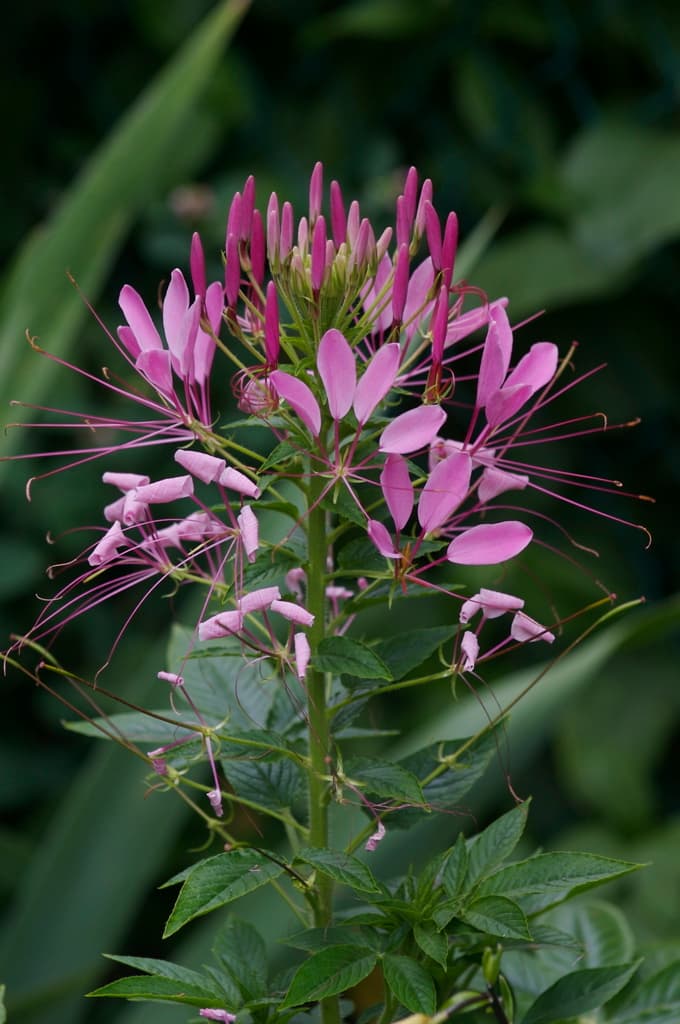
Queen Cleome
Cleome hassleriana 'Queen'
flowerQueen is the classic spider flower series of Cleome hassleriana, sending up dramatic 3 to 5 ft stems topped with airy, spidery flower heads of pink, rose, violet, or white all summer. The long, whisker-like stamens and seedpods give it its name, and its heat tolerance and self-seeding habit make it a low-care back-of-border annual and pollinator favorite.
☀️
Sun
full sun
💧
Water
Every 7 days
🌸
Bloom
~80 days
📊
Difficulty
easy
🌱
Lifecycle
annual
One season, then done
↔️
Spacing
12-18 in. apart
⬇️
Planting Depth
Press seed on surface (needs light)
🧪
Soil pH
6.0-7.0
Growing Details
Soil Type
Average, well-draining
Hardiness Zones
Zones 3 – 10
Grown as an annual. This range is its winter hardiness, but you can grow it for a single season in any zone.
When to Fertilize
Light feed at planting
Fertilizer
Balanced or compost; low needs
🌱 Growing Guide
Start seed indoors 6 to 8 weeks before the last frost or sow directly after frost, pressing the seed onto the surface since light is needed to germinate; a brief chill before sowing improves germination. Cleome wants full sun and average, well-drained soil and is happiest in lighter ground. Plants are heat- and drought-tolerant once established and need little care beyond staking in rich soil. Wear gloves when handling, as the stems bear small spines. It self-sows readily, so deadhead if you want to limit its spread.
🌼 Have a different variety?Cultivars of the same species usually share the same basic care, and they differ mainly in flower color, height, and bloom form, not in how you grow them. So this guide still applies even if your exact variety isn't the one shown.
Planting Calendar
Sign in to personalize →🌱
Start seeds indoors
Mar 4
🌿
Transplant outdoors
Apr 15
🌸
Projected first bloom
Jul 4
JJan
FFeb
MMar
AApr
MMay
JJun
JJul
AAug
SSep
OOct
NNov
DDec
✅ Plant alongside
Good neighbors that attract beneficial insects or deter pests
- Zinnia: Fills the mid-border below tall cleome and draws daytime butterflies and bees
- Cosmos: Shares lean soil and full sun while feeding bees and hoverflies
- Salvia: Adds nectar for bees and hummingbirds across the same long season
🛡️ Pest & disease prevention
Proactive ways to stop trouble before it starts. Tap a name with an arrow for its full guide
Cleome is seldom troubled; support resident ladybugs and lacewings and rinse off any clusters
Self-seeding
Deadhead spent heads before the pods ripen to keep volunteers in check the following spring
🌸 Blooms & cutting
Cut stems in the morning when about half the flowers on the head are open; wear gloves, as the stems carry small spines and the foliage is pungent. Deadhead to limit prolific self-seeding, or leave a few seedpods to let it return next year.
🥗 Nutrition & benefits
A long-blooming nectar source whose tall, airy flower heads feed bees and butterflies by day and are especially valuable to evening pollinators - hummingbird (hawk) moths and hummingbirds work the long-tubed blooms at dusk.
For educational and informational purposes only. HomeSown is not medical, health, or other professional advice. Always positively identify any plant before handling or eating it; some plants, and some parts of otherwise-edible plants, are toxic. Consult a qualified professional before consuming or otherwise using any plant, especially if you are pregnant, nursing, taking medication, or have a health condition.