Use with caution
True lilies (Lilium) are among the most dangerous plants for CATS: eating any part - a leaf, a petal, pollen groomed off the fur, or even drinking water from the vase - can cause fatal kidney failure within days, and there is no safe amount. Cats are uniquely sensitive. Keep this plant and its cut flowers out of any home or garden with cats. It is far less toxic to dogs (mostly mild stomach upset) and to people.
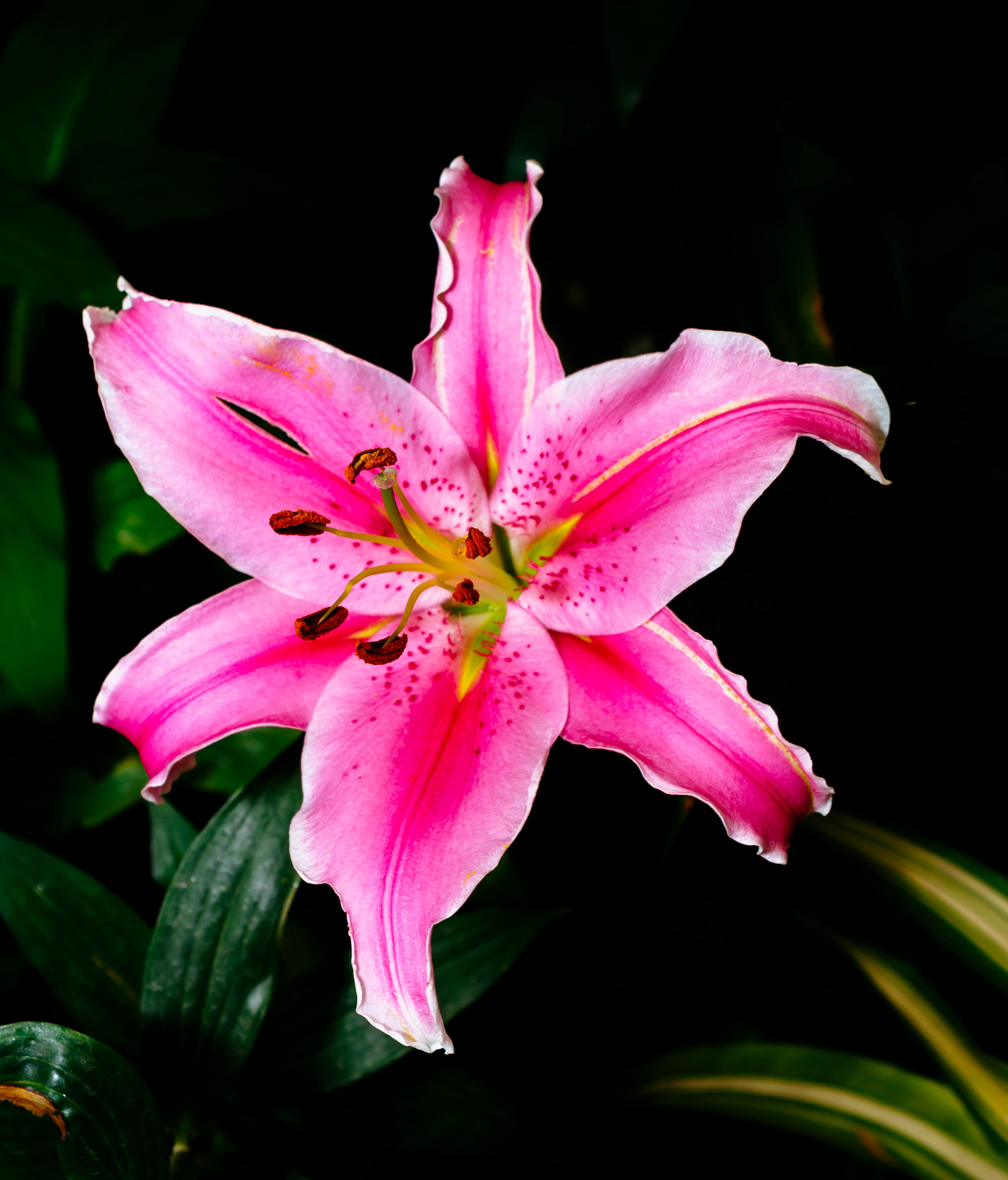
Stargazer Oriental Lily
Lilium 'Stargazer'
flowerStargazer is the most famous Oriental lily in the world, the flower that made upward-facing lilies popular. Each sturdy stem, about three feet tall, carries several enormous star-shaped flowers of vivid crimson-pink, heavily spotted and brushed with a white edge, and pours out an intense, sweet perfume that fills a garden or a room. It blooms in mid to late summer and is a premier cut flower. Lilies grow from true bulbs and return and multiply for years. One serious caution: every part of this and all true lilies is deadly toxic to cats, so it is best avoided in gardens and bouquets where cats roam.
☀️
Sun
full sun
💧
Water
Every 6 days
🌸
Bloom
~110 days
📊
Difficulty
easy
🌱
Lifecycle
perennial
Comes back every year
↔️
Spacing
8-12 in. apart
⬇️
Planting Depth
Plant bulbs 6-8 in. deep (about 3x bulb height); keep roots shaded and cool
🧪
Soil pH
6.0-7.0
Growing Details
Soil Type
Rich, well-draining
Hardiness Zones
Zones 3 – 9
When to Fertilize
At spring emergence and again when buds form
Fertilizer
Balanced or bulb fertilizer
🌱 Growing Guide
Plant lily bulbs in spring or fall, six to eight inches deep (about three times the height of the bulb) and eight to twelve inches apart, in rich, well-drained soil. The classic rule is to give lilies their heads in the sun and their feet in the shade: full sun on the flowers but cool, shaded, mulched roots, so underplant with low perennials. They are hardy in zones 3 to 9. Stake tall stems if needed, and water in dry spells while in growth. After bloom, deadhead the spent flowers but leave the stem and leaves to ripen and feed the bulb. Remove and destroy the bright red lily leaf beetle and its larvae on sight, as they can strip a plant.
🌼 Have a different variety?Cultivars of the same species usually share the same basic care, and they differ mainly in flower color, height, and bloom form, not in how you grow them. So this guide still applies even if your exact variety isn't the one shown.
Planting Calendar
Sign in to personalize →🌿
Direct sow
Apr 15
🌸
Projected first bloom
Aug 3
JJan
FFeb
MMar
AApr
MMay
JJun
JJul
AAug
SSep
OOct
NNov
DDec
✅ Plant alongside
Good neighbors that attract beneficial insects or deter pests
- Hosta: Its broad leaves shade and cool the lily roots while the lily flowers rise above into the sun
- Daylily: Shares the bed and helps shade the lily roots, though it is a different plant entirely despite the name
- Bee Balm: A pollinator partner of similar height that flowers alongside it in mid to late summer
🛡️ Pest & disease prevention
Proactive ways to stop trouble before it starts. Tap a name with an arrow for its full guide
The bright red beetles and their larvae can defoliate a plant - handpick adults, eggs, and larvae from leaf undersides daily during the season
Cluster on buds and can spread virus - rinse off and encourage ladybugs
Botrytis spots leaves in wet weather; give airflow, avoid overhead watering, and remove affected foliage
🌸 Blooms & cutting
Stargazer is a top-tier cut flower - cut stems in the cool morning when the lowest buds are just opening and the upper ones still show color, taking no more than a third of the stem so enough leaves remain to feed the bulb. To keep pollen from staining clothes and furniture (and to make blooms last longer), pinch off the orange anthers as flowers open. One vital warning: lilies are fatally toxic to cats, including the pollen and even the vase water, so never bring cut lilies into a home with cats.
🥗 Nutrition & benefits
An ornamental bulb grown for its dramatic, intensely fragrant flowers and as a premier cut flower. Bees and butterflies visit the open blooms, but its standout trait is perfume and cut-flower value - tempered by the serious warning that it is deadly to cats.
⚠️ Toxicity & safety
True lilies (Lilium) are among the most dangerous plants for CATS: eating any part - a leaf, a petal, pollen groomed off the fur, or even drinking water from the vase - can cause fatal kidney failure within days, and there is no safe amount. Cats are uniquely sensitive. Keep this plant and its cut flowers out of any home or garden with cats. It is far less toxic to dogs (mostly mild stomach upset) and to people.
For educational and informational purposes only. HomeSown is not medical, health, or other professional advice. Always positively identify any plant before handling or eating it; some plants, and some parts of otherwise-edible plants, are toxic. Consult a qualified professional before consuming or otherwise using any plant, especially if you are pregnant, nursing, taking medication, or have a health condition.