Birch Skeletonizer
Bucculatrix canadensisella
A tiny native moth whose caterpillars skeletonize birch leaves in late summer, eating away the soft tissue and leaving a fine lacework of veins. It is mostly a cosmetic pest of otherwise healthy birches, but heavy years can brown the canopy and cause early leaf drop.
🔎 How to spot it
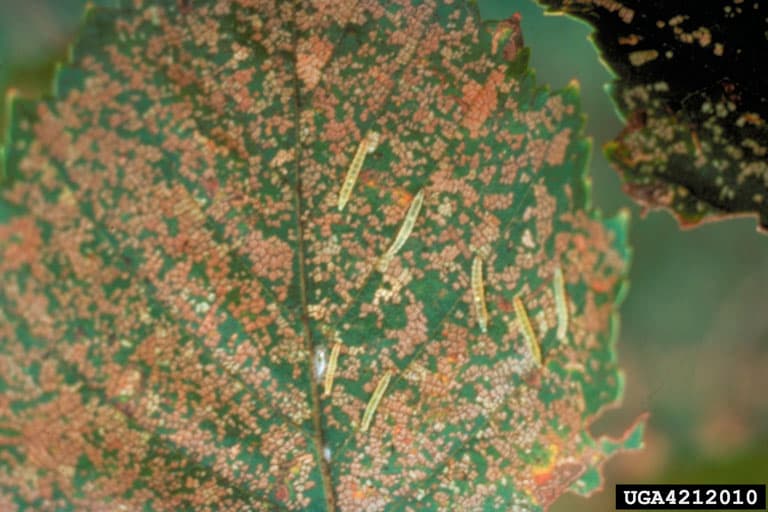
The moth is small, with a wingspan of about a quarter inch (6 to 9 mm), brown with pale white bands across the forewings and gray, heavily fringed hind wings. The young caterpillars are leaf miners hidden inside the leaf; older caterpillars are tiny pale green to yellowish larvae feeding on the leaf underside. Look for small white silken mats on the leaves where the caterpillars stop to molt, and for tiny ribbed cocoons in the leaf litter below.
🥀 Damage it causes
The first, mining stage makes small blotches inside the leaf; the later stages skeletonize the underside, eating everything but the network of veins so leaves turn brown and lacy. Damage shows up mainly in mid to late summer and looks alarming, and a heavy infestation can cause premature leaf drop, but established birches tolerate it and refoliate normally the next spring.
🛡️ Prevent it
Keep birches vigorous with adequate water and mulch, since stressed trees show damage more and recover more slowly. Because the pupae overwinter in the fallen leaves, raking up and destroying the leaf litter beneath the tree in autumn removes much of next years population and is the main home control. Before treating, confirm the lacy, skeletonized leaves are from this insect and not drought or a leaf disease.
🧯 If it is already here
On most landscape birches no spray is needed because the damage is late-season and cosmetic and the tree is not threatened. Where control is wanted on small or high-value trees, target the young exposed caterpillars in mid to late summer with a product such as spinosad or an insecticidal soap with thorough underside coverage; raking and destroying the leaves remains the simplest long-term measure.
💡 Good to know
There is one generation a year, and the insect spends the winter as pupae in cocoons in the leaf litter, with moths emerging in early summer. White, paper, and gray birches are the usual hosts. The lacy, brown leaves resemble drought scorch or fungal leaf spot, so check the underside for the fine skeletonizing and the little white molting mats to be sure.

For educational and informational purposes only. Pest control advice is general guidance drawn from university cooperative extension sources; always identify a pest positively and read and follow the label on any product before use, especially around food crops, children, and pets.