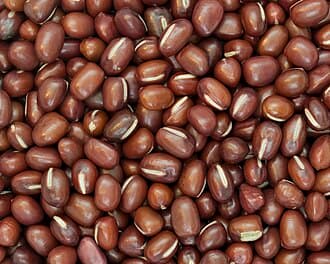
Adzuki Bean
Vigna angularis
vegetableAdzuki bean is the small red Asian bean (Vigna angularis) widely grown in Japan, China, and Korea for sweet bean paste (anko), red bean rice, and traditional Asian desserts. The annual vine produces clusters of pods filled with shiny 5 mm red beans with a chestnut-like sweetness, lower in cooking time than most dry beans and easier to digest.
☀️
Sun
full sun
💧
Water
Every 3 days
🌾
Harvest
~120 days
📊
Difficulty
medium
🌱
Lifecycle
annual
One season, then done
↔️
Spacing
4-6 in in row, 18-24 in between rows
⬇️
Planting Depth
1 in
🧪
Soil pH
6.0-7.0
Growing Details
Soil Type
Average, well-draining
Hardiness Zones
Zones 4 – 10
Grown as an annual. This range is its winter hardiness, but you can grow it for a single season in any zone.
When to Fertilize
Light pre-plant feed only; do not fertilize once flowering
Fertilizer
Low-nitrogen 5-10-10 pre-plant
🌱 Growing Guide
Sow seeds directly after all frost danger has passed and soil reaches 60F. Plant 1 in deep, 4 to 6 in apart in rows 18 to 24 in apart. Adzuki is a bush type that does not need staking. The plant fixes its own nitrogen via root nodules, so do not over-fertilize. Days to maturity range from 60 (early varieties like Wase) to 120 (full-season selections); short-season gardeners should pick early varieties.
Planting Calendar
Sign in to personalize →🌿
Direct sow
Apr 29
🌾
Projected first harvest
Aug 27
JJan
FFeb
MMar
AApr
MMay
JJun
JJul
AAug
SSep
OOct
NNov
DDec
✅ Plant alongside
Good neighbors that attract beneficial insects or deter pests
- Carrots: Different root depth and the bean nitrogen fixation supports carrot growth
- Cucumbers: Live well together and the bean fixes nitrogen that cucumbers use
- Marigolds: Suppress nematodes in the root zone
- Summer Savory: Improves bean flavor and reputed to repel bean beetles
❌ Keep away from
OnionGarlic
🛡️ Pest & disease prevention
Proactive ways to stop trouble before it starts. Tap a name with an arrow for its full guide
Hand-pick adults and crush yellow egg masses under leaves; encourage Pediobius wasp parasitoids
Blast with water, encourage ladybugs and lacewings, avoid heavy nitrogen
Water at the base, rotate beans out for 2 years, and remove infected plants promptly
Mist foliage in dry weather, hose down dusty leaves, and encourage predatory mites
🌾 Harvest & storage
Harvest adzuki when the pods turn dry and brown and the seeds rattle inside, about 100 to 120 days from sowing for a full-season type, though early selections can finish nearer 90. Cut whole plants at the base and hang to finish drying for 1 to 2 weeks in a warm airy place, then thresh by hand or by tumbling in a sack. Store finished beans below 16 percent moisture in airtight jars, and properly dried adzuki keep 2 to 3 years.
🥗 Nutrition & benefits
About 128 calories per 100 g cooked with 7.3 g fiber, 7.5 g protein, 532 mg potassium, and high levels of folate, iron, and magnesium. Adzuki is also one of the most digestible dry beans, with lower flatulence-causing oligosaccharides than navy or pinto.
For educational and informational purposes only. HomeSown is not medical, health, or other professional advice. Always positively identify any plant before handling or eating it; some plants, and some parts of otherwise-edible plants, are toxic. Consult a qualified professional before consuming or otherwise using any plant, especially if you are pregnant, nursing, taking medication, or have a health condition.