Aronia
Aronia melanocarpa 'Viking'
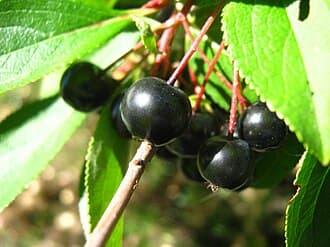
fruitViking Aronia (Black Chokeberry) is a hardy native US shrub with one of the highest antioxidant levels of any fruit on Earth. The 6 to 8 ft upright bushes produce abundant white spring flowers followed by clusters of deep blue-black berries with a tart astringent flavor that mellows beautifully in juice, jam, syrup, and wine. The glossy summer foliage turns flame orange-red in fall.
☀️
Sun
full sun
💧
Water
Every 5 days
🌾
Harvest
~24 months
to first harvest
📊
Difficulty
easy
🌱
Lifecycle
perennial
Comes back every year
↔️
Spacing
4-6 ft in row, 6-8 ft between rows
⬇️
Planting Depth
Same depth as nursery container
🧪
Soil pH
5.5-7.0
Growing Details
Soil Type
Average
Hardiness Zones
Zones 3 – 8
When to Fertilize
Light feed in early spring
Fertilizer
Compost; 10-10-10 only if growth is weak
🌱 Growing Guide
Plant in full sun for best fruit production (tolerates partial shade). Aronia thrives on a wide range of soils from sandy to clay, wet to dry, and tolerates pH 4.5 to 7.0. Hardy in zones 3 to 8. Self-pollinating, so a single bush bears, though planting two boosts yield. Set at nursery depth; space 4 to 6 ft apart for an edible hedge. Production begins in year 2 and reaches 5 gallons per mature bush by year 3.
Planting Calendar
Sign in to personalize →🌿
Direct sow
Apr 15
🌾
Projected first harvest
Aug 23 · Year 3
JJan
FFeb
MMar
AApr
MMay
JJun
JJul
AAug
SSep
OOct
NNov
DDec
Year 1
✅ Plant alongside
Good neighbors that attract beneficial insects or deter pests
- Garlic: Sulfur compounds discourage aphids
- Comfrey: Mineral-mining mulch returns potassium to surface roots
- White Clover: Nitrogen-fixing living mulch in the aisles
- Yarrow: Attracts beneficial parasitic wasps
🛡️ Pest & disease prevention
Proactive ways to stop trouble before it starts. Tap a name with an arrow for its full guide
Hand-pick adults into soapy water; never use pheromone traps
Aronia is more astringent than blueberries, so birds bother it less, but netting helps in heavy bird pressure
Blast with water, encourage ladybugs and lacewings
Site for airflow; rarely a serious problem on Aronia
🌾 Harvest & storage
Viking Aronia ripens in late summer (August into September). Look for deep blue-black color with no red tint; red means underripe. Harvest by grabbing a cluster and dragging fingers down the stem; ripe berries strip easily. Berries hang on the bush long after ripening and sweeten with the first frost, so leave some for later picking. Fresh berries are astringent for eating; process into juice, jam, wine, or freeze for smoothies and baking.
🥗 Nutrition & benefits
About 47 calories per 100 g with 5.6 g fiber, 21 mg vitamin C, and the highest measured anthocyanin content of any temperate fruit (about 1500 mg per 100 g, several times that of blueberries). Studies of aronia extract have shown notable effects on blood pressure, blood sugar regulation, and cardiovascular markers.
For educational and informational purposes only. HomeSown is not medical, health, or other professional advice. Always positively identify any plant before handling or eating it; some plants, and some parts of otherwise-edible plants, are toxic. Consult a qualified professional before consuming or otherwise using any plant, especially if you are pregnant, nursing, taking medication, or have a health condition.