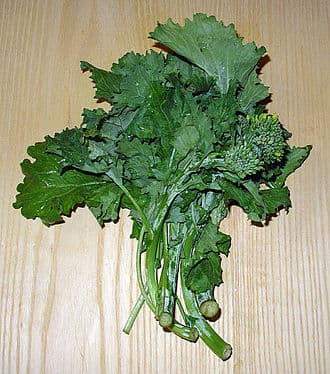
Broccoli Rabe
Brassica rapa subsp. rapa 'Sessantina Grossa'
vegetableBroccoli rabe, or rapini, is a fast Italian green grown for its leafy shoots and small, broccoli-like flower buds rather than a head, with a pleasantly pungent, mustardy bitterness. A cool-season brassica, it can mature in as little as 5 to 6 weeks and is harvested young while the buds are still tight.
☀️
Sun
full sun
💧
Water
Every 2 days
🌾
Harvest
~45 days
📊
Difficulty
easy
🌱
Lifecycle
annual
One season, then done
↔️
Spacing
6-8 in. apart
⬇️
Planting Depth
1/4-1/2 in.
🧪
Soil pH
6.0-7.5
Growing Details
Soil Type
Rich, well-draining
Hardiness Zones
Zones 3 – 10
Grown as an annual. This range is its winter hardiness, but you can grow it for a single season in any zone.
When to Fertilize
At planting, then every 3-4 weeks
Fertilizer
Nitrogen-rich
🌱 Growing Guide
Direct sow in the cool weather of spring or fall in fertile, moist, well-drained soil in full sun to light shade, enriched with a couple inches of compost. Keep moisture even and grow it through the cool season, since warm temperatures make it bolt quickly into flower.
Planting Calendar
Sign in to personalize →spring planting
🌿
Direct sow
Apr 1
🌾
Projected first harvest
May 16
fall planting
🌿
Direct sow
Aug 25
🌾
Projected first harvest
Oct 9
JJan
FFeb
MMar
AApr
MMay
JJun
JJul
AAug
SSep
✅ Plant alongside
Good neighbors that attract beneficial insects or deter pests
- Dill: Attracts wasps that prey on cabbage worms
- Onions: Scent helps mask the crop from pests
- Sweet Alyssum: Draws aphid-eating hoverflies
- Nasturtium: Trap crop for aphids and flea beetles
❌ Keep away from
StrawberryTomato
🛡️ Pest & disease prevention
Proactive ways to stop trouble before it starts. Tap a name with an arrow for its full guide
Row cover seedlings, which shot-hole the leaves
Handpick, use row cover, and apply Bt if needed
Hose off colonies and encourage beneficial insects with flowers
🌾 Harvest & storage
Cut the shoots when the buds have formed but before the yellow flowers open, usually 40 to 50 days from sowing, taking the top 6 to 8 inches of tender stem. Cutting the main shoot prompts tender side shoots, so the plant can be picked two or three times in cool weather.
🥗 Nutrition & benefits
Broccoli rabe is low in calories and high in vitamins A, C, and K, with folate and the glucosinolate compounds typical of cruciferous greens that are studied for their health benefits.
For educational and informational purposes only. HomeSown is not medical, health, or other professional advice. Always positively identify any plant before handling or eating it; some plants, and some parts of otherwise-edible plants, are toxic. Consult a qualified professional before consuming or otherwise using any plant, especially if you are pregnant, nursing, taking medication, or have a health condition.