Use with caution
All parts of caladium contain insoluble calcium oxalate crystals and are poisonous. Biting into the plant causes intense burning and swelling of the lips, mouth, and tongue, and can bring on nausea and vomiting; the sap also irritates skin. It is toxic to cats, dogs, and horses, and large ingestions by pets or livestock can be fatal. Wear gloves to handle it and keep it away from children and animals.
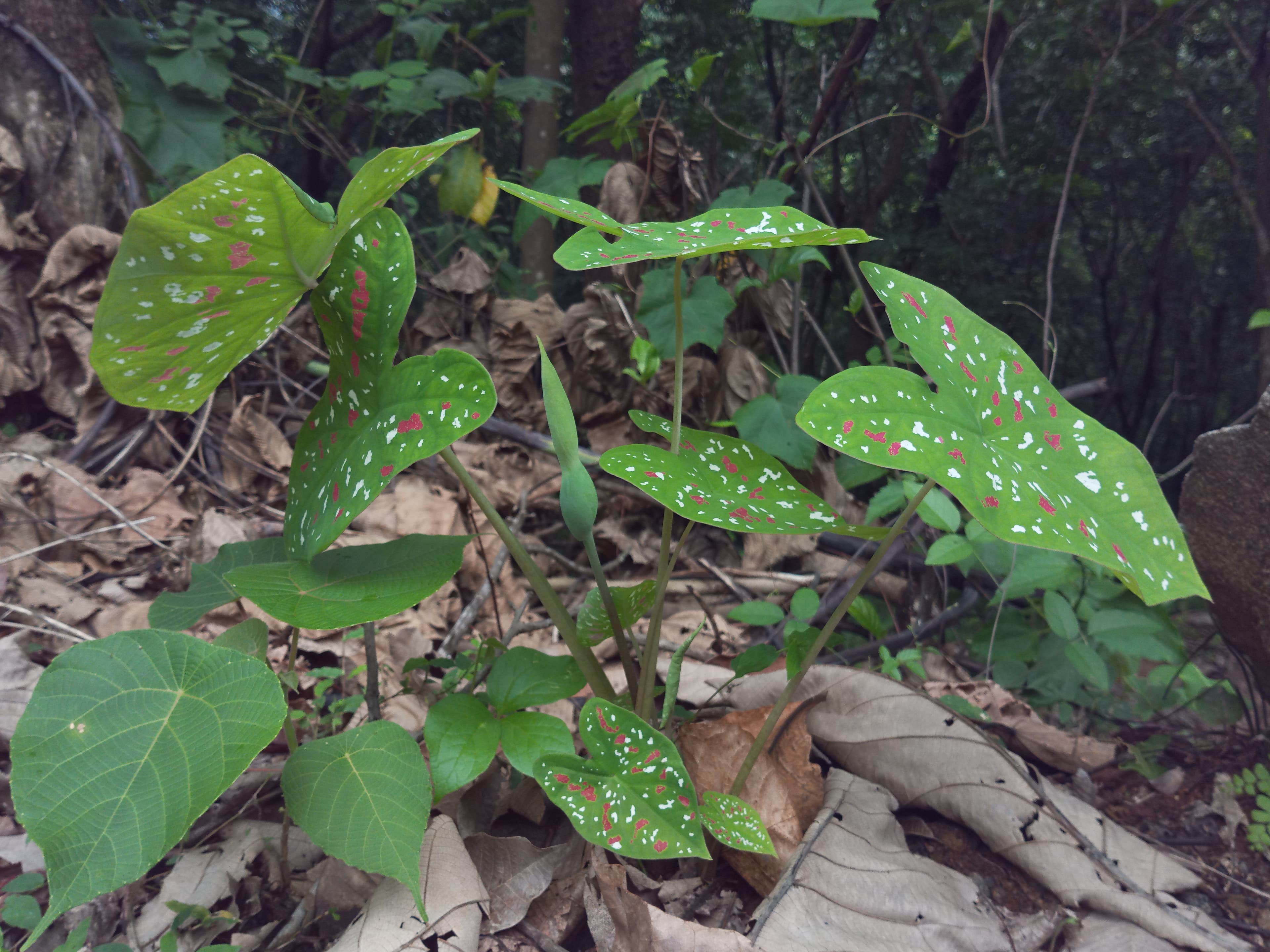
Caladium
Caladium bicolor
flowerCaladium (Caladium bicolor) is a tropical, tuberous plant grown not for flowers but for its spectacular large, arrowhead-shaped leaves splashed and veined in white, pink, red, and green. Reaching 1 to 2 ft, it lights up shady beds, borders, and containers with a lush, tropical feel where flowering plants struggle. Hardy only in zones 9 and warmer, it is grown as a summer annual or container plant elsewhere, with the tubers lifted and stored over winter. Its tiny flowers are insignificant.
☀️
Sun
partial shade
💧
Water
Every 3 days
🌸
Bloom
~60 days
📊
Difficulty
easy
🌱
Lifecycle
tender perennial
Perennial in warm zones; grown as an annual where winters freeze
↔️
Spacing
12-18 in apart
⬇️
Planting Depth
Plant tubers 1-2 in deep, knobby side up, in warm soil
🧪
Soil pH
5.5-6.5
Growing Details
Soil Type
Fertile, acidic, organic-rich, moist
Hardiness Zones
Zones 3 – 11
When to Fertilize
Regular feeding through the growing season
Fertilizer
Balanced general-purpose fertilizer
🌱 Growing Guide
Grow caladium in partial to deep shade in fertile, acidic, organic-rich, well-drained soil. It is a heat lover and a water guzzler, needing warm soil to start and abundant, consistent moisture all summer; do not plant the tubers out until the soil is thoroughly warm. Start tubers indoors a few weeks early for a head start, planting them knobby side up. Feed regularly during growth. The leaves are brittle, so site plants out of strong wind. In fall, after the first frost knocks back the foliage in cold zones, dig the tubers, dry them, and store in peat or wood shavings at 45 F or warmer.
🌼 Have a different variety?Cultivars of the same species usually share the same basic care, and they differ mainly in flower color, height, and bloom form, not in how you grow them. So this guide still applies even if your exact variety isn't the one shown.
Planting Calendar
Sign in to personalize →🌱
Start seeds indoors
Mar 4
🌿
Transplant outdoors
Apr 29
🌸
Projected first bloom
Jun 28
JJan
FFeb
MMar
AApr
MMay
JJun
JJul
AAug
SSep
OOct
NNov
DDec
✅ Plant alongside
Good neighbors that attract beneficial insects or deter pests
- Hosta: A shade perennial whose bold leaves complement caladium foliage
- Impatiens: Adds flower color in the same moist shade
- Fern: A fine-textured shade companion that sets off the broad caladium leaves
🛡️ Pest & disease prevention
Proactive ways to stop trouble before it starts. Tap a name with an arrow for its full guide
🌸 Blooms & cutting
Caladium is grown for foliage, not harvest. The key seasonal task is overwintering in cold climates: after frost, lift the tubers, let them dry, and store them in peat or wood shavings at 45 F or warmer to replant next spring. The colorful leaves can also be cut for arrangements; wear gloves, as the sap is irritating.
🥗 Nutrition & benefits
Caladium is an ornamental foliage plant, not edible, and all parts are poisonous. Its value is brilliant, tropical leaf color that thrives in shade where flowers fail, lifting borders and containers all summer. Have a different variety? Cultivars of the same species share the same basic care, so this guide still applies even if your exact leaf pattern is not shown.
⚠️ Toxicity & safety
All parts of caladium contain insoluble calcium oxalate crystals and are poisonous. Biting into the plant causes intense burning and swelling of the lips, mouth, and tongue, and can bring on nausea and vomiting; the sap also irritates skin. It is toxic to cats, dogs, and horses, and large ingestions by pets or livestock can be fatal. Wear gloves to handle it and keep it away from children and animals.
For educational and informational purposes only. HomeSown is not medical, health, or other professional advice. Always positively identify any plant before handling or eating it; some plants, and some parts of otherwise-edible plants, are toxic. Consult a qualified professional before consuming or otherwise using any plant, especially if you are pregnant, nursing, taking medication, or have a health condition.