Toxic if eaten
WARNING: every part of Carolina jessamine - leaves, flowers, stems, roots, sap, and seeds - is highly poisonous, containing potent alkaloids. Eating any part can cause sweating, muscle weakness, dilated pupils, lowered body temperature, convulsions, and even respiratory failure. The nectar and pollen are also toxic to honeybees. Site it away from children, pets, and grazing animals, and do not confuse the flowers with edible honeysuckle.
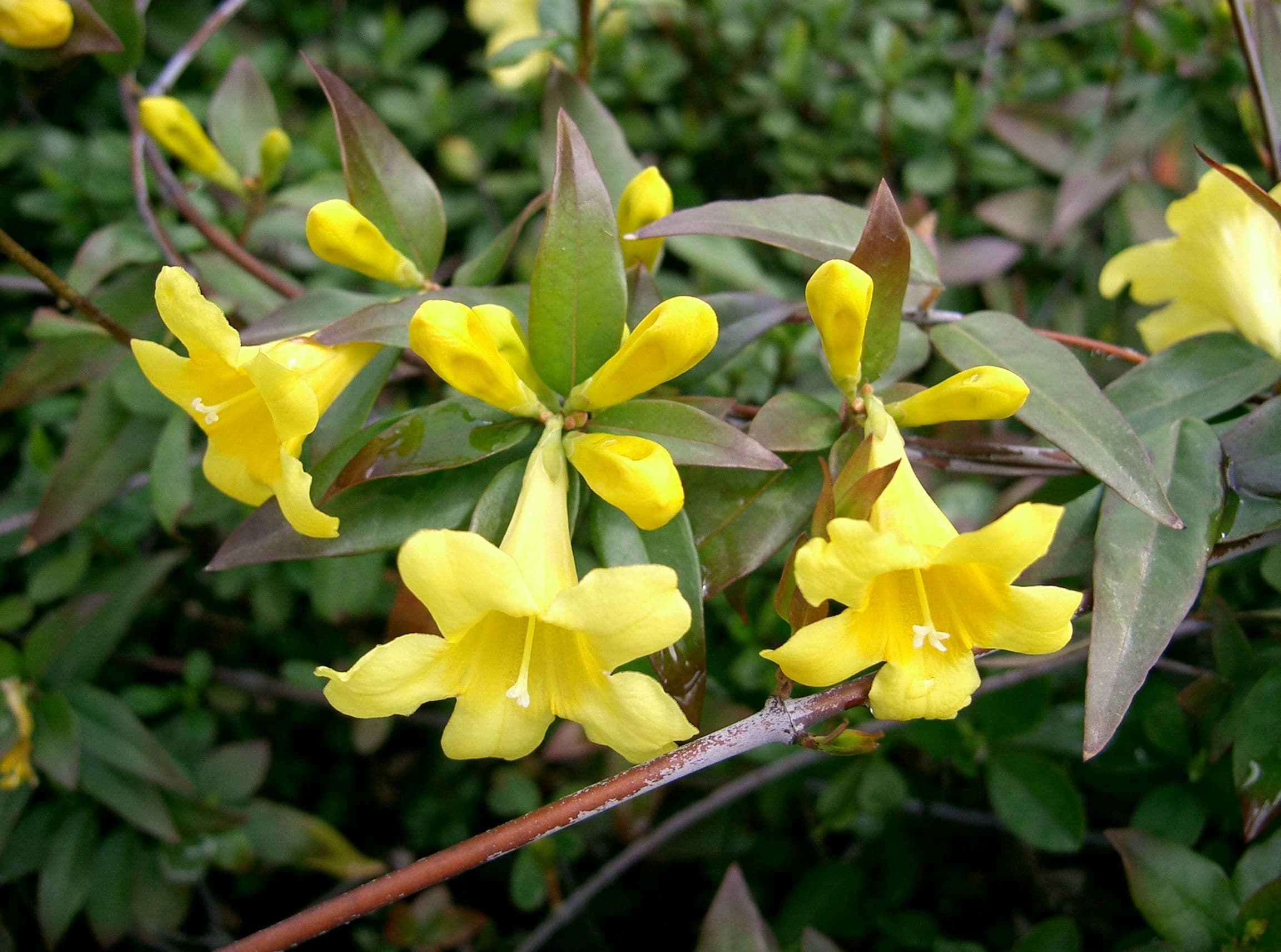
Carolina Jessamine
Gelsemium sempervirens
flowerCarolina jessamine (Gelsemium sempervirens) is a native evergreen twining vine of the Southeast and the state flower of South Carolina. In late winter and early spring it covers itself in fragrant, bright yellow trumpet flowers, with a lighter rebloom sometimes in fall, against fine, glossy, dark green leaves that bronze in winter. Trained on a support it climbs 10 to 20 ft; unsupported it makes a billowing groundcover. It is easy and beautiful, but its serious drawback is that the entire plant is highly poisonous.
☀️
Sun
full sun
💧
Water
Every 7 days
🌸
Bloom
~60 days
📊
Difficulty
easy
🌱
Lifecycle
perennial
Comes back every year
↔️
Spacing
4-8 ft apart
⬇️
Planting Depth
Set at the same depth as the nursery pot
🧪
Soil pH
5.5-7.0
Growing Details
Soil Type
Rich, well-drained
Hardiness Zones
Zones 6 – 10
When to Fertilize
Light feeding in spring after bloom
Fertilizer
Balanced general-purpose fertilizer
🌱 Growing Guide
Grow Carolina jessamine in full sun for the heaviest bloom, though it tolerates part shade, in rich, well-drained soil; it adapts to a wide pH and even handles occasional wet or dry spells. Hardy in zones 6 to 10, it is evergreen in the South and semi-evergreen at its northern edge. Give it a trellis, arbor, fence, or post to twine up, or let it sprawl as a groundcover. It is low-maintenance and largely pest-free. Prune right after the late-winter to spring bloom to control size and shape. Always wear gloves and wash up afterward, since all parts are toxic.
🌼 Have a different variety?Cultivars of the same species usually share the same basic care, and they differ mainly in flower color, height, and bloom form, not in how you grow them. So this guide still applies even if your exact variety isn't the one shown.
Planting Calendar
Sign in to personalize →🌿
Direct sow
Apr 15
🌸
Projected first bloom
Jun 14
JJan
FFeb
MMar
AApr
MMay
JJun
JJul
AAug
SSep
OOct
NNov
DDec
✅ Plant alongside
Good neighbors that attract beneficial insects or deter pests
- Clematis: A flowering vine that can share a large support for extended bloom
- Climbing Rose: Pairs on an arbor with complementary spring flowers
- Coral Honeysuckle: A native vine for a wildlife-friendly mixed screen
🛡️ Pest & disease prevention
Proactive ways to stop trouble before it starts. Tap a name with an arrow for its full guide
🌸 Blooms & cutting
Carolina jessamine is grown as an ornamental and should NOT be cut for anything edible or brought near food, since all parts are poisonous. The only seasonal task is to prune right after the spring bloom to shape it and keep it in bounds, wearing gloves and washing hands afterward. Do not let prunings end up where animals might graze them.
🥗 Nutrition & benefits
Carolina jessamine is an ornamental, not edible - in fact every part is highly poisonous, and even its nectar is toxic to honeybees. Its garden value is fragrant, early yellow bloom and evergreen cover on fences and arbors. Grow it strictly as an ornamental, well away from children, pets, and livestock. Have a different variety? Cultivars of the same species share the same basic care, so this guide still applies even if your exact form is not shown.
⚠️ Toxicity & safety
WARNING: every part of Carolina jessamine - leaves, flowers, stems, roots, sap, and seeds - is highly poisonous, containing potent alkaloids. Eating any part can cause sweating, muscle weakness, dilated pupils, lowered body temperature, convulsions, and even respiratory failure. The nectar and pollen are also toxic to honeybees. Site it away from children, pets, and grazing animals, and do not confuse the flowers with edible honeysuckle.
For educational and informational purposes only. HomeSown is not medical, health, or other professional advice. Always positively identify any plant before handling or eating it; some plants, and some parts of otherwise-edible plants, are toxic. Consult a qualified professional before consuming or otherwise using any plant, especially if you are pregnant, nursing, taking medication, or have a health condition.