Use with caution
Chaparral is grown as an ornamental desert shrub and is safe to handle, but it must NOT be eaten or taken internally. The US FDA issued a public warning in 1992 after chaparral (creosote bush) was linked to serious liver damage, including cases of acute liver failure; it had been removed from the GRAS safe list in 1968. Do not consume chaparral or use it as an herbal tea or supplement.
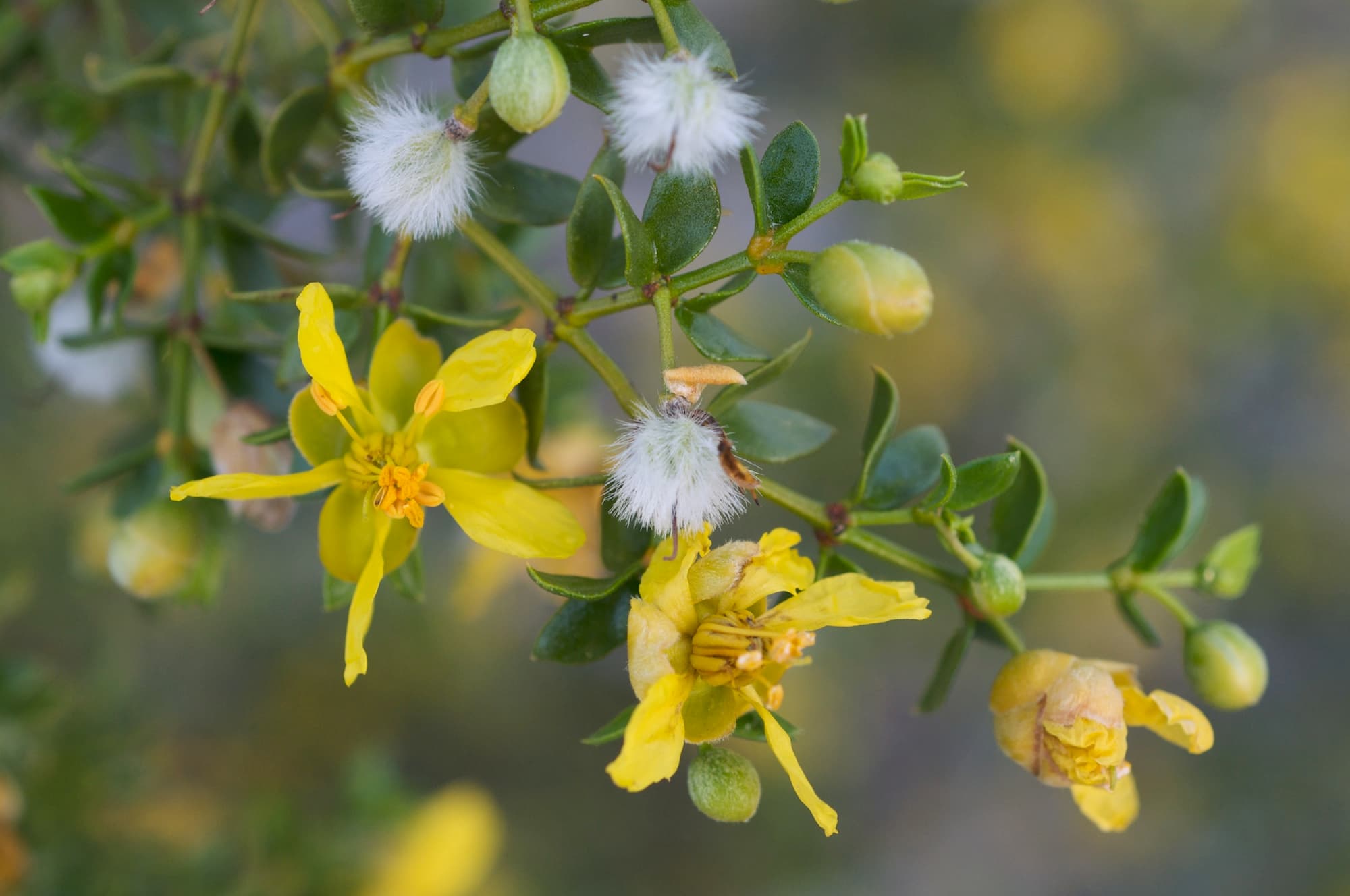
Chaparral
Larrea tridentata
treeChaparral, or creosote bush (Larrea tridentata), is the defining evergreen shrub of the hot North American deserts - the Mojave, Sonoran, and Chihuahuan - a 3 to 10 ft bush of small, resinous, olive-green leaflets that smell unmistakably of "rain on the desert" when wet. It is one of the oldest living things on Earth: clonal rings of creosote in the Mojave are estimated at thousands of years old. Astonishingly drought-, heat-, and salt-tolerant, it carries small yellow flowers on and off through the year. Its resinous leaves are a famous traditional desert herb - but one carrying a real safety caution, as internal use has been linked to liver concerns and is discouraged by the FDA.
☀️
Sun
full sun
💧
Water
Every 30 days
🌾
Harvest
~60 days
📊
Difficulty
medium
🌱
Lifecycle
perennial
Comes back every year
↔️
Spacing
4-8 ft apart
⬇️
Planting Depth
Set root ball at soil line in gritty, fast-draining soil
🧪
Soil pH
6.5-8.5
Growing Details
Soil Type
Rocky, sandy, alkaline, sharply draining
Hardiness Zones
Zones 6 – 10
When to Fertilize
None needed
Fertilizer
None; thrives on poor desert soil
🌱 Growing Guide
Creosote bush is a true desert plant: give it full sun, fierce heat, and rocky, sandy, sharply drained, even alkaline soil, and then leave it almost entirely alone. It is exceptionally drought-tolerant once established and actually resents rich soil and regular water, which can rot it. Plant in spring in the hottest, driest, best-drained spot you have; water sparingly only to establish, then rarely. It is slow-growing and extremely long-lived. Outside hot, dry climates (roughly zones 6 to 10 in arid regions) it is difficult, as it cannot abide cold, wet, humid conditions. In the desert garden it is care-free.
Planting Calendar
Sign in to personalize →🌿
Direct sow
Apr 29
🌾
Projected first harvest
Jun 28
JJan
FFeb
MMar
AApr
MMay
JJun
JJul
AAug
SSep
OOct
NNov
DDec
✅ Plant alongside
Good neighbors that attract beneficial insects or deter pests
- Brittlebush: A fellow desert shrub that shares the hot, dry, rocky conditions
- Desert Marigold: A heat- and drought-tough wildflower for the same arid ground
- Agave: A sculptural desert succulent suited to the sharp drainage and full sun
🛡️ Pest & disease prevention
Proactive ways to stop trouble before it starts. Tap a name with an arrow for its full guide
No serious pests
Creosote bush is remarkably pest- and disease-free; its resinous, aromatic foliage deters most herbivores and insects
The one real danger - it comes from overwatering or poor drainage, so keep it dry and sharply drained
Cold/wet damage
Not a pest but a limit; it suffers in cold, humid, or wet climates outside true desert conditions
🌾 Harvest & storage
Snip the small resinous leaves and twigs any time, especially after a rain when the aromatic resin is strongest; they are traditionally dried for external use only. State the caution plainly: internal use of chaparral has been associated with liver toxicity and the FDA has warned against it, so it is used externally if at all, not brewed as a casual tea. Harvest lightly from the long-lived shrub. The intense desert-rain scent on dried leaves is its signature.
🥗 Nutrition & benefits
Chaparral is not a food and carries a clear safety caution: its resinous leaves have a long traditional use in the desert Southwest, but internal use has been linked to liver toxicity and is discouraged by the FDA, so modern use is external at most. The shrub's real wonders are botanical - its astonishing drought endurance, its great age, and the unforgettable scent of creosote leaves after desert rain.
⚠️ Toxicity & safety
Chaparral is grown as an ornamental desert shrub and is safe to handle, but it must NOT be eaten or taken internally. The US FDA issued a public warning in 1992 after chaparral (creosote bush) was linked to serious liver damage, including cases of acute liver failure; it had been removed from the GRAS safe list in 1968. Do not consume chaparral or use it as an herbal tea or supplement.
For educational and informational purposes only. HomeSown is not medical, health, or other professional advice. Always positively identify any plant before handling or eating it; some plants, and some parts of otherwise-edible plants, are toxic. Consult a qualified professional before consuming or otherwise using any plant, especially if you are pregnant, nursing, taking medication, or have a health condition.