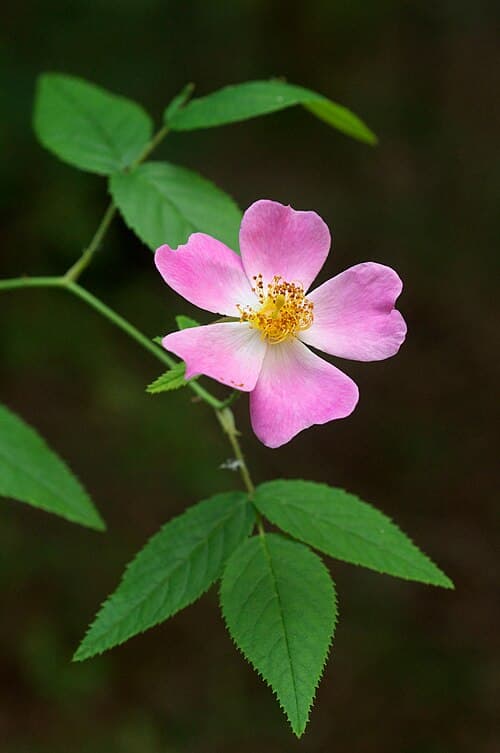
Climbing Prairie Rose
Rosa setigera
flowerA vigorous native climbing rose of the prairies and thickets, Rosa setigera bears clusters of single, five-petaled pink flowers with bright yellow stamens in early summer that soften to white as they age, followed by small bristly red hips. Arching canes can reach ten to fifteen feet on a support, making it a natural for training up walls, fences, and trellises, and it carries far better disease resistance than most hybrid roses.
☀️
Sun
full sun
💧
Water
Every 7 days
🌸
Bloom
~14 months
to first bloom
📊
Difficulty
easy
🌱
Lifecycle
perennial
Comes back every year
↔️
Spacing
4-6 ft. apart
⬇️
Planting Depth
Set crown at soil level
🧪
Soil pH
6.0-6.5
Growing Details
Soil Type
Well-drained
Hardiness Zones
Zones 4 – 9
When to Fertilize
Early spring as growth begins
Fertilizer
Balanced rose or all-purpose fertilizer; compost
🌱 Growing Guide
Plant in full sun for the best bloom and disease resistance, in well-drained soil; once established it tolerates dry spells and a wide range of soils. Give it a sturdy trellis, fence, or wall to climb and tie in the long canes as they grow. Cut stems back in early spring to encourage branching and flowering, and remove the oldest canes to renew the plant. It blooms once, in early summer, on growth made the previous season, so prune right after flowering if you need to shape it.
🌼 Have a different variety?Cultivars of the same species usually share the same basic care, and they differ mainly in flower color, height, and bloom form, not in how you grow them. So this guide still applies even if your exact variety isn't the one shown.
✅ Plant alongside
Good neighbors that attract beneficial insects or deter pests
- Garlic: Its scent helps repel aphids and deter many rose pests
- Lavender: Draws pollinators and may deter aphids with its strong scent
- Catmint: A classic rose underplanting that pulls in bees and masks the roses from pests
- Marigold: Deters nematodes and brings in hoverflies that eat aphids
🛡️ Pest & disease prevention
Proactive ways to stop trouble before it starts. Tap a name with an arrow for its full guide
Blast colonies off with water and encourage ladybugs and lacewings; avoid excess nitrogen that fuels the soft growth they favor
Handpick into soapy water in the cool morning; do not hang lure traps, which draw still more beetles in
Give full sun and good airflow, water at the base rather than overhead, and clear fallen leaves; this species resists disease better than hybrid roses
🌸 Blooms & cutting
Cut flowering sprays in the cool morning just as the buds open for the vase, though the single blooms are short-lived once cut. Leave spent flowers in place to set the bristly red hips, which color in fall, feed the birds, and can be gathered after the first frost for teas and jellies.
🥗 Nutrition & benefits
Grown as an ornamental climber and a pollinator plant whose open flowers are an easy landing pad for native bees. The bristly red hips that follow are rich in vitamin C and can be steeped for tea or cooked into jelly once softened by frost.
For educational and informational purposes only. HomeSown is not medical, health, or other professional advice. Always positively identify any plant before handling or eating it; some plants, and some parts of otherwise-edible plants, are toxic. Consult a qualified professional before consuming or otherwise using any plant, especially if you are pregnant, nursing, taking medication, or have a health condition.