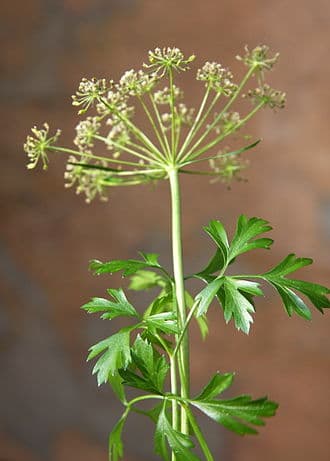
Curly Parsley
Petroselinum crispum 'Moss Curled'
herbCurly parsley is the tightly ruffled, deep-green form of the classic biennial herb, milder and more decorative than flat-leaf and the traditional garnish. Grown as an annual for its leaves, it forms dense 8 to 14 inch clumps that take light frost.
☀️
Sun
full sun
💧
Water
Every 4 days
🌾
Harvest
~75 days
📊
Difficulty
easy
🌱
Lifecycle
biennial
Leaves year 1, flowers year 2
↔️
Spacing
8-12 in. apart
⬇️
Planting Depth
Seed 1/4 in. deep
🧪
Soil pH
6.0-7.0
Growing Details
Soil Type
Rich, well-draining
Hardiness Zones
Zones 3 – 9
Grown as an annual. This range is its winter hardiness, but you can grow it for a single season in any zone.
When to Fertilize
Light feed monthly
Fertilizer
Balanced or compost
🌱 Growing Guide
Soak the slow seed overnight and start indoors about eight weeks before the last frost, or sow directly, keeping the soil moist through the two to three week germination. Transplant into rich, well-drained soil in full sun to part shade. Harvest regularly to keep new leaves coming; the plant bolts and flowers in its second year, so most gardeners resow each spring.
Planting Calendar
Sign in to personalize →🌱
Start seeds indoors
Feb 18
🌿
Transplant outdoors
Apr 15
🌾
Projected first harvest
Jun 29
JJan
FFeb
MMar
AApr
MMay
JJun
JJul
AAug
SSep
OOct
NNov
DDec
✅ Plant alongside
Good neighbors that attract beneficial insects or deter pests
- Tomato: Parsley draws hoverflies and parasitic wasps that hunt hornworms
- Asparagus: A traditional pairing said to benefit both in a permanent bed
- Pepper: Shares the bed while attracting beneficial insects
🛡️ Pest & disease prevention
Proactive ways to stop trouble before it starts. Tap a name with an arrow for its full guide
This is the black swallowtail caterpillar; handpick and relocate it, since the butterfly is a welcome pollinator
Hose off colonies and support ladybugs and lacewings
🌾 Harvest & storage
Snip outer stems at the base once plants are established, working from the outside in so the center keeps producing. Use fresh for the best flavor; parsley also freezes well, and its second-year flowers feed many beneficial insects.
🥗 Nutrition & benefits
Parsley is exceptionally high in vitamin K and a good source of vitamins C and A, antioxidants, and folate.
For educational and informational purposes only. HomeSown is not medical, health, or other professional advice. Always positively identify any plant before handling or eating it; some plants, and some parts of otherwise-edible plants, are toxic. Consult a qualified professional before consuming or otherwise using any plant, especially if you are pregnant, nursing, taking medication, or have a health condition.