Elecampane
Inula helenium
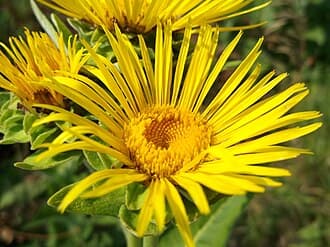
herbElecampane (Inula helenium) is a magnificent, statuesque perennial that towers 5 to 6 ft, with huge basal leaves and branching stems topped by shaggy, bright yellow, daisy-like flowers in mid to late summer. An old monastery-garden plant native to Europe and Asia and naturalized in North America, it is grown for its thick, aromatic root - dug in the second or third autumn. Its bold size and sunflower-like blooms also make it a striking back-of-border ornamental that pollinators adore.
☀️
Sun
full sun
💧
Water
Every 6 days
🌾
Harvest
~18 months
to first harvest
📊
Difficulty
easy
🌱
Lifecycle
perennial
Comes back every year
↔️
Spacing
24-36 in. apart
⬇️
Planting Depth
Barely cover seed; crowns at soil line
🧪
Soil pH
6.0-7.5
Growing Details
Soil Type
Rich, moist, well-draining
Hardiness Zones
Zones 3 – 7
When to Fertilize
Spring; compost
Fertilizer
Compost; moderate-high needs
🌱 Growing Guide
Give elecampane room: plant it at the back of a border in rich, moist, well-drained soil in full sun to part shade, spacing plants 2 to 3 ft apart, as it grows large. Sow seed (which benefits from cold stratification) in fall or start indoors, or plant root divisions, each with a bud, in spring or fall. Keep the soil moist, especially the first year, and add compost; it is a robust feeder. It dies back in winter and returns vigorously. Leave plants two to three years before harvesting root so they size up, and divide the crown to propagate.
Planting Calendar
Sign in to personalize →🌱
Start seeds indoors
Feb 18
🌿
Transplant outdoors
Apr 29
🌾
Projected first harvest
Oct 26 · Year 2
JJan
FFeb
MMar
AApr
MMay
JJun
JJul
AAug
SSep
OOct
NNov
DDec
Year 1
✅ Plant alongside
Good neighbors that attract beneficial insects or deter pests
- Comfrey: A fellow large, deep-rooted herb for a moist back-of-border bed, both good for chop-and-drop mulch
- Bee Balm: Shares the rich, moist ground and adds to the strong pollinator draw of the tall yellow blooms
- Elderberry: A big, moisture-loving shrub that suits the same scale and conditions at the garden edge
🛡️ Pest & disease prevention
Proactive ways to stop trouble before it starts. Tap a name with an arrow for its full guide
Can dust the big leaves in late summer - give space and airflow and water at the base, not overhead
Rinse colonies from stems and buds; the vigorous plant easily outgrows light infestations
🌾 Harvest & storage
Dig the aromatic root in autumn of the second or third year, after the tops die back, once it is large enough to be worth harvesting; lift the clump, cut away a portion of root, and replant a crown division to continue the planting. Wash, slice the dense root, and dry it thoroughly, as it becomes hard and woody when dry. The dried root is used in teas, syrups, and tinctures.
🥗 Nutrition & benefits
Elecampane is grown for its aromatic, slightly bitter root, used traditionally in herbal teas, syrups, and cordials rather than as a vegetable - the root is rich in inulin, a prebiotic starch. The plant is also a wonderful ornamental and pollinator magnet, its towering yellow daisies anchoring the back of a herb or wildflower border.
⚠️ Toxicity & safety
Handle with care. Elecampane root and foliage can cause allergic contact dermatitis in sensitive people, so wear gloves when digging and processing the root. It is grown for its aromatic, bitter root used in traditional teas and syrups rather than eaten as a vegetable.
For educational and informational purposes only. HomeSown is not medical, health, or other professional advice. Always positively identify any plant before handling or eating it; some plants, and some parts of otherwise-edible plants, are toxic. Consult a qualified professional before consuming or otherwise using any plant, especially if you are pregnant, nursing, taking medication, or have a health condition.