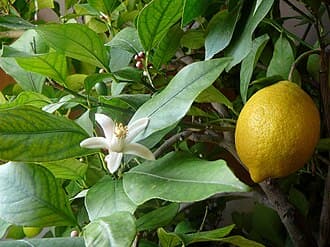
Eureka Lemon
Citrus × limon 'Eureka'
fruitEureka is the standard grocery-store lemon: medium to large bright yellow fruit with textured skin and intensely acidic juicy flesh, nearly seedless. The tree is everbearing in mild climates, meaning fruit and flowers appear together year-round, with the heaviest crop set in late winter through early summer. Cold-tender, so it lives in pots in any climate with frost.
☀️
Sun
full sun
💧
Water
Every 5 days
🌾
Harvest
~24 months
to first harvest
📊
Difficulty
easy
🌱
Lifecycle
perennial
Comes back every year
↔️
Spacing
12-15 ft in ground; large pot for container culture
⬇️
Planting Depth
Set at same depth as nursery pot; do not bury graft
🧪
Soil pH
6.0-7.0
Growing Details
Soil Type
Rich, well-draining
Hardiness Zones
Zones 9 – 12
When to Fertilize
Every 4-6 weeks during active growth, March through September
Fertilizer
Citrus-specific fertilizer with micronutrients (8-8-8 or similar) plus iron and manganese
🌱 Growing Guide
Plant in full sun on well-drained slightly acidic soil. Hardy in USDA zones 9 to 11; in colder zones grow in a 15 to 20 in container and move indoors below 30F. Avoid mounding soil against the trunk and keep mulch 6 inches back from the bark. Prune lightly any time of year to maintain shape and remove crossing branches; no heavy seasonal pruning is needed. Water deeply when the top 2 inches of soil are dry; do not let containers sit in standing water.
Planting Calendar
Sign in to personalize →🌿
Direct sow
Apr 15
🌾
Projected first harvest
Oct 22 · Year 3
JJan
FFeb
MMar
AApr
MMay
JJun
JJul
AAug
SSep
OOct
NNov
DDec
Year 1
✅ Plant alongside
Good neighbors that attract beneficial insects or deter pests
- Lavender: Mediterranean partner that attracts pollinators and repels aphids around the citrus drip line
- Marigolds: Root exudates suppress nematodes that damage citrus feeder roots
- Basil: Strong scent confuses citrus leafminer and supports pollinators
- Yarrow: Hosts hoverflies and parasitic wasps that hunt aphids and scale
🛡️ Pest & disease prevention
Proactive ways to stop trouble before it starts. Tap a name with an arrow for its full guide
Prune lightly to limit flushes of tender new growth and apply horticultural oil to young flushes when present
Blast with water, encourage ladybugs and lacewings, and avoid heavy nitrogen that drives soft growth
Apply horticultural oil in late winter to smother overwintering scale; release Aphytis melinus as a biological control
Mist foliage to raise humidity, hose down dusty leaves, and avoid drought stress
🌾 Harvest & storage
Eureka produces fruit most of the year, with the heaviest crop from late winter to early summer. Pick when the skin turns full yellow and the fruit feels heavy for its size; lemons soften slightly as they ripen and lose acidity if left too long. Twist gently with a small upward pull, or snip with pruners. Store at room temperature for a week, or refrigerate for up to a month.
🥗 Nutrition & benefits
About 29 calories per 100 g with 2.8 g fiber and a remarkable 53 mg of vitamin C (88 percent of the daily value). Lemons also supply citric acid and the flavonoid eriocitrin, both linked to antioxidant activity.
For educational and informational purposes only. HomeSown is not medical, health, or other professional advice. Always positively identify any plant before handling or eating it; some plants, and some parts of otherwise-edible plants, are toxic. Consult a qualified professional before consuming or otherwise using any plant, especially if you are pregnant, nursing, taking medication, or have a health condition.