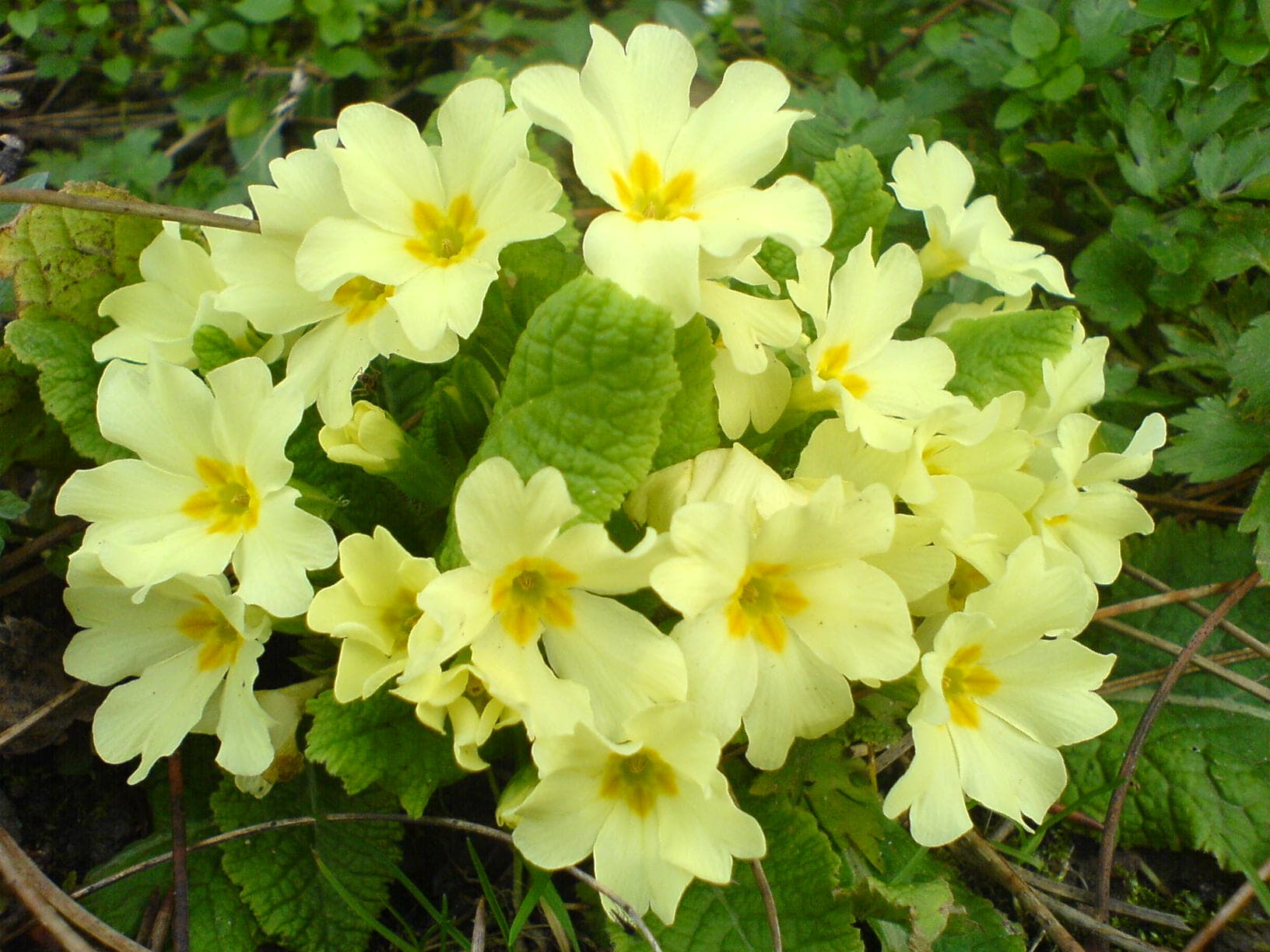
Garden Primrose
Primula vulgaris
flowerGarden primrose (Primula vulgaris) is a low, clump-forming herbaceous perennial just 3 to 6 in tall, one of the earliest and best-loved flowers of spring. Above a flat rosette of crinkled, tongue-shaped leaves it opens fragrant, five-petaled blooms - the wild form is pale yellow, but garden strains come in nearly every color, often with a contrasting eye. It is a cool-weather plant that thrives in the dappled shade of woodland edges, borders, and pond margins, and is a popular early-spring container and gift plant. It dislikes heat and is short-lived in the hot Southeast.
☀️
Sun
partial shade
💧
Water
Every 4 days
🌸
Bloom
~40 days
📊
Difficulty
medium
🌱
Lifecycle
perennial
Comes back every year
↔️
Spacing
6-12 in apart
⬇️
Planting Depth
Set the crown at the soil line
🧪
Soil pH
6.0-7.0
Growing Details
Soil Type
Humusy, moist, well-drained
Hardiness Zones
Zones 4 – 8
When to Fertilize
Light feeding in early spring as growth begins
Fertilizer
Balanced or compost; low needs
🌱 Growing Guide
Plant primrose in partial to dappled shade in humus-rich, consistently moist, well-drained soil; it must have protection from hot afternoon sun, especially in the South. Keep the soil evenly moist at all times, as it will not tolerate drying out, and mulch to keep the roots cool. It is happiest in cool spring weather and may struggle through hot, humid summers, so site it where summers are mild or treat it as a spring annual in warm regions. Divide clumps after flowering to keep them vigorous and to propagate. Watch for slugs, which love the new leaves.
🌼 Have a different variety?Cultivars of the same species usually share the same basic care, and they differ mainly in flower color, height, and bloom form, not in how you grow them. So this guide still applies even if your exact variety isn't the one shown.
Planting Calendar
Sign in to personalize →🌿
Direct sow
Apr 15
🌸
Projected first bloom
May 25
JJan
FFeb
MMar
AApr
MMay
JJun
JJul
AAug
SSep
OOct
NNov
DDec
✅ Plant alongside
Good neighbors that attract beneficial insects or deter pests
- Hosta: A shade perennial that fills in as primrose finishes and shares the moist, shaded site
- Fern: Thrives in the same cool, moist shade and contrasts with the primrose rosette
- Brunnera: Blooms blue at the same early season in the same woodland conditions
🛡️ Pest & disease prevention
Proactive ways to stop trouble before it starts. Tap a name with an arrow for its full guide
🌸 Blooms & cutting
Primrose is grown for early color, not harvest. Deadhead spent flowers to keep it tidy and prolong the bloom, and divide congested clumps right after flowering to renew them and make more plants. In hot climates, treat tired plants as spring annuals and replace them.
🥗 Nutrition & benefits
Garden primrose is an ornamental, not edible. Its value is some of the earliest, cheeriest color of the year for cool, shaded spots and spring containers, with early nectar for pollinators. Have a different variety? Cultivars of the same species share the same basic care, so this guide still applies even if your exact color is not shown.
⚠️ Toxicity & safety
Primrose foliage can cause contact dermatitis - an itchy skin rash - in sensitive people who handle it repeatedly, from a compound called primin. Eating the plant may cause mild vomiting, and it is considered a problem for cats, dogs, and horses if eaten. Grow it as an ornamental and wear gloves if your skin is sensitive.
For educational and informational purposes only. HomeSown is not medical, health, or other professional advice. Always positively identify any plant before handling or eating it; some plants, and some parts of otherwise-edible plants, are toxic. Consult a qualified professional before consuming or otherwise using any plant, especially if you are pregnant, nursing, taking medication, or have a health condition.