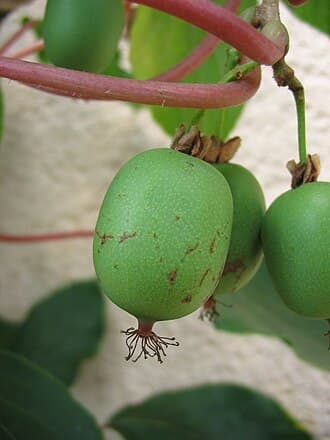
Hardy Kiwi
Actinidia arguta 'Issai'
fruitIssai (Actinidia arguta 'Issai') is the famously easy hardy kiwi: unlike most kiwis, which need separate male and female vines, Issai is self-fertile and will fruit on its own. The vigorous vine bears clusters of smooth-skinned, grape-sized green kiwiberries that you pop in your mouth whole - no peeling - with the sweet-tart flavor of a kiwi and no fuzz. Hardy to roughly zone 5, far tougher than the fuzzy grocery kiwi, it can climb 10 ft or more and needs a strong support. It tends to fruit young, often within a couple of years, and a single plant can crop, though yields improve with a male vine nearby.
☀️
Sun
full sun
💧
Water
Every 3 days
🌾
Harvest
~2 yrs
to first harvest
📊
Difficulty
medium
🌱
Lifecycle
perennial
Comes back every year
↔️
Spacing
10-15 ft apart on strong support
⬇️
Planting Depth
Crown at soil line
🧪
Soil pH
5.0-6.5
Growing Details
Soil Type
Rich, moist, slightly acidic
Hardiness Zones
Zones 5 – 9
When to Fertilize
Spring as growth begins
Fertilizer
Balanced; moderate nitrogen
🌱 Growing Guide
Plant Issai in full sun in rich, moist, slightly acidic, well-drained soil, and give it a sturdy trellis, arbor, or fence from the start - the vine is heavy and vigorous. Space plants about 10 to 15 ft along the support. Water regularly, especially while establishing and during fruiting, but ensure sharp drainage since the roots rot in soggy ground. Prune annually in late winter to control the rampant growth and to encourage the fruiting spurs, much like a grape. Although self-fertile, planting a male hardy kiwi nearby noticeably boosts the crop. Protect early shoots from late frosts, which can nip the tender new growth.
Planting Calendar
Sign in to personalize →🌿
Direct sow
Apr 15
🌾
Projected first harvest
Sep 12 · Year 3
JJan
FFeb
MMar
AApr
MMay
JJun
JJul
AAug
SSep
OOct
NNov
DDec
Year 1
✅ Plant alongside
Good neighbors that attract beneficial insects or deter pests
- Concord Grape: Has the same vigorous-vine training and annual winter pruning needs, so they share trellis culture
- Comfrey: Deep-rooted accumulator that mulches and feeds the root zone of the hungry vine
- A male hardy kiwi: Issai fruits alone, but a nearby male vine markedly increases pollination and yield
🛡️ Pest & disease prevention
Proactive ways to stop trouble before it starts. Tap a name with an arrow for its full guide
Can skeletonize the leaves in summer - hand-pick in the cool morning into soapy water and avoid lures that draw more in
The main killer - plant in sharply drained soil and never let the vine sit in waterlogged ground
Like catnip, Actinidia attracts cats that may chew and roll on young plants - protect new vines with a wire cage until established
🌾 Harvest & storage
Kiwiberries ripen in late summer to fall; pick when the fruit is plump and just begins to soften, and it will finish ripening and sweeten at room temperature like a pear. Taste-test for sweetness, or pick a full cluster once a few fruits soften. Eat them whole and unpeeled, out of hand or in salads, or freeze them. They store in the refrigerator for a few weeks if picked slightly firm, ripening as needed in small batches on the counter.
🥗 Nutrition & benefits
Kiwiberries pack the same vitamin C, vitamin E, fiber, and potassium as full-size kiwifruit into a sweeter, fuzz-free, eat-whole package, with the edible skin adding extra fiber and antioxidants. They are a delicious fresh snack and salad fruit, and the self-fertile Issai makes a home crop achievable without juggling male and female plants, which is why it is the standard starter hardy kiwi.
For educational and informational purposes only. HomeSown is not medical, health, or other professional advice. Always positively identify any plant before handling or eating it; some plants, and some parts of otherwise-edible plants, are toxic. Consult a qualified professional before consuming or otherwise using any plant, especially if you are pregnant, nursing, taking medication, or have a health condition.