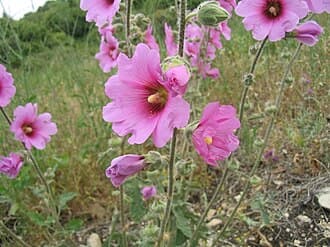
Hollyhock
Alcea rosea
flowerHollyhock is the towering cottage-garden classic - 5 to 8 ft single stems studded bottom-to-top with crepe-paper single or double blooms in pastel pink, deep maroon, white, yellow, or apricot. Most types are biennial, meaning they produce a leafy rosette the first year and flower spectacularly in the second, then self-seed and reseed in place to behave like long-lived perennials. They draw bumblebees and hummingbirds and look right against any fence, barn, or wall.
☀️
Sun
full sun
💧
Water
Every 5 days
🌸
Bloom
~365 days
📊
Difficulty
easy
🌱
Lifecycle
biennial
Leaves year 1, flowers year 2
↔️
Spacing
24 in. apart
⬇️
Planting Depth
Seed 1/4 in. deep
🧪
Soil pH
6.0-8.0
Growing Details
Soil Type
Rich, well-draining
Hardiness Zones
Zones 3 – 9
Grown as an annual. This range is its winter hardiness, but you can grow it for a single season in any zone.
When to Fertilize
Light feed in spring; again before flowering
Fertilizer
Balanced or compost; low needs
🌱 Growing Guide
Direct sow Hollyhock seed 1/4 in. deep in spring or late summer; either timing produces a leafy rosette the first year and blooms the second. Or start seed indoors 8 to 10 weeks before the last frost. Space plants 24 in. apart in full sun and rich, well-drained soil; choose a sheltered spot, since wind can topple the tall flower spikes. Water at the base in the morning to fight hollyhock rust, the main weakness of the species. Cut spent stalks at the base after flowering to limit self-seeding or leave them to volunteer.
🌼 Have a different variety?Cultivars of the same species usually share the same basic care, and they differ mainly in flower color, height, and bloom form, not in how you grow them. So this guide still applies even if your exact variety isn't the one shown.
Planting Calendar
Sign in to personalize →🌱
Start seeds indoors
Feb 18
🌿
Transplant outdoors
Apr 15
🌸
Projected first bloom
Apr 15
JJan
FFeb
MMar
AApr
MMay
JJun
JJul
AAug
SSep
OOct
NNov
DDec
✅ Plant alongside
Good neighbors that attract beneficial insects or deter pests
- Bee Balm: Pollinator partner with hummingbirds and bees and shares the same cottage-garden conditions
- Foxglove: Both tall biennials that flower together at the back of a border
- Larkspur: Cool-season annual spires fill in beneath the taller hollyhock stalks
- Yarrow: Yarrow draws hoverflies and parasitic wasps that prey on hollyhock aphids
🛡️ Pest & disease prevention
Proactive ways to stop trouble before it starts. Tap a name with an arrow for its full guide
The plants main weakness - water at the base in the morning, give plants airflow, remove infected leaves immediately, and clean up debris each fall
Handpick beetles into soapy water in the cool of the morning; avoid traps, which attract more beetles than they catch
Hose off colonies, plant yarrow nearby for hoverflies, and support resident ladybugs
Protect young rosettes with grit or traps in cool damp spring weather
🌸 Blooms & cutting
Hollyhock is grown as a garden flower rather than a cut flower - the stems are short-lived in a vase. Cut individual blooms for floating in a shallow bowl, or photograph them in situ. Leave a few seedheads to ripen and shatter if you want a self-sowing patch; collect dry seed to share or save by mid-fall.
🥗 Nutrition & benefits
Hollyhock is a powerful pollinator plant: the open single forms in particular feed bumblebees and native bees, and the tall flower spires also draw hummingbirds and hawkmoths. The bloom petals are edible and traditionally used as a colorful garnish and a soothing herbal tea. The plant has a long medicinal history in the mallow family for its mucilaginous qualities.
For educational and informational purposes only. HomeSown is not medical, health, or other professional advice. Always positively identify any plant before handling or eating it; some plants, and some parts of otherwise-edible plants, are toxic. Consult a qualified professional before consuming or otherwise using any plant, especially if you are pregnant, nursing, taking medication, or have a health condition.