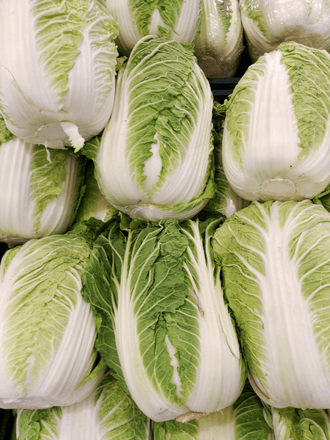
Napa Cabbage
Brassica rapa subsp. pekinensis
vegetableNapa, or Chinese cabbage, forms an oblong head of crinkled, pale-green leaves with broad white ribs and a mild, sweet, juicy flavor that is essential for kimchi, slaws, and stir-fries. It heads best as a fall crop, sizing up as the days shorten and temperatures cool. Spring plantings are risky because Napa bolts readily after a cold spell or when summer heat arrives, sending up a flower stalk instead of a head.
☀️
Sun
full sun
💧
Water
Every 2 days
🌾
Harvest
~75 days
📊
Difficulty
medium
🌱
Lifecycle
biennial
Leaves year 1, flowers year 2
↔️
Spacing
12-18 in. apart
⬇️
Planting Depth
1/4-1/2 in.
🧪
Soil pH
6.0-7.5
Growing Details
Soil Type
Rich, well-draining
Hardiness Zones
Zones 3 – 10
Grown as an annual. This range is its winter hardiness, but you can grow it for a single season in any zone.
When to Fertilize
At transplant, then every 3-4 weeks
Fertilizer
Nitrogen-rich
🌱 Growing Guide
For the most reliable crop, time planting to mature in cool fall weather: direct sow in July, or start seed 10 to 12 weeks before the first fall frost and set out transplants in late summer. Give full sun, fertile soil, and steady, even moisture so the heads form full and tight. Avoid stress from cold snaps, drought, or hot soil, all of which trigger premature bolting; floating row cover helps buffer temperature swings.
Planting Calendar
Sign in to personalize →spring planting
🌱
Start seeds indoors
Feb 25
🌿
Transplant outdoors
Apr 1
🌾
Projected first harvest
Jun 15
fall planting
🌱
Start seeds indoors
Jul 7
🌿
Transplant outdoors
Aug 11
🌾
Projected first harvest
Oct 25
JJan
FFeb
MMar
AApr
✅ Plant alongside
Good neighbors that attract beneficial insects or deter pests
- Dill: Attracts parasitic wasps that hunt cabbage worms
- Onions: Scent helps repel pests
- Sweet Alyssum: Draws aphid-eating hoverflies
- Nasturtium: Trap crop for aphids
❌ Keep away from
StrawberryTomato
🛡️ Pest & disease prevention
Proactive ways to stop trouble before it starts. Tap a name with an arrow for its full guide
Row cover young plants until established
Handpick, cover, and apply Bt if needed
Hose off colonies and encourage ladybugs and hoverflies
🌾 Harvest & storage
Cut the head at the base once it is 9 to 12 inches tall and feels firm and dense. Napa tolerates a light frost, and the tight heads store well for several weeks in cold, humid conditions. Harvest before a hard freeze.
🥗 Nutrition & benefits
Napa is low in calories and a good source of vitamins C and K plus folate, potassium, and fiber, and like all cabbages it contains glucosinolates being studied for cancer prevention.
For educational and informational purposes only. HomeSown is not medical, health, or other professional advice. Always positively identify any plant before handling or eating it; some plants, and some parts of otherwise-edible plants, are toxic. Consult a qualified professional before consuming or otherwise using any plant, especially if you are pregnant, nursing, taking medication, or have a health condition.