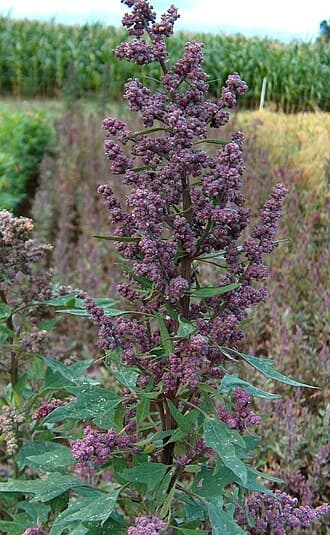
Quinoa
Chenopodium quinoa
vegetableQuinoa is an Andean pseudo-grain grown for protein-rich seeds borne in showy, often colorful seed heads on 4 to 6 foot plants; the young leaves are edible like spinach. It prefers cool nights and a long, frost-free but not blazing-hot season.
☀️
Sun
full sun
💧
Water
Every 7 days
🌾
Harvest
~100 days
📊
Difficulty
medium
🌱
Lifecycle
annual
One season, then done
↔️
Spacing
12-18 in. apart
⬇️
Planting Depth
Seed 1/4-1/2 in. deep
🧪
Soil pH
6.0-7.5
Growing Details
Soil Type
Well-draining sandy loam
Hardiness Zones
Zones 3 – 9
Grown as an annual. This range is its winter hardiness, but you can grow it for a single season in any zone.
When to Fertilize
Light feed early in the season
Fertilizer
Balanced or compost; moderate nitrogen
🌱 Growing Guide
Sow seed directly around the last frost into well-drained soil, since quinoa germinates in cool ground and dislikes transplanting. Give it full sun, thin the seedlings, and keep weeds down early. It is drought-tolerant once established, but high heat during flowering can prevent the seeds from setting, so it does best where summers are mild.
Planting Calendar
Sign in to personalize →🌿
Direct sow
Apr 15
🌾
Projected first harvest
Jul 24
JJan
FFeb
MMar
AApr
MMay
JJun
JJul
AAug
SSep
OOct
NNov
DDec
✅ Plant alongside
Good neighbors that attract beneficial insects or deter pests
- Corn: A tall companion that shares the bed without crowding the sun
- Beans: Fix nitrogen that supports leafy quinoa growth
- Spinach: A relative with similar cool-season needs for the early bed
🛡️ Pest & disease prevention
Proactive ways to stop trouble before it starts. Tap a name with an arrow for its full guide
Encourage ladybugs and lacewings and rinse off colonies
Float row cover over young seedlings until they are established
Remove and destroy mined leaves and use row cover early
🌾 Harvest & storage
Harvest when the leaves have dropped and the seeds are hard enough to dent only with a fingernail, usually 90 to 120 days. Cut the seed heads, dry them fully, then rub out the seeds and winnow; rinse the seeds to remove the bitter saponin coating before cooking.
🥗 Nutrition & benefits
Quinoa is a complete protein with all nine essential amino acids, plus fiber, magnesium, and iron, and it is naturally gluten-free.
⚠️ Toxicity & safety
Rinse before cooking. Quinoa seeds have a natural bitter coating (saponins) that can irritate digestion - rinse them well under running water before cooking to wash it off.
For educational and informational purposes only. HomeSown is not medical, health, or other professional advice. Always positively identify any plant before handling or eating it; some plants, and some parts of otherwise-edible plants, are toxic. Consult a qualified professional before consuming or otherwise using any plant, especially if you are pregnant, nursing, taking medication, or have a health condition.