Snowdrop
Galanthus nivalis
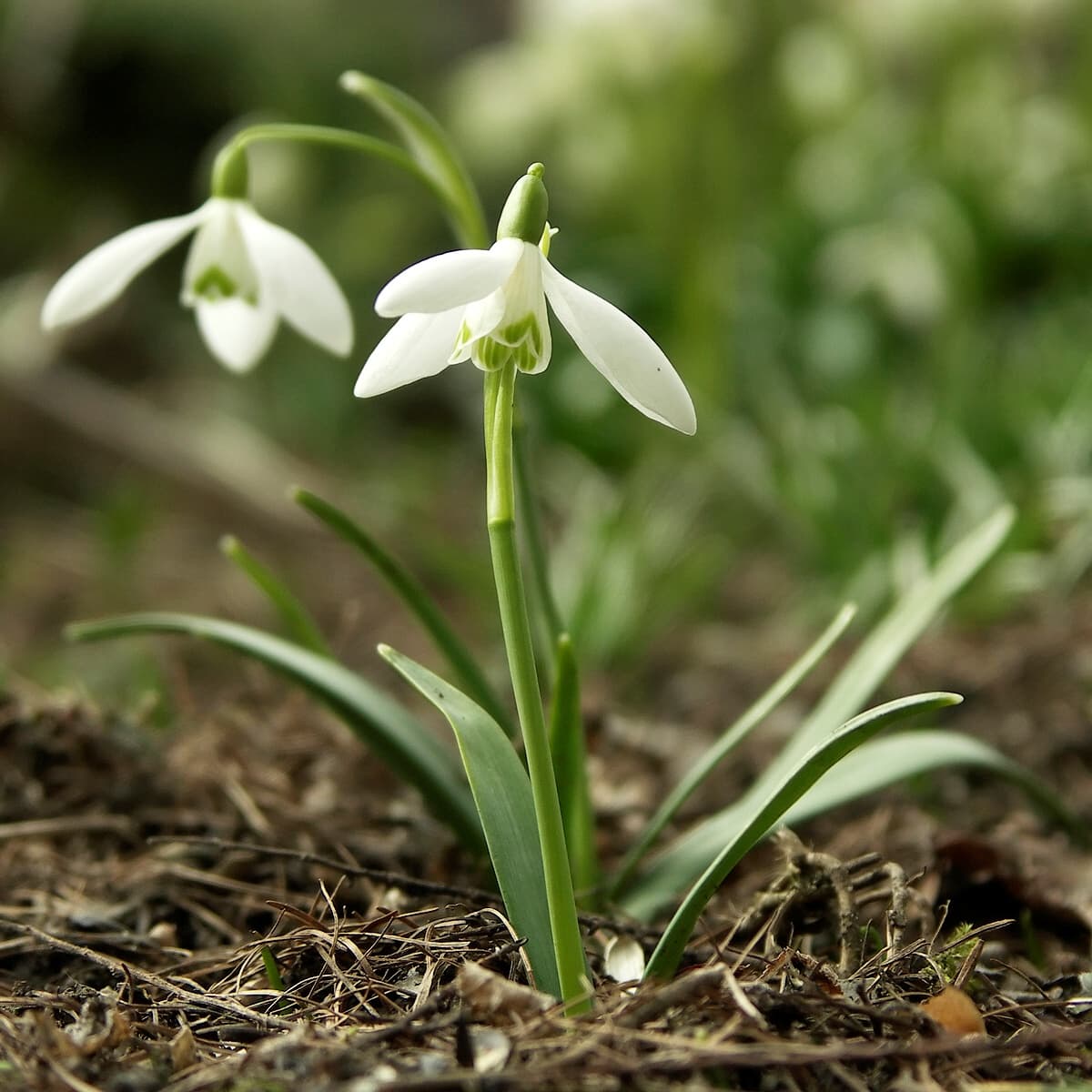
flowerCommon snowdrop (Galanthus nivalis) is a small, hardy bulb just 4 to 10 in tall that is one of the earliest flowers of the year, often blooming through late-winter snow. Each stem nods a single white bell marked with green. It naturalizes easily by bulb offsets and self-seeding into spreading drifts, making it a beloved choice for woodland gardens, lawns, and the ground beneath deciduous trees, where it blooms and fades before the canopy leafs out. It tolerates the juglone of black walnut and is deer resistant and bee-friendly.
☀️
Sun
partial shade
💧
Water
Every 7 days
🌸
Bloom
~130 days
📊
Difficulty
easy
🌱
Lifecycle
perennial
Comes back every year
↔️
Spacing
3 in apart
⬇️
Planting Depth
Plant bulbs 3 in deep, pointed end up, in fall
🧪
Soil pH
6.0-7.0
Growing Details
Soil Type
Humus-rich, moist, well-drained
Hardiness Zones
Zones 3 – 9
When to Fertilize
Light feeding after bloom if naturalizing weakly
Fertilizer
Balanced or compost; low needs
🌱 Growing Guide
Plant snowdrop bulbs in fall, 3 in deep and a few inches apart, in humus-rich, moist but well-drained soil in partial shade - ideally under deciduous trees or shrubs that give sun in late winter and shade in summer. They establish best when planted promptly, as the small bulbs dislike drying out. Leave the foliage to die back naturally after bloom to feed next year flowers. The clumps multiply on their own; to spread them, lift and divide just after flowering while still in leaf, a technique called planting in the green.
🌼 Have a different variety?Cultivars of the same species usually share the same basic care, and they differ mainly in flower color, height, and bloom form, not in how you grow them. So this guide still applies even if your exact variety isn't the one shown.
Planting Calendar
Sign in to personalize →🌿
Direct sow
Nov 12
🌸
Projected first bloom
Mar 22
JJan
FFeb
MMar
AApr
MMay
JJun
JJul
AAug
SSep
OOct
NNov
DDec
✅ Plant alongside
Good neighbors that attract beneficial insects or deter pests
- Crocus: Another tiny early bulb that extends the late-winter show in the same drifts
- Hellebore: A winter-blooming perennial that pairs in the woodland garden
- Winter Aconite: A yellow late-winter bulb that naturalizes alongside snowdrops
🛡️ Pest & disease prevention
Proactive ways to stop trouble before it starts. Tap a name with an arrow for its full guide
Larvae tunnel into bulbs; buy firm, healthy bulbs and discard any soft ones
A fungus in cold, wet conditions; ensure drainage and remove affected foliage
From waterlogged soil; plant in well-drained ground that is not summer-soggy
🌸 Blooms & cutting
Snowdrops are grown to naturalize, not to harvest. The one technique worth knowing is to divide and spread them in the green - immediately after flowering, while still in leaf - lifting clumps and replanting them in small groups to widen the drift. Otherwise leave them undisturbed to multiply.
🥗 Nutrition & benefits
Snowdrop is an ornamental, not edible, and the bulbs are toxic. Its value is the very first flowers of the year, naturalizing into cheerful late-winter drifts and offering early pollen to bees on warm days. Have a different variety? Cultivars of the same species share the same basic care, so this guide still applies even if your exact form is not shown.
⚠️ Toxicity & safety
Snowdrop bulbs and, to a lesser degree, the leaves and flowers contain phenanthridine alkaloids and are toxic if eaten in quantity, causing nausea, vomiting, and diarrhea. The bulbs can be mistaken for edible bulbs, so plant and store them where they will not be confused, and keep them from pets and children.
For educational and informational purposes only. HomeSown is not medical, health, or other professional advice. Always positively identify any plant before handling or eating it; some plants, and some parts of otherwise-edible plants, are toxic. Consult a qualified professional before consuming or otherwise using any plant, especially if you are pregnant, nursing, taking medication, or have a health condition.