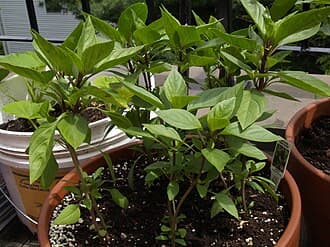
Thai Basil
Ocimum basilicum var. thyrsiflora
herbThe fragrant Southeast Asian basil with purple-tinged stems, glossy narrow leaves, and an anise-clove aroma quite different from Italian sweet basil. Essential in Vietnamese pho, Thai curries, and stir-fries. More heat-tolerant and slower to bolt than Genovese types.
☀️
Sun
full sun
💧
Water
Every 3 days
🌾
Harvest
~65 days
📊
Difficulty
easy
🌱
Lifecycle
annual
One season, then done
↔️
Spacing
12-18 in. apart
⬇️
Planting Depth
1/8 in.
🧪
Soil pH
6.0-7.0
Growing Details
Soil Type
Rich, well-draining
Hardiness Zones
Zones 3 – 10
Grown as an annual. This range is its winter hardiness, but you can grow it for a single season in any zone.
When to Fertilize
Every 4-6 weeks with a dilute balanced fertilizer
Fertilizer
Balanced 10-10-10 or fish emulsion
🌱 Growing Guide
Start indoors 6-8 weeks before last frost or sow directly after soil warms. Full sun and warm temperatures maximize essential oil content and flavor. Pinch flower buds promptly and repeatedly to maintain leaf production. Slightly more drought-tolerant than Italian basil.
Planting Calendar
Sign in to personalize →🌱
Start seeds indoors
Mar 4
🌿
Transplant outdoors
Apr 29
🌾
Projected first harvest
Jul 3
JJan
FFeb
MMar
AApr
MMay
JJun
JJul
AAug
SSep
OOct
NNov
DDec
✅ Plant alongside
Good neighbors that attract beneficial insects or deter pests
- Tomatoes: Repels thrips and whiteflies; traditional companion in Asian gardens
- Peppers: Deters aphids and spider mites
- Eggplant: Provides aromatic pest confusion
- Marigold: Doubles up pest deterrence when planted together
🛡️ Pest & disease prevention
Proactive ways to stop trouble before it starts. Tap a name with an arrow for its full guide
Strong anise scent deters many soft-bodied insects; inspect leaf undersides regularly
Rotate basil to a new bed each year; avoid overwatering; buy resistant varieties
The strong aromatic oils discourage feeding compared to Italian types
🌾 Harvest & storage
Harvest stems just above a leaf node to encourage branching. Remove flower spikes as soon as they appear to prevent bolting. Add Thai basil at the very end of cooking to preserve the anise fragrance. Store stems in water like fresh-cut flowers at room temperature.
🥗 Nutrition & benefits
Contains eugenol and estragole, essential oils with antibacterial and anti-inflammatory properties. Good source of vitamins K and A plus magnesium. Particularly rich in antioxidant polyphenols.
For educational and informational purposes only. HomeSown is not medical, health, or other professional advice. Always positively identify any plant before handling or eating it; some plants, and some parts of otherwise-edible plants, are toxic. Consult a qualified professional before consuming or otherwise using any plant, especially if you are pregnant, nursing, taking medication, or have a health condition.