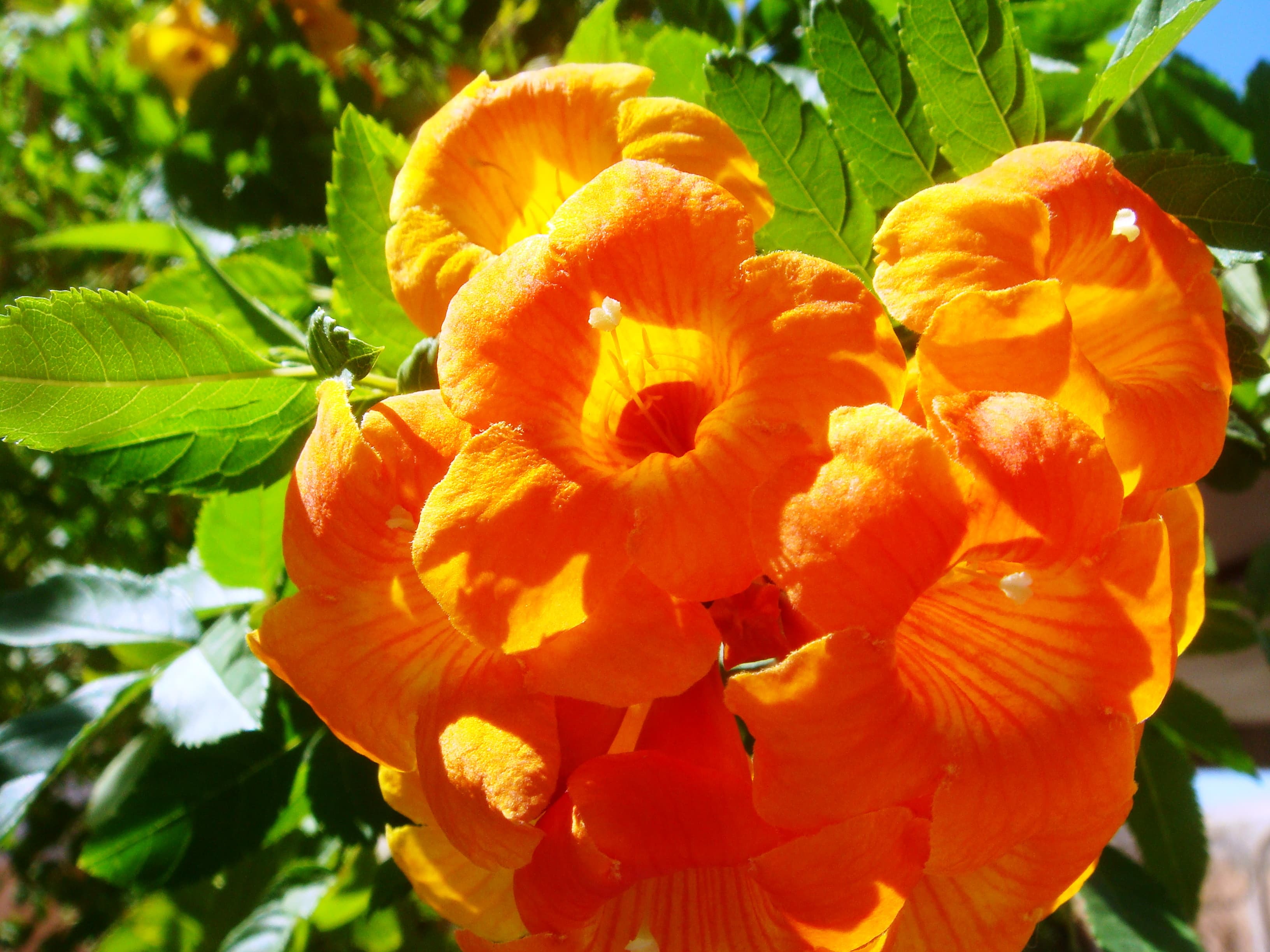
Trumpet Vine
Campsis radicans
flowerTrumpet vine (Campsis radicans) is a vigorous, woody, deciduous vine native to the central and eastern United States that climbs 30 to 40 ft by clinging aerial rootlets. All summer it bears clusters of large, orange-red trumpet flowers that are a magnet for hummingbirds. It is rugged, fast, and easy almost anywhere, but that vigor is also its drawback: it suckers profusely from underground runners and self-seeds freely, so it can overwhelm a small space and must be sited and controlled with that in mind.
☀️
Sun
full sun
💧
Water
Every 7 days
🌸
Bloom
~90 days
📊
Difficulty
easy
🌱
Lifecycle
perennial
Comes back every year
↔️
Spacing
6-12 ft apart
⬇️
Planting Depth
Set at the same depth as the nursery pot
🧪
Soil pH
6.0-7.0
Growing Details
Soil Type
Adaptable; well-drained
Hardiness Zones
Zones 4 – 10
When to Fertilize
Usually none; lean soil keeps it in check
Fertilizer
Little to none; avoid rich feeding
🌱 Growing Guide
Grow trumpet vine in full sun for the best flowering, in almost any well-drained soil; lean soil actually curbs its rampant growth, while rich soil and shade give leaves at the expense of flowers. Provide a very sturdy support such as a heavy arbor, fence, or masonry wall, because a mature vine becomes extremely heavy. To keep it in bounds, plant it where suckers can be mowed, pull or cut runners as they appear, and remove seedpods before they ripen. It blooms on new growth, so prune hard in early spring to control size without sacrificing flowers. Consider tamer cultivars like Apricot or Indian Summer.
🌼 Have a different variety?Cultivars of the same species usually share the same basic care, and they differ mainly in flower color, height, and bloom form, not in how you grow them. So this guide still applies even if your exact variety isn't the one shown.
Planting Calendar
Sign in to personalize →🌿
Direct sow
Apr 15
🌸
Projected first bloom
Jul 14
JJan
FFeb
MMar
AApr
MMay
JJun
JJul
AAug
SSep
OOct
NNov
DDec
✅ Plant alongside
Good neighbors that attract beneficial insects or deter pests
- Clematis: A less aggressive vine that can share a large structure for layered bloom
- Honeysuckle: Another hummingbird vine with similar vigor for a wildlife screen
- Coneflower: A sturdy perennial at the base that draws additional pollinators
🛡️ Pest & disease prevention
Proactive ways to stop trouble before it starts. Tap a name with an arrow for its full guide
Few serious pests
Trumpet vine has no significant insect or disease problems; the real challenge is restraining its growth
White film in crowded, shady spots; give sun and airflow
Bumps on stems with sooty mold; prune out heavy infestations and conserve natural enemies
🌸 Blooms & cutting
Trumpet vine is grown for its flowers and hummingbird value, not harvest. The key seasonal work is control: prune hard in early spring to shape and limit size, since it flowers on new wood, and through the season remove root suckers and clip off the long seedpods before they scatter seed. Wear gloves to avoid skin irritation.
🥗 Nutrition & benefits
Trumpet vine is an ornamental, not edible. Its value is fast, bold summer color and an outstanding nectar source for hummingbirds and bees. It is native but aggressive, so give it a strong support and firm control rather than a small garden. Have a different variety? Cultivars of the same species share the same basic care, so this guide still applies even if your exact form is not shown.
⚠️ Toxicity & safety
Trumpet vine causes low toxicity if eaten, and contact with the leaves or sap can cause minor skin irritation with redness and swelling - the reason for its old name cow-itch vine. Wear gloves when pruning. Keep it from being eaten in quantity by children or pets, though serious poisoning is uncommon.
For educational and informational purposes only. HomeSown is not medical, health, or other professional advice. Always positively identify any plant before handling or eating it; some plants, and some parts of otherwise-edible plants, are toxic. Consult a qualified professional before consuming or otherwise using any plant, especially if you are pregnant, nursing, taking medication, or have a health condition.