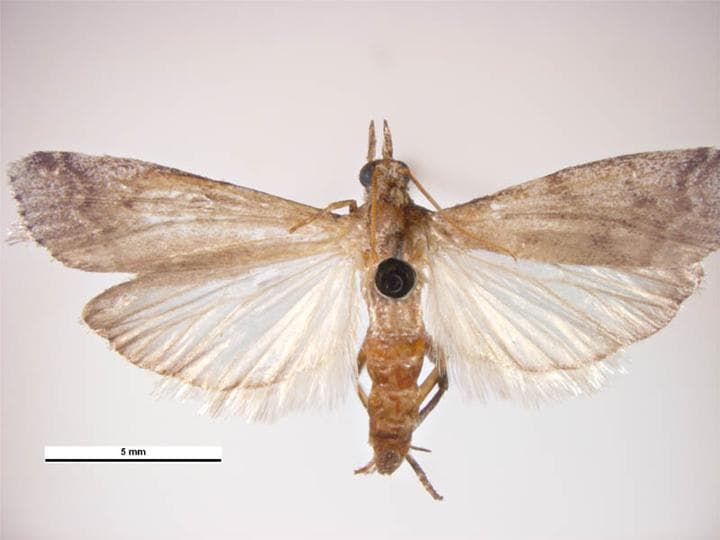
Navel Orangeworm
Amyelois transitella
A small mottled moth whose larvae bore into and feed in the nutmeat of almond, pistachio, and walnut and the fruit of fig and pomegranate, filling them with frass and webbing. It is the most damaging insect pest of California almonds and pistachios, and its feeding also opens the way for molds that produce harmful aflatoxins.
🔎 How to spot it
Adults are about two thirds of an inch long with a roughly one inch wingspan and are a mottled mix of black and light and dark gray, with paired appendages at the front that give the head a snoutlike look. Young larvae are reddish orange and older ones are cream colored, up to three quarters of an inch long, with a distinctive blackish crescent shape on each side of the segment just behind the head. Tunnels packed with webbing and frass inside a nut are the sign.
🥀 Damage it causes
The first signs are small pinhole-size entrances in the fruit or nutmeat, after which the larvae tunnel through and fill the cavity with webbing and excrement. Beyond the direct feeding loss, the wounds let in Aspergillus molds that produce aflatoxins, a serious contamination concern. The pest favors old mummy nuts and ripening or splitting nuts, so damage builds late in the season.
🛡️ Prevent it
The most effective control is winter sanitation: knock down old mummy nuts and fruit left on the tree, pick up the drops, and destroy them before the overwintering larvae pupate in late winter. Harvest as early as the crop allows, since late-hanging nuts are the most heavily attacked. Removing the overwintering sites is far more powerful than any spray for a home grower.
🧯 If it is already here
There is no easy rescue once larvae are inside the nut, so management is built on sanitation and timely harvest rather than insecticides in the backyard. Where many trees are grown, mating disruption and well-timed treatments at hullsplit are used commercially. Storing harvested nuts promptly and keeping them sound prevents further infestation.
💡 Good to know
Navel orangeworm has at least three generations a year and overwinters as larvae in mummy nuts and fruit, which is why old nuts left on the tree are the engine of the problem. The crescent marks behind the head separate its larvae from codling moth. Because it can carry aflatoxin-producing molds, do not eat visibly infested or moldy nuts.
🌱 Plants it attacks
8 plants in the library can be attacked by this pest


For educational and informational purposes only. Pest control advice is general guidance drawn from university cooperative extension sources; always identify a pest positively and read and follow the label on any product before use, especially around food crops, children, and pets.