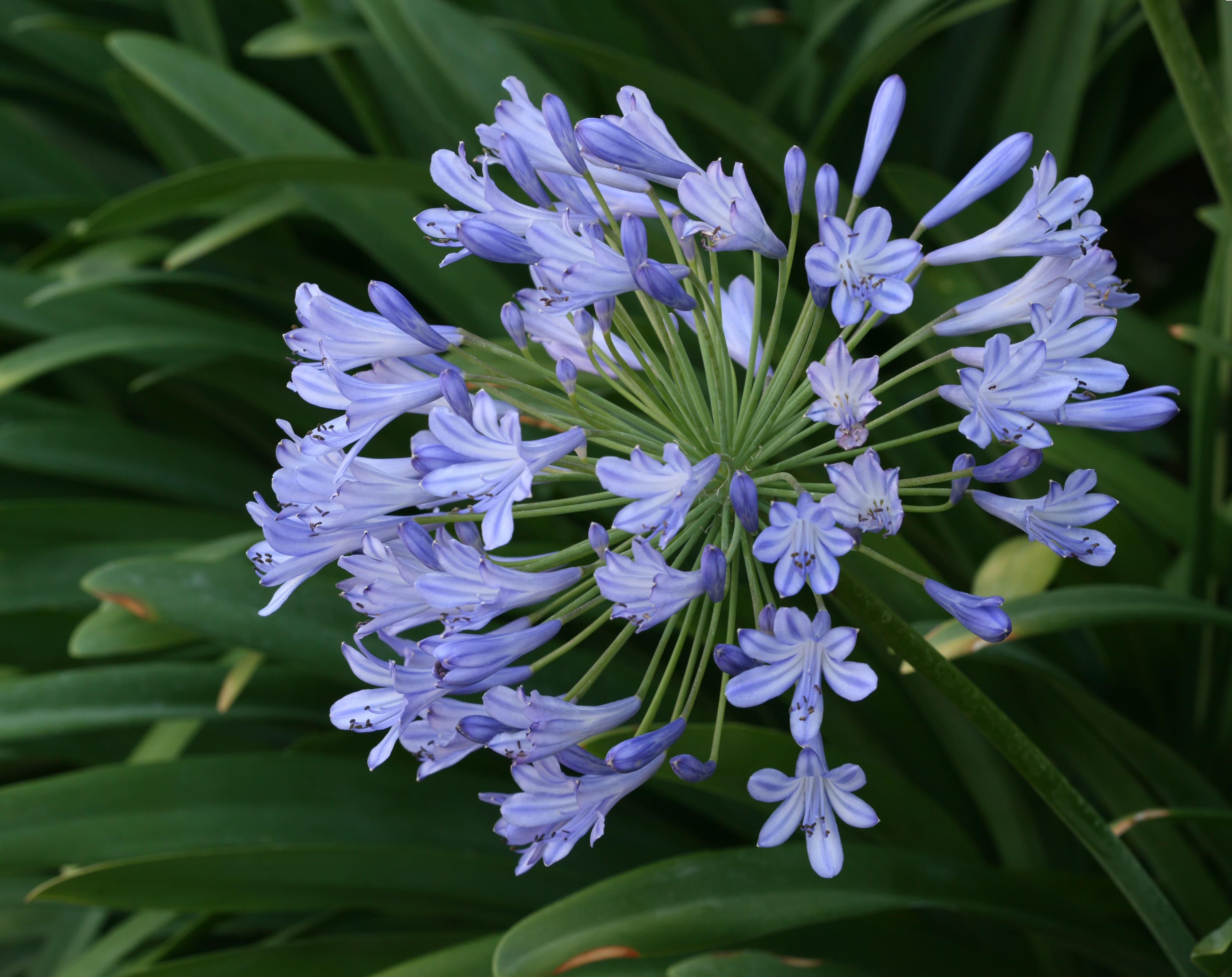
Agapanthus
Agapanthus praecox
flowerAgapanthus (Agapanthus praecox), commonly called lily of the Nile, is a clump-forming perennial with arching, strap-shaped, mostly evergreen leaves, from which tall stalks rise in summer bearing large, rounded clusters of blue or white trumpet flowers. The flower stems can reach 5 ft. It is a signature plant of warm-climate and coastal gardens, prized for its bold form and long bloom, and where winters are cold it makes an outstanding large container plant that is simply moved indoors for the winter.
☀️
Sun
full sun
💧
Water
Every 5 days
🌸
Bloom
~90 days
📊
Difficulty
easy
🌱
Lifecycle
tender perennial
Perennial in warm zones; grown as an annual where winters freeze
↔️
Spacing
12-24 in apart
⬇️
Planting Depth
Set the crown at the soil line; plant shallowly
🧪
Soil pH
6.0-7.0
Growing Details
Soil Type
Fertile, moist, well-drained
Hardiness Zones
Zones 8 – 11
When to Fertilize
Feed during active growth in spring and summer
Fertilizer
Balanced general-purpose fertilizer
🌱 Growing Guide
Plant agapanthus in full sun in fertile, moist, well-drained soil; it leans toward the light, so a south-facing spot keeps it upright. It is hardy in zones 8b and warmer, where it can stay in the ground year-round; in colder areas grow it in a large pot and bring it into a cool, bright space over winter. Keep it consistently watered during the growing season, easing off in winter. It flowers best when its roots are somewhat crowded, so divide only every several years. Remove spent flower stalks, and feed during active growth for the best bloom.
🌼 Have a different variety?Cultivars of the same species usually share the same basic care, and they differ mainly in flower color, height, and bloom form, not in how you grow them. So this guide still applies even if your exact variety isn't the one shown.
Planting Calendar
Sign in to personalize →🌿
Direct sow
Apr 15
🌸
Projected first bloom
Jul 14
JJan
FFeb
MMar
AApr
MMay
JJun
JJul
AAug
SSep
OOct
NNov
DDec
✅ Plant alongside
Good neighbors that attract beneficial insects or deter pests
- Salvia: Upright flower spikes that share the sun and complement the rounded agapanthus heads
- Lavender: Loves the same warm, well-drained conditions and draws pollinators
- Daylily: A tough, sun-loving perennial with strappy foliage that pairs in habit
🛡️ Pest & disease prevention
Proactive ways to stop trouble before it starts. Tap a name with an arrow for its full guide
🌸 Blooms & cutting
Agapanthus makes a long-lasting cut flower, so cut the stalks when about half the florets in the cluster have opened. Otherwise remove spent flower stems after bloom for tidiness. In cold climates, the main seasonal task is moving container plants to a cool, bright, frost-free place for winter and resuming water in spring.
🥗 Nutrition & benefits
Agapanthus is an ornamental, not edible, and is mildly poisonous. Its value is bold, long-lasting summer flower heads on a handsome evergreen clump, excellent in warm-climate beds and as a winter-indoors container plant, with nectar for pollinators. Have a different variety? Cultivars of the same species share the same basic care, so this guide still applies even if your exact color is not shown.
⚠️ Toxicity & safety
Agapanthus sap can irritate the skin, and the plant is poisonous if eaten, causing irritation and ulceration of the mouth. It is considered a problem if chewed by pets. Wear gloves when dividing it and keep it away from children and pets that nibble plants.
For educational and informational purposes only. HomeSown is not medical, health, or other professional advice. Always positively identify any plant before handling or eating it; some plants, and some parts of otherwise-edible plants, are toxic. Consult a qualified professional before consuming or otherwise using any plant, especially if you are pregnant, nursing, taking medication, or have a health condition.