Use with caution
All parts of anemone are poisonous. The fresh sap contains protoanemonin, which can cause inflammation and blistering on skin contact, and eating the plant causes mouth irritation, vomiting, and diarrhea. Handle with care and keep it away from children and pets; wash hands after working with cut stems.
Anemone
Anemone coronaria
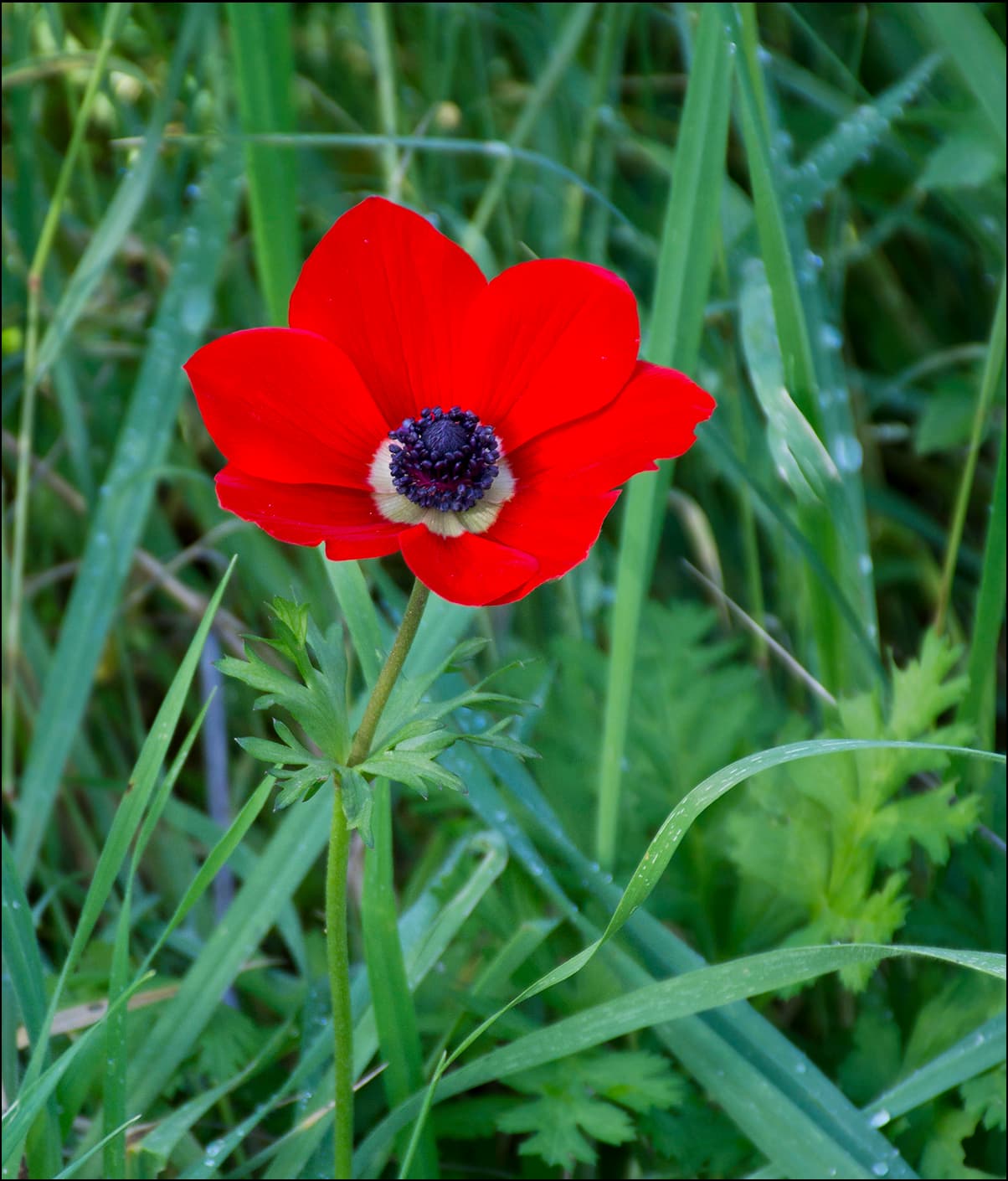
flowerPoppy anemone (Anemone coronaria) grows from a small knobby corm into a tuft of ferny leaves topped by brilliant poppy-like flowers 2 to 3 in across in jewel reds, blues, purples, pinks, and white, most with a striking dark center. It is one of the great cool-season cut flowers, with a long vase life. Hardy in zones 7 to 10, it is planted in fall for late-winter and spring bloom in mild climates, or in early spring where winters are harsh, and it goes dormant by summer.
☀️
Sun
full sun
💧
Water
Every 5 days
🌸
Bloom
~120 days
📊
Difficulty
medium
🌱
Lifecycle
tender perennial
Perennial in warm zones; grown as an annual where winters freeze
↔️
Spacing
4-6 in apart
⬇️
Planting Depth
Plant corms 2-3 in deep after soaking
🧪
Soil pH
6.0-7.0
Growing Details
Soil Type
Amended, well-drained, organic-rich
Hardiness Zones
Zones 7 – 10
When to Fertilize
Light feeding during active growth
Fertilizer
Balanced; avoid heavy nitrogen
🌱 Growing Guide
Plant anemone in full sun to part shade in amended, organic-rich, well-drained soil; it rots in soggy ground. Soak the hard corms for a few hours before planting and set them 2 to 3 in deep. In zones 7 and warmer, plant in fall for early bloom; in colder areas, plant corms in early spring or pre-sprout them indoors. Keep evenly moist during growth, deadhead to prolong flowering, and let the foliage die back as the plant goes summer-dormant. In cold zones, lift and store the corms dry, or simply grow it as an annual.
🌼 Have a different variety?Cultivars of the same species usually share the same basic care, and they differ mainly in flower color, height, and bloom form, not in how you grow them. So this guide still applies even if your exact variety isn't the one shown.
Planting Calendar
Sign in to personalize →🌿
Direct sow
Nov 12
🌸
Projected first bloom
Mar 12
JJan
FFeb
MMar
AApr
MMay
JJun
JJul
AAug
SSep
OOct
NNov
DDec
✅ Plant alongside
Good neighbors that attract beneficial insects or deter pests
- Ranunculus: Shares the same cool-season corm culture and bloom time for a classic cut-flower duo
- Tulip: A spring bulb that blooms alongside anemone in the same beds
- Daffodil: An easy spring bulb that overlaps and fills the bed
🛡️ Pest & disease prevention
Proactive ways to stop trouble before it starts. Tap a name with an arrow for its full guide
Chew foliage and stems at night; remove debris and use collars on transplants
From wet, poorly drained soil; plant in well-drained ground and do not overwater
Spots spread in humid, wet conditions; water at the base and give airflow
🌸 Blooms & cutting
Anemone is a superb cut flower with a long vase life. Cut the stems just as the buds are showing full color but before they open flat, in the cool of the morning, and they will continue to open indoors. Frequent cutting and deadheading keep the plant blooming through its cool-season window.
🥗 Nutrition & benefits
Anemone is an ornamental, not edible, and all parts are poisonous. Its value is brilliant cool-season color and one of the finest cut flowers for early spring, plus pollen for early bees. Have a different variety? Cultivars of the same species share the same basic care, so this guide still applies even if your exact color is not shown.
⚠️ Toxicity & safety
All parts of anemone are poisonous. The fresh sap contains protoanemonin, which can cause inflammation and blistering on skin contact, and eating the plant causes mouth irritation, vomiting, and diarrhea. Handle with care and keep it away from children and pets; wash hands after working with cut stems.
For educational and informational purposes only. HomeSown is not medical, health, or other professional advice. Always positively identify any plant before handling or eating it; some plants, and some parts of otherwise-edible plants, are toxic. Consult a qualified professional before consuming or otherwise using any plant, especially if you are pregnant, nursing, taking medication, or have a health condition.