Angelonia
Angelonia angustifolia
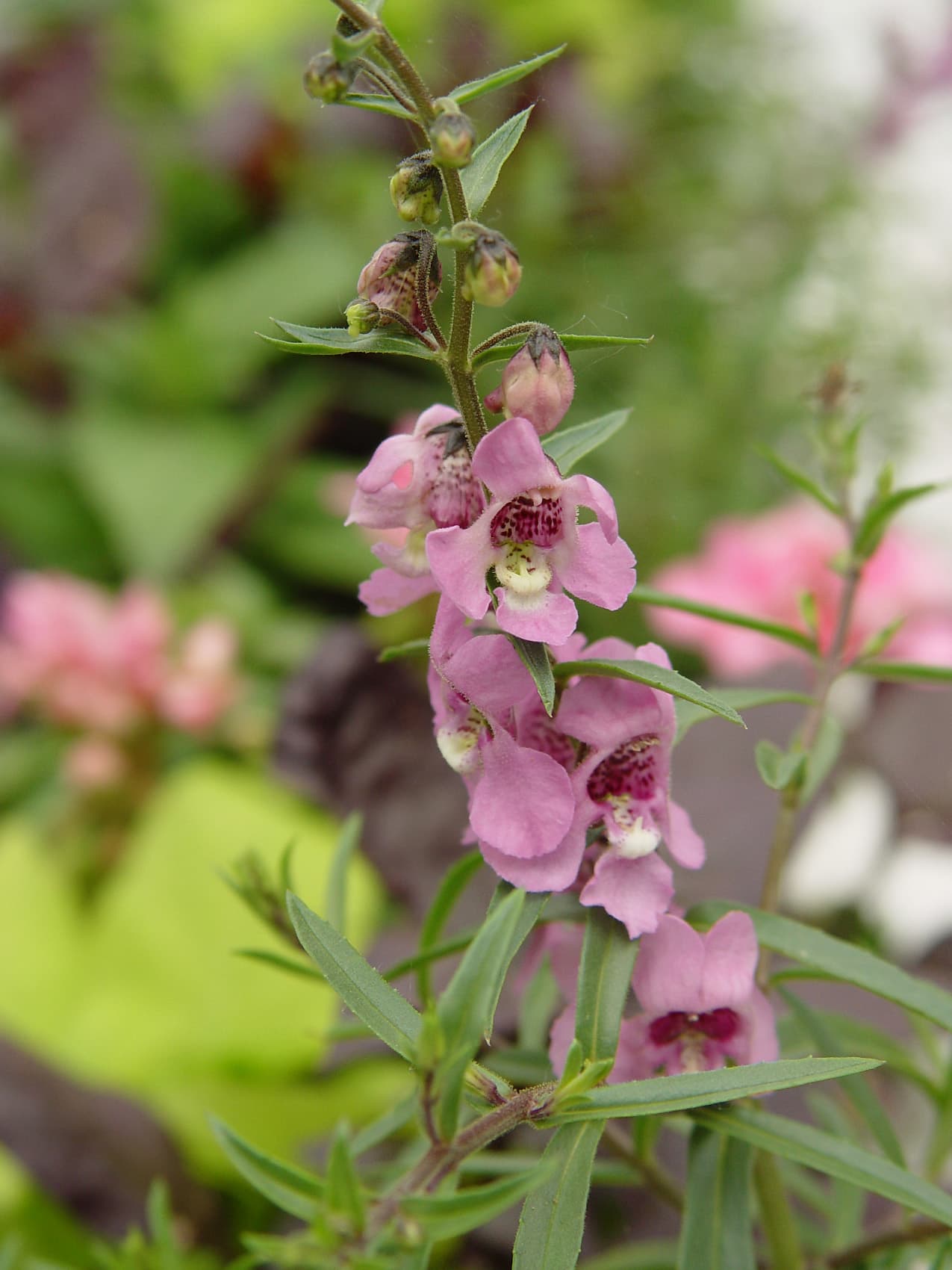
flowerAngelonia, widely sold as summer snapdragon, is a tender perennial grown as an annual that forms upright, bushy plants 12 to 18 in tall topped with loose spikes of small orchid-like flowers in purple, pink, blue, and white. It blooms from June into September and has excellent tolerance for summer heat and humidity along with some drought tolerance, so it keeps performing when many annuals fade. It needs no deadheading and works equally well in beds, borders, and containers, where it adds welcome vertical structure.
☀️
Sun
full sun
💧
Water
Every 3 days
🌸
Bloom
~80 days
📊
Difficulty
easy
🌱
Lifecycle
tender perennial
Perennial in warm zones; grown as an annual where winters freeze
↔️
Spacing
9-12 in apart
⬇️
Planting Depth
Set transplants at the same depth as the cell pack
🧪
Soil pH
5.5-6.5
Growing Details
Soil Type
Moist, fertile, well-drained
Hardiness Zones
Zones 3 – 11
When to Fertilize
Monthly through the growing season
Fertilizer
Balanced general-purpose fertilizer
🌱 Growing Guide
Plant angelonia in full sun in moist, fertile, well-drained soil; it flowers poorly in shade. Once established it handles heat and short dry spells, but steady moisture and a monthly feeding keep it blooming strongly. It is self-cleaning and does not require deadheading, though a light shear can refresh tired plants. Container plants are difficult to overwinter indoors, so most gardeners replant each spring or take cuttings. Choose phytophthora-resistant cultivars such as the Archangel or Serena series where root and stem rot have been a problem.
🌼 Have a different variety?Cultivars of the same species usually share the same basic care, and they differ mainly in flower color, height, and bloom form, not in how you grow them. So this guide still applies even if your exact variety isn't the one shown.
Planting Calendar
Sign in to personalize →🌱
Start seeds indoors
Feb 18
🌿
Transplant outdoors
Apr 29
🌸
Projected first bloom
Jul 18
JJan
FFeb
MMar
AApr
MMay
JJun
JJul
AAug
SSep
OOct
NNov
DDec
✅ Plant alongside
Good neighbors that attract beneficial insects or deter pests
- Lantana: A heat-loving annual that flowers in the same hot, sunny conditions and feeds pollinators
- Salvia: Adds more upright flower spikes and shares the same sun and drought tolerance
- Zinnia: A sun-loving annual that contrasts with angelonia spikes and draws butterflies
🛡️ Pest & disease prevention
Proactive ways to stop trouble before it starts. Tap a name with an arrow for its full guide
Feed on new growth; rinse off and rely on ladybugs and lacewings
White coating in crowded, humid plantings; space for airflow and water at the base
Worse in wet soil; plant in well-drained ground and choose resistant cultivars
🌸 Blooms & cutting
Angelonia needs little upkeep and does not require deadheading to keep flowering. The spikes also make good, long-lasting cut flowers, so cut stems freely for arrangements, which doubles as light pruning that encourages more blooms. Shear plants back lightly in midsummer if they sprawl.
🥗 Nutrition & benefits
Angelonia is an ornamental, not edible. Its value is reliable, upright summer color that thrives in heat and humidity with no deadheading, plus nectar for bees and butterflies. Have a different variety? Cultivars of the same species share the same basic care, so this guide still applies even if your exact color is not shown.
For educational and informational purposes only. HomeSown is not medical, health, or other professional advice. Always positively identify any plant before handling or eating it; some plants, and some parts of otherwise-edible plants, are toxic. Consult a qualified professional before consuming or otherwise using any plant, especially if you are pregnant, nursing, taking medication, or have a health condition.