Use with caution
Use with caution. Avoid ashwagandha during pregnancy and breastfeeding. Use caution if you have a thyroid or autoimmune condition, are scheduled for surgery, or take thyroid, sedative, blood-pressure, diabetes, or immune-suppressing medication. Rare cases of liver injury have been reported - talk to a doctor before using it.
Ashwagandha
Withania somnifera
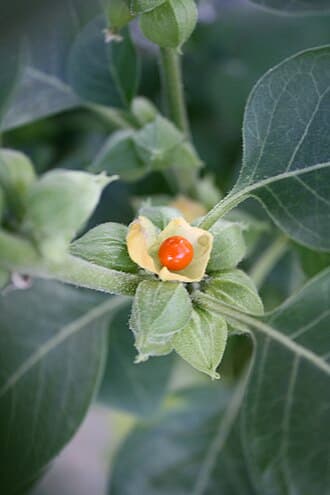
herbAshwagandha (Withania somnifera), also called Indian ginseng or winter cherry, is a small, branching, gray-green shrub in the nightshade family, grown as a warm-season annual for its prized root. Native to the dry regions of India, the Middle East, and Africa, it bears inconspicuous greenish-yellow bell flowers followed by red-orange berries in papery husks like a tomatillo. It is a cornerstone herb of Ayurvedic tradition, the root harvested at the end of a season and dried. Heat-loving and drought-tolerant, it is easy in a hot summer or a container and rewards a long, warm season with a usable root.
☀️
Sun
full sun
💧
Water
Every 10 days
🌾
Harvest
~180 days
📊
Difficulty
medium
🌱
Lifecycle
tender perennial
Perennial in warm zones; grown as an annual where winters freeze
↔️
Spacing
18-24 in. apart
⬇️
Planting Depth
Sow about 1/4 in. deep
🧪
Soil pH
7.0-8.0
Growing Details
Soil Type
Sandy, dry, well-draining
Hardiness Zones
Zones 8 – 11
When to Fertilize
Little; lean soil preferred
Fertilizer
Low; minimal feeding
🌱 Growing Guide
Ashwagandha needs heat, sun, and sharp drainage. Start seed indoors about 6 weeks before the last frost and transplant after the soil is thoroughly warm, or direct-sow in warm soil, spacing plants 18 to 24 in. apart in full sun and sandy, dry, well-drained soil. Water sparingly once established - it is a dryland plant that rots in wet, rich ground and grows a better root under lean, dry conditions. It is a tender perennial only in zones 8 to 11; everywhere colder it is grown as an annual, the root dug at the end of the season, or potted in a 3 to 5 gallon container.
Planting Calendar
Sign in to personalize →🌱
Start seeds indoors
Mar 4
🌿
Transplant outdoors
Apr 29
🌾
Projected first harvest
Oct 26
JJan
FFeb
MMar
AApr
MMay
JJun
JJul
AAug
SSep
OOct
NNov
DDec
✅ Plant alongside
Good neighbors that attract beneficial insects or deter pests
- Pepper: A fellow heat-loving nightshade that shares the warm, sunny, well-drained conditions
- Tomato: Enjoys the same warm-season culture in a hot, sunny bed
- Basil: A warm-season herb that pairs easily and helps fill the bed around the small shrub
🛡️ Pest & disease prevention
Proactive ways to stop trouble before it starts. Tap a name with an arrow for its full guide
As a nightshade it can be peppered by flea beetles - use row cover early and keep plants vigorous
Appear in hot, dry conditions - this dryland plant tolerates them, but rinse leaves if heavy
Hose colonies from tender tips; predators follow outdoors
🌾 Harvest & storage
Harvest the root at the end of the season, about 150 to 180 days from sowing, once the lower leaves yellow and the berries ripen red-orange. Lift the whole plant, cut the root from the stem, wash it, slice it, and dry it thoroughly - it is hard and woody when dry. The dried root is the part used, ground or simmered. The red berries and the leaves are not eaten.
🥗 Nutrition & benefits
Ashwagandha is grown for its root, dried and powdered for traditional Ayurvedic preparations and teas rather than eaten as a vegetable. The plant is also a curiosity in the garden, a tidy nightshade shrub with husked berries that thrives in heat where many herbs struggle.
⚠️ Toxicity & safety
Use with caution. Avoid ashwagandha during pregnancy and breastfeeding. Use caution if you have a thyroid or autoimmune condition, are scheduled for surgery, or take thyroid, sedative, blood-pressure, diabetes, or immune-suppressing medication. Rare cases of liver injury have been reported - talk to a doctor before using it.
For educational and informational purposes only. HomeSown is not medical, health, or other professional advice. Always positively identify any plant before handling or eating it; some plants, and some parts of otherwise-edible plants, are toxic. Consult a qualified professional before consuming or otherwise using any plant, especially if you are pregnant, nursing, taking medication, or have a health condition.