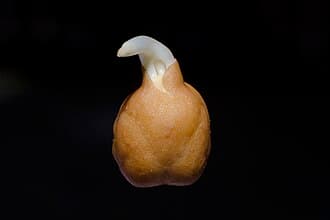
Black Kabouli Chickpea
Cicer arietinum 'Black Kabouli'
vegetableBlack Kabouli is an unusual heirloom chickpea (garbanzo) from Afghanistan, with charcoal-black, knobbly seeds that are even richer in flavor than the familiar tan kind. The plants are small, bushy, and branching, around 1 to 2 feet tall with delicate ferny leaves, carrying short pods that each hold one or two seeds. Chickpea is a cool-season annual legume that needs a fairly long season to dry down, but it is genuinely easy to grow - it can be sown as early as garden peas - and like other pulses it fixes its own nitrogen and is notably drought-tolerant once up.
☀️
Sun
full sun
💧
Water
Every 7 days
🌾
Harvest
~100 days
📊
Difficulty
medium
🌱
Lifecycle
annual
One season, then done
↔️
Spacing
3-6 in apart, rows 18-24 in
⬇️
Planting Depth
1.5-2 in
🧪
Soil pH
6.0-7.0
Growing Details
Soil Type
Well-draining, neutral pH
Hardiness Zones
Zones 4 – 10
Grown as an annual. This range is its winter hardiness, but you can grow it for a single season in any zone.
When to Fertilize
Low nitrogen; inoculate at planting
Fertilizer
Low-nitrogen; Rhizobium inoculant
🌱 Growing Guide
Chickpeas want full sun and a well-drained, near-neutral soil; they do poorly in saline ground and will not tolerate wet or waterlogged soil. Sow around the date of the last spring frost (they take cool weather), or start a few indoors in peat pots to gain time, since the crop needs roughly 100 days. Sow seed 1.5 to 2 inches deep and 3 to 6 inches apart in rows 18 to 24 inches apart, and inoculate with the proper Rhizobium for nitrogen fixation. Keep them on the dry side - chickpeas are drought-tolerant and resent overwatering. The main disease to plan against is Ascochyta blight, a seed- and air-borne fungus, so start with clean seed, rotate crops, and avoid handling plants while wet.
Planting Calendar
Sign in to personalize →🌿
Direct sow
Apr 15
🌾
Projected first harvest
Jul 24
JJan
FFeb
MMar
AApr
MMay
JJun
JJul
AAug
SSep
OOct
NNov
DDec
✅ Plant alongside
Good neighbors that attract beneficial insects or deter pests
- Cucumber: A ground-running crop that uses space around the small upright chickpea plants
- Corn: Shares the bed and benefits from the nitrogen the chickpeas fix
- Marigold: Helps suppress soil nematodes around the planting
❌ Keep away from
OnionGarlic
🛡️ Pest & disease prevention
Proactive ways to stop trouble before it starts. Tap a name with an arrow for its full guide
The key chickpea disease - plant certified disease-free seed, rotate at least three to four years away from chickpea, scout regularly, and never work the plants when foliage is wet
Rinse colonies from new growth and encourage ladybugs and lacewings
A problem in wet ground - plant only in well-drained soil and do not overwater
🌾 Harvest & storage
Chickpeas take about 100 days to mature. For fresh green chickpeas, pick the plump immature pods and eat the seeds like a shelling pea. For dried beans, leave the crop until the whole plant yellows and the leaves wither, then pull the plants and dry them on a warm, airy surface before threshing out the seeds. Each pod yields only one or two seeds, so grow a generous patch.
🥗 Nutrition & benefits
Cooked chickpeas are a nutritional powerhouse at about 164 calories per 100 g, with around 8.9 g protein, a high 7.6 g fiber, a strong 172 mcg folate, plus iron, magnesium, and manganese. Filling and versatile, they are the base of hummus, curries, stews, and roasted snacks; the black-seeded type cooks up especially nutty.
For educational and informational purposes only. HomeSown is not medical, health, or other professional advice. Always positively identify any plant before handling or eating it; some plants, and some parts of otherwise-edible plants, are toxic. Consult a qualified professional before consuming or otherwise using any plant, especially if you are pregnant, nursing, taking medication, or have a health condition.