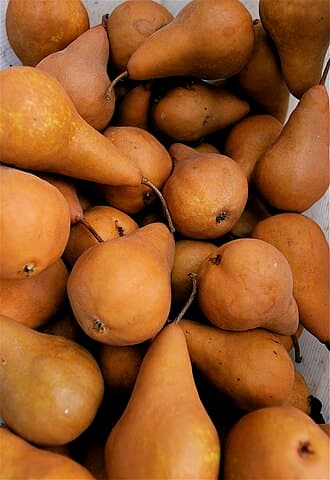
Bosc Pear
Pyrus communis 'Bosc'
fruitBosc is the cinnamon-skinned winter pear with an elongated neck and dense, sweet, spicy flesh that holds its shape under heat. The russet brown skin is natural to the variety and signals the rich honeyed flavor inside. Bosc is the classic baking and poaching pear, equally good fresh once ripened.
☀️
Sun
full sun
💧
Water
Every 5 days
🌾
Harvest
~3 yrs
to first harvest
📊
Difficulty
medium
🌱
Lifecycle
perennial
Comes back every year
↔️
Spacing
15-20 ft (semi-dwarf)
⬇️
Planting Depth
Graft union 2-4 in above soil
🧪
Soil pH
6.0-7.0
Growing Details
Soil Type
Rich, well-draining
Hardiness Zones
Zones 5 – 8
When to Fertilize
Light feed in early spring only
Fertilizer
Compost; avoid heavy nitrogen which encourages fire blight
🌱 Growing Guide
Plant in full sun on well-drained loam in zones 5 to 8. Set the graft union 2 to 4 inches above soil and stake young trees against wind. Train to a central leader, prune in late winter for an open canopy, and keep the trunk free of weeds and rodent damage. Bosc needs a cross-pollinator that blooms in the same window; Bartlett, Anjou, and Comice all work. Trees bear in 4 to 6 years.
Planting Calendar
Sign in to personalize →🌿
Direct sow
Apr 15
🌾
Projected first harvest
Sep 12 · Year 4
JJan
FFeb
MMar
AApr
MMay
JJun
JJul
AAug
SSep
OOct
NNov
DDec
Year 1
✅ Plant alongside
Good neighbors that attract beneficial insects or deter pests
- Chives: Sulfur compounds discourage aphids and pear psylla around the drip line
- Comfrey: Mineral-mining taproot; chop-and-drop leaves return potassium to surface roots
- Yarrow: Hosts hoverflies and parasitic wasps that hunt pear-orchard pests
- White Clover: Orchard-floor nitrogen fixer that adds organic matter and feeds bees
🛡️ Pest & disease prevention
Proactive ways to stop trouble before it starts. Tap a name with an arrow for its full guide
Avoid heavy nitrogen, prune blighted shoots 12 in below cankers during dry weather, and disinfect tools with 10 percent bleach
Apply dormant horticultural oil before bud break and keep the canopy open for predatory insects
Hang pheromone traps, bag fruit, and pick up drops every week
Rake and remove fallen leaves in autumn and prune for airflow; sulfur sprays may be needed in wet years
🌾 Harvest & storage
Bosc is picked firm from late September into October when the russet skin deepens to warm cinnamon brown and the skin shifts from glossy to slightly dull. Refrigerate immediately, then bring to room temperature for 5 to 7 days when you are ready to eat. The flesh is firmer and denser than Anjou or Bartlett, which is why Bosc keeps its shape in baked or poached dishes.
🥗 Nutrition & benefits
Around 57 calories per 100 g with 3.1 g of fiber, 4 mg vitamin C, and 116 mg potassium. Much of a pear's fiber is the soluble pectin concentrated in and just under the skin, so eating Bosc unpeeled retains the most fiber.
⚠️ Toxicity & safety
Eat the flesh, not the seeds. Apple and pear seeds contain amygdalin, a cyanide-releasing compound. Swallowing a seed or two is harmless, but do not deliberately eat or crush the seeds or cores in quantity.
For educational and informational purposes only. HomeSown is not medical, health, or other professional advice. Always positively identify any plant before handling or eating it; some plants, and some parts of otherwise-edible plants, are toxic. Consult a qualified professional before consuming or otherwise using any plant, especially if you are pregnant, nursing, taking medication, or have a health condition.