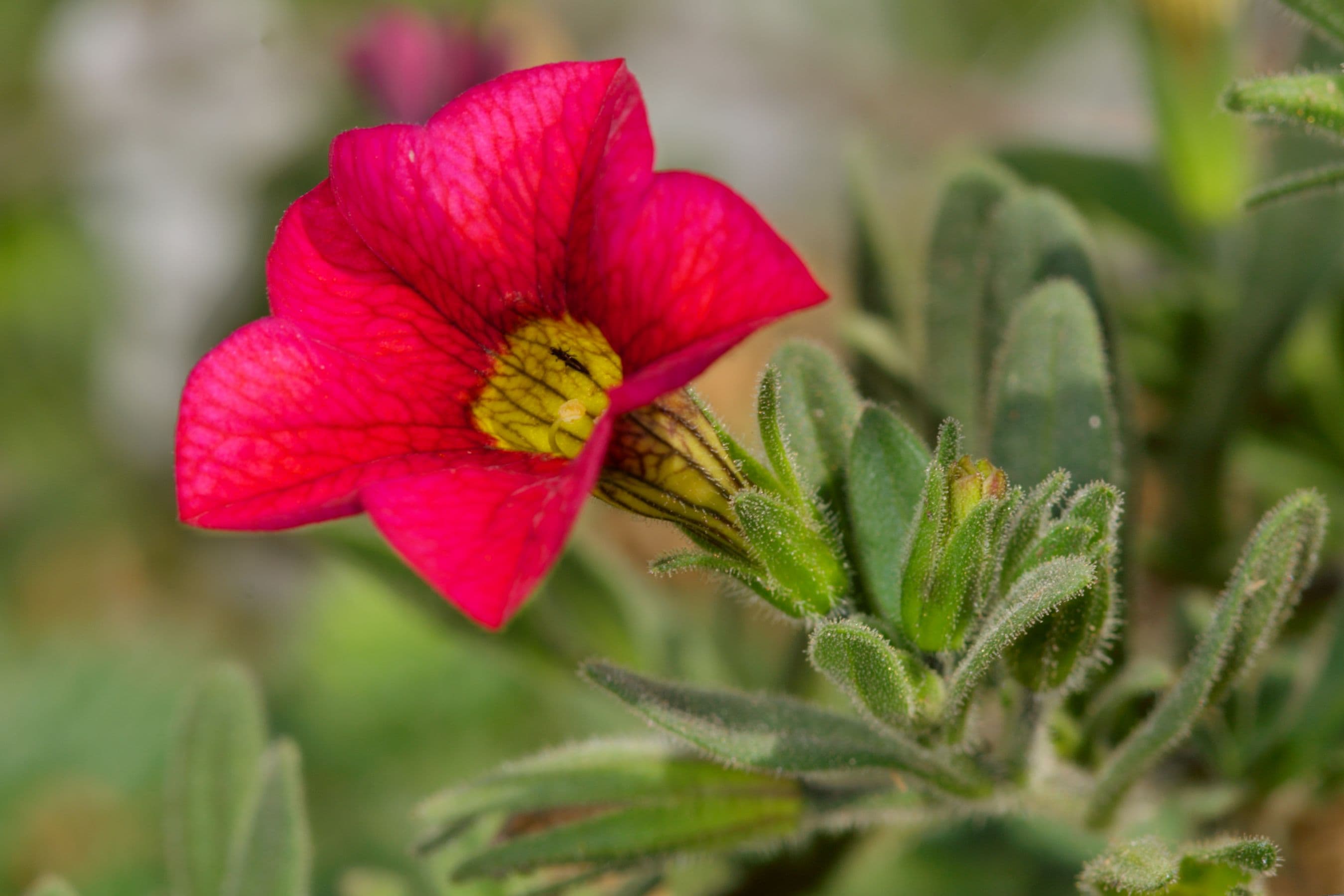
Calibrachoa
Calibrachoa x hybrida
flowerCalibrachoa, sold as Million Bells or trailing petunia, is a tender perennial from South America almost always grown as a warm-season annual. It makes a cascading mound 3 in tall and up to 20 in across, covered from late spring until frost in masses of half-inch bells in nearly every color. It is heat and drought tolerant, does not decline in hot summers, and needs no deadheading, which makes it one of the most popular plants for hanging baskets, window boxes, and mixed containers.
☀️
Sun
full sun
💧
Water
Every 3 days
🌸
Bloom
~60 days
📊
Difficulty
easy
🌱
Lifecycle
tender perennial
Perennial in warm zones; grown as an annual where winters freeze
↔️
Spacing
8-12 in apart
⬇️
Planting Depth
Set transplants at the same depth as the cell pack
🧪
Soil pH
5.5-6.2
Growing Details
Soil Type
Rich, well-drained; fast-draining mix in containers
Hardiness Zones
Zones 3 – 11
When to Fertilize
Slow-release at planting plus dilute liquid feed every 1 to 2 weeks in bloom
Fertilizer
Balanced bloom fertilizer; add iron if leaves yellow
🌱 Growing Guide
Plant calibrachoa in full sun, the more the better, in rich, fast-draining soil or a quality potting mix. It is a heavy feeder that flowers best with a slow-release fertilizer worked in at planting plus a dilute liquid feed every week or two through the season. Keep the mix evenly moist but never waterlogged, since overwatering causes root rot and yellowing. Calibrachoa prefers a slightly acidic root zone and often yellows from iron lockout in high-pH water, which a bloom or acid fertilizer corrects. No deadheading is needed; a light midseason trim revives leggy plants.
🌼 Have a different variety?Cultivars of the same species usually share the same basic care, and they differ mainly in flower color, height, and bloom form, not in how you grow them. So this guide still applies even if your exact variety isn't the one shown.
Planting Calendar
Sign in to personalize →🌱
Start seeds indoors
Feb 4
🌿
Transplant outdoors
Apr 29
🌸
Projected first bloom
Jun 28
JJan
FFeb
MMar
AApr
MMay
JJun
JJul
AAug
SSep
OOct
NNov
DDec
✅ Plant alongside
Good neighbors that attract beneficial insects or deter pests
- Petunia: A close relative with the same sun, water, and feeding needs for a seamless mixed basket
- Bacopa: A trailing white-flowered annual that fills around calibrachoa in containers
- Sweet Alyssum: A low, fragrant filler that draws pollinators and softens container edges
🛡️ Pest & disease prevention
Proactive ways to stop trouble before it starts. Tap a name with an arrow for its full guide
Cluster on tender new growth; rinse off with water and conserve ladybugs and other natural enemies
Flare in hot, dry spells with fine webbing and stippled leaves; raise humidity and rinse foliage
Caused by overwatering and poor drainage; use a fast-draining mix and let the surface dry between waterings
🌸 Blooms & cutting
Calibrachoa is grown for continuous color rather than harvest. It is self-cleaning and does not need deadheading, but if plants stretch and go bald in the center by midsummer, shear them back by about a third and feed to bring on a fresh flush. Keep containers watered and fed and the bloom continues right up to frost.
🥗 Nutrition & benefits
Calibrachoa is an ornamental, not edible. Its garden value is nonstop, low-care color in containers and baskets and a steady nectar source that draws bees, butterflies, and hummingbirds all season. Have a different variety? Cultivars of the same species share the same basic care, so this guide still applies even if your exact color is not shown.
For educational and informational purposes only. HomeSown is not medical, health, or other professional advice. Always positively identify any plant before handling or eating it; some plants, and some parts of otherwise-edible plants, are toxic. Consult a qualified professional before consuming or otherwise using any plant, especially if you are pregnant, nursing, taking medication, or have a health condition.