Use with caution
All parts of cardinal flower contain alkaloids (including lobeline) and are poisonous if eaten in quantity, causing nausea, vomiting, diarrhea, and in severe cases convulsions and coma. It is also toxic to cats, dogs, and horses. Grow it as an ornamental only and keep it away from children and pets.
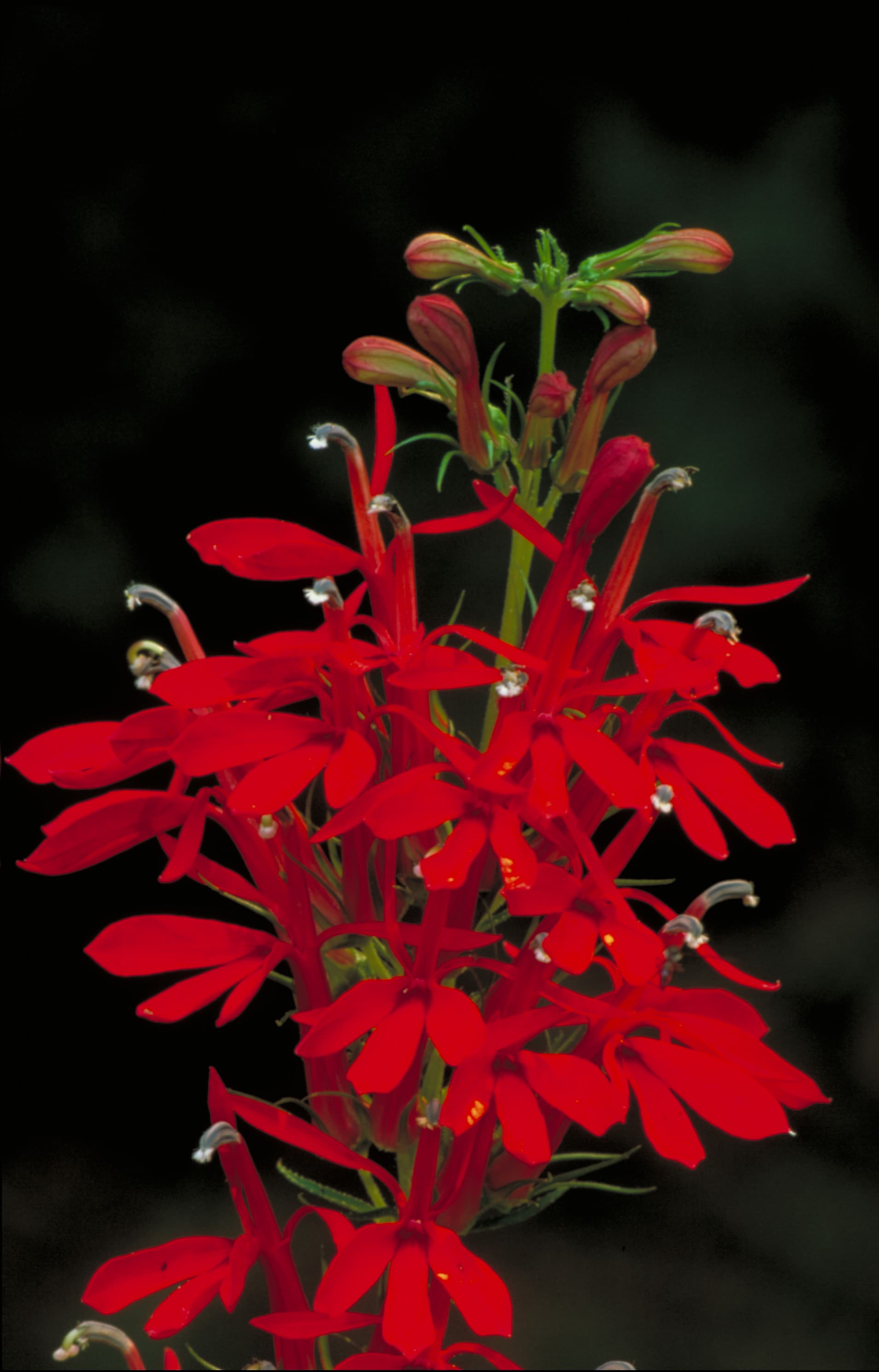
Cardinal Flower
Lobelia cardinalis
flowerCardinal flower (Lobelia cardinalis) is a striking native perennial of eastern North America, growing 4 to 5 ft tall and topped in late summer and fall by spikes of brilliant, velvety scarlet-red flowers - one of the best hummingbird plants there is. Unlike most showy perennials it loves consistently moist to wet soil, thriving along streams, pond edges, and in rain gardens. It can be short-lived but self-sows and re-roots from its basal rosettes to persist. It was named NC Wildflower of the Year three times.
☀️
Sun
full sun
💧
Water
Every 3 days
🌸
Bloom
~90 days
📊
Difficulty
medium
🌱
Lifecycle
perennial
Comes back every year
↔️
Spacing
12-18 in apart
⬇️
Planting Depth
Set the crown at the soil line; keep the basal rosette uncovered
🧪
Soil pH
6.0-7.0
Growing Details
Soil Type
Rich, constantly moist to wet
Hardiness Zones
Zones 3 – 9
When to Fertilize
Light feeding in spring; rich moist soil suits it
Fertilizer
Balanced or compost
🌱 Growing Guide
Plant cardinal flower in full sun to partial shade in rich, humusy soil that stays constantly moist to wet; the soil should never be allowed to dry out, and the plant even tolerates brief flooding, making it ideal for low, soggy spots where little else showy will grow. In cold climates, mulch lightly over winter but do not bury the evergreen basal rosette, which needs air. Deadheading can prompt some rebloom. Let some flowers set seed, or divide the offset rosettes in spring, to keep this sometimes short-lived plant going year after year.
🌼 Have a different variety?Cultivars of the same species usually share the same basic care, and they differ mainly in flower color, height, and bloom form, not in how you grow them. So this guide still applies even if your exact variety isn't the one shown.
Planting Calendar
Sign in to personalize →🌿
Direct sow
Apr 15
🌸
Projected first bloom
Jul 14
JJan
FFeb
MMar
AApr
MMay
JJun
JJul
AAug
SSep
OOct
NNov
DDec
✅ Plant alongside
Good neighbors that attract beneficial insects or deter pests
- Blue Flag Iris: A native that shares the wet, sunny conditions of pond and stream edges
- Swamp Milkweed: Another moisture-loving native that supports pollinators alongside it
- Fern: Thrives in the same rich, moist soil and softens the planting
🛡️ Pest & disease prevention
Proactive ways to stop trouble before it starts. Tap a name with an arrow for its full guide
🌸 Blooms & cutting
Cardinal flower is grown for its hummingbird-drawing spikes in the garden, not for cutting or eating (all parts are poisonous). To keep this short-lived perennial going, let some spikes set and drop seed, or divide the basal offset rosettes in spring and replant them. Light deadheading can bring a little rebloom.
🥗 Nutrition & benefits
Cardinal flower is an ornamental, not edible, and all parts are poisonous. Its value is unmatched late-season scarlet color for wet ground and rain gardens, and an outstanding nectar source for hummingbirds and butterflies. Have a different variety? Cultivars of the same species share the same basic care, so this guide still applies even if your exact form is not shown.
⚠️ Toxicity & safety
All parts of cardinal flower contain alkaloids (including lobeline) and are poisonous if eaten in quantity, causing nausea, vomiting, diarrhea, and in severe cases convulsions and coma. It is also toxic to cats, dogs, and horses. Grow it as an ornamental only and keep it away from children and pets.
For educational and informational purposes only. HomeSown is not medical, health, or other professional advice. Always positively identify any plant before handling or eating it; some plants, and some parts of otherwise-edible plants, are toxic. Consult a qualified professional before consuming or otherwise using any plant, especially if you are pregnant, nursing, taking medication, or have a health condition.