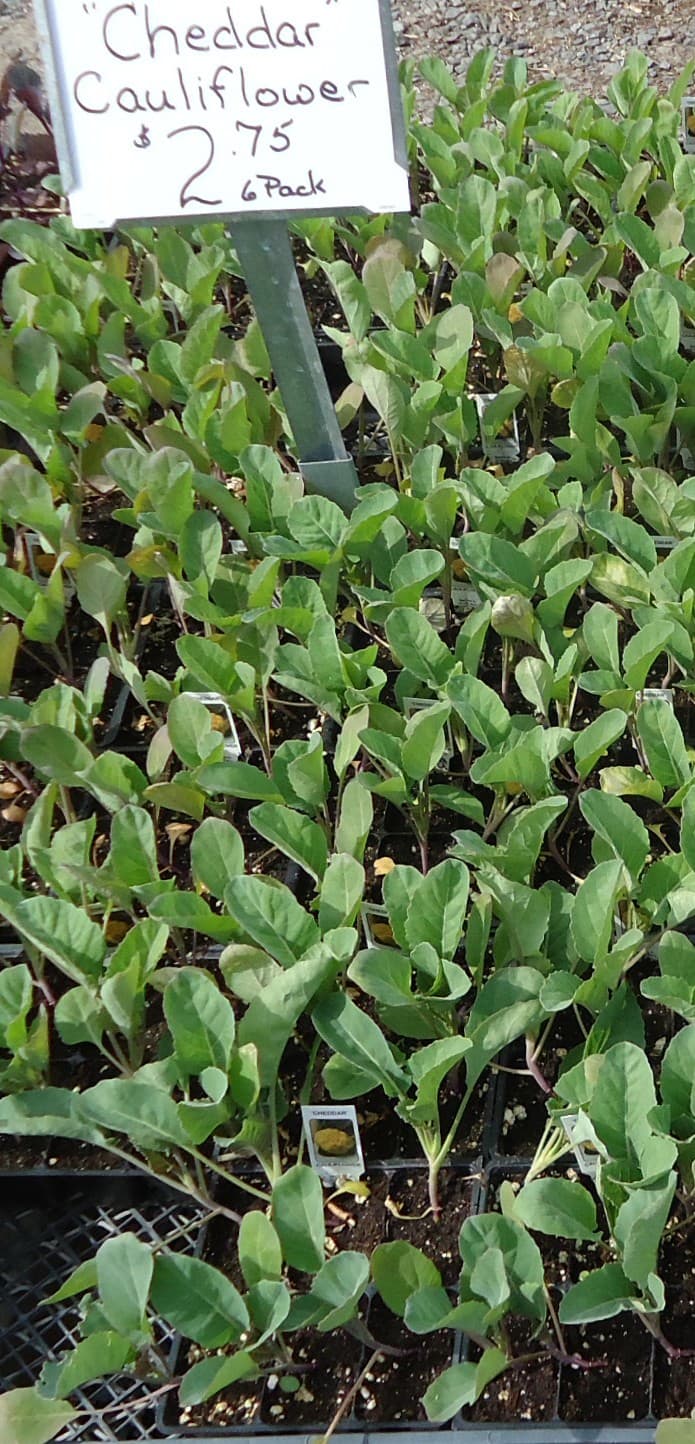
Cheddar Cauliflower
Brassica oleracea 'Cheddar'
vegetableA striking bright orange cauliflower containing 25 times more beta-carotene (vitamin A) than white cauliflower. Orange color is caused by a natural genetic mutation that concentrates the same beta-carotene found in carrots. Flavor is mild and slightly sweeter than white cauliflower. The orange color intensifies when cooked. A nutritional powerhouse in an eye-catching package.
☀️
Sun
full sun
💧
Water
Every 2 days
🌾
Harvest
~70 days
📊
Difficulty
medium
🌱
Lifecycle
biennial
Leaves year 1, flowers year 2
↔️
Spacing
18-24 in
⬇️
Planting Depth
1/4 in seed; transplant to first true leaf
🧪
Soil pH
6.0-7.5
Growing Details
Soil Type
Rich, well-draining
Hardiness Zones
Zones 3 – 10
Grown as an annual. This range is its winter hardiness, but you can grow it for a single season in any zone.
When to Fertilize
At transplant; nitrogen side-dress 3 weeks after transplanting; phosphorus boost as head forms
Fertilizer
Balanced 10-10-10 at transplant; high-nitrogen formula during leaf development
🌱 Growing Guide
Identical to Snowball cauliflower in culture. Start indoors 4 to 6 weeks before last frost. Transplant into cool soil. Cheddar cauliflower does not need blanching (tying leaves over the head) to develop color. In fact the head develops best color with some sun exposure. Grow as a fall crop in most areas for best results. Head size is similar to white varieties.
Planting Calendar
Sign in to personalize →spring planting
🌱
Start seeds indoors
Mar 4
🌿
Transplant outdoors
Apr 1
🌾
Projected first harvest
Jun 10
fall planting
🌱
Start seeds indoors
Jun 23
🌿
Transplant outdoors
Jul 28
🌾
Projected first harvest
Oct 6
JJan
FFeb
MMar
AApr
✅ Plant alongside
Good neighbors that attract beneficial insects or deter pests
- Onion: Deters aphids and cabbage moths from brassica beds
- Dill: Attracts beneficial wasps that parasitize cabbage worms
- Marigold: Deters cabbage root fly and nematodes
- Celery: Said to repel white cabbage moth when planted as a border
❌ Keep away from
StrawberryTomato
🛡️ Pest & disease prevention
Proactive ways to stop trouble before it starts. Tap a name with an arrow for its full guide
Inspect weekly for white butterfly eggs; Bt spray at early caterpillar stage; row cover
Water blast colonies off; insecticidal soap; introduce parasitic wasps
Brassica collars at transplanting; row cover; beneficial nematodes in soil
Use certified disease-free transplants; avoid overhead watering; copper spray if detected
🌾 Harvest & storage
Harvest when the head is firm, compact, and 6 to 8 inches across. The orange color should be uniform and vibrant. Heads that sit too long begin to separate (riceing). Cut with several wrapper leaves attached to protect the head. Refrigerate for up to 2 weeks. Orange color deepens when roasted at high heat.
🥗 Nutrition & benefits
Exceptional source of beta-carotene (25x more than white cauliflower), vitamin C, vitamin K, folate, and glucosinolates. The orange pigment is directly converted to vitamin A in the body. High in sulforaphane and indole-3-carbinol, compounds studied for cancer-preventive properties.
For educational and informational purposes only. HomeSown is not medical, health, or other professional advice. Always positively identify any plant before handling or eating it; some plants, and some parts of otherwise-edible plants, are toxic. Consult a qualified professional before consuming or otherwise using any plant, especially if you are pregnant, nursing, taking medication, or have a health condition.