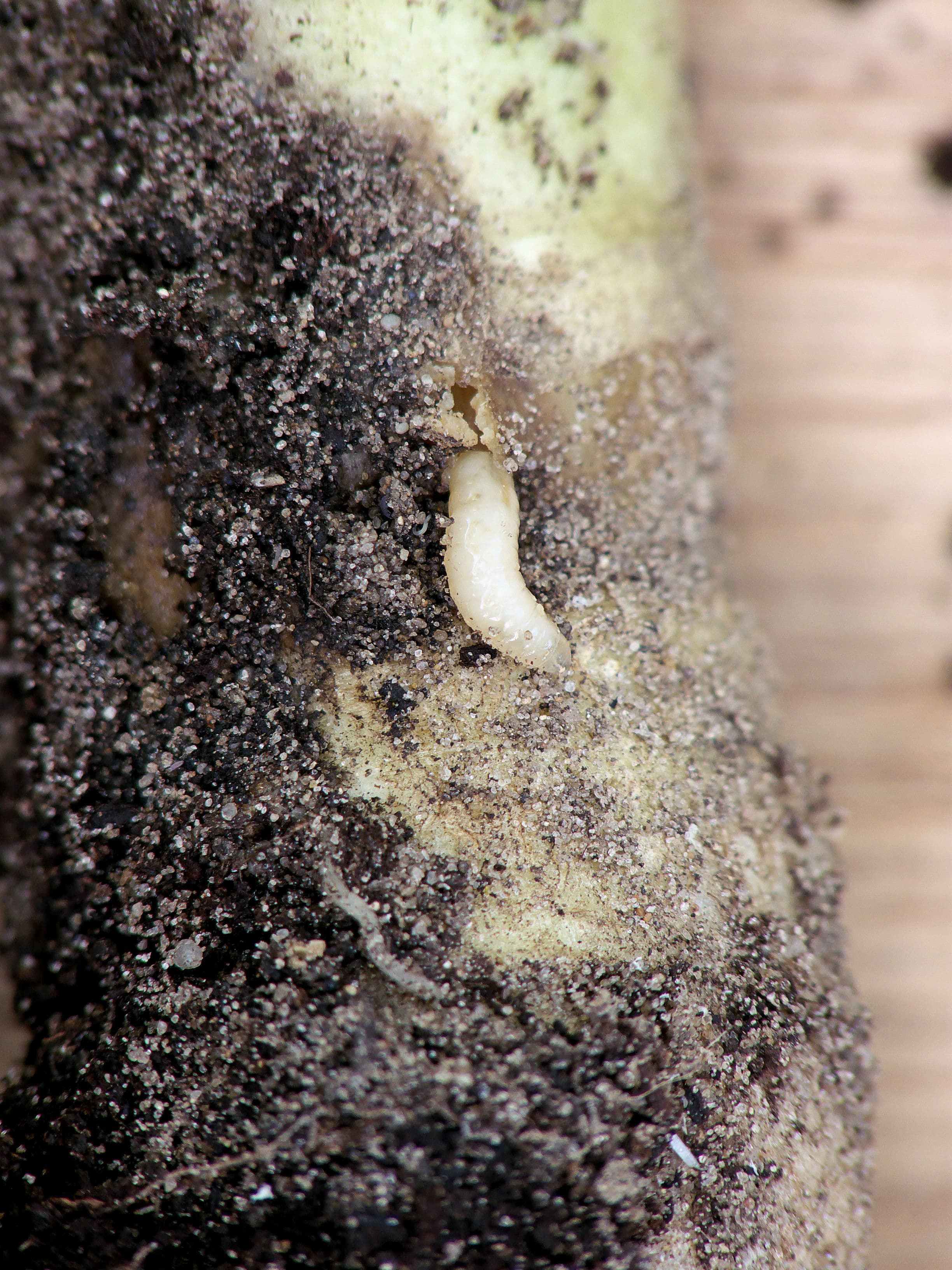
Cabbage Maggot
Delia radicum
The maggot of a gray fly that attacks the roots of cabbage and its relatives, especially cool-season and early transplants. Because the larvae feed underground on the roots, the first sign is often a plant that suddenly wilts, stunts, or topples for no visible reason above the soil.
🔎 How to spot it
The adult is a delicate dark-gray fly about a quarter inch long, covered in fine black hairs and easily mistaken for a small house fly or the seedcorn maggot fly. It lays small white torpedo-shaped eggs at the base of the stem and in the soil right next to young plants. The maggots are small, legless, yellowish-white grubs with pointed heads and a blunt rear, found tunneling in the roots when an affected plant is lifted.
🥀 Damage it causes
The maggots tunnel into the feeder roots and the main taproot, cutting off water and nutrient uptake so plants wilt, yellow, grow poorly, or die, with seedlings and new transplants hit hardest. The wounds also let in rot organisms such as blackleg and soft rot. Root crops in the family, like radish and turnip, are scarred and made unmarketable.
🛡️ Prevent it
Rotate brassicas to a new spot each year and clean up crop residue, since the fly overwinters as pupae in the soil where the crop grew. Fit a collar of cardboard, felt, or similar material snugly around the base of each transplant so females cannot lay eggs against the stem. Float row cover sealed at the edges over the bed from transplanting to block the egg-laying flies, and avoid setting transplants out during the peak of the first spring flight.
🧯 If it is already here
There is no effective rescue once maggots are in the roots, so the controls are preventive: stem collars, row cover, and rotation. Drenching the root zone with beneficial nematodes such as Steinernema feltiae can reduce larvae in the soil. Yellow sticky cards or water pan traps at the bed edge in early spring tell you when the flies are active so covers go on in time.
💡 Good to know
Because all the damage is underground and irreversible, this is a pest you beat by keeping the fly from ever laying eggs at the stem. Collars and row cover on early transplants are the backbone of home-garden control, with crop rotation breaking the cycle year to year.
🌱 Plants it attacks
41 plants in the library can be attacked by this pest
 Arugula🥕Black Spanish Radish
 Bok Choy
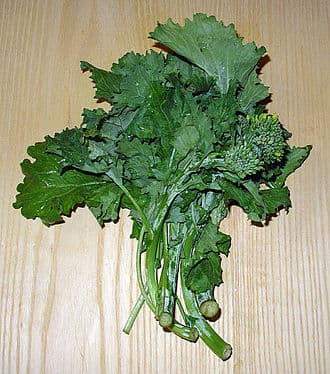 Broccoli Rabe
 Brussels Sprouts
 Calabrese Broccoli🥬Champion Collards
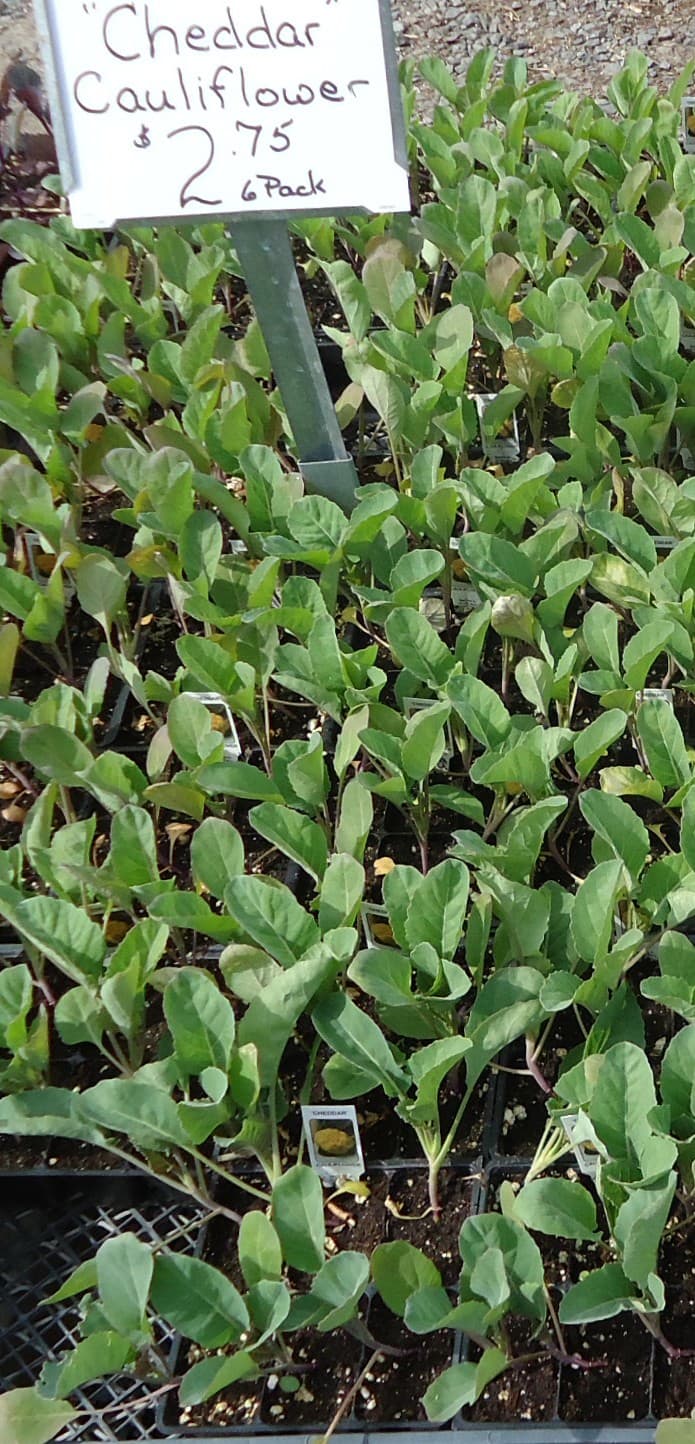 Cheddar Cauliflower
 Cherry Belle Radish
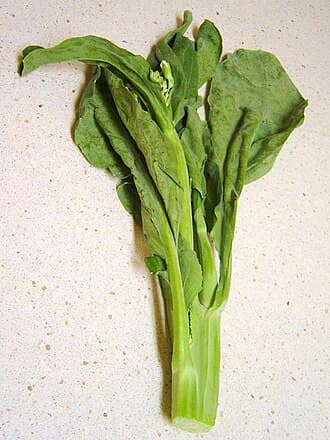 Chinese Broccoli
 Daikon Radish
 De Cicco Broccoli
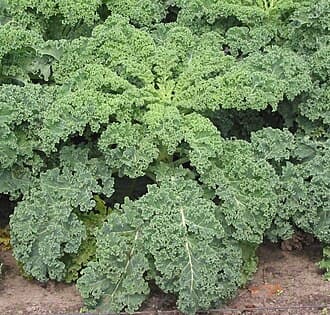 Dwarf Blue Curled Vates Kale🥬Dwarf Siberian Kale🌸Easter Egg Radish🥕French Breakfast Radish
 Green Cabbage
 Hakurei Turnip
 Horseradish
 January King Cabbage
 Kohlrabi
 Lacinato Kale
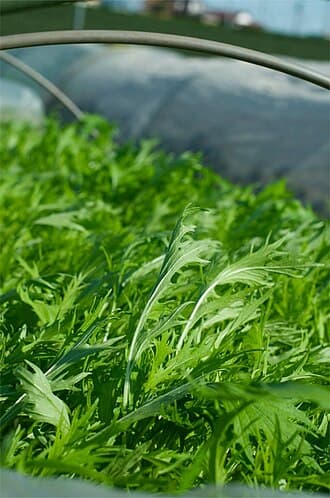 Mizuna
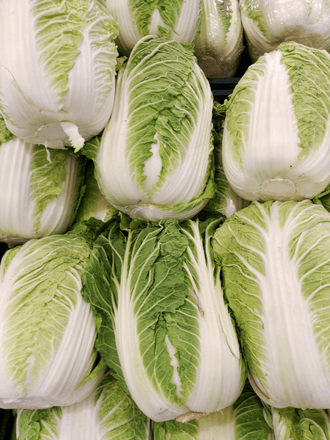 Napa Cabbage🥦Purple Cape Cauliflower
 Purple Sprouting Broccoli
 Purple Top Turnip
 Red Cabbage
 Red Russian Kale
 Redbor Kale
 Romanesco Cauliflower
 Rutabaga
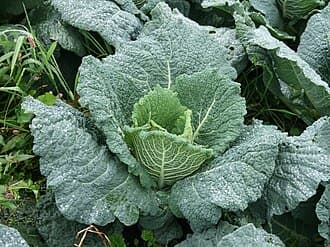 Savoy Cabbage
 Sea Kale🥦Snowball Cauliflower
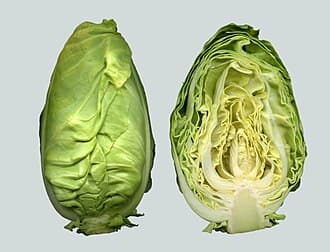 Sweetheart Cabbage
 Tatsoi
 Turnip Greens
 Watercress🥕Watermelon Radish
 White Mustard
For educational and informational purposes only. Pest control advice is general guidance drawn from university cooperative extension sources; always identify a pest positively and read and follow the label on any product before use, especially around food crops, children, and pets.