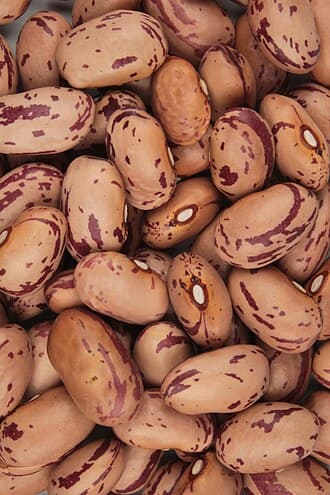
Cranberry Bean
Phaseolus vulgaris 'Cranberry'
vegetableA beautiful speckled shell bean with creamy white pods splashed with vivid red-pink markings that fade to tan when dried. The fresh-shelled beans are nutty and creamy. A staple of Italian, Portuguese, and South American cooking. Can be eaten fresh-shelled (like lima beans) or as a dried bean. One of the most ornamental beans for the vegetable garden.
☀️
Sun
full sun
💧
Water
Every 3 days
🌾
Harvest
~70 days
📊
Difficulty
easy
🌱
Lifecycle
annual
One season, then done
↔️
Spacing
4-6 in (bush) or 6 in (pole)
⬇️
Planting Depth
1-1.5 in
🧪
Soil pH
6.0-7.5
Growing Details
Soil Type
Average, well-draining
Hardiness Zones
Zones 3 – 10
Grown as an annual. This range is its winter hardiness, but you can grow it for a single season in any zone.
When to Fertilize
Inoculate seeds before planting; no nitrogen fertilizer needed
Fertilizer
Low-nitrogen compost at planting only
🌱 Growing Guide
Direct sow after last frost when soil is above 60 F. Cranberry beans are bush or pole type depending on variety. Check the seed packet. Bush types need no support; pole types need a trellis. Water moderately. The beautiful red-splashed pods fade to tan as they dry. For the best flavor, harvest at the fresh shell stage when pods are plump but before they yellow.
Planting Calendar
Sign in to personalize →🌿
Direct sow
Apr 29
🌾
Projected first harvest
Jul 8
JJan
FFeb
MMar
AApr
MMay
JJun
JJul
AAug
SSep
OOct
NNov
DDec
✅ Plant alongside
Good neighbors that attract beneficial insects or deter pests
- Corn: Classic three sisters partner providing support for pole types
- Squash: Ground cover combination; three sisters
- Summer Savory: Traditional bean companion; deters bean beetles
- Cucumber: Compatible warm-season companion with different pest profiles
❌ Keep away from
OnionGarlicBeets
🛡️ Pest & disease prevention
Proactive ways to stop trouble before it starts. Tap a name with an arrow for its full guide
Row cover early; handpick adults and orange larvae; neem oil spray
Water blast; insecticidal soap; beneficial insect habitat nearby
Bt spray when larvae are small; remove rolled leaf shelters
Ensure spacing and airflow; avoid overhead watering
🌾 Harvest & storage
For fresh shell beans: harvest when pods are fully plump and the red markings are vivid. Pods will feel rounded when you run your hand along them. Cook like fresh limas. Simmer 20 to 30 minutes. For dry beans: allow pods to brown and rattle on the plant. Store dry beans up to 3 years in airtight containers.
🥗 Nutrition & benefits
Excellent source of plant protein, fiber, folate, iron, and potassium. Contains anthocyanins in the red-splashed pods. One of the most nutrient-dense beans available. Used in traditional South American and Mediterranean cuisines as a staple protein source.
For educational and informational purposes only. HomeSown is not medical, health, or other professional advice. Always positively identify any plant before handling or eating it; some plants, and some parts of otherwise-edible plants, are toxic. Consult a qualified professional before consuming or otherwise using any plant, especially if you are pregnant, nursing, taking medication, or have a health condition.