Toxic if eaten
Toxic - not an edible pea. Despite the name, sweet pea seeds and pods are poisonous; eating the seeds can cause a condition called lathyrism (weakness and paralysis). Do not plant where the pods might be confused with edible garden peas, and keep them away from children and pets.
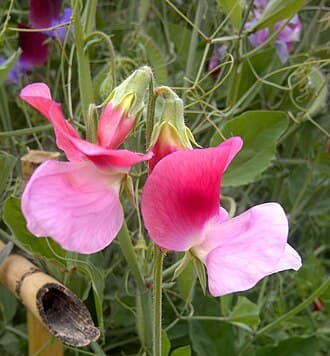
Cupani Sweet Pea
Lathyrus odoratus 'Cupani'
flowerCupani is the original 1699 heirloom sweet pea, prized above all others for a powerful honey-and-orange-blossom fragrance. Slender climbing vines reach 6 feet and carry small bicolor blooms with deep maroon-purple upper petals and violet-blue wings. A cool-season annual best sown early, and strictly an ornamental cut flower, not the edible pea.
☀️
Sun
full sun
💧
Water
Every 3 days
🌸
Bloom
~90 days
📊
Difficulty
medium
🌱
Lifecycle
annual
One season, then done
↔️
Spacing
6-8 in. apart
⬇️
Planting Depth
Seed 1/2-1 in. deep
🧪
Soil pH
7.0-7.5
Growing Details
Soil Type
Rich, well-draining
Hardiness Zones
Zones 3 – 10
Grown as an annual. This range is its winter hardiness, but you can grow it for a single season in any zone.
When to Fertilize
At planting and again when buds form
Fertilizer
Balanced, then high-potassium for blooms
🌱 Growing Guide
Soak seeds overnight or nick the coats, then sow them 1/2 to 1 inch deep as soon as the soil can be worked in early spring (or in fall in mild-winter regions), since sweet peas need cool weather to establish. Provide a trellis, netting, or strings at sowing because the vines climb by tendrils. Pinch the tips when seedlings reach 6 inches to force side shoots. Sweet peas prefer rich, deeply dug, slightly alkaline soil, so add lime if your soil is acidic. Mulch and shade the roots to keep them cool, and water consistently.
🌼 Have a different variety?Cultivars of the same species usually share the same basic care, and they differ mainly in flower color, height, and bloom form, not in how you grow them. So this guide still applies even if your exact variety isn't the one shown.
Planting Calendar
Sign in to personalize →🌱
Start seeds indoors
Mar 4
🌿
Transplant outdoors
Mar 18
🌸
Projected first bloom
Jun 16
JJan
FFeb
MMar
AApr
MMay
JJun
JJul
AAug
SSep
OOct
NNov
DDec
✅ Plant alongside
Good neighbors that attract beneficial insects or deter pests
- Cornflower: Shares the cool-season cutting bed and draws bees and beneficial hoverflies
- Snapdragon: Attracts the bumblebees that also work sweet pea blooms
- Sweet Alyssum: A low carpet that shades the roots cool and pulls in aphid-eating hoverflies
🛡️ Pest & disease prevention
Proactive ways to stop trouble before it starts. Tap a name with an arrow for its full guide
Encourage ladybugs and hoverflies with nearby alyssum and blast colonies off with water before they spread virus
Protect young seedlings with grit or traps in the cool damp of early spring
Give the vines full sun and airflow on a trellis and water at the base as summer heat arrives
🌸 Blooms & cutting
Pick flowers daily and never let pods form, because once a plant sets seed it stops blooming. Cut stems in the cool of the morning when the lowest one or two flowers on the stem are open. Frequent cutting keeps Cupani producing its intensely fragrant blooms for weeks.
🥗 Nutrition & benefits
Highly fragrant flowers draw bumblebees and other long-tongued bees. Note: sweet pea is strictly ornamental - its seeds and pods are toxic if eaten and must not be confused with the edible garden pea.
⚠️ Toxicity & safety
Toxic - not an edible pea. Despite the name, sweet pea seeds and pods are poisonous; eating the seeds can cause a condition called lathyrism (weakness and paralysis). Do not plant where the pods might be confused with edible garden peas, and keep them away from children and pets.
For educational and informational purposes only. HomeSown is not medical, health, or other professional advice. Always positively identify any plant before handling or eating it; some plants, and some parts of otherwise-edible plants, are toxic. Consult a qualified professional before consuming or otherwise using any plant, especially if you are pregnant, nursing, taking medication, or have a health condition.