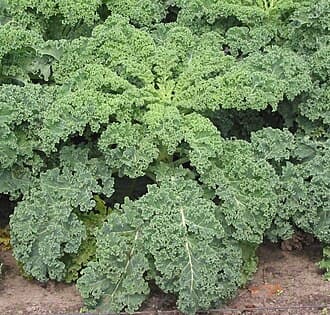
Dwarf Blue Curled Vates Kale
Brassica oleracea (Acephala Group) 'Vates'
vegetableDwarf Blue Curled Vates is the standard curly kale of American gardens - compact plants 12 to 16 in. tall packed with tightly ruffled, blue-green leaves. The Vates strain was selected for cold-hardiness, slow bolting, and a low, non-trailing habit that holds up to wind and snow, so it stands in the garden well into winter and is the classic kale for braising, chips, and soups. The curled leaves hold dressing and crisp up beautifully roasted.
☀️
Sun
full sun
💧
Water
Every 3 days
🌾
Harvest
~55 days
📊
Difficulty
easy
🌱
Lifecycle
biennial
Leaves year 1, flowers year 2
↔️
Spacing
12-18 in. apart
⬇️
Planting Depth
Seed 1/2 in. deep
🧪
Soil pH
6.0-7.5
Growing Details
Soil Type
Rich, well-draining, loamy
Hardiness Zones
Zones 3 – 9
Grown as an annual. This range is its winter hardiness, but you can grow it for a single season in any zone.
When to Fertilize
At planting and every 4 to 6 weeks
Fertilizer
Nitrogen-rich or balanced 10-10-10
🌱 Growing Guide
Direct sow Vates kale 1/2 in. deep as soon as soil can be worked in spring, or start indoors 4 to 6 weeks before the last frost and set out 2 weeks before it; sow again in mid to late summer for a fall and winter crop. Space plants 12 to 18 in. apart in rows 18 to 24 in. apart, in full sun and rich, well-drained soil. Keep moisture steady and feed with nitrogen for lush leaves. Harvest outer leaves continuously; light frosts only improve the flavor.
Planting Calendar
Sign in to personalize →spring planting
🌱
Start seeds indoors
Feb 11
🌿
Transplant outdoors
Mar 18
🌾
Projected first harvest
May 12
fall planting
🌱
Start seeds indoors
Jul 28
🌿
Transplant outdoors
Sep 1
🌾
Projected first harvest
Oct 26
JJan
FFeb
MMar
AApr
✅ Plant alongside
Good neighbors that attract beneficial insects or deter pests
- Beets: Share a bed neatly with leafy kale and draw different nutrients
- Onions: Pungent scent helps confuse the cabbage pests that hunt brassicas
- Dill: Attracts parasitic wasps and ladybugs that hunt aphids and caterpillars
- Nasturtium: Trap crop that lures aphids and flea beetles away from the kale
❌ Keep away from
StrawberryTomatoPole Beans
🛡️ Pest & disease prevention
Proactive ways to stop trouble before it starts. Tap a name with an arrow for its full guide
Floating row cover from transplant, handpicking, and Bt for heavy infestations
Exclude the moths with row cover; Bt handles larvae
Blast colonies off the curled leaves with water and plant dill or alyssum for predators; the ruffled leaves can hide aphids, so scout closely
Row cover young plants against shothole feeding
Handpick adults and egg clusters and clean up brassica debris in fall
🌾 Harvest & storage
Begin harvesting Vates at about 55 days, or earlier for baby leaves. Pick the outer leaves from the bottom up, leaving the central rosette to keep generating new growth for months. The tightly curled leaves trap grit, so wash well. Flavor sweetens markedly after frost, and in many zones the compact plants keep producing through winter under a little mulch or row cover.
🥗 Nutrition & benefits
Curly kale is a vitamin powerhouse - a 100 g serving provides many times the daily value of vitamin K, abundant vitamin A as beta-carotene, around 90 to 120 mg of vitamin C, plus lutein and zeaxanthin for eye health and a useful dose of calcium and fiber, all at very few calories. Cooking concentrates the minerals while softening the sturdy curled leaves.
For educational and informational purposes only. HomeSown is not medical, health, or other professional advice. Always positively identify any plant before handling or eating it; some plants, and some parts of otherwise-edible plants, are toxic. Consult a qualified professional before consuming or otherwise using any plant, especially if you are pregnant, nursing, taking medication, or have a health condition.