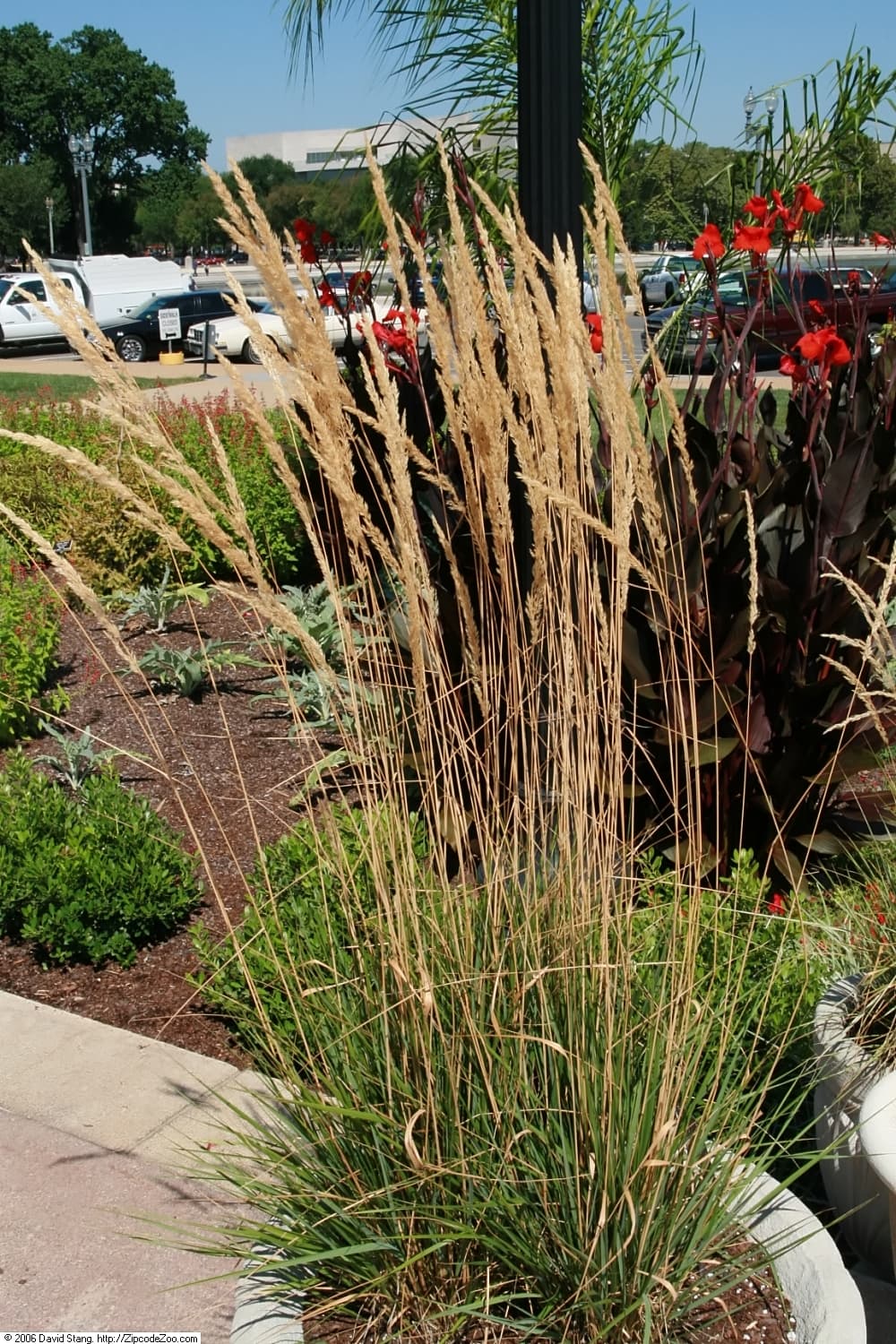
Feather Reed Grass
Calamagrostis x acutiflora
flowerFeather reed grass (Calamagrostis x acutiflora) is a cool-season ornamental grass prized for its strictly vertical, columnar habit, reaching 3 to 5 ft in flower. It blooms earlier than most grasses, sending up narrow feathery plumes in early summer that shift from pinkish to a warm wheat-tan and stand stiffly into winter. The widely grown forms such as Karl Foerster are sterile hybrids that set no viable seed, so they will not self-sow or become invasive - a key reason it is one of the most recommended landscape grasses.
☀️
Sun
full sun
💧
Water
Every 6 days
🌸
Bloom
~90 days
📊
Difficulty
easy
🌱
Lifecycle
perennial
Comes back every year
↔️
Spacing
18-36 in apart
⬇️
Planting Depth
Set at the same depth as the nursery pot
🧪
Soil pH
5.5-7.0
Growing Details
Soil Type
Fertile, well-drained; tolerates clay
Hardiness Zones
Zones 4 – 9
When to Fertilize
Light feeding in spring
Fertilizer
Balanced; low needs
🌱 Growing Guide
Plant feather reed grass in full sun in fertile, well-drained soil, though it tolerates clay and a range of moisture from dry to wet. As a cool-season grass it does most of its growing in spring and fall and can struggle in the heat and humidity of the deep South, where a little afternoon shade helps it through summer. Water to establish; it is otherwise low-maintenance. Cut the clump to the ground in late winter or very early spring before new growth starts, since it greens up early. Divide every few years if the center thins.
🌼 Have a different variety?Cultivars of the same species usually share the same basic care, and they differ mainly in flower color, height, and bloom form, not in how you grow them. So this guide still applies even if your exact variety isn't the one shown.
Planting Calendar
Sign in to personalize →🌿
Direct sow
Apr 15
🌸
Projected first bloom
Jul 14
JJan
FFeb
MMar
AApr
MMay
JJun
JJul
AAug
SSep
OOct
NNov
DDec
✅ Plant alongside
Good neighbors that attract beneficial insects or deter pests
- Coneflower: A summer perennial whose blooms contrast with the vertical plumes
- Sedum: Autumn sedums echo the fall season and share full sun and drainage
- Catmint: A soft, billowing perennial that offsets the strict upright grass
🛡️ Pest & disease prevention
Proactive ways to stop trouble before it starts. Tap a name with an arrow for its full guide
🌸 Blooms & cutting
The early, narrow plumes are excellent fresh or dried, so cut them as they emerge for arrangements. Leave the rest standing for winter structure, then cut the whole clump to a few inches in late winter - do this early, because feather reed grass resumes growth sooner than most grasses.
🥗 Nutrition & benefits
Feather reed grass is an ornamental, not edible. Its value is bold vertical structure and early plumes in the border, sterile non-seeding behavior, and a long season of interest into winter. Have a different variety? Cultivars of the same species share the same basic care, so this guide still applies even if your exact form is not shown.
For educational and informational purposes only. HomeSown is not medical, health, or other professional advice. Always positively identify any plant before handling or eating it; some plants, and some parts of otherwise-edible plants, are toxic. Consult a qualified professional before consuming or otherwise using any plant, especially if you are pregnant, nursing, taking medication, or have a health condition.