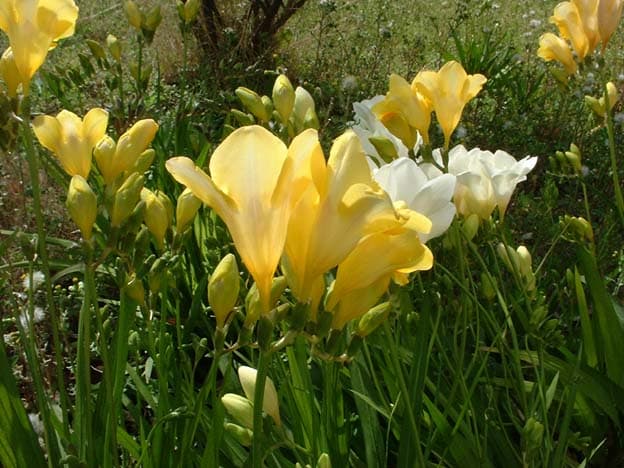
Freesia
Freesia hybrida
flowerFreesia is a tender, corm-grown plant famous above all for its powerful, sweet perfume, carried on arching, one-sided spikes of funnel-shaped flowers in white, yellow, orange, pink, red, purple, and blue. Plants reach 1 to 2 ft and are treasured as cut flowers, especially in wedding work. Hardy only in zones 9 to 10, freesia needs a frost-free climate to grow outdoors year-round; elsewhere it is grown in pots and forced for winter bloom, or planted out for summer and lifted for storage.
☀️
Sun
full sun
💧
Water
Every 4 days
🌸
Bloom
~100 days
📊
Difficulty
medium
🌱
Lifecycle
tender perennial
Perennial in warm zones; grown as an annual where winters freeze
↔️
Spacing
2-3 in apart
⬇️
Planting Depth
Plant corms about 1 in deep, pointed end up
🧪
Soil pH
6.0-7.0
Growing Details
Soil Type
Moist, organic-rich, well-drained
Hardiness Zones
Zones 9 – 10
When to Fertilize
Dilute liquid feed every 2 weeks once shoots are a few inches
Fertilizer
Balanced liquid fertilizer
🌱 Growing Guide
Grow freesia in full sun to part shade in moist, organic-rich, well-drained soil. It likes cool conditions, doing best with daytime temperatures around 60 to 70 F and cool nights, which is why it is often forced as a winter pot plant. Plant corms about 1 in deep, pointed end up. Keep evenly moist while growing but never waterlogged, since wet corms rot, and begin feeding with a dilute liquid fertilizer every couple of weeks once shoots reach a few inches. The spikes often need light staking. After bloom, let the foliage ripen, then lift and store the corms dry for replanting.
🌼 Have a different variety?Cultivars of the same species usually share the same basic care, and they differ mainly in flower color, height, and bloom form, not in how you grow them. So this guide still applies even if your exact variety isn't the one shown.
Planting Calendar
Sign in to personalize →🌿
Direct sow
Apr 15
🌸
Projected first bloom
Jul 24
JJan
FFeb
MMar
AApr
MMay
JJun
JJul
AAug
SSep
OOct
NNov
DDec
✅ Plant alongside
Good neighbors that attract beneficial insects or deter pests
- Ranunculus: Shares cool-season corm culture and makes a fragrant cut-flower combination
- Anemone: Another cool-season corm that blooms in the same conditions
- Sparaxis: A related tender corm with the same culture and bright flowers
🛡️ Pest & disease prevention
Proactive ways to stop trouble before it starts. Tap a name with an arrow for its full guide
Cluster on buds and spikes; rinse off and conserve natural enemies
Streak and distort flowers; remove debris, use sticky traps, and keep plants vigorous
A soil and corm rot; plant healthy corms in well-drained mix and do not overwater
🌸 Blooms & cutting
Freesia is a top cut flower with a heavenly scent. Cut the spikes when the lowest one or two flowers have just opened and the rest are colored buds; the remaining buds open in the vase over many days. Cutting does not harm the corm. After flowering, leave the leaves to yellow and die back before lifting the corms for storage.
🥗 Nutrition & benefits
Freesia is an ornamental, not edible. Its value is an intense, sweet fragrance and elegant flower spikes that are among the most prized of all cut flowers. Have a different variety? Cultivars of the same species share the same basic care, so this guide still applies even if your exact color is not shown.
For educational and informational purposes only. HomeSown is not medical, health, or other professional advice. Always positively identify any plant before handling or eating it; some plants, and some parts of otherwise-edible plants, are toxic. Consult a qualified professional before consuming or otherwise using any plant, especially if you are pregnant, nursing, taking medication, or have a health condition.