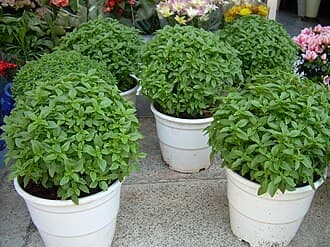
Greek Basil
Ocimum basilicum var. minimum
herbGreek basil is a compact, mounding form of sweet basil that grows into a tight green globe of tiny, intensely aromatic leaves a fraction the size of Italian sweet basil. The small leaf still carries the full clove-and-anise flavor, and the neat dome makes it as much an ornamental edging or container plant as a kitchen herb. A tender annual that lives one warm season and dies at first frost, it is a bit more heat- and drought-tolerant than large-leaf basil but grown the same way: heat, sun, and rich, well-drained soil.
☀️
Sun
full sun
💧
Water
Every 3 days
🌾
Harvest
~60 days
📊
Difficulty
easy
🌱
Lifecycle
annual
One season, then done
↔️
Spacing
10-12 in. apart
⬇️
Planting Depth
1/8 in.
🧪
Soil pH
6.0-7.0
Growing Details
Soil Type
Rich, well-draining
Hardiness Zones
Zones 3 – 10
Grown as an annual. This range is its winter hardiness, but you can grow it for a single season in any zone.
When to Fertilize
Every 4-6 weeks with dilute balanced fertilizer
Fertilizer
Balanced 10-10-10
🌱 Growing Guide
Basil will not tolerate frost or cold soil, so direct sow after spring frost or start seed indoors six to eight weeks ahead. Cover seed a quarter inch deep; it germinates in five to seven days when warm. Give six to eight hours of sun and well-drained soil of pH 6.0 to 7.5, and space plants 6 to 12 inches apart. Water deeply every seven to ten days, more often in containers, and feed only lightly, since excess fertilizer dilutes the aromatic oils. The globe needs little pinching, but remove flower buds as they appear, because once basil flowers and sets seed it turns woody and leaf yield drops sharply.
Planting Calendar
Sign in to personalize →🌱
Start seeds indoors
Mar 4
🌿
Transplant outdoors
Apr 29
🌾
Projected first harvest
Jun 28
JJan
FFeb
MMar
AApr
MMay
JJun
JJul
AAug
SSep
OOct
NNov
DDec
✅ Plant alongside
Good neighbors that attract beneficial insects or deter pests
- Tomatoes: Deters whiteflies and thrips
- Peppers: Aromatic oils deter several flying pests
- Eggplant: Companion planting reduces aphid pressure
- Roses: Planted at the base to deter aphids and spider mites
🛡️ Pest & disease prevention
Proactive ways to stop trouble before it starts. Tap a name with an arrow for its full guide
Strong volatile oils deter aphids; inspect regularly
Rotate basil beds annually; avoid overly wet soil
Space plants well; water at the base; increase airflow
🌾 Harvest & storage
Snip young leaves and sprigs as needed, taking from the outside of the mound so the dome keeps its shape and the center keeps producing. The leaves are most flavorful before flowering, so harvest often and keep removing buds; the plant regrows quickly. Basil blackens in the refrigerator, so hold cut sprigs stem-down in a glass of water at room temperature. To store a surplus, hang small bunches upside down to air dry for about a week, or freeze the leaves in oil.
🥗 Nutrition & benefits
Basil is rich in the aromatic oils eugenol and linalool behind its scent and its traditional use as a digestive and antiseptic herb, and it supplies vitamin K with some vitamin A and antioxidant flavonoids. Eaten in small flavoring amounts rather than as a vegetable, its real value is flavor and aroma, not calories. Greek basil has the same oil profile as sweet basil in a more concentrated leaf, best used fresh since the aroma fades when dried.
For educational and informational purposes only. HomeSown is not medical, health, or other professional advice. Always positively identify any plant before handling or eating it; some plants, and some parts of otherwise-edible plants, are toxic. Consult a qualified professional before consuming or otherwise using any plant, especially if you are pregnant, nursing, taking medication, or have a health condition.