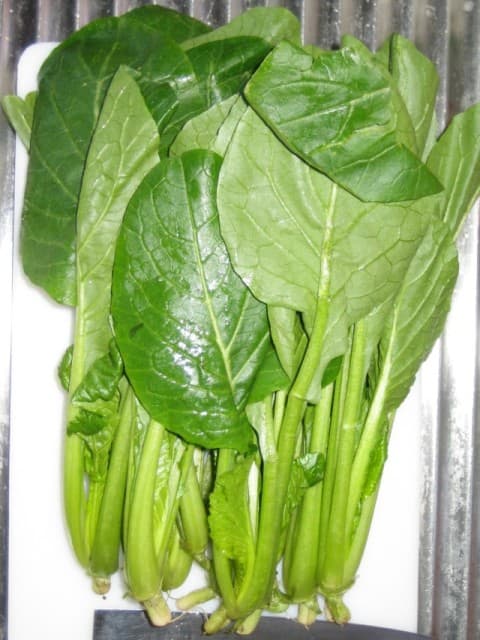
Komatsuna
Brassica rapa var. perviridis
vegetableKomatsuna (Brassica rapa var. perviridis), also called Japanese mustard spinach, is a fast, easy leafy green with glossy, deep-green leaves whose flavor is milder than mustard. It is unusually adaptable, far more heat tolerant than spinach and more cold tolerant than most greens, standing light frost and cropping from spring through fall. Baby leaves are ready in under a month and full-size leaves soon after. Young leaves are eaten raw in salads, while larger leaves are cooked in stir-fries, soups, and pickles. Plants reach about 12 to 18 in.
☀️
Sun
full sun to partial shade
💧
Water
Every 4 days
🌾
Harvest
~40 days
📊
Difficulty
easy
🌱
Lifecycle
annual
One season, then done
↔️
Spacing
12 in apart (closer for baby leaf)
⬇️
Planting Depth
Sow 0.25 in deep
🧪
Soil pH
6.0-7.0
Growing Details
Soil Type
Fertile, moist, well-drained
Hardiness Zones
Zones 2 – 11
Grown as an annual. This range is its winter hardiness, but you can grow it for a single season in any zone.
When to Fertilize
Feed with nitrogen as growth begins
Fertilizer
Balanced fertilizer or compost; nitrogen for leafy growth
🌱 Growing Guide
Grow komatsuna in full sun to partial shade in fertile, well-drained soil rich in organic matter with a good nitrogen supply. Direct sow 0.25 in deep, spacing seeds a few inches apart and thinning to about 12 in apart for full-size plants (closer for baby leaf), in rows about 8 to 12 in apart. It germinates fast and grows quickly, so keep the soil evenly moist and succession sow every two to three weeks for a steady supply. Pinch off any early flower stalks to delay bolting. It tolerates a wider temperature range than most greens, making it productive in both spring and fall.
Planting Calendar
Sign in to personalize →spring planting
🌿
Direct sow
Apr 1
🌾
Projected first harvest
May 11
fall planting
🌿
Direct sow
Aug 25
🌾
Projected first harvest
Oct 4
JJan
FFeb
MMar
AApr
MMay
JJun
JJul
AAug
SSep
✅ Plant alongside
Good neighbors that attract beneficial insects or deter pests
- Carrot: Uses different root space and the bed efficiently
- Beet: A cool-season companion with complementary needs
- Onion: Its scent helps deter some cabbage-family pests
❌ Keep away from
Strawberry
🛡️ Pest & disease prevention
Proactive ways to stop trouble before it starts. Tap a name with an arrow for its full guide
Pit young leaves; use floating row cover on seedlings
Cluster in growing tips; rinse off and conserve ladybugs
Green caterpillars chew leaves; handpick and use Bt or row cover
Small caterpillars riddle leaves; use row cover and rotate brassicas
🌾 Harvest & storage
Harvest komatsuna at any stage: pick baby leaves about three to four weeks from sowing, or cut full-size leaves from about 35 to 40 days. Take outer leaves a few at a time for a cut-and-come-again harvest, or cut the whole plant at the base. Harvest before hot weather or a hard freeze pushes it to bolt, though it tolerates more heat and cold than most greens.
🥗 Nutrition & benefits
Komatsuna is rich in calcium, vitamin C, vitamin A, vitamin K, and iron, and is very low in calories. Young leaves are eaten raw and older leaves cooked in stir-fries, soups, and pickles.
For educational and informational purposes only. HomeSown is not medical, health, or other professional advice. Always positively identify any plant before handling or eating it; some plants, and some parts of otherwise-edible plants, are toxic. Consult a qualified professional before consuming or otherwise using any plant, especially if you are pregnant, nursing, taking medication, or have a health condition.