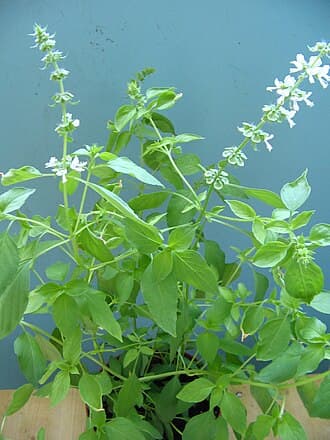
Lemon Basil
Ocimum × citriodorum
herbA bright citrus-scented basil with genuine lemon flavor rather than just lemon scent. Pairs beautifully with fish, poultry, fruit salads, and desserts. Grows identically to sweet basil but with smaller leaves and a more compact habit. A versatile alternative to both basil and lemon zest in summer cooking.
☀️
Sun
full sun
💧
Water
Every 3 days
🌾
Harvest
~65 days
📊
Difficulty
easy
🌱
Lifecycle
annual
One season, then done
↔️
Spacing
8-12 in
⬇️
Planting Depth
1/4 in
🧪
Soil pH
6.0-7.0
Growing Details
Soil Type
Rich, well-draining
Hardiness Zones
Zones 3 – 10
Grown as an annual. This range is its winter hardiness, but you can grow it for a single season in any zone.
When to Fertilize
At planting; light nitrogen feed every 3 to 4 weeks
Fertilizer
Balanced fertilizer; moderate nitrogen for lush growth without bitterness
🌱 Growing Guide
Start indoors 4 to 6 weeks before last frost or direct sow after frost when soil warms to 60 F. Grow in full sun in rich, well-draining soil. Pinch tips regularly to keep plants bushy and prevent early flowering. Once lemon basil bolts to flower the leaves lose most of their intense lemon flavor. Grow multiples for succession harvests. Slightly more compact than Genovese basil.
Planting Calendar
Sign in to personalize →🌱
Start seeds indoors
Mar 4
🌿
Transplant outdoors
Apr 29
🌾
Projected first harvest
Jul 3
JJan
FFeb
MMar
AApr
MMay
JJun
JJul
AAug
SSep
OOct
NNov
DDec
✅ Plant alongside
Good neighbors that attract beneficial insects or deter pests
- Tomato: Strong aromatic compounds repel whiteflies and aphids from tomato plants
- Pepper: Similar growing requirements and mutual pest deterrence
- Asparagus: Deters asparagus beetles when interplanted
- Most vegetables: General aromatic pest deterrence; attractive to pollinators when in flower
🛡️ Pest & disease prevention
Proactive ways to stop trouble before it starts. Tap a name with an arrow for its full guide
Blast with water; insecticidal soap; introduce lacewings
Handpick in morning; row cover; neem oil spray
Diatomaceous earth around base; copper tape on container rims; beer traps nearby
Avoid overhead watering; do not plant basil in the same bed in consecutive years
🌾 Harvest & storage
Harvest tips regularly once plants reach 6 inches tall. Always cut just above a leaf node so the stem branches. Remove flower buds the moment they appear to prolong leaf production. Use fresh immediately or infuse into oil or vinegar within a day. Dried lemon basil retains good flavor. Freeze in oil for longer storage.
🥗 Nutrition & benefits
Contains citral and limonene, the same compounds that give lemon its scent. Good source of vitamin K, vitamin A, and manganese. Contains anti-inflammatory flavonoids including orientin and vicenin.
For educational and informational purposes only. HomeSown is not medical, health, or other professional advice. Always positively identify any plant before handling or eating it; some plants, and some parts of otherwise-edible plants, are toxic. Consult a qualified professional before consuming or otherwise using any plant, especially if you are pregnant, nursing, taking medication, or have a health condition.