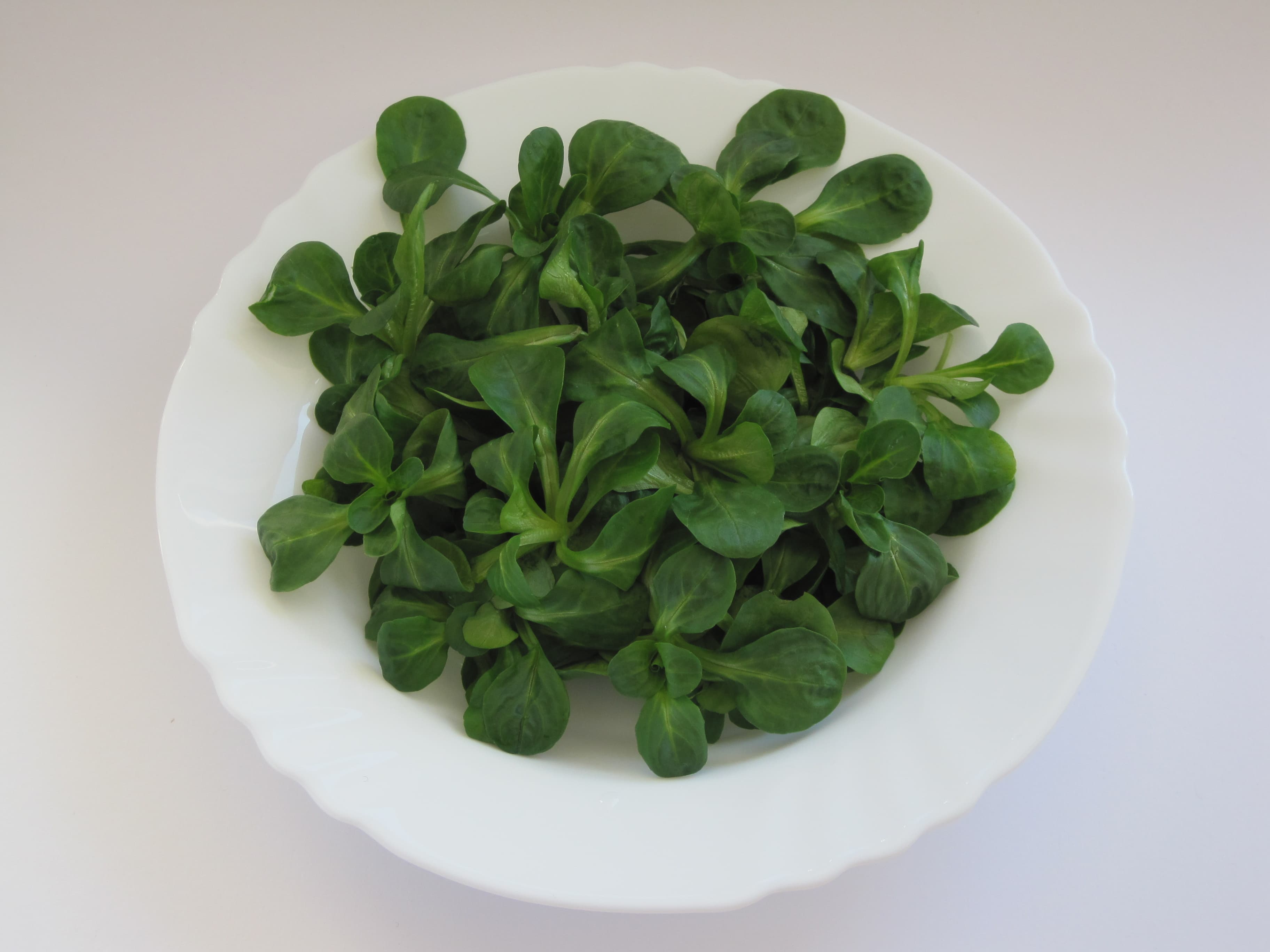
Mâche
Valerianella locusta
vegetableAlso known as corn salad or lambs lettuce, Mache is a tiny rosette-forming winter salad green with small, round, very tender leaves and a delicate, slightly nutty flavor. One of the most cold-hardy salad greens available, surviving temperatures down to 5 F in some varieties. The traditional winter and early spring salad green of France and Northern Europe.
☀️
Sun
partial shade
💧
Water
Every 2 days
🌾
Harvest
~50 days
📊
Difficulty
easy
🌱
Lifecycle
annual
One season, then done
↔️
Spacing
4-6 in
⬇️
Planting Depth
1/8 in
🧪
Soil pH
6.0-7.0
Growing Details
Soil Type
Rich, moist
Hardiness Zones
Zones 3 – 9
Grown as an annual. This range is its winter hardiness, but you can grow it for a single season in any zone.
When to Fertilize
Very light balanced fertilizer at planting only; mache grows in lean soil
Fertilizer
Minimal; lean soil produces the best-flavored rosettes
🌱 Growing Guide
Direct sow in late summer for fall and winter harvest (August to October in most climates). Seeds germinate best at cool temperatures, 50 to 65 F. Sow thickly and barely cover. Seeds need light. Grows slowly; allow 45 to 60 days. In mild climates, mache can be sown in early spring. Plant under row cover or cold frame for extended winter harvest. Extremely frost-hardy with no protection needed in zones 5 and warmer.
Planting Calendar
Sign in to personalize →spring planting
🌿
Direct sow
Mar 18
🌾
Projected first harvest
May 7
fall planting
🌿
Direct sow
Sep 8
🌾
Projected first harvest
Oct 28
JJan
FFeb
MMar
AApr
MMay
JJun
JJul
AAug
SSep
✅ Plant alongside
Good neighbors that attract beneficial insects or deter pests
- Strawberry: Traditional European combination; mache fills space between strawberry plants
- Carrot: Efficient cool-season bed companion
- Spinach: Similar cold tolerance and care requirements
- Chervil: Classic French salad garden companion with compatible flavor profile
🛡️ Pest & disease prevention
Proactive ways to stop trouble before it starts. Tap a name with an arrow for its full guide
The primary pest; diatomaceous earth; beer traps; handpick after rain
Water blast; insecticidal soap; rarely a severe problem on mache
Ensure airflow; avoid overhead watering; remove affected plants
Beneficial nematodes in soil; collar protection for dense plantings
🌾 Harvest & storage
Harvest whole rosettes when they reach 2 to 3 inches across by cutting at the base. Or harvest individual outer leaves from multiple plants. Use immediately or store briefly. Mache is very delicate and wilts quickly. Best served simply with a light vinaigrette to showcase the delicate flavor. Rinse gently in cold water and dry immediately before serving.
🥗 Nutrition & benefits
Surprisingly high in omega-3 fatty acids for a salad green, higher than most other lettuces. Excellent source of vitamins A, C, and B6, iron, and potassium. One of the most nutrient-dense winter salad greens available per calorie.
For educational and informational purposes only. HomeSown is not medical, health, or other professional advice. Always positively identify any plant before handling or eating it; some plants, and some parts of otherwise-edible plants, are toxic. Consult a qualified professional before consuming or otherwise using any plant, especially if you are pregnant, nursing, taking medication, or have a health condition.