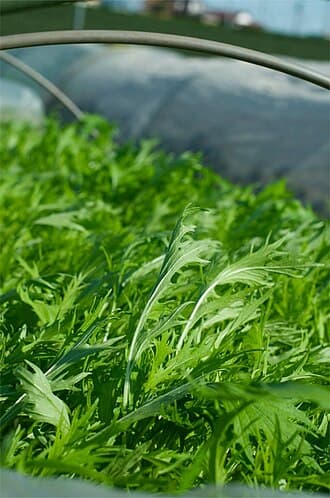
Mizuna
Brassica rapa var. niposinica
vegetableMizuna is a Japanese mustard green grown for its deeply cut, feathery, serrated leaves that rise in graceful rosettes on thin, crisp white stems. Also called Japanese mustard, spider mustard, or California pepper grass, it has a mild peppery, mustardy bite gentler than arugula that works raw in salad mixes and cooked into stir-fries, soups, and even pesto. It is one of the fastest and most forgiving greens in the garden, harvestable as baby leaves in three to four weeks, unusually slow to bolt, and tolerant of light frost, which makes it a dependable spring and fall staple.
☀️
Sun
full sun
💧
Water
Every 2 days
🌾
Harvest
~40 days
📊
Difficulty
easy
🌱
Lifecycle
annual
One season, then done
↔️
Spacing
4-6 in. apart or broadcast
⬇️
Planting Depth
1/4 in.
🧪
Soil pH
6.0-7.0
Growing Details
Soil Type
Rich, well-draining
Hardiness Zones
Zones 3 – 10
Grown as an annual. This range is its winter hardiness, but you can grow it for a single season in any zone.
When to Fertilize
Light nitrogen at sowing for fast lush growth
Fertilizer
Nitrogen-rich (blood meal or fish emulsion)
🌱 Growing Guide
Mizuna is a cool-season green best direct sown in spring and fall, in well-drained soil rich in organic matter with at least six hours of sun. Sow seed about a quarter inch deep; it germinates in a few days, from cool soil near 40F up to about 75F. For baby-leaf salad use, broadcast the seed thickly and cut young; for larger plants and repeated cutting, thin seedlings to four to six inches apart. Keep the soil evenly moist for fast, tender growth, and give a little nitrogen at sowing. Mizuna is unusually slow to bolt for a mustard, but it is still a cool-weather crop, so a spring planting that runs into real summer heat eventually bolts and turns sharp and tough; sow in the cool shoulders of the year.
Planting Calendar
Sign in to personalize →spring planting
🌿
Direct sow
Apr 1
🌾
Projected first harvest
May 11
fall planting
🌿
Direct sow
Aug 25
🌾
Projected first harvest
Oct 4
JJan
FFeb
MMar
AApr
MMay
JJun
JJul
AAug
SSep
✅ Plant alongside
Good neighbors that attract beneficial insects or deter pests
- Radishes: Quick companion sown simultaneously; radishes are harvested before mizuna needs the full space
- Carrots: Compatible deep/shallow root zones share bed space well
- Spinach: Both prefer cool weather and can share fall beds
- Garlic: Allium scent deters aphids and fungus gnats near the greens
❌ Keep away from
Strawberry
🛡️ Pest & disease prevention
Proactive ways to stop trouble before it starts. Tap a name with an arrow for its full guide
Row cover in early spring when flea beetles are most active; the small holes they create are mostly cosmetic
Hose off with water; attract hoverflies with nearby flowers
Sow in cool weather only; shade cloth can extend the spring season by a week or two
🌾 Harvest & storage
Mizuna is a classic cut-and-come-again green, so rather than pulling whole plants you can shear the leaves an inch or two above the crown and the plant regrows for several more cuttings. Baby leaves harvested at three to four weeks, about three to six inches tall, are the mildest and sweetest, while older leaves grow more peppery and are better cooked. Harvest in the cool of the morning for the crispest leaves. The leaves do not keep long once cut, so refrigerate and use within a few days, washing only just before use.
🥗 Nutrition & benefits
As a cruciferous green mizuna is very nutritious for its very low calorie count, an excellent source of vitamins A, C, and K with folate, fiber, calcium, and minerals. Like other brassicas it supplies glucosinolates, the sulfur compounds linked to the cancer-preventive reputation of the cabbage family. Eaten raw as a baby green it keeps the most vitamin C, while a quick saute preserves most of the nutrients in mature leaves.
For educational and informational purposes only. HomeSown is not medical, health, or other professional advice. Always positively identify any plant before handling or eating it; some plants, and some parts of otherwise-edible plants, are toxic. Consult a qualified professional before consuming or otherwise using any plant, especially if you are pregnant, nursing, taking medication, or have a health condition.