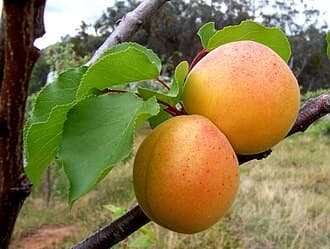
Moorpark Apricot
Prunus armeniaca 'Moorpark'
fruitMoorpark is the classic English heirloom apricot, prized since the 1600s for its honeyed orange flesh, lively apricot tang, and intoxicating perfume. The fruit ripens unevenly over several weeks rather than all at once, spreading out the harvest. Self-fruitful and a strong pollinizer for other apricots, Moorpark is widely considered one of the best for fresh eating, jam, and drying.
☀️
Sun
full sun
💧
Water
Every 5 days
🌾
Harvest
~24 months
to first harvest
📊
Difficulty
medium
🌱
Lifecycle
perennial
Comes back every year
↔️
Spacing
15-20 ft (semi-dwarf)
⬇️
Planting Depth
Graft union 2 in above soil
🧪
Soil pH
6.5-8.0
Growing Details
Soil Type
Rich, well-draining
Hardiness Zones
Zones 5 – 8
When to Fertilize
Light feed at bud break, no late-summer nitrogen
Fertilizer
Compost; 10-10-10 only if growth is weak
🌱 Growing Guide
Plant in full sun on well-drained loam in zones 5 to 9. Apricots bloom very early, so site away from frost pockets and consider a north-facing slope where bloom is delayed. Set the graft union 2 inches above soil. Self-fruitful, so a single tree bears. Prune in summer rather than winter to reduce Eutypa dieback risk; train to an open vase. Thin fruit clusters to one apricot every 3 to 4 inches for size.
Planting Calendar
Sign in to personalize →🌿
Direct sow
Apr 15
🌾
Projected first harvest
Jun 24 · Year 3
JJan
FFeb
MMar
AApr
MMay
JJun
JJul
AAug
SSep
OOct
NNov
DDec
Year 1
✅ Plant alongside
Good neighbors that attract beneficial insects or deter pests
- Comfrey: Mineral-mining mulch that returns potassium to surface roots
- Chives: Repels aphids and may help suppress brown rot around the trunk
- Yarrow: Hosts predatory wasps that hunt peach twig borer and aphids
- White Clover: Living mulch that fixes nitrogen below the canopy and feeds early-spring pollinators
❌ Keep away from
Tomato
🛡️ Pest & disease prevention
Proactive ways to stop trouble before it starts. Tap a name with an arrow for its full guide
Remove mummified fruit in dormant season, prune for airflow, and pick fruit promptly before it softens on the branch
Apply dormant oil at bud swell, and consider Bt sprays at petal fall and again at first cover
Apply kaolin clay at petal fall, jar the trunk over a sheet at dawn, and pick up early drops
Avoid pruning during cold wet weather, summer-prune instead, and paint the trunk with white latex to limit sunscald cracks
🌾 Harvest & storage
Moorpark ripens over four to six weeks in late July and August. Pick each apricot when the orange background flushes red and the fruit yields to gentle thumb pressure. Eat fresh within a few days, or halve, pit, and dry at 135F for 24 to 36 hours for an excellent dried apricot. The variety jams beautifully because of its high pectin content.
🥗 Nutrition & benefits
About 48 calories per 100 g with 2 g fiber, 10 mg vitamin C, 259 mg potassium, and 1926 IU vitamin A. Apricots are exceptionally rich in beta-carotene, which the body converts to vitamin A for eye and immune health.
⚠️ Toxicity & safety
Eat the flesh, not the pit. The kernel inside the pit contains amygdalin, a cyanide-releasing compound - discard the pits and never eat or crush the seeds inside.
For educational and informational purposes only. HomeSown is not medical, health, or other professional advice. Always positively identify any plant before handling or eating it; some plants, and some parts of otherwise-edible plants, are toxic. Consult a qualified professional before consuming or otherwise using any plant, especially if you are pregnant, nursing, taking medication, or have a health condition.