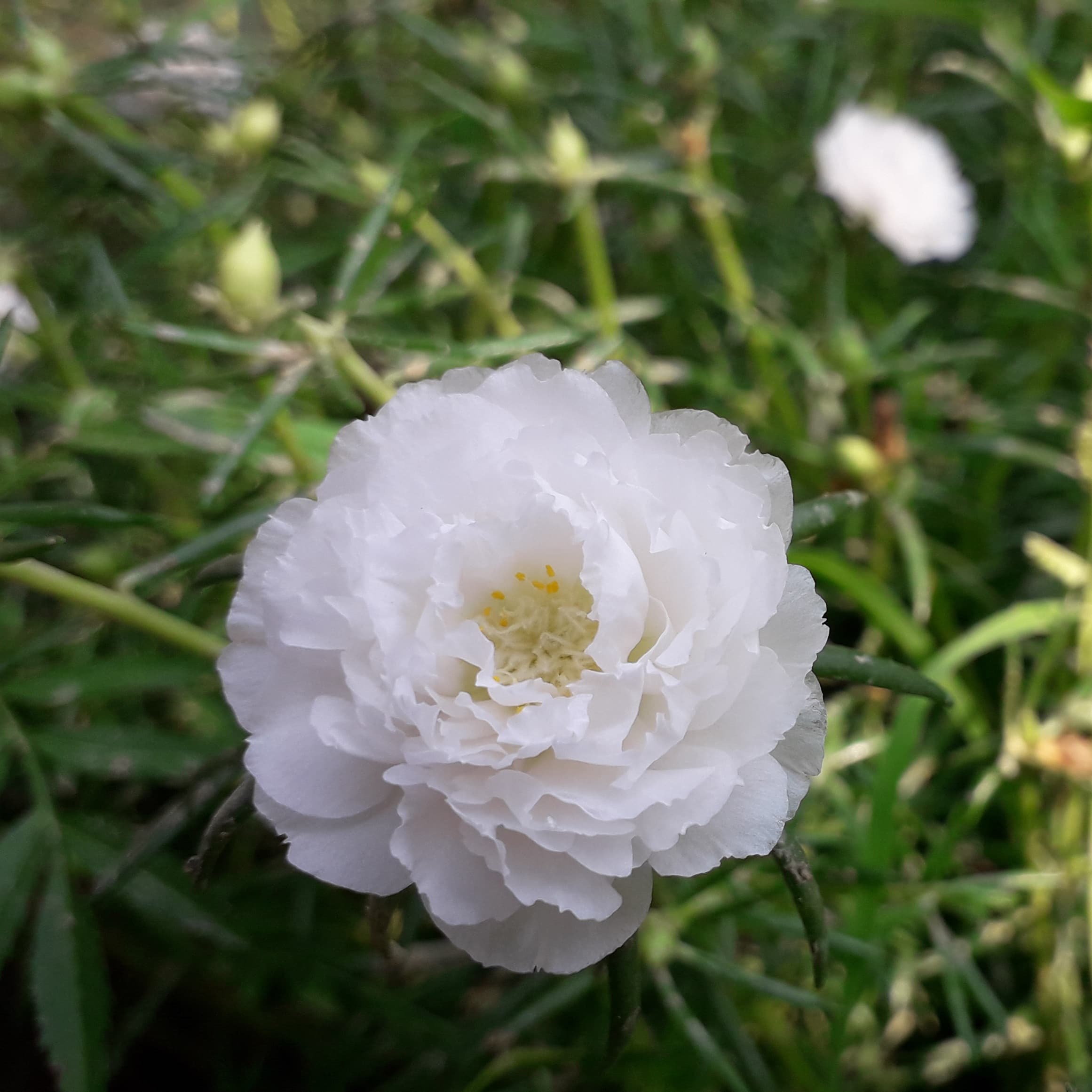
Moss Rose
Portulaca grandiflora
flowerMoss rose is a low, spreading annual with fleshy, needle-like succulent leaves and bright, satiny flowers in red, pink, orange, yellow, white, and magenta. It grows only 3 to 8 in tall but forms a mat up to a foot wide, thriving in exactly the hot, dry, sun-baked, sandy spots that defeat most annuals. The flowers close on cloudy or rainy days and from sundown to sunup. It self-seeds without becoming invasive and is perfect for rock gardens, edging, hot slopes, and cascading containers.
☀️
Sun
full sun
💧
Water
Every 8 days
🌸
Bloom
~60 days
📊
Difficulty
easy
🌱
Lifecycle
annual
One season, then done
↔️
Spacing
6-12 in apart
⬇️
Planting Depth
Surface sow seed in warmth or set seedlings carefully at the same depth
🧪
Soil pH
5.5-7.5
Growing Details
Soil Type
Sandy or rocky, sharply drained
Hardiness Zones
Zones 2 – 11
Grown as an annual. This range is its winter hardiness, but you can grow it for a single season in any zone.
When to Fertilize
Rarely needed; lean soil is best
Fertilizer
Little to none; avoid rich feeding
🌱 Growing Guide
Give moss rose full sun and well-drained sandy or rocky soil; poorly drained ground leads to crown rot. It has high heat and drought tolerance and needs little water once established, making it a fine choice for neglected hot spots. It dislikes being moved, so handle seedlings carefully when transplanting or sow it where it is to grow. Deadheading is optional and mainly serves to limit self-seeding. It needs little or no fertilizer; lean soil actually produces a sturdier, more floriferous plant.
🌼 Have a different variety?Cultivars of the same species usually share the same basic care, and they differ mainly in flower color, height, and bloom form, not in how you grow them. So this guide still applies even if your exact variety isn't the one shown.
Planting Calendar
Sign in to personalize →🌱
Start seeds indoors
Mar 4
🌿
Transplant outdoors
Apr 29
🌸
Projected first bloom
Jun 28
JJan
FFeb
MMar
AApr
MMay
JJun
JJul
AAug
SSep
OOct
NNov
DDec
✅ Plant alongside
Good neighbors that attract beneficial insects or deter pests
- Sedum: A succulent that shares the same hot, dry, sharply drained conditions
- Zinnia: A heat-loving annual that adds height above the low moss rose mat
- Marigold: Tolerates the same lean, sunny soil and draws pollinators
🛡️ Pest & disease prevention
Proactive ways to stop trouble before it starts. Tap a name with an arrow for its full guide
🌸 Blooms & cutting
Moss rose is grown for color and needs almost no care. Deadhead only if you want to limit its self-seeding, since spent flowers otherwise drop seed that returns next year. Leave it to spread and bloom through the heat until frost.
🥗 Nutrition & benefits
Moss rose is an ornamental, not edible. Its value is vivid, drought-proof color in the hottest, driest, poorest spots in the garden, plus an easygoing habit of returning from self-sown seed. Have a different variety? Cultivars of the same species share the same basic care, so this guide still applies even if your exact color is not shown.
⚠️ Toxicity & safety
Moss rose contains soluble calcium oxalates and oxalic acid. Eating it in quantity can cause mouth and stomach irritation, drooling, or upset, including in cats, dogs, and horses. Note that the closely related edible purslane is a different species; the ornamental moss rose is grown for flowers, not for eating.
For educational and informational purposes only. HomeSown is not medical, health, or other professional advice. Always positively identify any plant before handling or eating it; some plants, and some parts of otherwise-edible plants, are toxic. Consult a qualified professional before consuming or otherwise using any plant, especially if you are pregnant, nursing, taking medication, or have a health condition.