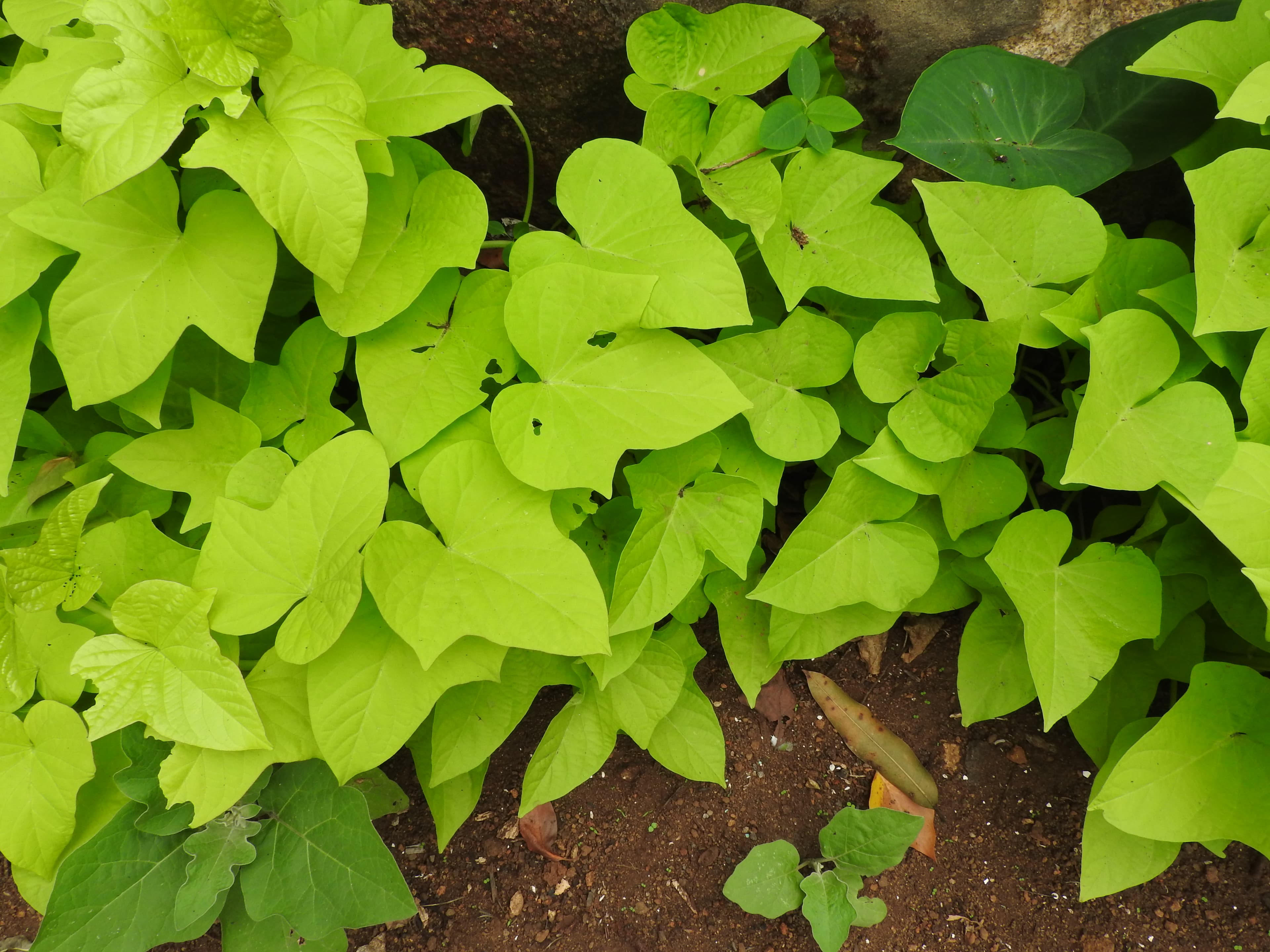
Ornamental Sweet Potato Vine
Ipomoea batatas
flowerOrnamental sweet potato vine (Ipomoea batatas) is the same species as the edible sweet potato, but these cultivars are bred for bold, colorful foliage rather than tubers. Fast-trailing stems carry heart-shaped or deeply lobed leaves in vivid chartreuse, near-black purple, or variegated pink, white, and green, reaching 3 to 5 ft or more in a season. It is the classic spiller for summer containers, hanging baskets, and window boxes, and also makes a quick groundcover. Grown as an annual outside frost-free zones, it roots and grows fast in heat. Its tubers are not bred for eating.
☀️
Sun
full sun
💧
Water
Every 4 days
🌸
Bloom
~60 days
📊
Difficulty
easy
🌱
Lifecycle
tender perennial
Perennial in warm zones; grown as an annual where winters freeze
↔️
Spacing
12-36 in apart
⬇️
Planting Depth
Set transplants or rooted slips at the same depth; or plant tuber pieces 2-3 in deep in warm soil
🧪
Soil pH
5.5-6.5
Growing Details
Soil Type
Loamy, organic-rich, well-drained
Hardiness Zones
Zones 3 – 11
When to Fertilize
Regular feeding for container plants through the season
Fertilizer
Balanced general-purpose fertilizer
🌱 Growing Guide
Grow ornamental sweet potato vine in full sun to partial shade in loamy, organic-rich, well-drained soil or a quality potting mix; the darkest and brightest leaf colors show best in good light. It is a tender perennial treated as an annual: plant out only after the last frost and the soil is warm, or start it from tuber pieces or rooted cuttings. It is fast, vigorous, and drought tolerant once established, though container plants need regular water and feeding to look lush. Pinch or trim the trailing stems anytime to control size and keep plants full. Lift and store tubers over winter, or root cuttings indoors, to carry favorites over.
🌼 Have a different variety?Cultivars of the same species usually share the same basic care, and they differ mainly in flower color, height, and bloom form, not in how you grow them. So this guide still applies even if your exact variety isn't the one shown.
Planting Calendar
Sign in to personalize →🌱
Start seeds indoors
Mar 4
🌿
Transplant outdoors
Apr 29
🌸
Projected first bloom
Jun 28
JJan
FFeb
MMar
AApr
MMay
JJun
JJul
AAug
SSep
OOct
NNov
DDec
✅ Plant alongside
Good neighbors that attract beneficial insects or deter pests
- Calibrachoa: A trailing bloomer that pairs as the flower to the vine foliage in baskets
- Petunia: Provides flower color above and around the cascading foliage
- Coleus: Another bold foliage plant for contrasting leaf color in mixed containers
🛡️ Pest & disease prevention
Proactive ways to stop trouble before it starts. Tap a name with an arrow for its full guide
Chew tiny holes in the leaves; support plant vigor and rotate planting sites in beds
Streak and distort foliage; remove debris, use sticky traps, and rinse plants
Tiny white flies on leaf undersides; use yellow sticky traps and rinse foliage
🌸 Blooms & cutting
Ornamental sweet potato vine is grown for foliage, not harvest. Pinch and trim the trailing stems anytime through the season to control the length and keep containers tidy and full; the trimmings root easily in water or soil. In fall, lift and store the tubers dry and cool, or overwinter rooted cuttings on a windowsill, to keep prized colors for next year.
🥗 Nutrition & benefits
Ornamental sweet potato vine is grown as an ornamental foliage plant. It is the same species as the edible sweet potato and its tubers are technically edible, but these cultivars are selected for looks, not flavor, so they are grown for color rather than food. Its value is vigorous, vivid foliage that anchors summer containers and baskets. Have a different variety? Cultivars of the same species share the same basic care, so this guide still applies even if your exact leaf color is not shown.
For educational and informational purposes only. HomeSown is not medical, health, or other professional advice. Always positively identify any plant before handling or eating it; some plants, and some parts of otherwise-edible plants, are toxic. Consult a qualified professional before consuming or otherwise using any plant, especially if you are pregnant, nursing, taking medication, or have a health condition.