Regulated in some states
This plant is listed as a noxious or regulated weed in parts of the US, where it may be illegal to grow. Check your state and local regulations before planting it.
Pampas Grass
Cortaderia selloana
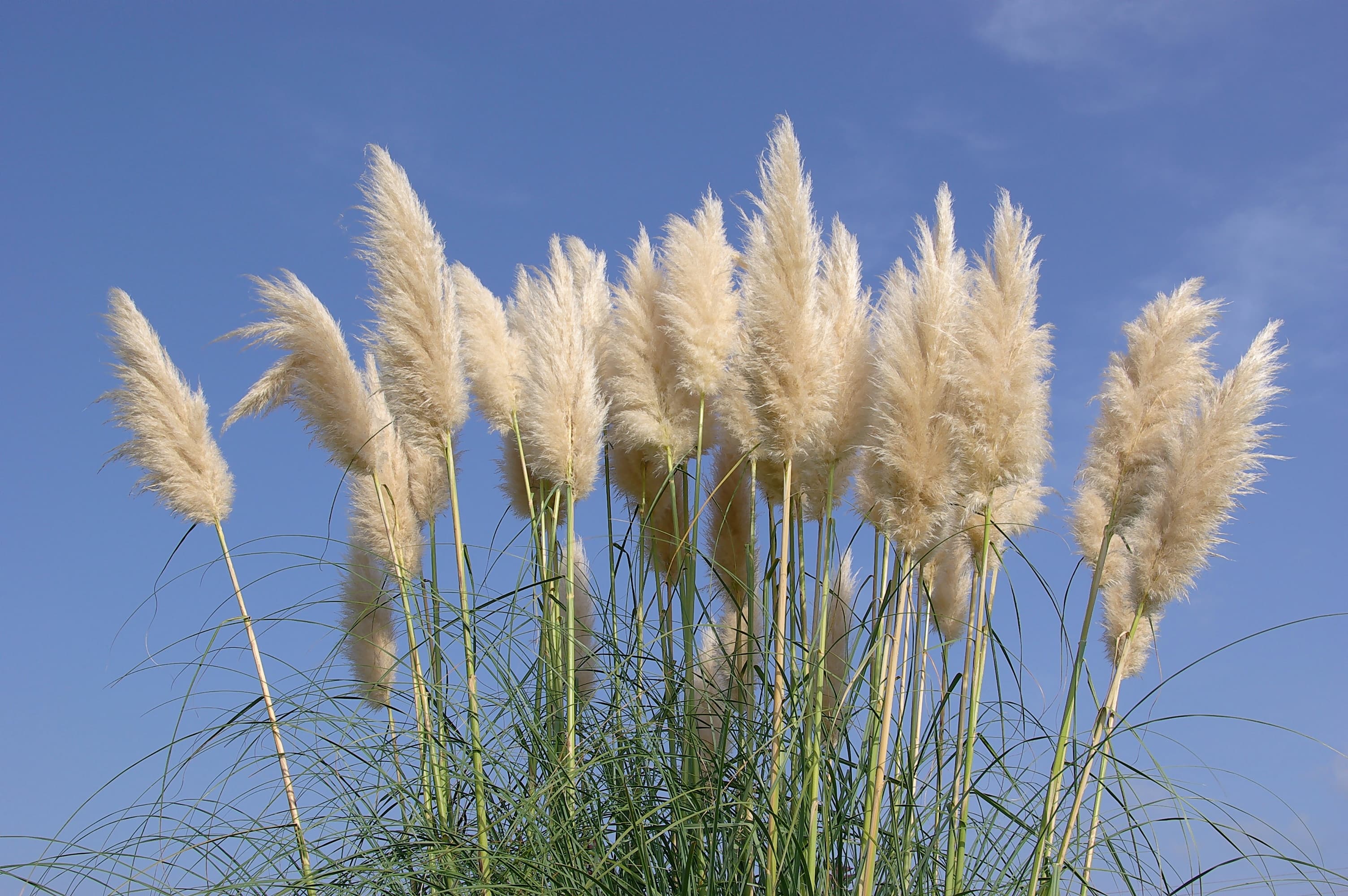
flowerPampas grass (Cortaderia selloana) is a massive ornamental grass that builds a fountain of arching blades 6 to 12 ft tall, topped in late summer by tall, showy, silvery-white plumes that hold their beauty into midwinter. It is drought and salt tolerant and a striking specimen or screen, but it is not for small gardens: it grows huge, its leaf edges are razor sharp, its dry foliage is highly flammable, and it has escaped to become invasive in milder parts of the country, so sterile or non-seeding selections and careful siting are important.
☀️
Sun
full sun
💧
Water
Every 8 days
🌸
Bloom
~120 days
📊
Difficulty
medium
🌱
Lifecycle
perennial
Comes back every year
↔️
Spacing
6-10 ft apart
⬇️
Planting Depth
Set at the same depth as the nursery pot
🧪
Soil pH
5.5-7.5
Growing Details
Soil Type
Adaptable; well-drained
Hardiness Zones
Zones 6 – 10
When to Fertilize
Feed in spring and during active growth
Fertilizer
Balanced general-purpose fertilizer
🌱 Growing Guide
Plant pampas grass in full sun in well-drained soil; it adapts to most soils and tolerates drought, salt, and coastal conditions, though it grows lushest with water and feeding during the season. Give it plenty of room, around 10 ft, and keep it away from walkways because the leaf margins can slice skin - always wear long sleeves and gloves to work around it. Cut the clump back hard in late winter before new growth, again wearing protective clothing. Because it can self-seed into wild areas, remove plumes before seed disperses and prefer sterile selections, especially in mild climates.
🌼 Have a different variety?Cultivars of the same species usually share the same basic care, and they differ mainly in flower color, height, and bloom form, not in how you grow them. So this guide still applies even if your exact variety isn't the one shown.
Planting Calendar
Sign in to personalize →🌿
Direct sow
Apr 15
🌸
Projected first bloom
Aug 13
JJan
FFeb
MMar
AApr
MMay
JJun
JJul
AAug
SSep
OOct
NNov
DDec
✅ Plant alongside
Good neighbors that attract beneficial insects or deter pests
- Yucca: A bold, drought-tolerant architectural plant that suits the same dry, sunny scale
- Sedum: A tough succulent that shares the hot, well-drained conditions
- Russian Sage: Airy and drought tolerant, a softening contrast to the massive grass
🛡️ Pest & disease prevention
Proactive ways to stop trouble before it starts. Tap a name with an arrow for its full guide
🌸 Blooms & cutting
The plumes are popular for large dried arrangements, so cut them just as they fully open, wearing gloves and long sleeves against the sharp blades; harvesting them also helps prevent unwanted self-seeding. Leave some for winter display, then cut the whole clump back hard in late winter, again well protected, before new growth begins.
🥗 Nutrition & benefits
Pampas grass is an ornamental, not edible. Its value is dramatic plumes and screening on a large scale with good drought and salt tolerance. Site and manage it responsibly: the leaves are dangerously sharp, the foliage is flammable, and it is a regulated or invasive plant in some states (see the warnings on this page), so prefer sterile selections. Have a different variety? Cultivars of the same species share the same basic care, so this guide still applies even if your exact form is not shown.
For educational and informational purposes only. HomeSown is not medical, health, or other professional advice. Always positively identify any plant before handling or eating it; some plants, and some parts of otherwise-edible plants, are toxic. Consult a qualified professional before consuming or otherwise using any plant, especially if you are pregnant, nursing, taking medication, or have a health condition.