Use with caution
All parts of hellebore are toxic - they contain compounds (including cardiac glycosides and protoanemonin) that are poisonous to people, dogs, cats, and horses, causing drooling, vomiting, diarrhea, and in large amounts heart effects. The sap also irritates skin, so wear gloves when cutting it back, and keep pets from chewing it.
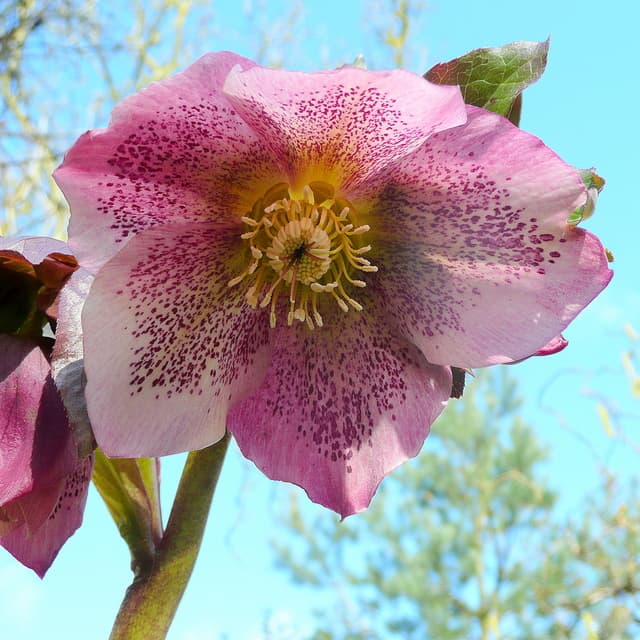
Royal Heritage Lenten Rose
Helleborus x hybridus 'Royal Heritage'
flowerRoyal Heritage is a superb strain of hybrid Lenten rose, one of the earliest and most valuable perennials for the shade garden. Its great gift is timing: it opens its nodding, cup-shaped flowers in the dead of late winter and early spring, often through the snow, when almost nothing else is in bloom, in a rich range of colors from white and cream through pink, rose, plum, and near-purple, many freckled inside. The leathery, dark green, divided leaves are evergreen, giving year-round structure, and the whole plant is deer and rabbit proof and remarkably long-lived. Tucked under deciduous trees, where it gets winter sun and summer shade, it is one of the toughest and most rewarding shade perennials.
☀️
Sun
partial shade
💧
Water
Every 7 days
🌸
Bloom
~10 days
📊
Difficulty
easy
🌱
Lifecycle
perennial
Comes back every year
↔️
Spacing
18-24 in. apart
⬇️
Planting Depth
Set the crown at the soil surface (do not bury it)
🧪
Soil pH
7.0-7.5
Growing Details
Soil Type
Rich, well-drained (neutral to alkaline)
Hardiness Zones
Zones 4 – 9
When to Fertilize
In early spring with compost or a balanced feed
Fertilizer
Balanced fertilizer or compost
🌱 Growing Guide
Grow hellebores in partial to full shade - the ideal spot is under deciduous trees, where they get sun in winter while in bloom and shade in summer - in rich, well-drained soil of neutral to slightly alkaline pH with plenty of compost; they will not tolerate wet, poorly drained ground. They are hardy in zones 4 to 9 and, once established, are drought tolerant and almost indestructible. The evergreen leaves can look tattered by late winter, so cut off the old, damaged foliage just as the flower buds emerge to show off the blooms and reduce leaf-spot disease. They self-sow gently around the parent, and the seedlings can be left to naturalize or moved while small. Shelter from harsh winter wind in cold regions to protect the evergreen leaves.
🌼 Have a different variety?Cultivars of the same species usually share the same basic care, and they differ mainly in flower color, height, and bloom form, not in how you grow them. So this guide still applies even if your exact variety isn't the one shown.
Planting Calendar
Sign in to personalize →🌿
Direct sow
Apr 15
🌸
Projected first bloom
Apr 25
JJan
FFeb
MMar
AApr
MMay
JJun
JJul
AAug
SSep
OOct
NNov
DDec
✅ Plant alongside
Good neighbors that attract beneficial insects or deter pests
- Patriot Hosta: Emerges in spring to take over as the hellebore foliage carries the early season, sharing the same rich shade
- Ferns: Woodland partners that fill in for summer over the same well-drained, shaded soil
- Daffodil: Early bulbs that bloom alongside the hellebore for a late-winter and early-spring show
🛡️ Pest & disease prevention
Proactive ways to stop trouble before it starts. Tap a name with an arrow for its full guide
Can cluster on flower stems and new leaves in early spring - rinse off with water and encourage ladybugs
A viral disease causing black streaking and distortion - there is no cure, so remove and destroy any affected plant to protect the rest
Fungal spotting on old leaves - cutting away the tattered evergreen foliage as buds emerge removes most of it; clear fallen leaves
May rasp the leaves in damp shade - hand-pick and trap; usually minor on this tough plant
🌸 Blooms & cutting
Hellebores are wonderful but tricky as cut flowers - they last best if cut only once the blooms are mature (when the seed pods have begun to form in the center) and floated in a shallow bowl of water, which shows off their downward-facing faces beautifully. In the garden, the one key task is cutting off the old, weather-beaten evergreen leaves just as the flower buds push up in late winter, which displays the flowers and cuts down on leaf-spot disease. Wear gloves, as the sap can irritate skin.
🥗 Nutrition & benefits
An ornamental evergreen shade perennial grown for its late-winter flowers when little else blooms - those early flowers are an important nectar source for the first bees of the year. Deer and rabbit proof but toxic to people and pets, so its value is purely ornamental.
⚠️ Toxicity & safety
All parts of hellebore are toxic - they contain compounds (including cardiac glycosides and protoanemonin) that are poisonous to people, dogs, cats, and horses, causing drooling, vomiting, diarrhea, and in large amounts heart effects. The sap also irritates skin, so wear gloves when cutting it back, and keep pets from chewing it.
For educational and informational purposes only. HomeSown is not medical, health, or other professional advice. Always positively identify any plant before handling or eating it; some plants, and some parts of otherwise-edible plants, are toxic. Consult a qualified professional before consuming or otherwise using any plant, especially if you are pregnant, nursing, taking medication, or have a health condition.