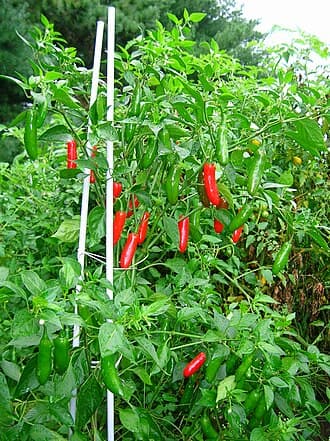
Serrano Pepper
Capsicum annuum 'Serrano'
vegetableThe serrano is a slender, thin-walled chile that packs bright, clean heat, rated roughly 10,000 to 25,000 Scoville units, several times hotter than a jalapeno. Crisp and grassy when green, it is the classic fresh-salsa and pico de gallo pepper, and pods left to ripen red turn slightly sweeter. The compact, very productive plants crop over a long, warm season.
☀️
Sun
full sun
💧
Water
Every 3 days
🌾
Harvest
~75 days
📊
Difficulty
easy
🌱
Lifecycle
annual
One season, then done
↔️
Spacing
18-24 in. apart
⬇️
Planting Depth
1/4 in.
🧪
Soil pH
5.5-6.8
Growing Details
Soil Type
Rich, well-draining
Hardiness Zones
Zones 4 – 11
Grown as an annual. This range is its winter hardiness, but you can grow it for a single season in any zone.
When to Fertilize
At transplant, then lightly after fruit set
Fertilizer
Balanced 5-10-10, low nitrogen
🌱 Growing Guide
Start seed indoors about 8 weeks before the last frost and transplant only after the soil reaches 65F and nights stay above 55F. Space plants about 18 inches apart in full sun, give steady moisture, and feed lightly, since excess nitrogen grows leaves at the expense of fruit. Stake or cage plants once they are heavy with pods; peppers are ready roughly 70 to 85 days after transplanting.
Planting Calendar
Sign in to personalize →🌱
Start seeds indoors
Feb 18
🌿
Transplant outdoors
Apr 29
🌾
Projected first harvest
Jul 13
JJan
FFeb
MMar
AApr
MMay
JJun
JJul
AAug
SSep
OOct
NNov
DDec
✅ Plant alongside
Good neighbors that attract beneficial insects or deter pests
- Basil: Repels aphids and thrips
- Sweet Alyssum: Draws hoverflies and parasitic wasps
- French Marigold: Deters nematodes
- Onions: Scent helps mask plants from aphids
❌ Keep away from
FennelBrassicas
🛡️ Pest & disease prevention
Proactive ways to stop trouble before it starts. Tap a name with an arrow for its full guide
Encourage hoverflies and ladybugs with alyssum; rinse colonies off
Use row cover over young transplants
Keep soil moisture even; mulch to buffer
🌾 Harvest & storage
Pick serranos green and firm for crisp, bright heat, or let them ripen to red for fuller, slightly sweeter flavor; frequent picking keeps the plant setting fruit. Cut pods with a short stem rather than pulling. Wear gloves and keep your hands away from your eyes when handling.
🥗 Nutrition & benefits
Hot chiles like the serrano are rich in vitamin C and vitamin A, and their heat comes from capsaicin, the compound studied for its effects on metabolism and pain, all for almost no calories.
For educational and informational purposes only. HomeSown is not medical, health, or other professional advice. Always positively identify any plant before handling or eating it; some plants, and some parts of otherwise-edible plants, are toxic. Consult a qualified professional before consuming or otherwise using any plant, especially if you are pregnant, nursing, taking medication, or have a health condition.